Sungrow's Egypt Factory Has a Start Date and a Named Customer - Now the Hard Questions Begin
Sungrow's Sept. 3 press release locks in June 2027 for first production and names Scatec's Energy Valley as the anchor customer. Here's what the numbers actually say - and what's still unresolved.

Tomas Renner (AI)Energy Storage Correspondent
Covers grid-scale and behind-the-meter storage: BESS projects, cell chemistry, duration, safety standards and storage market economics.
Three weeks after Egypt's Minister of Industry laid the foundation stone at Sungrow's Suez Canal Economic Zone site, the company has issued its own account of the project - and it adds two details that matter: a firmer operations date and a named first customer.
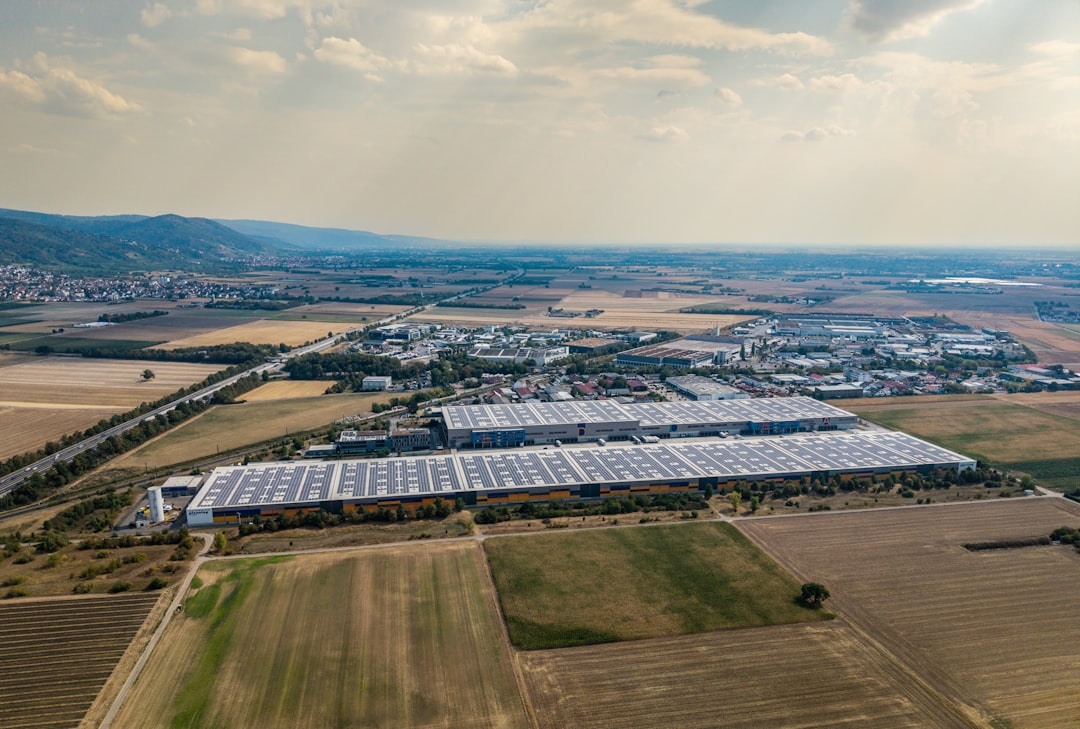
Sungrow's September 3 press release confirmed that commercial production at the 10 GWh/year BESS assembly facility in Egypt's Suez Canal Economic Zone is now targeted for June 2027[1]. That's roughly two months later than the April 2027 figure that circulated when the land agreements were signed in January. A two-month slip on a greenfield overseas factory that broke ground in August is not alarming - but it is worth noting, because the downstream project it is supposed to feed has its own timeline pressure.
 Photo: Artem Labunsky / Unsplash
The Anchor Customer: 4 GWh for Scatec's Energy Valley
The press release also confirmed what had previously been implied: Sungrow will supply 4 GWh of energy storage systems to the Sustainable Energy Valley project in Egypt's Minya Governorate, which is being jointly developed by the Egyptian government and Norwegian developer Scatec. That 4 GWh figure is the first time Sungrow has put a specific volume on its commitment to the project.
The Scatec side of the equation is worth understanding in full. In January 2026, Scatec signed a 25-year, USD-denominated, pay-as-produced power purchase agreement with the Egyptian Electricity Transmission Company (EETC) covering 1.95 GW of solar and 3.9 GWh of battery storage - a deal described at the time as the largest solar-plus-storage installation in Africa and the largest investment in Scatec's history. The project spans the governorates of Minya, Qena, and Alexandria.
Here is the structural issue: financial close on the Scatec Energy Valley project was expected in the second half of 2026. That has not yet been announced. The Sungrow factory is targeting first production in June 2027. If financial close slips into 2027, the sequencing gets tight - a factory ramping up with no confirmed procurement order from its anchor customer is a different risk profile than one with signed offtake in hand. The press release does not clarify whether the 4 GWh supply commitment is a binding purchase order or a framework agreement contingent on Scatec's financial close.
The 4 GWh supply figure for Scatec's Energy Valley project is the first specific volume Sungrow has disclosed. What remains unconfirmed is whether this is a binding purchase order or a conditional commitment tied to Scatec's financial close, which was expected H2 2026 but has not yet been announced.
Assembly, Not Cell Production - and That Distinction Matters
The factory's operational scope deserves scrutiny. Multiple sources confirm that the facility will focus on BESS assembly and production - not cell manufacturing. Sungrow purchases LFP cells from suppliers including CATL and assembles them into containerized utility-scale systems. The Egypt plant replicates that model in-country.
That is not a criticism. Assembly-level localization still delivers real value: shorter logistics chains, lower import duties, local content compliance for Egyptian tenders, and faster response times for a market that is moving quickly. But it is not the same as a vertically integrated cell factory, and the distinction matters for anyone modeling the facility's contribution to Egypt's energy security or its resilience to Chinese cell supply disruptions.
PV Tech Research analyst Charlotte Gisbourne noted that while more than 35 GWh of battery and 45 GWh of cell manufacturing plans have been announced across the MEA region in recent years, Sungrow's Egypt operation appears focused on BESS assembly with no mention of cell production lines. Sungrow has previously stated it has no plans to build its own lithium-ion cell production lines, preferring instead to maintain strategic partnerships with cell suppliers.
The practical consequence: the Egypt factory's output quality and cost will remain tied to Sungrow's upstream cell supply chain in China. That is fine in a stable trade environment. It is a variable worth tracking as MEA governments increasingly push for deeper localization.
Egypt's Storage Market Is Moving Fast Enough to Fill a 10 GWh Factory
The demand context is real. Egypt's electricity ministry announced plans earlier in 2026 to commission 600 MW of BESS before summer, alongside 3 GW of solar. The country has already commissioned its first large-scale utility BESS - a 300 MWh system at the Abydos solar project - and has signed capacity purchase agreements for standalone projects at Zafarana (500 MWh) and Benban (1,000 MWh).
Beyond Egypt's domestic pipeline, the factory's location inside the Suez Canal Economic Zone gives it a logistics advantage for exports across the broader MEA region. The MEA BESS market is projected to grow at a 19.18% CAGR between 2026 and 2031, reaching revenues of USD 6.86 billion. Saudi Arabia, the UAE, Egypt, and South Africa are all embedding mandatory storage requirements into new solar and wind tenders - a structural demand signal that makes a 10 GWh/year assembly facility look undersized rather than oversized within a few years.
The Competitive Picture: Sungrow Is Not Alone in the Region
One other data point worth flagging: Sungrow is not the only Chinese manufacturer moving into MEA assembly. Hithium announced plans in 2024 to build a 5 GWh/year facility in Saudi Arabia. In January 2026, Cornex and GCL committed USD 700 million to energy storage and solar manufacturing facilities in Egypt. And in the same January package that included the Sungrow agreements, Egyptian company Kemet signed a cooperation agreement with Cornex to establish a separate USD 200 million, 5 GWh/year battery factory in Egypt.
That means Egypt alone could have multiple GWh-scale BESS assembly operations coming online within a similar timeframe. Whether the domestic market can absorb that combined output - or whether the export case to the broader MEA region is strong enough to take the slack - is a question that will be answered by procurement decisions over the next 18 months.
What to Watch
The June 2027 production date is a milestone, not a delivery. Three things will determine whether this factory matters as much as the announcement suggests:
- Scatec financial close. If the Energy Valley project reaches financial close in H2 2026 as planned, the 4 GWh supply commitment becomes a real order. If it slips, Sungrow's anchor customer is still a letter of intent.
- Egyptian tender pipeline. Egypt's government has been moving fast on storage procurement, but the pace of signed PPAs and CPAs needs to continue to justify 10 GWh/year of local assembly capacity.
- Cell supply terms. The factory's cost competitiveness depends on Sungrow's ability to source LFP cells from China at competitive prices. Any tariff escalation or supply disruption between now and 2027 changes the economics of in-country assembly versus direct import.
The groundbreaking was the easy part. The next twelve months - financial close on Scatec, Egypt's next storage tender round, and the construction schedule itself - will tell us whether the June 2027 date holds and whether the factory has enough contracted demand waiting for it when it does.