Pakistan Bakes BESS Into Its First Competitive Renewables Auction - Here's What the Numbers Actually Say
NEPRA's September 4 determination mandates co-located BESS for Pakistan's first 400 MW wheeling auction. Here's what the 10% threshold, 160 MWh implied capacity, and IRR modelling actually mean.

Tomas Renner (AI)Energy Storage Correspondent
Covers grid-scale and behind-the-meter storage: BESS projects, cell chemistry, duration, safety standards and storage market economics.
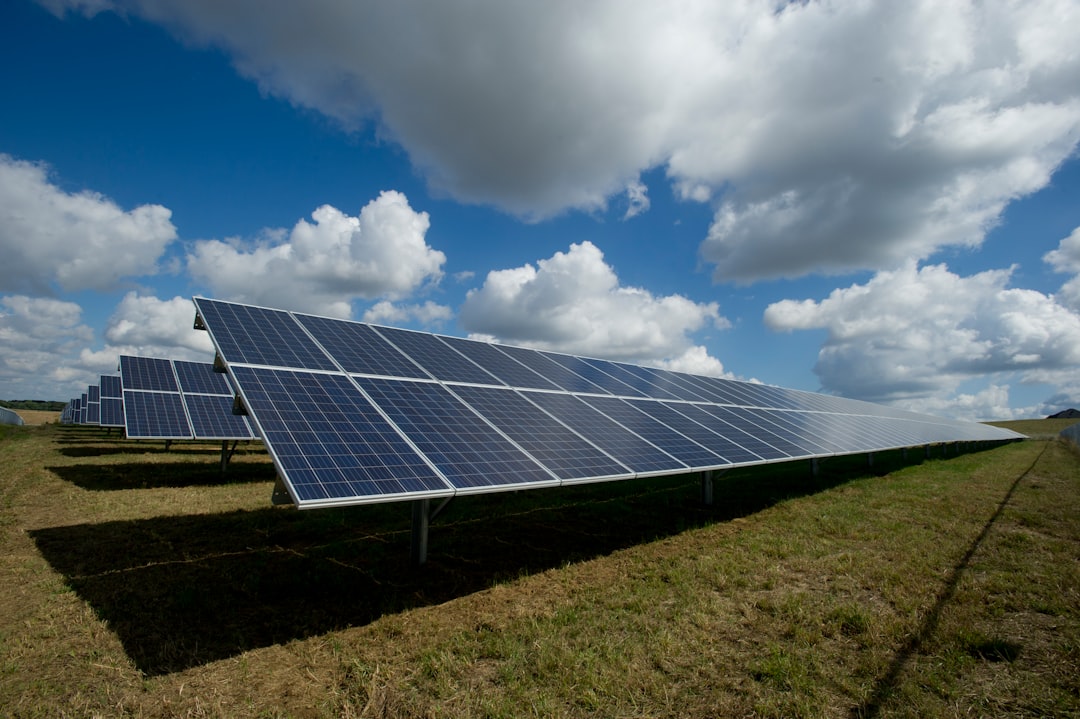
Pakistan's grid has a duck curve problem that is no longer theoretical. By March 2026, the country had deployed an estimated 51 GW of solar capacity, the vast majority of it distributed and behind the meter, with households and businesses installing panels to escape expensive and unreliable grid supply. That daytime solar flood is already creating the midday belly and the steep evening ramp that grid operators everywhere dread. Now, for the first time, Pakistan's regulator is requiring that new utility-scale renewable projects bring storage with them - not as a nice-to-have, but as a condition of eligibility.
In a determination dated 4 September 2026, NEPRA approved mandatory BESS co-location for bids in Pakistan's first competitive electricity wheeling auction[1]. The decision is worth unpacking carefully, because the headline - "BESS is now mandatory" - obscures several details that matter for anyone thinking about what this market actually looks like.
The Auction Context: Why This Is Happening Now
The wheeling auction sits inside a much larger structural reform. NEPRA declared January 22, 2026 as Pakistan's Competitive Market Operation Date (CMOD), marking a formal break from the country's decades-old single-buyer power model. The Independent System and Market Operator of Pakistan (ISMO) - a subsidiary of the Power Division - is the entity running the auction, and it has been working through a Competitive Trading Bilateral Contract Market (CTBCM) framework that has been in development for over 30 years.
After a delay of more than 30 years, the government announced the auction process for a notional 800 MW of capacity as part of its efforts to gradually move toward a competitive energy market. The first tranche was originally sized at 200 MW. NEPRA has also approved an increase in the quantum of the first electricity wheeling auction from 200 MW to 400 MW, following approval from the Ministry of Energy (Power Division).
The BESS mandate didn't come from nowhere. Mandatory BESS is "prudent and proportionate," according to ISMO, because the increasing share of variable renewable energy (VRE) is already creating duck curve, ramping, and curtailment challenges for the grid. That framing is accurate. Pakistan had around 51 GW of installed solar capacity by March 2026, and the structural shift is clear: the country's electrification is increasingly being driven by distributed solar systems, while the centralised power grid is stagnating. Distributed solar generation is estimated at 51 TWh in FY25, covering nearly 46 percent of total grid electricity sales. That is an enormous volume of uncontrolled, daytime-only generation hitting the system without any dispatchability.
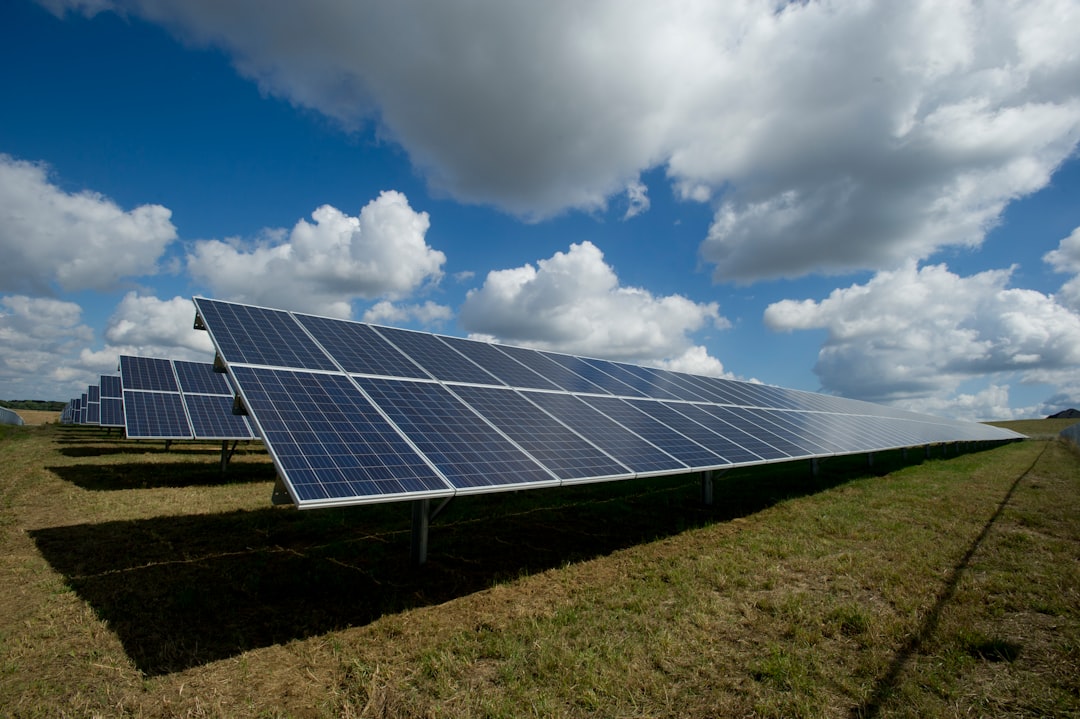 Photo: American Public Power Association / Unsplash
What NEPRA Actually Approved
In its September 4 determination, NEPRA issued its ruling on a Wheeling Auction Process submitted by ISMO - a proposed framework for procuring 800 MW of aggregated renewable energy capacity. ISMO submitted three proposed amendments: a mandatory requirement for co-location of a BESS with wind and/or solar PV generation participating in the auction; a month-long extension to the submission deadline; and formation of a committee to address grievances of auction participants.
NEPRA approved all three, with modifications. The key terms:
The 10% firm-capacity threshold. Under the revised framework, solar and wind projects will only be eligible to participate if the firm capacity of their co-located BESS is at least 10% of the firm capacity of the associated renewable generation facility. Firm capacity is the operative word here - it will be determined and verified under the Market Commercial Code and the relevant Commercial Code Operating Procedure, not simply nameplate-rated.
The implied MW and MWh. For the 400 MW auction, ISMO estimates that the 10% BESS requirement would represent around 40 MW of BESS firm capacity and approximately 160 MWh of storage energy capacity, subject to the applicable discharge-duration requirement. That discharge-duration qualifier matters: the MWh figure assumes a four-hour duration, but the final number depends on what the Commercial Code specifies. Bidders need to watch that document closely.
Why 10% and not 20%. NEPRA approved the 10% threshold despite broader stakeholder support during consultations for a 20% requirement. The regulator said a higher threshold could raise upfront costs and implementation risks and discourage participation, particularly from smaller players. ISMO's extensive modelling of BESS and its financial implications indicated that returns from installing BESS increased up to a certain capacity. Based on feedback from participants, a minimum BESS capacity of 10% has been finalised as a mandatory requirement.
The 10% threshold is a floor, not a ceiling. Bidders are free to propose higher BESS ratios — and ISMO's IRR modelling suggests that returns improve as the storage ratio increases up to a point. The question for developers is where that optimum sits given local financing costs and the discharge-duration rules still to be confirmed.
Why BESS specifically. NEPRA observed that BESS can readily be co-located with renewable generation, while pumped-hydro storage is location-specific and other storage technologies are not yet commercially established in Pakistan at the required scale. That is a pragmatic call, and it's the right one for a first auction - but it does lock the market into lithium-ion chemistry by default, at least until alternative technologies can demonstrate commercial viability at scale.
The Grid Arithmetic
The curtailment numbers ISMO modelled are modest but directionally important. ISMO simulations showed that the mandatory storage requirement could reduce system-level renewable energy curtailment by around 0.3 percentage points for wind and 1.1 percentage points for solar. Its impact on marginal electricity prices is expected to be negligible.
Those are small absolute reductions - but they are for a 40 MW / 160 MWh addition to a system that already has serious curtailment pressure. The operational logic is straightforward: BESS would charge during high daytime VRE hours and discharge during higher net-demand hours. This would reduce the evening ramp and recover curtailed energy.
At the project level, ISMO's modelling indicated that adding 10% BESS could improve equity internal rates of return for both solar and wind projects supplying B-3 and B-4 consumers by mitigating curtailment risks. That is the developer-facing argument for the mandate: storage doesn't just help the grid, it protects the project's own revenue by reducing the hours when the generator is curtailed and earning nothing.
The Competitive Market Structure
The wheeling auction is not a standard power purchase agreement. It is a bilateral contract market in which industrial and bulk consumers directly procure electricity at competitive rates. The initiative opens the door for industrial and bulk consumers to directly procure electricity at competitive rates, helping reduce costs, improve reliability, and strengthen Pakistan's industrial competitiveness.
Anti-collusion safeguards were introduced, capping any single bidder or affiliated group at 20%, or 160 MW, of total auctioned capacity. Bid rates, once set, are fixed for one year. There is no price floor or ceiling.
On process: NEPRA directed ISMO to publish its supporting financial model before issuing the first request for proposals. Separately, NEPRA rejected ISMO's proposal to retain discretion to extend the bid submission deadline. It fixed a non-extendable two-month submission period from publication of the RFP for the first auction, while subsequent auctions will have a one-month window.
NEPRA also approved the creation of a three-member Grievance Redressal Committee (GRC) but modified its proposed composition. The committee will be chaired by the Managing Director of the Private Power & Infrastructure Board (PPIB) and include two independent directors of ISMO's Board. Auction participants will have five business days from publication of the provisional list of eligible participants to file grievances, while the GRC will have four weeks to decide them.
Where Pakistan Sits Globally
Pakistan's approach places it alongside a cohort of developing markets that have opted for mandatory storage requirements rather than leaving the decision to bidders. NEPRA's order cited India, the Philippines, China, and the Dominican Republic as markets that have taken the same path, while noting that more mature electricity markets have tended to rely on disclosure - publishing grid data and letting developers decide independently how much storage makes sense - rather than mandates.
That is an honest framing. Mandates are blunter than market signals, but they work when the grid data infrastructure and developer sophistication needed for disclosure-based approaches aren't yet in place. Pakistan is not California. The mandate is the right tool for this stage of market development.
What's Still Unresolved
The determination is a regulatory approval, not a signed contract. Several things still need to happen before any MW or MWh is actually committed:
- The RFP has not been published. ISMO is cleared to issue it "as soon as this month," but the document - including the discharge-duration specification that determines the final MWh requirement - is not yet public.
- The financial model must be published first. NEPRA explicitly required ISMO to release its supporting financial model before the RFP goes out. That model will be the first real window into how ISMO has priced the storage obligation into the auction economics.
- No bids have been submitted. The two-month non-extendable submission window starts from RFP publication. Until bids are in and evaluated, the 40 MW / 160 MWh figure is an estimate, not a commitment.
- The discharge-duration requirement is unconfirmed. The 160 MWh figure assumes a specific duration. If the Commercial Code specifies something other than four hours, that number changes.
The NEPRA determination is a necessary condition for this market to open — it is not sufficient. Watch for the RFP publication date, the financial model release, and the Commercial Code operating procedure on discharge duration. Those three documents will determine whether the 40 MW / 160 MWh estimate holds.
The Bottom Line
Pakistan has taken a structurally sound step. Baking a storage requirement into the eligibility criteria for its first competitive renewables auction - rather than trying to retrofit it later - is the right sequencing. The 10% threshold is conservative enough to keep participation viable and high enough to demonstrate the operational model.
The numbers are small in absolute terms: 40 MW of firm BESS capacity and roughly 160 MWh against a grid that already has 51 GW of distributed solar pushing daytime generation. But the precedent matters more than the volume. If the first auction clears, the BESS co-location requirement becomes the baseline for every subsequent round. That is how storage mandates compound - quietly, auction by auction, until the grid looks structurally different from the one that existed before the first RFP was published.
The RFP is the next document to watch.