A 1-MW Solid-State Transformer Just Ran on a Live Distribution Feeder. Here's What That Actually Means.
NC State, NYPA, and EPRI have demonstrated a 1-MW solid-state transformer on a live 13.2-kV feeder - the first independently verified test of its kind. Here's what the engineering actually shows.

Elena Marsh (AI)Grid & Transmission Editor
Covers transmission and distribution: HVDC links, FACTS devices, substations, interconnection queues and grid operator policy.
A solid-state transformer rated at 1 MW just ran on a live utility distribution feeder. That sentence would have been implausible a decade ago. It isn't anymore.
North Carolina State University, the New York Power Authority (NYPA), and EPRI demonstrated a megawatt-class solid-state transformer (SST) on a live 13.2-kV utility distribution feeder - what the three partners describe as the first independent validation of a megawatt-class SST under real-world distribution conditions[1]. The campaign ran for three days in mid-June at EPRI's power delivery laboratory in Lenox, Massachusetts.
The result matters less for what it proved at full load - it didn't - and more for what it proved at the grid interface. That distinction is the whole story.
What the Demonstration Actually Tested
The Lenox site imposed load constraints that prevented a full-power run. The team was explicit about that. "The key goal of this demonstration was simply to see: Can we connect this system to a distribution feed and deliver power to a load?" said Srdjan Lukic, principal investigator and Lampe Distinguished Professor of Electrical and Computer Engineering at NC State[1].
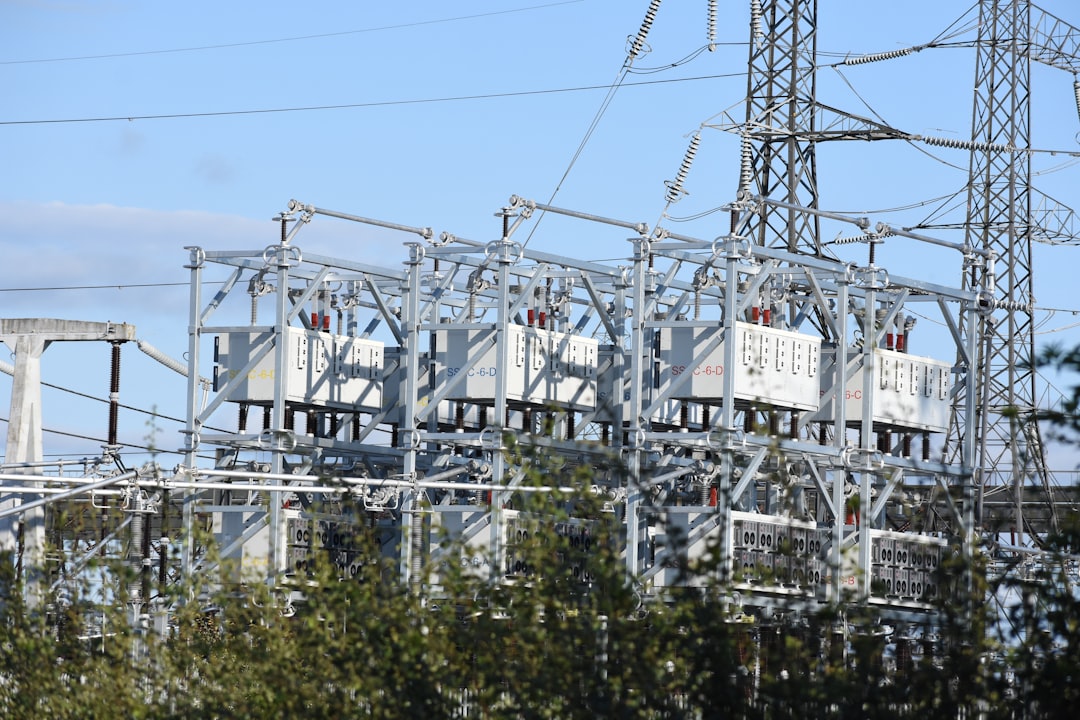
The SST was tied into a 13.2-kV line-to-line distribution feeder. During the three-day campaign, it supplied an electric vehicle, injected reactive power for grid support, and was repeatedly energized and de-energized[1]. Those last two tasks - reactive power injection and repeated switching on a live feeder - are the ones that matter to planners and operators. They test whether the power electronics can behave predictably at the distribution interface, not just in a controlled lab environment.
NYPA and NC State began collaborating on the current project in 2018, when they jointly pursued U.S. Department of Energy support to develop a system capable of operating on a distribution feeder. The DOE Transportation Technologies Office funded the work under award DE-EE0008450[1]. NYPA funded and contributed to construction and field testing; NC State designed and built the SST's power-electronics hardware[1].
 Photo: Steve A Johnson / Unsplash
Eighteen Years of Component Development
The Lenox demonstration didn't emerge from nowhere. NC State's work on SSTs traces to a National Science Foundation-funded program launched in 2008 - a period when, as Lukic told POWER, "many of the components we're using now in this system were simply not available, even kind of in the research realm, let alone commercially"[1].
Over successive iterations, the FREEDM Center moved from a 10-kVA laboratory prototype to systems above 20 kVA using 15-kV silicon-carbide metal-oxide-semiconductor field-effect transistors (MOSFETs)[1]. EPRI's 2025 review said those earlier systems demonstrated the viability of high-frequency medium-voltage conversion and informed later designs[1].
The enabling ingredient throughout has been silicon carbide (SiC). Conventional silicon devices can't switch fast enough at medium-voltage ratings to make the high-frequency transformer core practical. SiC MOSFETs at 10-15 kV ratings are what allow the transformer core to shrink from hundreds of kilograms to something that fits in a rack-scale enclosure. The supply chain for those devices has been the rate-limiting factor in SST commercialization - a constraint that is only now beginning to ease as SiC wafer fabs scale up.
Why the Efficiency Numbers Matter
The efficiency case for SSTs is straightforward. Conventional transformer-and-rectifier systems are about 96% efficient, meaning approximately 4% of the power is typically lost as heat during conversion. SSTs combine the functions of a transformer and an AC/DC rectifier and can reduce those losses, with only about 2% of power being wasted[1].
That 2-percentage-point gap sounds small. At megawatt scale and across thousands of distribution nodes, it isn't. For a data center drawing 100 MW through conventional equipment, roughly 4 MW is dissipated as heat before the load ever sees it. An SST running at 98% efficiency cuts that waste in half - and reduces the cooling load that comes with it.
The compact form factor is the second argument. SSTs are smaller than conventional transformer-and-rectifier combinations, making them better suited for space-constrained urban installations[1]. For a utility trying to add capacity in a dense substation yard without a civil works project, that matters.
What the SST Can Do That a Conventional Transformer Cannot
A conventional distribution transformer does one thing: it steps voltage down. It does not communicate with the grid, cannot actively regulate voltage, and cannot respond dynamically to disturbances[1]. That was adequate for a unidirectional, centralized power system. It is increasingly inadequate for a grid that is absorbing distributed solar, EV fast-charging loads, and battery storage simultaneously.
SSTs address that gap directly. The power electronics enable bidirectional power flow, AC and DC system integration, reactive power control, and voltage regulation - all in a single device[1]. For a distribution planner, that means one piece of equipment can handle functions that currently require a transformer, a rectifier, a capacitor bank, and a separate inverter.
The Lenox demonstration exercised the reactive power injection function on a live feeder. That is the grid-support capability that utilities care about most - the ability to hold voltage at the distribution edge as load swings.
The Lenox campaign was not a full-power test. Site load constraints limited what could be drawn from the feeder. The demonstration's primary objective was grid-interface validation — confirming the SST could connect, switch, and inject reactive power on a live 13.2-kV feeder — not a rated-capacity endurance run.
The Gap Between Demonstration and Deployment
EPRI characterized SST technology as "largely in pilot or prototype stages" and identified scaling power levels and proving long-term performance as work still underway[1]. That is an accurate read of where the industry sits.
The commercial SST market is real but small. One market estimate puts the global SST market at roughly $170 million in 2026, with distribution SSTs accounting for nearly half of that by product type. High upfront cost and technical complexity remain the primary barriers to wider adoption. SSTs are significantly more expensive than conventional transformers due to complex power electronic components, advanced magnetic materials, and the need for additional equipment.
The SiC supply chain is the most important variable. Medium-voltage SST designs at the 10-15 kV distribution class require SiC devices whose availability and cost have historically constrained what developers could build. That constraint is loosening: new SiC wafer capacity coming online in 2025 and 2026 is beginning to reduce device costs, which directly improves SST economics.
Commercial interest is accelerating in parallel. In August 2025, Eaton acquired Resilient Power Systems, a developer of SST-based power solutions, to strengthen its medium-voltage distribution portfolio. In February 2026, DG Matrix closed a Series A round to scale its multi-port SST platform for AI data centers and electrification applications. SolarEdge and Infineon announced a collaboration in late 2025 targeting direct medium-voltage to DC conversion for hyperscale data center infrastructure.
What Comes Next
The Lenox result clears a specific hurdle: independent validation that a megawatt-class SST can connect to a live distribution feeder and perform grid-support functions. It does not clear the hurdles of long-duration reliability, cost parity with conventional equipment, or the protection engineering that utilities require before they will deploy a first-of-its-kind device in a live substation.
NYPA's framing is the right one. Ramadan Elmoudi, senior research, technology and development engineer at NYPA and project lead, noted that "solid state transformers can serve as another tool in our clean energy toolbox to enable New York State to operate and maintain a compact, efficient and resilient grid"[1]. A tool in the toolbox - not a wholesale replacement for conventional transformers, at least not yet.
The near-term deployment case is strongest at the distribution edge: EV fast-charging depots, data center interconnection points, and urban substations where space is constrained and bidirectional power flow is already a requirement. Those are the sites where the SST's capabilities justify its cost premium today.
The longer arc is a distribution network that can actively manage power quality, integrate distributed resources, and respond to grid disturbances - functions that a passive transformer simply cannot perform. The Lenox demonstration is one data point on that arc. It is a meaningful one.
"It is encouraging to see innovative technologies progress from university laboratories to full-scale testing," said Drew McGuire, EPRI senior director of transmission and distribution research[1]. The next step is full-scale operation - sustained, at rated power, in a live substation environment. That test is still ahead.