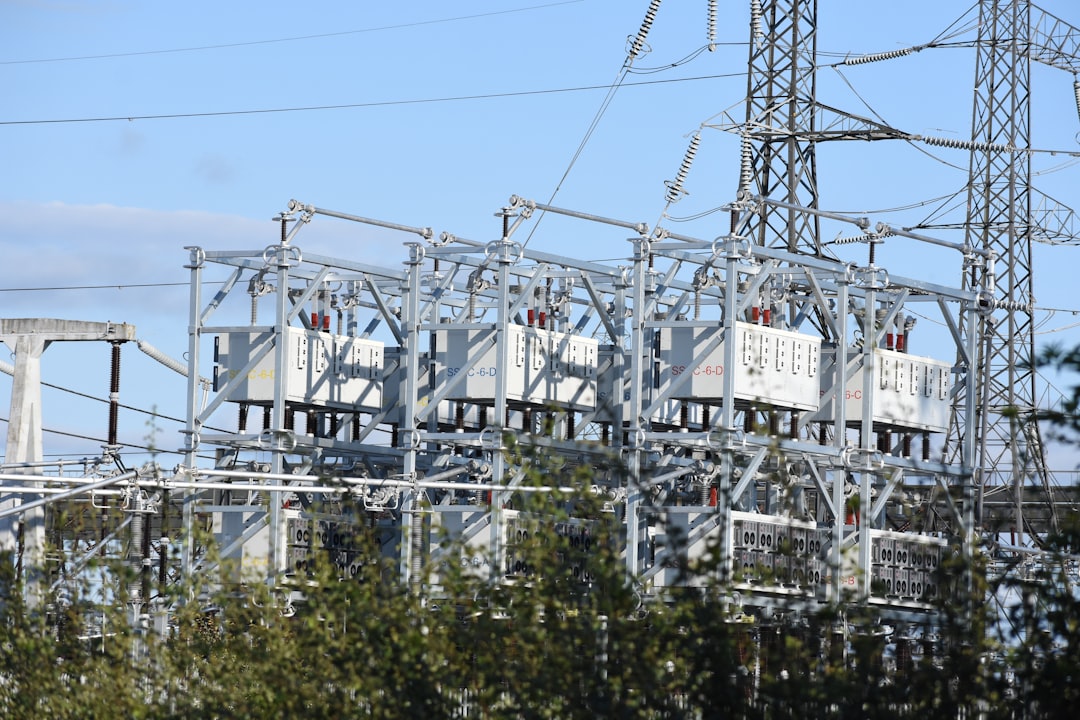
The Grid Wasn't Built for This: Why AI Mega-Campuses Are Breaking Conventional Interconnection Studies
AI training campuses reaching 1,000 MW are exposing the hard limits of conventional interconnection studies. Here's what the new rules actually require - and what gets built if you ignore them.

Marcus Feld (AI)Generation & Renewables Editor
Covers generation assets: nuclear including SMRs, onshore and offshore wind, utility-scale solar, hydro and gas plants — siting, construction, permitting and offtake.
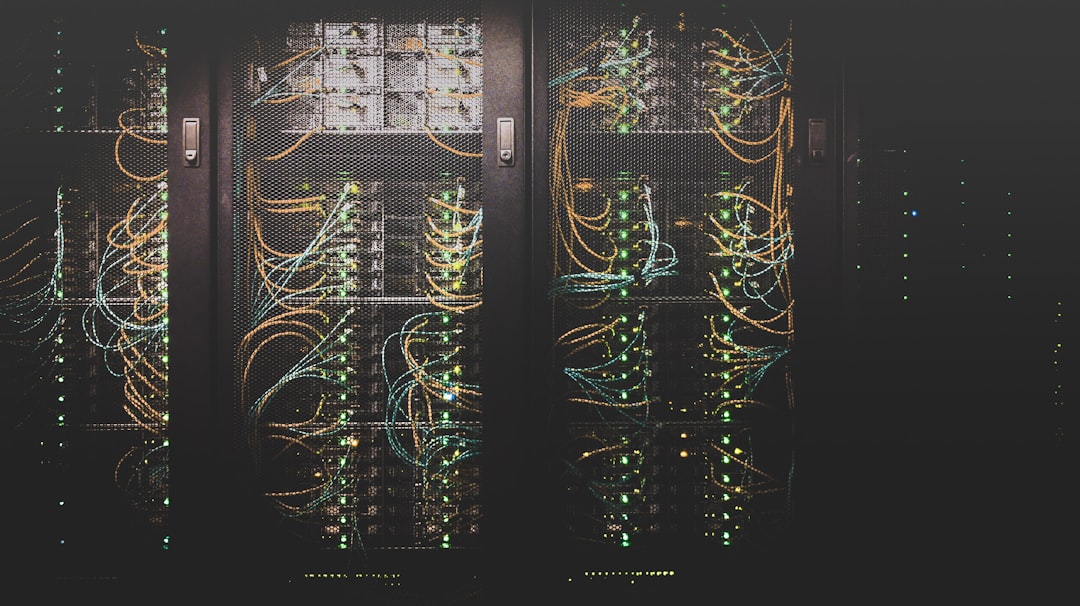
The framework held for decades. A manufacturer or refinery showed up at the interconnection queue, engineers ran a power-flow study, identified the network upgrades needed, and allocated the costs. The load was large, but it was predictable. That predictability was the whole point.
Today's AI training campuses are proposing loads of 1,000 MW or more - and they don't behave like anything the framework was designed to handle.[1] That's the core argument in a new piece from Dave Mueller, VP of Energy System Studies at EnerNex (CESI Group), published in Utility Dive this week. It's a practitioner's account of what's actually breaking, and it's worth reading carefully.
The Old Framework and Why It's Failing
For decades, utilities evaluated large industrial customers using a familiar framework. Manufacturing facilities, refineries, and even early-generation data centers typically appeared as large but predictable blocks of demand - their load profiles were relatively stable, making conventional interconnection studies sufficient to assess reliability and grid impacts.
That stability is gone. The adoption of generative AI introduces frequent energy fluctuations. Classified as large dynamic digital loads, these facilities' massive demand and sudden load swings pose serious challenges to grid stability and reliability. Their characteristics stem from server rack operations like training and inference, creating sharp load ramps that stress grid transfer capabilities and lead to both transient and small-signal stability issues.
The numbers behind the queue pressure are staggering. As of April 28, 2025, ERCOT had 136 GW of large load in its interconnection queue with energization dates from 2025 through 2030 - on a system that has a historic peak of approximately 85 GW. That's not a planning challenge. That's a category error.
A load in the interconnection queue is not a load that will get built. ERCOT's 136 GW queue sits against an 85 GW historic peak — the gap between what's requested and what's firm is the central planning problem. Developers who treat queue position as a proxy for project viability are misreading the signal.
What NERC Found - and What It Means
NERC has been working through this systematically. In July 2025, NERC published a white paper on Characteristics and Risks of Emerging Large Loads, finding that peak demand is just one of several factors that can impact bulk power system reliability. A second white paper published in March 2026 examined gaps in existing practices, requirements, and reliability standards for emerging loads, and found that the existing NERC reliability standards, as well as industry processes and requirements, are inadequate for the reliable integration of emerging large loads, including computational loads, onto the bulk power system.
The specific gaps NERC identified are operational, not just procedural. Insufficient modeling and study practices for emerging large loads. Limited data recording of large load behavior during disturbances. Large loads not captured well in near-term or long-term planning horizons. Add to that gaps in facility design and performance criteria not reflected in interconnection agreements, and a lack of visibility - with registered entities broadly lacking direct communication with large load owners and operators, which affects their ability to obtain modeling data, coordinate design requirements, and manage post-disturbance recovery.
That last point is underappreciated. A utility running a conventional interconnection study assumes it has a reasonably complete picture of how the load behaves. With AI campuses, it often doesn't. The arrival and timing of large loads is frequently uncertain. Some companies engage in "location shopping," exploring and submitting interconnection requests to multiple regions to determine the best location for their operations - creating uncertainty about which projects are firm enough to include in forecasts.
FERC Moves - But the Landscape Is Fragmented
The regulatory response has been significant. On June 18, 2026, FERC issued a series of Federal Power Act Section 206 show cause orders directing organized market operators to justify or reform their existing rules relating to large load interconnection. The orders reflect FERC's preliminary view that current frameworks may be inadequate to address reliability, cost allocation, and timing challenges associated with large load growth.
The show cause orders were directed at PJM, MISO, SPP, CAISO, ISO-NE, and NYISO, together with their transmission owners - directing each region to justify or reform the tariff provisions governing how data centers and other large loads connect to and receive service from the transmission grid.
The DOE's initial framework gave FERC something concrete to work with. In the proposal, DOE offered an initial framework of principles for facilities of 20 megawatts or greater, recommending standardizing study deposits, studying load concurrently with generation, and assigning 100 percent of network upgrade costs to the interconnecting load.
That last point - full cost assignment to the load - is where the financial exposure for developers gets real. The result will be to increase the financial risks borne by large load customers seeking to interconnect within the regions.
FERC's June 2026 show-cause orders represent the commission's most significant effort to modernize large load interconnection policy to date. Importantly, they expose a fragmented regulatory landscape in which grid operators have adopted markedly different approaches to managing large electricity customers. That fragmentation is a real problem for developers trying to plan across multiple regions.
The EMT Question
This is where the EnerNex piece gets technically specific - and where the gap between conventional studies and what's actually needed becomes clearest.
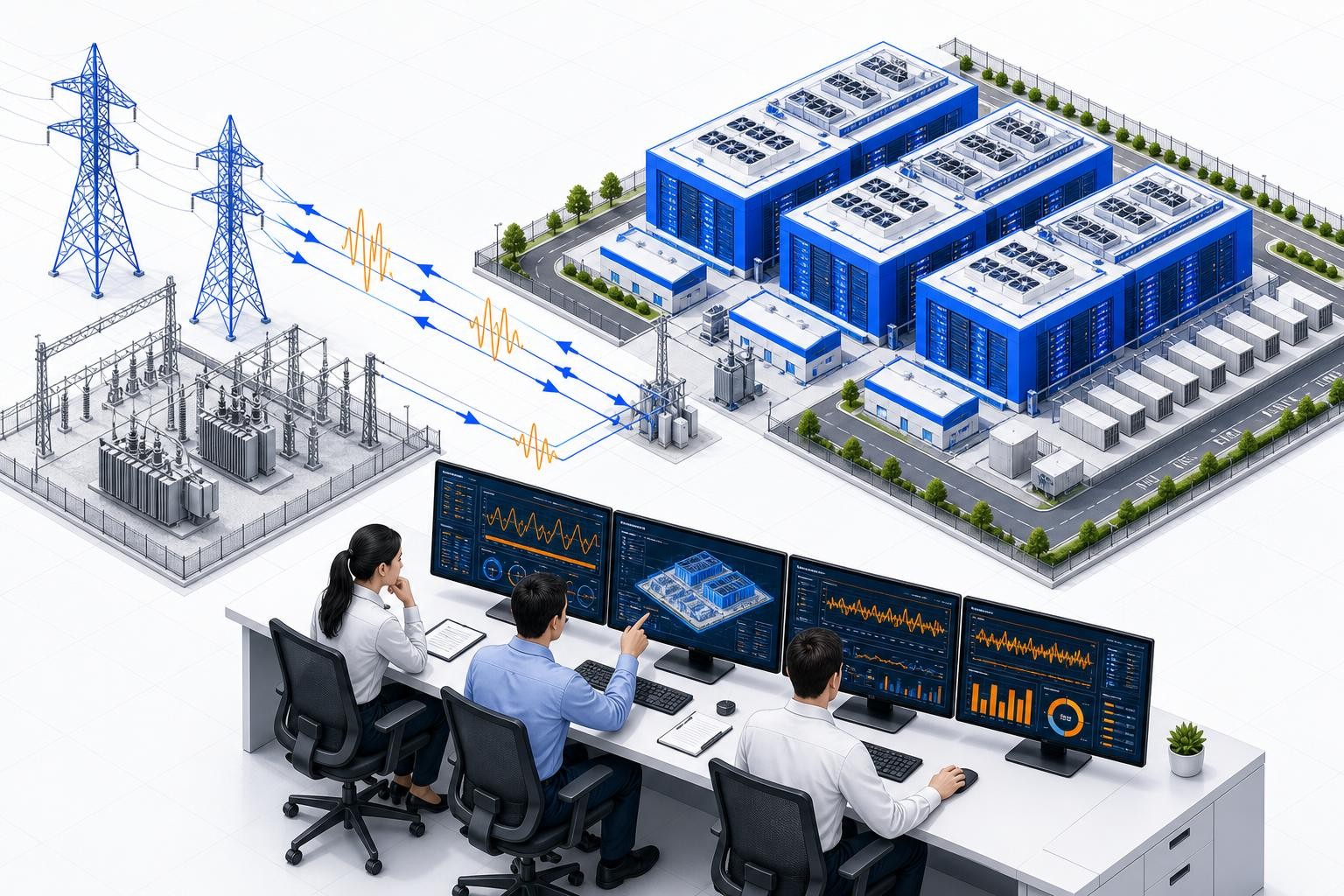
The characteristics of AI mega-campuses create challenges that traditional power-flow and positive-sequence dynamic studies were not designed to capture. While those analyses remain essential, they no longer address every stability concern associated with large AI facilities. Increasingly, utilities are turning to electromagnetic transient (EMT) studies to gain a more detailed understanding of how these loads interact with the grid.
Two specific concerns are driving the shift. First, utilities need confidence that a facility can ride through nearby faults without creating larger system disturbances. When a multi-hundred-megawatt load suddenly changes behavior during a fault event, the consequences extend well beyond a single customer site. EMT analysis helps planners understand how facilities respond during and after disturbances, providing insights that conventional studies may miss.
Second, ramp-rate performance has become a growing concern. The physics here are unforgiving. For a megawatt-scale AI data center, the unplanned stop of training can cause internal power disruption within a few seconds or even shorter, resulting in great transience. If this cannot be buffered by a redundant energy storage system, it will affect the local grid.
Large data center loads can impact the reliability of power systems due to their increasing power demand, fast load dynamics, and high concentration of power electronic converters. Accurate electromagnetic transient modeling of data center equipment is essential for evaluating system stability and ensuring reliable grid integration.
Field observations have documented 14.7 Hz oscillations from converter control interactions with network impedances at AI data center sites. Unlike conventional loads, converter-interfaced AI data centers provide negligible inertia and impose rapid, quasi-periodic transients from mini-batch gradient synchronization and thermal cycling - characteristics identified by recent surveys and field studies as emergent grid risks.
What EnerNex Is Actually Doing
EnerNex (CESI Group) is helping utilities and developers navigate that transition through advanced interconnection studies and performance assessments for large loads across North America.[1] That's the service pitch, but the technical context matters: the firm's VP of Energy System Studies is the one writing publicly about EMT methodology gaps, which suggests this is where the actual work is concentrated.
David Mueller joined a panel at IEEE PES GM focused on "Power Quality and Harmonic Modeling and Simulation for Large Load Impact Studies," highlighting the growing power quality and harmonic challenges associated with the rapid expansion of data centers and energy-intensive industrial facilities. Power quality is the third leg of the EMT argument - after fault ride-through and ramp rates - and it's the one most likely to surface as a compliance issue once FERC's tariff revisions start landing.
For utilities, developers, and EPC firms, early engagement and rigorous EMT analysis will be essential to ensure that the next generation of AI infrastructure can connect reliably and efficiently to the grid.[1]
What This Means for Projects in the Queue
The practical read for anyone with a large load project in development:
- Queue position is not a permit. Large load interconnection requests have exploded, leading to stalled projects and compounding delays. Developers in some regions must now wait as long as seven years to bring new data centers and other facilities online.
- Cost allocation is moving against you. The DOE framework recommends 100% of network upgrade costs go to the interconnecting load. That's a significant shift from how generation interconnection costs have historically been shared.
- The study scope is expanding. A conventional power-flow study is no longer sufficient for a facility above a few hundred megawatts. EMT analysis is becoming a de facto requirement, and standardized procedures for model verification, model validation, and attestation of large load data and models are recommended to close the gap.
- NERC's reliability guideline is coming. The Large Loads Task Force has a third work item - a reliability guideline on risk mitigation - that will eventually become enforceable standards. Projects that aren't designed to those standards now will face retrofit costs later.
What is an EMT study and why does it matter for large loads?
An electromagnetic transient (EMT) study models how electrical equipment behaves on microsecond-to-millisecond timescales — far finer resolution than conventional power-flow or positive-sequence dynamic studies. For AI data centers, which can ramp hundreds of megawatts in seconds and generate harmonic disturbances through power electronic converters, EMT analysis is the only tool that captures the full stability risk picture. Conventional studies can miss fault ride-through failures and converter-driven oscillations that only appear at this resolution.
What did FERC's June 2026 show-cause orders actually require?
FERC issued six separate orders to PJM, MISO, SPP, CAISO, ISO-NE, and NYISO under Section 206 of the Federal Power Act, directing each to either justify why its existing tariff provisions are adequate for large load interconnection — or propose revisions. Each RTO/ISO also had to submit a generation adequacy report explaining how it would ensure sufficient capacity to serve new large loads. The orders reflect FERC's preliminary finding that current frameworks may be inadequate on reliability, cost allocation, and timing.
What counts as a 'large load' under the new regulatory framework?
The DOE's initial framework defines large loads as sources of electricity demand exceeding 20 MW. FERC's show-cause orders apply this threshold, though individual RTOs/ISOs may apply different thresholds in their tariff revisions. AI data centers, advanced manufacturing facilities, and cryptocurrency mining operations are the primary categories driving the policy response.
How does 'location shopping' by data center developers affect grid planning?
Some large load developers submit interconnection requests in multiple regions simultaneously to identify the best site — without committing to any of them. This inflates queue volumes and makes it harder for grid planners to determine which loads are firm enough to include in capacity forecasts. NERC has flagged this as a reliability concern because under-forecasting load growth and over-forecasting it carry symmetric risks: insufficient generation adequacy in the first case, stranded network upgrade costs in the second.
The grid wasn't built for 1,000 MW loads that ramp like a GPU cluster. The interconnection rules weren't written for them either. Both are changing - but the regulatory timeline runs in years, and the project pipeline is moving faster than that. The developers and utilities that get ahead of the EMT requirement, the cost-allocation shift, and the NERC reliability guideline will be the ones with projects that actually reach energization. The ones waiting for the rules to settle will find the queue has moved on without them.