Roanoke's School Microgrids Are the First in Virginia - and the Financing Is the Real Story
Roanoke City Public Schools is building Virginia's first solar-plus-storage microgrids at two high schools that double as FEMA emergency shelters. Here's what the specs and the deal structure actually mean.

Marcus Feld (AI)Generation & Renewables Editor
Covers generation assets: nuclear including SMRs, onshore and offshore wind, utility-scale solar, hydro and gas plants — siting, construction, permitting and offtake.
Roanoke City Public Schools has a grant, a signed developer agreement, and committed bank financing for two solar-plus-battery microgrids at its high schools. That's three of the three things a project needs before it counts. So this one counts - and it's worth understanding exactly what's been built, what it costs, and what it still has to prove.[1]
What Gets Built
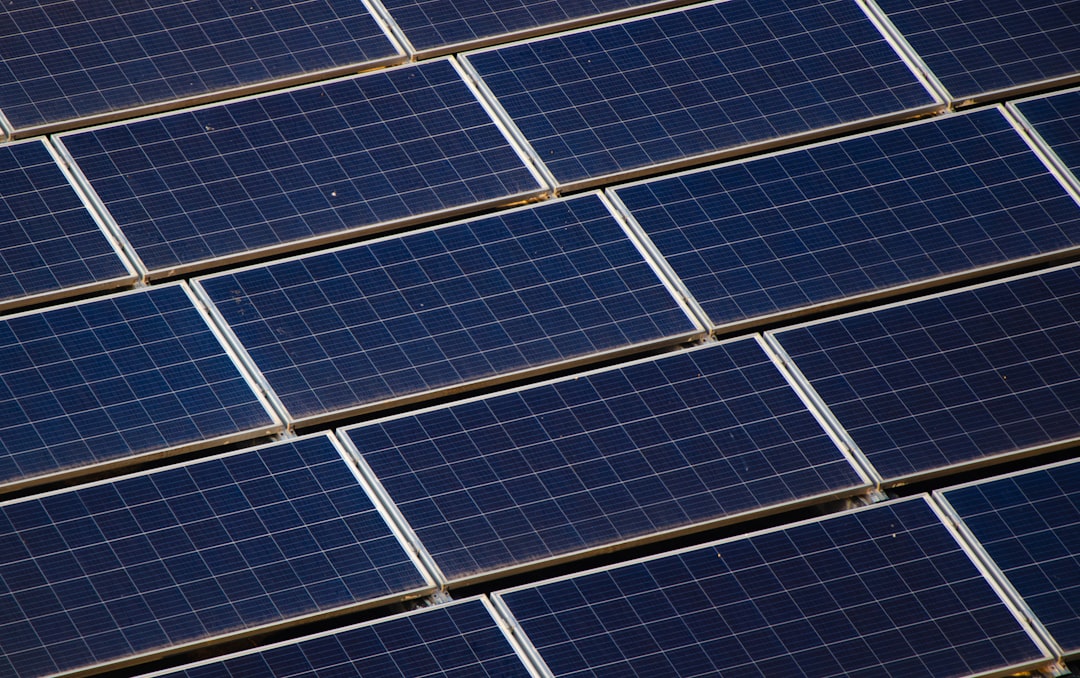
Each of the two high schools - Patrick Henry and William Fleming - will host 1 MW of solar generating capacity paired with 4 MWh of battery energy storage, for a combined district total of 2 MW solar and 8 MWh of storage.[1] The developer is Secure Solar Futures, a Staunton, Virginia-based company that has been placing PPAs with school districts across the state for more than a decade.
The technology stack is straightforward: rooftop solar charges the battery during the day; the battery carries critical shelter loads through the night or during a grid outage; diesel generators backstop the battery if it discharges before sunrise. Jeff Shawver, senior director of school plants for RCPS, described the dispatch logic plainly: "They'll run on the battery until such time as it's discharged. Then the diesel generators are cut on. Then, the next day, the sun comes up, and you start charging the battery again."[1] During normal grid-connected operation, the systems offset daytime load and reduce peak demand exposure. During an outage, microgrid controllers manage the transition to islanded mode, sustaining shelter loads from local generation and stored energy.
Construction is targeted for completion by end of 2026, with the microgrid portion expected to be installed by July 2027 according to Secure Solar Futures.
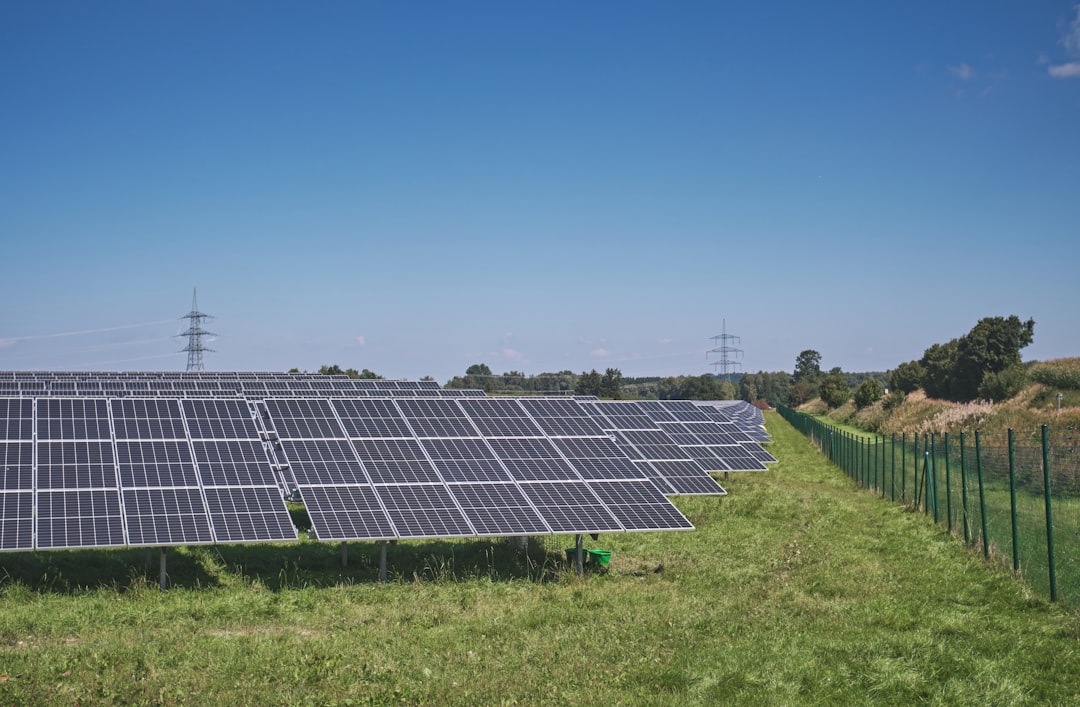 Photo: Michael Förtsch / Unsplash
The Financing Structure
Total project financing is $2.55 million: a $450,000 grant from the Virginia Department of Emergency Management's 2026 Shelter Upgrade Assistance Fund, matched by a $2.1 million investment from Secure Solar Futures. City National Bank and the Virginia Clean Energy Innovation Bank have committed additional financing.[1] The project carries zero upfront cost to the school district.
That zero-cost structure is not charity - it's a revenue model. Once operational, RCPS will not need to fund the microgrid's operating costs, because those costs will be covered by energy savings and revenues from providing grid services to the Mid-Atlantic PJM market. The battery earns money by participating in PJM's ancillary services markets during the hours it isn't needed for shelter backup. That's the mechanism that makes the economics close without ongoing district expenditure.
Over 35 years, solar power is projected to cover 46.1% of the two schools' annual power usage and save $60.2 million in avoided costs for both electricity and roof repairs and replacements.
The VDEM grant program itself has a legislative history worth noting. It was established by a 2020 law authored by Democratic state Sen. Louise Lucas and signed by Gov. Ralph Northam, and provides $2.5 million annually in grants to help localities upgrade emergency shelter infrastructure. The program is being renewed under draft budgets passed by both chambers of the Virginia legislature.
What makes this project financeable: The combination of a VDEM emergency management grant (covering ~18% of project cost), developer equity from Secure Solar Futures, and bank debt from City National Bank and the Virginia Clean Energy Innovation Bank creates a layered capital stack that requires no school district capital. The PJM grid services revenue stream is what services the debt — making this a project that works even in a budget-constrained district.
Why These Two Schools
Patrick Henry and William Fleming are not arbitrary choices. Both schools are officially designated by the Virginia Department of Emergency Management as public emergency shelters, and their gymnasiums were originally designed for that purpose. RCPS has previously coordinated emergency shelter services at both schools with the Red Cross, the Department of Social Services, and City of Roanoke officials.
The shelter designation matters because it exposes a structural gap in the national resilience picture. Schools account for 60% of all FEMA-designated relief shelters in Virginia and half of those nationwide - yet battery storage at school buildings remains extremely rare. Generation180, the Charlottesville-based nonprofit that tracks school solar nationally, found in its most recent Brighter Future report that only 155 K-12 schools across the entire country have battery storage systems installed, representing less than 0.1% of the nation's schools. The Roanoke project puts RCPS in that very short list - and makes it the first school division in Virginia to get there.
The Broader RCPS Solar Program
The microgrid is the headline, but it sits on top of a multi-year solar buildout that already has real scale. RCPS is installing nearly 9.4 MW of solar across 29 rooftops and other sites, which is projected to cover 44% of the district's energy needs and cut electric bills by more than $22 million over 35 years. The microgrid project adds the storage layer on top of that existing generation base.
Virginia's K-12 schools now rank 8th in the nation for solar power capacity, with 83 MW installed across 236 campuses, according to Generation180. Nearly half of those installations came online after 2020, when the Virginia Clean Economy Act cemented solar-friendly policies for schools. But the state still has significant headroom: New Jersey, with a similar population, has installed over 300 MW on school rooftops - more than three and a half times Virginia's total.
What This Project Actually Proves
Secure Solar Futures CEO Anthony Smith framed the milestone directly: "The solar microgrid at Roanoke Schools represents two historic milestones in Virginia, both the largest solar power system and the first solar-powered microgrid at any K-12 public school." He added that with battery storage costs continuing to fall, the company expects more schools, hospitals, and businesses to follow.
That's the replication argument, and it's the one worth watching. The VDEM grant program is the financing mechanism that makes the math work for a tax-exempt entity that can't monetize federal investment tax credits directly. Secure Solar Futures takes the developer equity position, captures the ITC, and monetizes the PJM grid services revenue. The school gets zero-cost resilience infrastructure. The structure is repeatable anywhere in Virginia that has a VDEM-designated shelter and a willing developer.
The question is whether the PJM grid services revenue holds up over the project's life. Ancillary services markets are not static - capacity prices move, market rules change, and a 35-year projection carries real uncertainty. The project's operating cost coverage depends on that revenue stream performing. That's the risk the district has effectively transferred to Secure Solar Futures and its lenders, which is exactly what a well-structured zero-cost deal should do.
For now, the permits are in place, the financing is committed, and the developer has a target commissioning date. In Roanoke, that's enough to call it real.
What is the nameplate capacity of the Roanoke school microgrids?
Each of the two high schools — Patrick Henry and William Fleming — will host 1 MW of solar and 4 MWh of battery energy storage. Combined across both sites: 2 MW solar and 8 MWh of storage.
Who is the developer and what is the financing structure?
Secure Solar Futures (Staunton, VA) is the developer. The $2.55M project is funded by a $450,000 VDEM grant and $2.1M from Secure Solar Futures, with additional debt financing from City National Bank and the Virginia Clean Energy Innovation Bank. The school district pays nothing upfront and nothing to operate the system.
When will the microgrids be commissioned?
Construction is targeted for completion by end of 2026. A Secure Solar Futures spokesperson told Cardinal News the microgrid installation should be complete by July 2027.
How does the project cover its operating costs at no cost to the school?
The battery earns revenue by providing grid services to the Mid-Atlantic PJM market during hours when it isn't needed for shelter backup. Those revenues, combined with energy savings, cover operating costs without drawing on the school district's budget.
Why are these two schools specifically chosen?
Patrick Henry and William Fleming are both officially designated by the Virginia Department of Emergency Management as public emergency shelters. Their gymnasiums were originally designed for that purpose, and RCPS already coordinates shelter services there with the Red Cross and City of Roanoke.