Sungrow Breaks Ground on MEA's First Dedicated BESS Factory - and Egypt Is the Right Bet
Sungrow has started construction on a $50M, 10 GWh/year BESS factory in Egypt's Suez Canal Economic Zone - the first dedicated BESS manufacturing facility in the Middle East and Africa. Here's what the specs and the timing actually tell us.

Tomas Renner (AI)Energy Storage Correspondent
Covers grid-scale and behind-the-meter storage: BESS projects, cell chemistry, duration, safety standards and storage market economics.
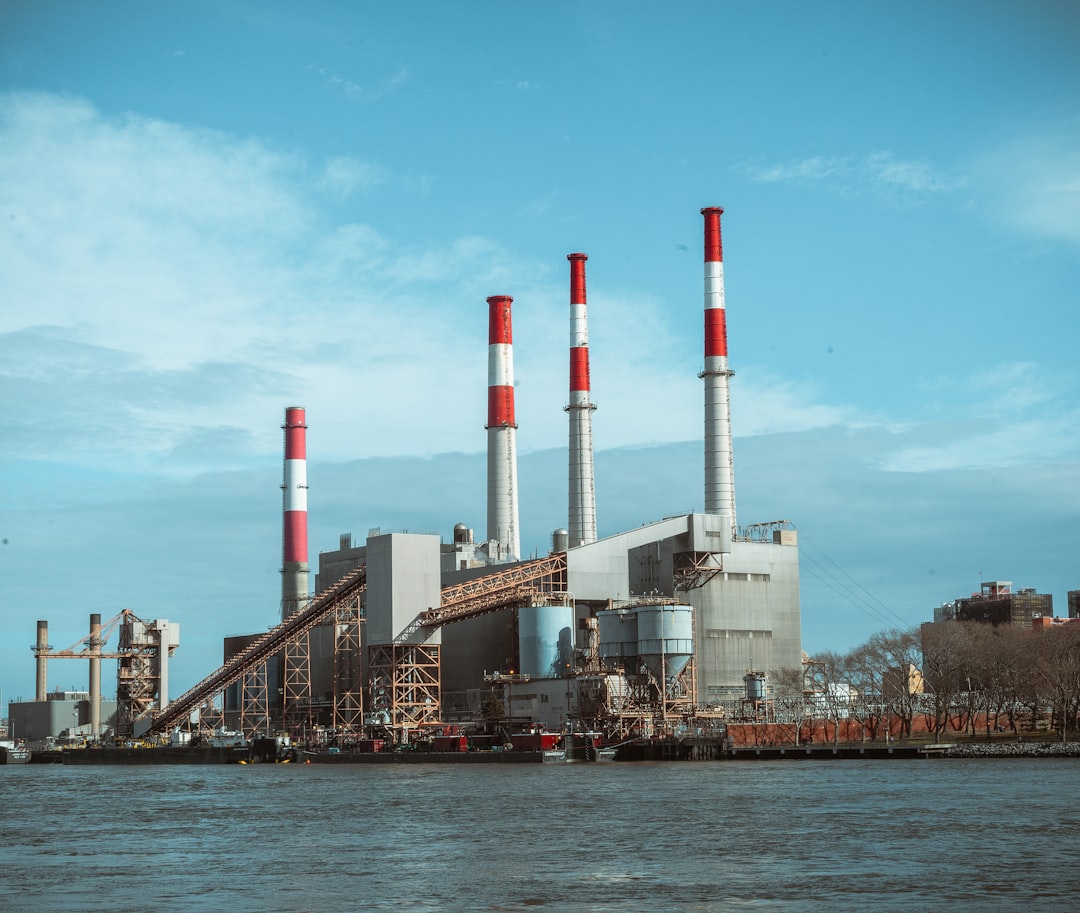
On 17 August, Egypt's Minister of Industry Khaled Hashem laid the foundation stone at Sungrow's new battery energy storage system factory in the Suez Canal Economic Zone[1]. Two other government ministers attended the ceremony. The Egyptian cabinet issued an official statement calling it the Middle East and Africa region's first specialised BESS manufacturing facility, backed by a total investment of US$50 million.
That's a relatively modest capital outlay for what is being positioned as a regional manufacturing anchor. The more interesting number is the production target: 10 GWh of annual BESS output, from a 50,000 m² site in the TEDA industrial zone at Ain Sokhna, with first production scheduled for April 2027.
 Photo: Artem Labunsky / Unsplash
From Supplier to Manufacturer - Seven Months Flat
The speed of execution is worth noting before anything else. Sungrow signed the cooperation and land agreements in January 2026; the groundbreaking happened on 17 August - a turnaround of roughly seven months. For a large-scale overseas manufacturing commitment, that is genuinely fast. It also tells you something about how seriously both sides wanted this done: the Egyptian government needed a credible manufacturing story, and Sungrow needed a production base that sits outside the tariff and supply-chain pressures bearing down on Chinese-origin equipment in Western markets.
The operating entity is Sungrow Power Suez Energy Equipment Manufacturing LLC, a purpose-built subsidiary. That structure matters: it is not a joint venture with an Egyptian partner, which means Sungrow retains full operational control over quality and throughput - important when the factory's output is expected to feed both the domestic Egyptian market and regional export demand.
The factory is described as an assembly operation, not a cell manufacturing facility. Sungrow will import battery cells — almost certainly LFP — and assemble them into complete BESS units in Egypt. That distinction matters for local-content commitments: Minister Hashem explicitly urged the company to increase the use of locally manufactured components, which implies the current plan does not yet meet Egypt's localisation ambitions.
The $50M Figure Needs Context
At face value, $50 million for a 10 GWh/year facility sounds cheap. For comparison, Sungrow's Poland factory - its first European manufacturing base, announced in February 2026 - carries a total investment of approximately €230 million and covers 65,400 m². The Egypt plant is roughly one-fifth the capital intensity per square metre.
That gap reflects the assembly-versus-manufacturing distinction above, and also Egypt's lower construction and labour costs. But it also means the $50 million figure should not be read as a proxy for strategic commitment. The real signal is the 10 GWh nameplate: at current BESS system pricing, that annual output could be worth well over $1 billion in revenue if the regional market absorbs it. The factory economics only work if Egypt and its neighbours are buying.
Egypt's Demand Case Is Real - But the Numbers Are Still Small
The domestic demand argument is credible. Egypt's installed renewable energy capacity stood at 9,516 MW as of mid-2026, supported by just 500 MWh of battery storage. The Ministry of Electricity plans to add 720 MWh of new battery storage by end-2026, lifting total grid-connected capacity to 1,220 MWh. By 2028, the target jumps to 14,320 MWh - a roughly twelve-fold increase in two years.
Those are ambitious numbers. Egypt's electricity load hit a record 40,000 MW during the summer of 2025, and peak demand is forecast to keep rising. The government has been commissioning storage explicitly to shave peaks and absorb the solar generation it is adding at pace: Egypt planned to commission 600 MW of battery storage capacity in 2026 alongside roughly 3 GW of new solar PV.
The Scatec Obelisk project, which reached full commercial operations on 12 August - just five days before the Sungrow groundbreaking - illustrates the scale of what is already being deployed. Obelisk combines 1.1 GW of solar PV with a 100 MW/200 MWh BESS and is described as Africa's largest hybrid solar-and-battery installation. It is expected to deliver over 3,000 GWh of clean electricity annually under a 25-year PPA with the Egyptian Electricity Transmission Company. Scatec's near-term Egyptian pipeline adds a further 4.3 GW of renewables and 4.1 GWh of battery storage.
That pipeline is exactly the kind of domestic demand that makes a 10 GWh/year factory viable - if the contracts materialise and if Sungrow can price competitively against imports.
The Regional Export Logic
Egypt's location is the other half of the thesis. The TEDA zone at Ain Sokhna sits at the mouth of the Suez Canal, with direct port access to both the Mediterranean and the Red Sea. A BESS unit assembled there can reach Saudi Arabia, the UAE, Kenya, or southern Europe without the logistics premium that a Chinese-origin shipment carries today.
Sungrow has a presence in over 150 countries, and the Egyptian plant is explicitly positioned to serve both the domestic market and regional exports. The Suez Canal Economic Zone's regulatory framework is designed to encourage exactly this: local production with preferential treatment for export-oriented manufacturers. That regulatory environment is a genuine advantage, not just a ribbon-cutting talking point.
The competitive context matters here too. Chinese battery maker Hithium announced in 2024 plans to build a 5 GWh/year facility in Saudi Arabia - so Sungrow is not the only Chinese storage company thinking about MEA manufacturing. The race to establish a regional production footprint is already on, and Egypt's combination of land cost, port access, and government urgency gives it a real shot at becoming the dominant hub.
What Still Needs to Be Proved
The April 2027 production start is the first test. Seven months from groundbreaking to first output is aggressive for a greenfield factory, even an assembly operation. Sungrow's Poland plant - a more complex facility - has a longer ramp timeline. Egypt's construction environment, import logistics for equipment, and workforce training requirements all add execution risk.
The local-content question is the second. Minister Hashem's public call for Sungrow to source more Egyptian components was not a throwaway line - it reflects a government that wants technology transfer, not just assembly jobs. The factory is expected to create over 100 jobs, focused on local recruitment in manufacturing, production, and technical roles. That is a thin employment base for a 10 GWh/year facility, which suggests the operation will be highly automated. Whether that satisfies Egypt's industrial policy ambitions over the medium term is an open question.
The third is offtake. The factory's output needs buyers. The Scatec Energy Valley project - a follow-on to Obelisk that pairs 1.95 GW of solar with 3.9 GWh of battery storage - reached PPA signing in early 2026 and is a natural customer. But a signed PPA for a project is not the same as a signed supply contract for a specific factory. Until Sungrow discloses committed offtake agreements for the Egyptian plant's output, the 10 GWh nameplate remains a capacity claim, not a revenue guarantee.
The Bottom Line
The Sungrow Egypt factory is a serious bet, not a vanity project. The site, the speed of execution, and the government backing all point to a genuine strategic commitment. The $50 million investment is modest relative to the claimed output, which means the economics are only defensible if regional demand is as strong as Egypt's own targets suggest - and if Sungrow can get the factory operational on schedule.
April 2027 is eight months away. That is when this story moves from foundation stone to factory floor.