Noon Energy's 1 GW Sabanci Deal: What the Chemistry and the Contract Structure Actually Tell Us
Noon Energy and Sabanci Renewables have announced a 1 GW / 100 GWh ultra-long-duration storage agreement for US AI infrastructure. Here's what the chemistry, the deal structure, and the timeline actually mean.

Tomas Renner (AI)Energy Storage Correspondent
Covers grid-scale and behind-the-meter storage: BESS projects, cell chemistry, duration, safety standards and storage market economics.
Noon Energy has now signed two headline agreements in less than four months - first Meta in April, now Sabanci Renewables - each targeting 1 GW of its carbon-oxygen battery technology for US AI infrastructure[1]. That's a lot of paper. The question worth asking is what sits behind it.
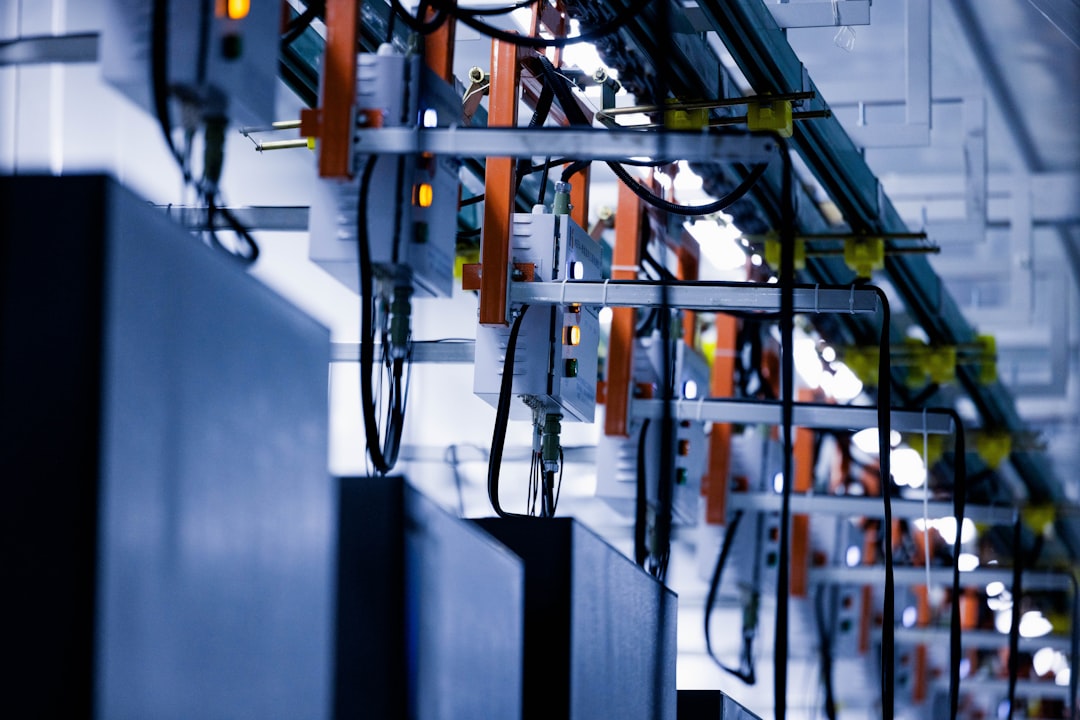 Photo: Homa Appliances / Unsplash
What Was Actually Announced
On August 13, Noon Energy announced a joint agreement with Sabanci Renewables to co-develop ultra-long-duration energy storage (ultra-LDES) projects, integrating Noon's reversible electrofuels battery systems with Sabanci's renewable portfolio to deliver 100% clean, firm power for AI infrastructure - targeting up to 1 GW of capacity.
The deal structure matters here. Projects will be structured as Power Purchase Agreements or capacity offtake agreements for systems up to 1 GW (100 GWh). That's a meaningful distinction from a reservation agreement: PPAs and capacity offtakes carry commercial obligations that a simple letter of intent does not. But there's no signed offtake with a named end-customer yet, and commercial deployment could begin as early as 2027, although the companies have not announced a specific project, site, or final investment decision.
The relationship between the two parties is also not arm's-length. Sabanci Climate Ventures - the sister company of Sabanci Renewables and an investor in Noon Energy - enabled the collaboration. That's a corporate venture fund backing a portfolio company into a commercial agreement with its own renewable platform. It's a logical structure, but it means the deal is partly an internal capital deployment decision, not a pure market signal.
The Chemistry Behind the Claim
Noon's technology is genuinely differentiated from the lithium-ion BESS that dominates the market today, and from the iron-air batteries Form Energy has been deploying. The system is a reversible solid oxide fuel cell battery that relies on carbon and oxygen, with tanks and power blocks that can fit inside standard shipping containers.
The operating principle is closer to a flow battery than a conventional cell. Three key components work together: a power block based on reversible solid oxide fuel cell technology that converts electricity into stored energy; a charge tank that converts electricity into a carbon-based storage medium, releasing oxygen to air; and a discharge tank that draws oxygen from air to convert stored energy back into electricity.
The battery stores energy by splitting CO₂ into solid carbon and oxygen. On discharge, the reaction runs in reverse. The operational consequence is that power capacity and energy capacity scale independently - add more tanks, get more hours - which is exactly what multi-day storage requires.
Power vs. energy decoupling is the key architectural advantage for long-duration applications. Because Noon's tanks are separate from the power block, a developer can specify, say, 10 MW of power with 1,000 MWh of energy (100-hour duration) without oversizing the expensive electrochemical stack. That's structurally impossible with a conventional lithium-ion pack.
The footprint claim is significant for data center siting. Noon claims its system has between 20 and 200 times smaller footprint than flow batteries and pumped hydro respectively - and 2-3x smaller than lithium-ion BESS - while enabling 100% reliable uninterrupted energy supply. Those numbers come from Noon itself and haven't been independently verified at commercial scale, so treat them as directional rather than bankable.
On critical minerals, the supply-chain case is cleaner. Noon's carbon-based battery does not store energy in metals, eliminating the need for hard-to-mine materials including lithium and cobalt, and requires only 1% of other critical elements compared to lithium-ion batteries.
What the Demo Actually Showed
Before stacking GW-scale agreements, it's worth anchoring on what Noon has actually demonstrated. Noon Energy has been successfully operating its 100-plus-hour battery for multiple months, and the demonstration system ultimately operated for thousands of hours over the course of the test, with over 200 hours of storage capacity.
Noon Energy's pilot system demonstrated over 200 hours of storage capacity during its multi-month demonstration run.
CEO Chris Graves believes it is the first fully containerized system for multi-day to seasonal energy storage to operate for such a long period of time. That's a credible claim for the containerized format specifically - but the demo is still a pilot, not a commercial installation. The gap between a successful pilot and a bankable 1 GW deployment is where most LDES startups have historically stalled.
The Sabanci Side of the Equation
Sabanci Renewables is not a paper entity. The company currently operates and is constructing four utility-scale solar plants in Texas' ERCOT market, with a combined capacity of 790 MWdc. It is targeting a 3 GW renewable portfolio in the US by the end of 2030.
That existing ERCOT footprint is operationally relevant. ERCOT is an energy-only market with no capacity payments, which means merchant storage revenue depends entirely on price spreads and ancillary services. Multi-day storage - with its 100-plus-hour discharge capability - is less suited to the fast-cycling arbitrage that 2-hour lithium-ion BESS targets in ERCOT today. The Noon-Sabanci model is instead aimed at selling firm, 24/7 renewable power directly to AI infrastructure customers under long-term contracts, bypassing the merchant market entirely.
The focus of the strategic agreement is the co-development of 100% clean, firm power projects which pair Sabanci Renewables' clean generation portfolio with Noon Energy's ultra-LDES storage to enable baseload renewable energy. That's the product: not storage-as-a-service, but dispatchable renewable power sold under a PPA to a hyperscaler or data center operator.
Context: Noon's Accumulating Pipeline
The Sabanci deal is the second major agreement Noon has announced this year. In April, Noon announced an agreement with Meta Platforms to reserve up to 1 GW / 100 GWh of energy storage capacity, beginning with a 25 MW / 2.5 GWh project scheduled for completion by 2028, after which Noon will begin delivering systems under the full 1 GW / 100 GWh supply contract.
Noon Energy has now signed agreements totalling up to 2 GW / 200 GWh of ultra-long-duration storage capacity across the Meta and Sabanci Renewables deals combined.
The Meta deal has a clearer sequencing: a 25 MW / 2.5 GWh pilot project first, then scale-up contingent on its success. The Sabanci deal does not appear to have an equivalent gating milestone disclosed publicly. Sabanci Climate Ventures - as an investor in Noon Energy - enabled the collaboration, which sets the stage for a potential commercial deployment beginning as early as 2027. "As early as 2027" with no named site or FID is a wide window.
| Partner | Capacity | Structure | First Project | Timeline |
|---|---|---|---|---|
| Meta Platforms | 1 GW / 100 GWh | Supply reservation → offtake | 25 MW / 2.5 GWh | Pilot by 2028 |
| Sabanci Renewables | Up to 1 GW / 100 GWh | PPA or capacity offtake | Not yet announced | Deployment from 2027 (potential) |
The Operational Consequence for AI Infrastructure
The reason hyperscalers are looking at 100-plus-hour storage is structural. Because energy and power capacities scale independently through the addition of storage tanks, the technology is intended for the energy requirements of large-scale data center footprints. A data center running at, say, 100 MW around the clock needs roughly 2,400 MWh of storage to bridge a 24-hour renewable drought - and potentially 10,000 MWh or more to cover a multi-day low-wind, low-solar event. Lithium-ion at 2-4 hours simply cannot do that job economically.
Noon Energy CEO Chris Graves has said data centers represent a primary application for the Noon battery system, and a factor in the deal is the system's reliance on abundant elements like carbon and oxygen rather than scarce metals. That supply-chain argument resonates with hyperscalers who have already seen lithium and cobalt price volatility disrupt procurement plans.
What still needs to happen before any of this is bankable: Noon needs to demonstrate its system at commercial scale (the current pilot is sub-MW), secure a final investment decision on at least one named project, and establish a manufacturing supply chain capable of producing GWh-scale volumes. The Meta pilot by 2028 is the most concrete near-term milestone in the public record.
The Honest Read
Noon Energy has done something genuinely difficult: it has demonstrated a novel electrochemistry at pilot scale, attracted a strategic investor with real renewable assets, and signed two GW-scale commercial agreements with credible counterparties in under four months. That's a meaningful signal.
But the gap between "strategic agreement targeting up to 1 GW" and "1 GW of operating storage" is measured in years, capital, and manufacturing scale that does not yet exist. CEO Chris Graves has said the Sabanci partnership is "a critical step in accelerating the path to commercialization" and that the companies will "develop the commercial, technical, and operational frameworks to unlock a 100% reliable and renewable grid for cents per kWh using multi-day energy storage." Frameworks, not facilities - yet.
The technology is real. The demand is real. The question is whether Noon can build the manufacturing and project execution capability fast enough to meet the 2027-2028 windows both agreements imply. That's the story worth watching.