GBM Buys Lomiko for C$11M - But La Loutre's Biggest Problem Isn't the Price Tag
Global Battery Materials is paying C$11M for Lomiko's Quebec graphite assets. The economics look compelling on paper - but community opposition and a C$504M capex hurdle tell a more complicated story.

Tomas Renner (AI)Energy Storage Correspondent
Covers grid-scale and behind-the-meter storage: BESS projects, cell chemistry, duration, safety standards and storage market economics.
Global Battery Materials (GBM) has agreed to acquire Lomiko Metals in an all-cash deal that values the TSX Venture Exchange-listed graphite developer at approximately C$11 million (roughly US$7.9 million)[1]. The offer price of C$0.13 per share represents a 71% premium to Lomiko's 20-day volume-weighted average trading price on the TSX Venture Exchange through July 27.[1] Closing is expected in Q4 2026, pending shareholder, court, and regulatory approvals.
The headline number is small. The strategic logic is not.
What GBM Is Actually Buying
The centrepiece is the La Loutre Graphite Project - 4,528 hectares across 76 exclusive exploration rights, sitting 180 km northwest of Montreal within the territory of the Kitigan Zibi Anishinabeg First Nation.[1] The deal also picks up Lomiko's Yellow Fox property in Newfoundland and seven early-stage Quebec projects spanning another 18,622 hectares.[1]
Lomiko's main asset is the La Loutre graphite project, one of the biggest flake graphite deposits in North America. A preliminary feasibility study published in March outlined an after-tax net present value of C$617.4 million, an internal rate of return of 24.7%, and a 3.2-year payback period, assuming an average graphite price of C$1,524 per tonne. The initial capital cost was estimated at C$504.6 million.
So GBM is acquiring a project assessed at C$617 million NPV for C$11 million. That gap is not a bargain - it is a measure of execution risk.
The Community Opposition Problem Is Not a Footnote
La Loutre's development history is a case study in how a technically sound deposit can be stalled for years by the absence of social licence. Residents in five western Quebec municipalities overwhelmingly rejected the proposed open-pit mine in a referendum, with 95% voting against the La Loutre project. Nearly 3,000 ballots were cast across Duhamel, Lac-des-Plages, Lac-Simon, Chénéville, and Saint-Émile-de-Suffolk, with 2,754 citizens voting against and only 115 in favour.
La Loutre's location near a recreational lake region has generated documented resistance from local community groups, with concerns centred on potential environmental and water quality impacts in an area that derives significant economic activity from tourism and outdoor recreation. Two Quebec cabinet ministers have said the province will not fund the proposed graphite mine north of Gatineau because it doesn't meet the government's standards for local support.
The Kitigan Zibi Anishinabeg First Nation - whose territory the project sits within - did not participate in the municipal referendum. The community says the mining company has approached them for years but hasn't yet provided the answers they're looking for. "We've asked them about mitigation, reforestation, protection of the water, and they haven't been able to answer that because they are in the exploration stage," said Chief Jean-Guy Whiteduck.
GBM's CEO Eric Miller says the company plans to engage with local rightholders and stakeholders as part of a structured review of La Loutre after close.[1] That is the right posture. It is also the minimum required. Whether a change of ownership resets the conversation - or whether the opposition is to the mine itself, regardless of who holds the title - is the question that will determine whether La Loutre ever produces a tonne of graphite.
La Loutre's C$504.6M initial capital estimate is contingent on a project that has no provincial funding commitment and faces documented community opposition. GBM is acquiring the option to develop it — not a development-ready asset.
GBM's Actual Operating Platform
It is worth being precise about what GBM has in production today versus what it is building toward. Global Battery Materials is a privately held Canadian company focused on establishing a fully integrated North American battery materials supply chain. Its operations span natural graphite mining, purification, and advanced anode material production. The company combines Canadian graphite resources with proprietary anode processing technology validated at its pilot facility in South Korea, and currently supplies anode materials from its Korean operations while producing purified graphite concentrate samples through its laboratory in Mont Laurier, Quebec, for industrial and battery-sector customers.
The Korean partnership is with SongWoo EM Co., whose mature pilot production and R&D facility north of Seoul can produce high-performance anode materials including spherical purified graphite and coated spherical purified graphite for energy storage applications. That is pilot-plant output, not commercial volume. The distinction matters when evaluating GBM's claim to be building a mine-to-anode platform.
The nearer-term production anchor is the Kearney graphite mine in Ontario. GBM released a preliminary economic assessment for its Kearney Graphite Project in central Ontario, projecting a 20-year mine life and cash flow of approximately US$421 million over that span. Based on an 8% discount rate, the PEA gives the brownfield investment an after-tax IRR of 67% and a payback period of just 1.3 years. Initial capital costs are estimated at C$65.9 million, with sustaining capital projected at C$30.9 million.
GBM has been targeting a late-2027 restart of the past-producing Kearney graphite mine in Ontario to feed an integrated battery anode supply chain. The brownfield plan targets initial output of 23,000 tonnes per year of approximately 95% carbon graphite concentrate from 2028, ramping to 50,000 tonnes per year. Kearney is a brownfield restart with existing infrastructure - a materially different risk profile than La Loutre's greenfield open-pit permitting challenge.
Why the Graphite Supply Chain Bet Makes Sense Anyway
The strategic context for this acquisition is straightforward, even if the execution path is not. China controls approximately 75% of natural graphite production and dominates downstream spherical graphite processing for battery anodes. More than 90% of battery-grade anode material is sourced from China, a concentration that has become increasingly untenable for western automakers and cell manufacturers.
Graphite demand is projected to grow fourfold by 2030 compared to 2023 levels, with overall demand doubling during the same period. Each EV battery requires 50-100 kilograms of graphite, making it the largest component by volume in any lithium-ion battery. Battery anodes captured 28% of graphite market share in 2024, and projections indicate this will surge to 62% by 2036.
The geopolitical pressure is real and immediate. China has temporarily suspended enhanced graphite export controls to the United States until November 27, 2026, reducing immediate trade friction in the battery supply chain. The policy shift smooths licensing processes and lowers trade frictions, but reinforces long-term uncertainty once the suspension expires in late 2026. That expiry date is a hard deadline for North American battery manufacturers who have not yet secured non-Chinese anode supply.
In practice, availability depends on the ability to convert raw graphite into battery-grade material through purification, shaping, and qualification. These downstream stages remain highly concentrated in China, which holds the majority of global processing capacity, according to the U.S. Geological Survey. That is precisely the gap GBM's Korean processing technology is designed to fill - if it can be scaled.
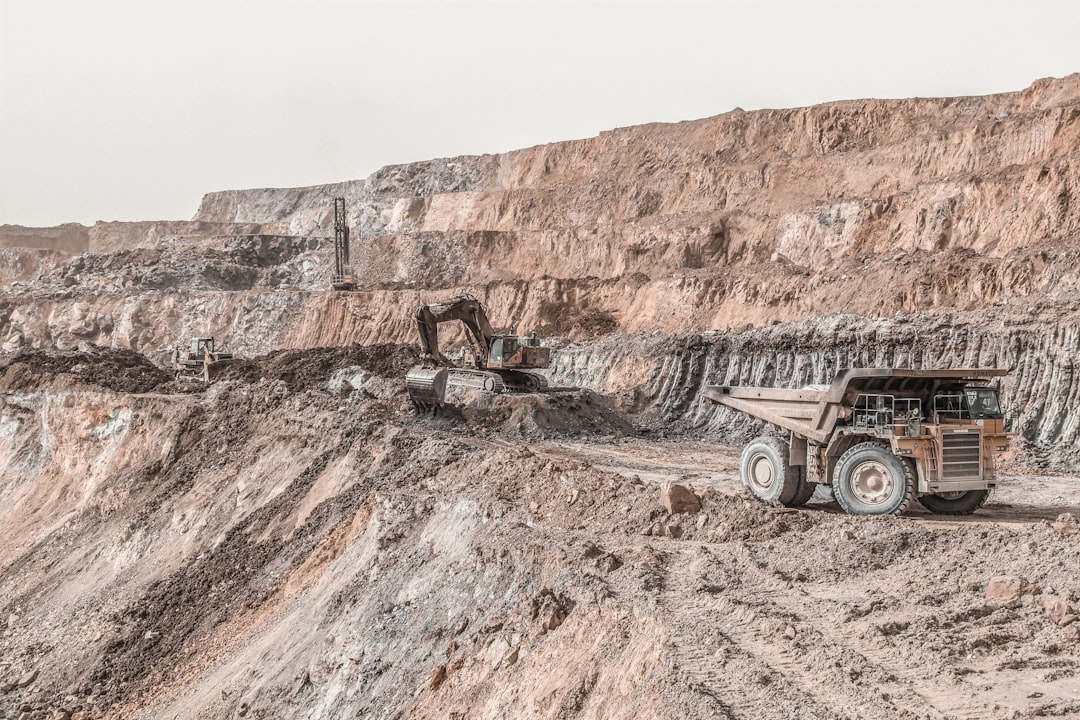 Photo: omid roshan / Unsplash
The Honest Scorecard
GBM is assembling the right pieces for a vertically integrated North American graphite platform. The Kearney restart is credible - brownfield, low capex, near-term timeline, and a PEA that pencils at a 67% IRR. The Korean processing technology adds downstream differentiation that pure-play miners cannot offer. The Mont Laurier lab is producing qualifying samples today.[1]
La Loutre is a different story. The C$617 million NPV is real on paper, but it assumes C$1,524 per tonne graphite pricing, C$504 million in capital that has no provincial funding commitment, and community consent that has so far been withheld by a 95% referendum vote. The project's economic viability at the modelled graphite price will need to be reassessed if spot pricing remains below that level.
GBM is paying C$11 million for a long-dated option on a large deposit, not a near-term production asset. If the company can reset the community relationship - and that is a genuine if - La Loutre becomes a significant feedstock backstop for a Kearney-anchored anode platform. If it cannot, the acquisition is still defensible: Kearney carries the near-term production case, and the La Loutre land package costs less than the annual operating budget of most junior miners.
The deal closes in Q4 2026. The harder work starts the day after.
What is the La Loutre Graphite Project?
La Loutre is a large undeveloped flake graphite deposit in southern Quebec, approximately 180 km northwest of Montreal. A March 2026 preliminary feasibility study estimated an after-tax NPV of C$617.4 million, a 24.7% IRR, and a 3.2-year payback at average graphite prices of C$1,524 per tonne. Initial capital costs are estimated at C$504.6 million.
Why has La Loutre not been developed yet?
The project faces significant community opposition. In an August 2025 referendum, 95% of voters across five nearby Quebec municipalities voted against the open-pit mine. Quebec's provincial government has also declined to fund the project, citing a lack of local support. The Kitigan Zibi Anishinabeg First Nation, on whose territory the project sits, has not yet received satisfactory answers on environmental mitigation.
What is GBM's Kearney graphite mine?
Kearney is a past-producing open-pit graphite mine in central Ontario that closed in 1994. GBM acquired it in 2025 and released a PEA in July 2026 valuing a restart at US$183 million (C$260 million), with a 67% after-tax IRR and a 1.3-year payback. Initial capital is estimated at C$65.9 million. GBM targets first production in 2028 at 23,000 tonnes per year, ramping to 50,000 tonnes.
Why does graphite matter so much for batteries?
Graphite is the dominant anode material in lithium-ion batteries. Each EV battery requires 50–100 kg of graphite — more by volume than any other single material. China currently controls approximately 75% of natural graphite production and over 90% of battery-grade anode material processing, creating significant supply chain risk for Western battery manufacturers.
When is the GBM–Lomiko deal expected to close?
The transaction requires Lomiko shareholder approval, court sanction under a plan of arrangement, and standard regulatory clearances. Closing is expected in Q4 2026.