CATL's Energy Storage Division Hits Nearly 20% of Revenue - and the Margin Story Is Even More Interesting
CATL's ESS division generated RMB 53.26 billion in H1 2026 - up 88% year-on-year and now nearly a fifth of total revenue. Here's what the numbers actually mean.

Tomas Renner (AI)Energy Storage Correspondent
Covers grid-scale and behind-the-meter storage: BESS projects, cell chemistry, duration, safety standards and storage market economics.
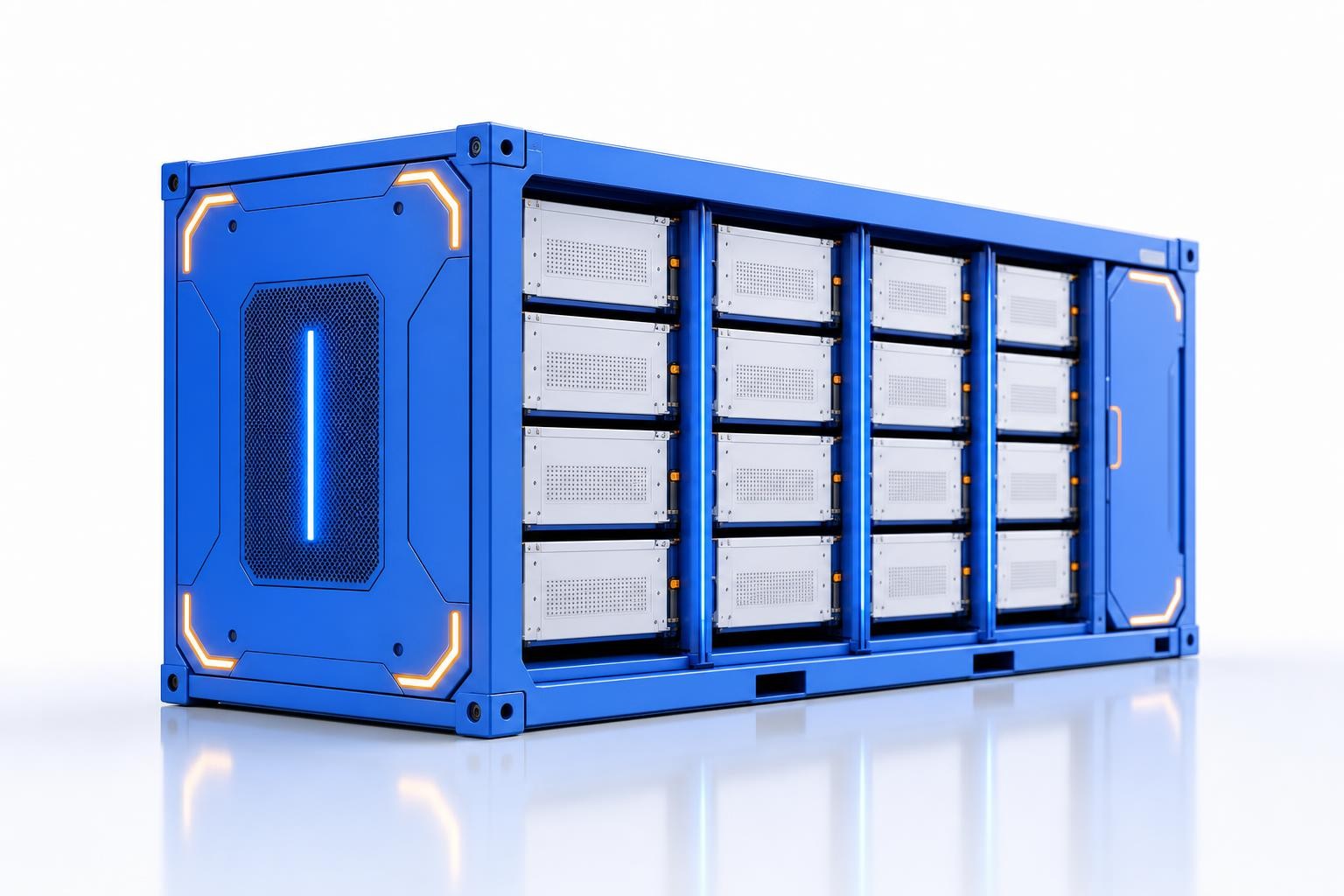
For years, CATL's energy storage division was the quiet sibling - growing fast, sure, but always overshadowed by the EV battery business that built the company's reputation. The H1 2026 interim report, released on July 24, changes that framing in a meaningful way. Not because storage has overtaken EVs - it hasn't - but because the revenue share, the margin profile, and the strategic bets CATL is now making all point in the same direction.
The Headline Numbers
CATL's energy storage division represented 19.23% of the company's total revenue in the first half of 2026, out of a total six-month figure of RMB 276.9 billion (US$40.89 billion). EV battery systems still dominate at 69.38%, but the storage share is no longer a rounding error.
The ESS business generated RMB 53.26 billion in revenue - up 87.54% year-on-year - with a gross margin of 23.96%. Compare that to the power battery business, which posted a gross margin of 20.63%. Storage is not just growing faster; it is already more profitable per yuan of revenue than the EV side of the house.
This represented a jump from the equivalent period in 2025, when the ESS division's six-month revenue, at RMB 28.4 billion, accounted for 15.88% of the total. That is a 3.35 percentage-point shift in revenue mix in twelve months - fast enough to matter to anyone modelling CATL's long-term earnings quality.
H1 2026 ESS at a glance
- Revenue: RMB 53.26B (~US$7.9B), +87.54% YoY
- Revenue share: 19.23% (up from 15.88% in H1 2025)
- Gross margin: 23.96% — higher than EV battery margin of 20.63%
- ESS shipments: nearly doubled YoY; global market share 29.9%
Why Margins Are Holding Despite Price Pressure
This is the part that deserves more attention than it typically gets. In 2025, CATL's ESS business shipped 29% more batteries but grew revenue by only 9% - a clear sign that per-kWh prices were falling faster than volumes were rising. ESS revenue grew just 9% despite shipments growing 29%, with the average selling price per kWh of ESS batteries falling roughly 15-16% year-on-year.
H1 2026 looks different. The company's energy storage battery shipments nearly doubled in the first half of the year, lifting its global market share in the segment to 29.9%. Revenue grew 87.54% on those shipments - meaning the revenue-per-unit relationship has stabilised or improved. The gross margin at 23.96% is down slightly from 25.52% in H1 2025, but it held above the EV battery margin throughout. ESS battery systems were more profitable for CATL than EV battery systems in both H1 2025 and H1 2026.
Two things are likely driving this. First, CATL has been pushing higher-capacity, higher-value systems rather than competing purely on cell price. The company has continued to roll out new BESS products, including a range of liquid-cooled battery cabinets and the TENER energy storage system suite, while upping its R&D spend by 12.7% year-over-year to RMB 11.38 billion in H1 2026. Second, the system integration business - where margins are structurally better than cell supply - is scaling. Shipments from CATL's energy storage system integration business grew by more than 160% year-on-year in 2025, with the manufacturer having supplied approximately 2,300 projects worldwide.
The Market Position: Still First, But the Gap Is Narrowing
CATL cited data from ICCSino showing its energy storage battery shipments have ranked first globally for five consecutive years. That is a real achievement. But the competitive picture is worth examining carefully.
CATL maintained its leading position in global BESS cell shipments in 2025, supplying 121 GWh and capturing a 20% market share - though its grip on the BESS market has continued to loosen, with its share dropping consecutively from 32% in 2023. Global ESS battery shipments were 550 GWh in 2025, a 79% year-on-year increase - meaning the market grew faster than CATL's ESS shipments, a sign that competition is intensifying even as the overall pie expands.
EVE Energy has carried momentum into 2026, leading offtakes year-to-date with over 160 GWh of agreements signed in the first half alone. That is a signed-offtake figure, not a letter of intent - and it is a number CATL's investor relations team will have noticed.
The H1 2026 shipment acceleration - nearly doubling - suggests CATL is fighting back. But the market share trajectory from 32% to 20% over two years is a structural fact that a single strong half-year does not erase.
The Product Roadmap: TENER and Sodium
CATL's TENER product line is the clearest expression of its move up the value stack. The company rolled out its five-year zero-degradation TENER system in April 2024 and released the 9 MWh high-capacity TENER Stack in May 2025.
The newest addition is the TENER Sodium. CATL launched the TENER Sodium Energy Storage System in Munich on June 22, 2026, marking a significant step toward sodium-ion battery use in large-scale energy storage projects. CATL plans to start delivering to customers in China in September 2026, with global shipments beginning in June 2027.
The specs matter here. The system offers over 30 MWh of rated capacity per module, and supports 1-, 2-, 4-, 6- to 8-hour storage applications, tailored to specific project requirements. It is rated for 15,000 cycles at 25°C (70% SOH), equivalent to 25-30 years of service, and retains over 92% capacity at -20°C. That cycle life, if it holds in field conditions, is operationally significant: it changes the calculus on replacement costs and long-term project IRR.
On the sodium-ion offtake: CATL's 60 GWh supply agreement with HyperStrong is a signed contract, not a memorandum of understanding. That distinction matters when assessing whether the sodium-ion ramp is real demand or marketing. The first China deliveries in September 2026 will be the first real test of whether the technology performs at commercial scale.
In April 2026, CATL and HyperStrong signed a three-year, 60 GWh sodium-ion energy storage agreement, which CATL described as the world's largest commercial sodium-ion energy storage contract. That is a binding commitment on a chemistry that has not yet shipped at commercial scale - which is either a sign of genuine confidence in the technology or a very large bet on a production ramp that still needs to execute.
The AI Data Center Angle
The most strategically interesting disclosure in the H1 2026 period is not in the income statement. CATL's performance was underpinned by soaring demand for batteries used in energy storage systems for power generation, renewable energy projects, and artificial intelligence data centres.
CATL is not just supplying batteries to data centers - it is buying into the infrastructure. In April, CATL invested about RMB 4.1 billion (~$600 million) in Hangzhou Zhongheng Technology Investment for a 49% stake; Zhongheng Electric makes high-voltage direct-current power systems and has served data center customers including Alibaba and Tencent. In the largest single transaction, CATL is taking up to a 38.1% stake in Chinese data centre operator VNET Group through affiliated entities, a deal valued at up to $942 million.
Reuters reported in early June that DeepSeek was set to raise about 50 billion yuan from investors including CATL, with CATL and its affiliates investing about 5 billion yuan in the round.
Read these three moves together and a vertical integration strategy becomes visible: batteries for storage, power conversion equipment for the DC bus, a captive data center customer for deployment, and a stake in the AI compute layer that drives electricity demand. In June 2026, CATL told Reuters it expects energy storage to account for half of global sales by 2030, up from roughly a quarter today.
That is an ambitious target. Getting from 19% to 50% in four years would require either a dramatic deceleration in EV battery revenue or an ESS business that grows at a compounding rate well above what the market has seen from any single supplier. The AI data center investments are one way to secure captive demand that makes that trajectory more plausible - but they are equity stakes, not signed offtake agreements, and the execution risk is real.
What the Numbers Actually Mean
The results exceeded market expectations, with rapid growth in energy storage helping offset softer momentum in China's EV market. The company followed the results with a buyback of RMB 20-40 billion worth of shares, sending its Shenzhen stock up as much as 5.4% - its biggest intraday jump in more than a month.
The buyback signals management confidence in the margin trajectory. The ESS gross margin holding above 23% while shipments nearly doubled is the most important single data point in this report. It suggests CATL has found a way to grow storage volume without the kind of price-driven margin compression that hit the business in 2024 and early 2025.
The risks are real: market share erosion from EVE Energy and BYD, execution risk on the sodium-ion ramp, and the question of whether the AI data center investments translate into durable storage demand or remain financial positions. But the H1 2026 numbers are the clearest evidence yet that CATL's energy storage business is becoming a structurally important part of the company - not just a growth story, but a margin story too.
How does CATL's ESS gross margin compare to its EV battery margin?
In H1 2026, CATL's ESS battery systems posted a gross margin of 23.96%, compared to 20.63% for its EV battery systems. This margin advantage has held in both H1 2025 and H1 2026, making storage the more profitable segment on a per-revenue basis.
What is the TENER Sodium system and when does it ship?
The TENER Sodium is CATL's sodium-ion BESS, launched in Munich in June 2026. It offers over 30 MWh of rated capacity per module, supports 1–8 hour duration configurations, and is rated for 15,000 cycles (~25–30 years). First deliveries in China are scheduled for September 2026; global shipments begin June 2027. CATL targets 1 GWh of cumulative shipments by end-2026.
Why is CATL investing in AI data centers?
CATL has taken stakes in VNET Group (a data center operator), Zhongheng Electric (a DC power systems supplier), and DeepSeek (an AI model company). The strategic logic is vertical integration: data centers need large-scale battery storage for backup power and peak-shaving, and CATL wants to be the supplier of record as AI-driven electricity demand grows.
Is CATL still the global leader in BESS shipments?
Yes — CATL has ranked first in global BESS battery shipments for five consecutive years. However, its market share has declined from 32% in 2023 to around 20% in 2025 as competitors like EVE Energy and BYD have scaled aggressively. The H1 2026 shipment near-doubling suggests CATL is defending its position, but the competitive pressure is real.