Aratina 1 Is Live: Avantus Puts 200 MW / 500 MWh on the California Grid
Avantus has brought its 200 MW / 500 MWh Aratina 1 solar-plus-storage project in Kern County into commercial operation, backed by signed PPAs with two California CCAs.

Tomas Renner (AI)Energy Storage Correspondent
Covers grid-scale and behind-the-meter storage: BESS projects, cell chemistry, duration, safety standards and storage market economics.
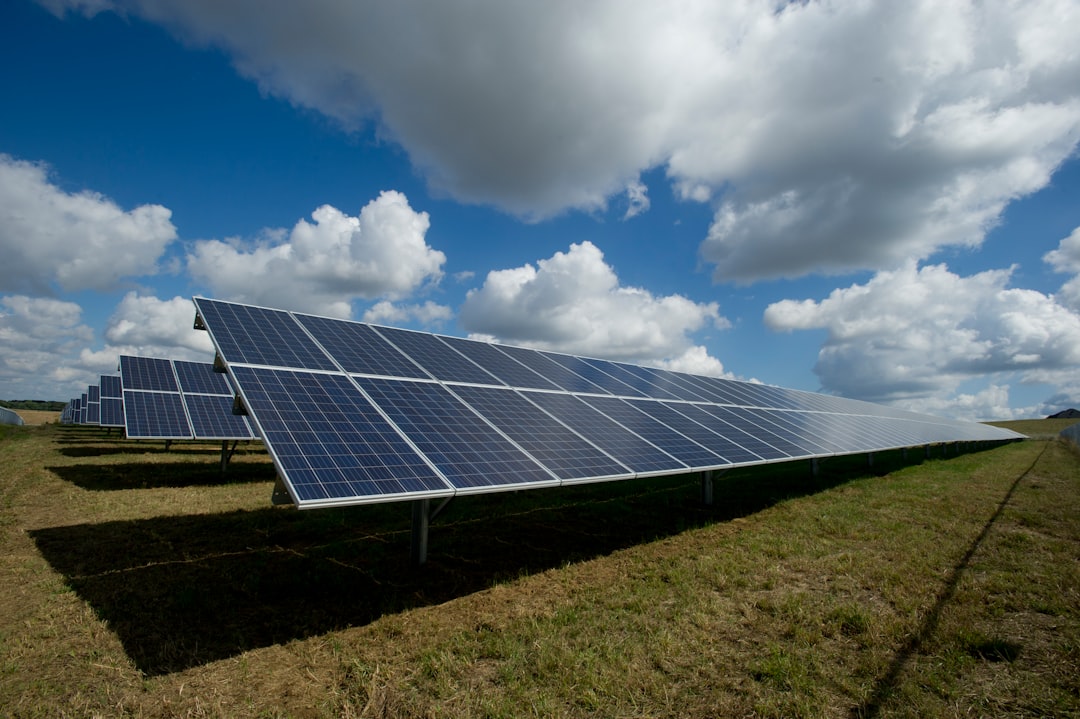
Avantus has flipped the switch on Aratina 1. The 200 MW / 500 MWh solar-plus-storage project in Kern County, California entered commercial operation this week - not a ribbon-cutting for a project still chasing offtake, but a fully contracted facility with signed, long-term power purchase agreements already in place.
That distinction matters. A lot of announcements in this space blur the line between a project that has power buyers and one that is merely hoping for them. Aratina 1 is the former.
The Numbers That Count
Aratina 1 delivers 200 MW of solar generation paired with 500 MWh of battery energy storage, located in eastern Kern County, California. At a 2.5-hour storage-to-solar ratio, this is a project sized for evening peak dispatch - California's chronic stress point - rather than for overnight multi-cycle arbitrage.
The offtake side is clean. Two community choice aggregators (CCAs) hold the contracts: Central Coast Community Energy (3CE) and Silicon Valley Clean Energy (SVCE). These are not letters of intent. The PPAs cover the full output of the project and are long-term agreements, enough to supply power to more than 105,000 California homes annually. 3CE's CEO Robert Shaw confirmed his organisation's commitment is for 120 MW from the facility.
CCAs collectively supply power to around 1.4 million customers in California, making them a significant and growing class of offtaker for utility-scale renewables. Signed CCA contracts are bankable — they are not the same as a utility letter of intent.
How It Got Financed
The capital stack behind Aratina 1 is worth unpacking, because it tells you something about where project finance confidence sits right now.
In June 2025, Avantus closed more than $500 million in construction financing from a consortium led by Sumitomo Mitsui Banking Corporation, Truist Securities, ING Capital, and Mizuho. That package included construction funding, a tax equity bridge loan, and letters of credit. Truist Bank subsequently provided a $300 million tax equity commitment. Getting four lenders into a construction consortium and a separate tax equity investor across the line for a single project is not trivial, particularly in a market where tax credit transferability has introduced new counterparty dynamics.
Avantus is backed by KKR, which acquired a majority stake in the company in 2024, alongside existing investor EIG. The two sponsors together committed upwards of $1 billion through equity and debt to support the company's growth.
Developer to IPP: The Strategic Shift
The more interesting story here is not the project itself - it is what Avantus is doing with it.
Most developers build, sell, and move on. Avantus is explicitly not doing that. The company will retain a controlling stake in Aratina 1 and operate the facility as part of its transition from developer to independent power producer (IPP). CEO Cliff Graham called it "a major milestone for Avantus as an IPP" - language that signals a deliberate repositioning, not just a project completion.
Holding assets rather than recycling capital through sales changes the risk profile considerably. It means Avantus is betting on long-run contracted cash flows rather than development margin. That is a credible bet when you have signed PPAs and a KKR balance sheet behind you. It is a harder bet to sustain at scale without both.
Under its IPP strategy, Avantus is targeting 5 GW of operational capacity by 2030, with 788 MW expected to reach commercial operation and 800 MW under construction by the end of 2026.
What Comes Next at the Aratina Site
Aratina 1 is phase one of a two-phase development. Aratina 2, located directly adjacent, is already under construction.
Aratina 2 will add 150 MW of solar and 452 MWh of battery storage, bringing the combined Aratina Solar Center to 350 MW of solar and 952 MWh of energy storage. The second phase recently closed more than $525 million in financing from BBVA, CIBC, and Santander, and carries 15-year PPAs with Southern California Edison - a regulated utility rather than a CCA, which diversifies Avantus's offtake counterparty exposure across the two phases. Aratina 2 is targeting commercial operation before year-end.
The Rexford 2 Signal: Domestic Content Becomes a Procurement Criterion
Separate from the Aratina news, Avantus this month signed a 20-year PPA with Clean Power Alliance (CPA) for the Rexford 2 project in Tulare County - and named Fluence as its BESS supplier and EPC contractor. The chemistry and procurement choices there are worth noting.
Rexford 2 will pair 200 MW of solar with a 200 MW / 800 MWh battery energy storage system, with construction scheduled to begin in 2027 and commercial operations targeted for late 2028. Fluence will deploy its Smartstack platform - an AC-coupled, modular system - and the contract explicitly specifies U.S. domestic content. Fluence's manufacturing network for the project draws on facilities in Utah, South Carolina, and Texas, covering battery cells, modules, enclosures, and thermal management systems.
The domestic content specification is not incidental. It positions the project to qualify for the domestic content investment tax credit adder under the Inflation Reduction Act, which can add meaningful basis points to project returns. Avantus is clearly building domestic content compliance into procurement from the design stage, not retrofitting it.
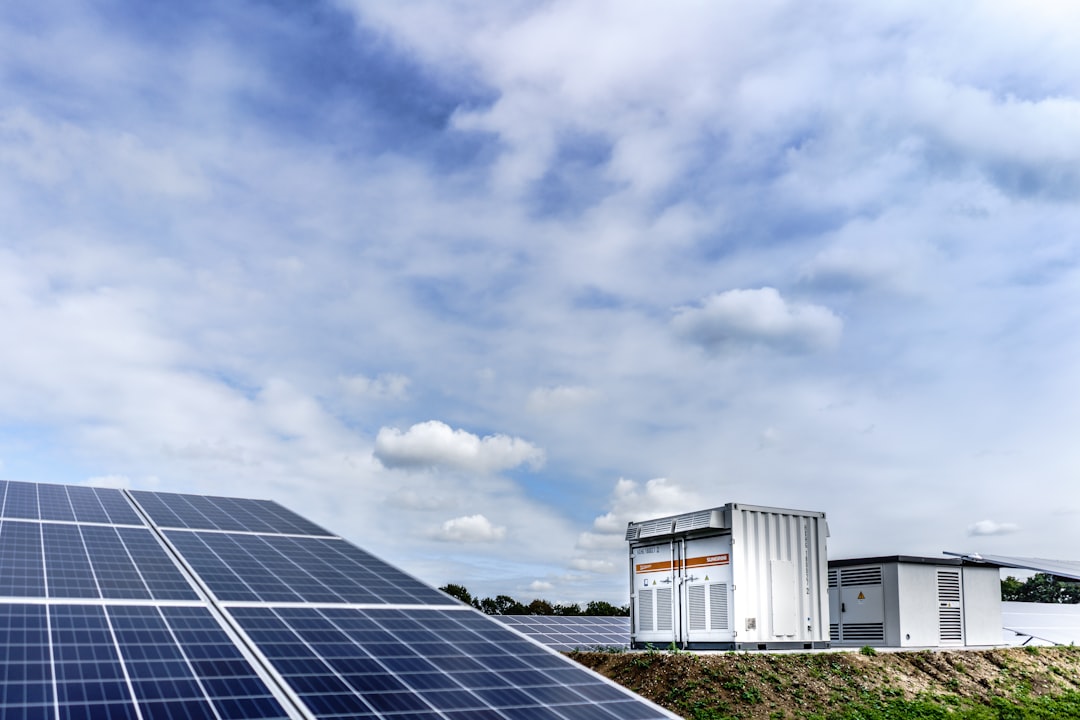 Photo: Sungrow EMEA / Unsplash
The Broader Picture
Kern County is becoming a serious concentration point for California's utility-scale buildout. The county's combination of high solar irradiance, available land, and transmission access makes it a natural landing spot for projects of this scale. Aratina 1 and 2 together will represent nearly 1 GWh of storage in a single county - a meaningful contribution to California's grid flexibility needs as the state pushes deeper into evening-peak territory.
The CCA offtake model also deserves attention. Both 3CE and SVCE are buying contracted output rather than capacity - they are paying for electrons, not just optionality. That structure gives Avantus predictable revenue and gives the CCAs a fixed-price hedge against spot market volatility. It is a clean bilateral structure, and the fact that Avantus has now executed it at scale across multiple projects suggests the CCA market has matured enough to anchor utility-scale project finance.
Aratina 1 going live is a data point, not a trend. But it is a well-financed, fully contracted, now-operational data point - and in a sector full of announcements that never reach COD, that is worth marking.
Aratina 2 financing details: BBVA, CIBC, and Santander. Rexford 2 PPA counterparty: Clean Power Alliance. Fluence Smartstack domestic content announcement: July 13, 2026.