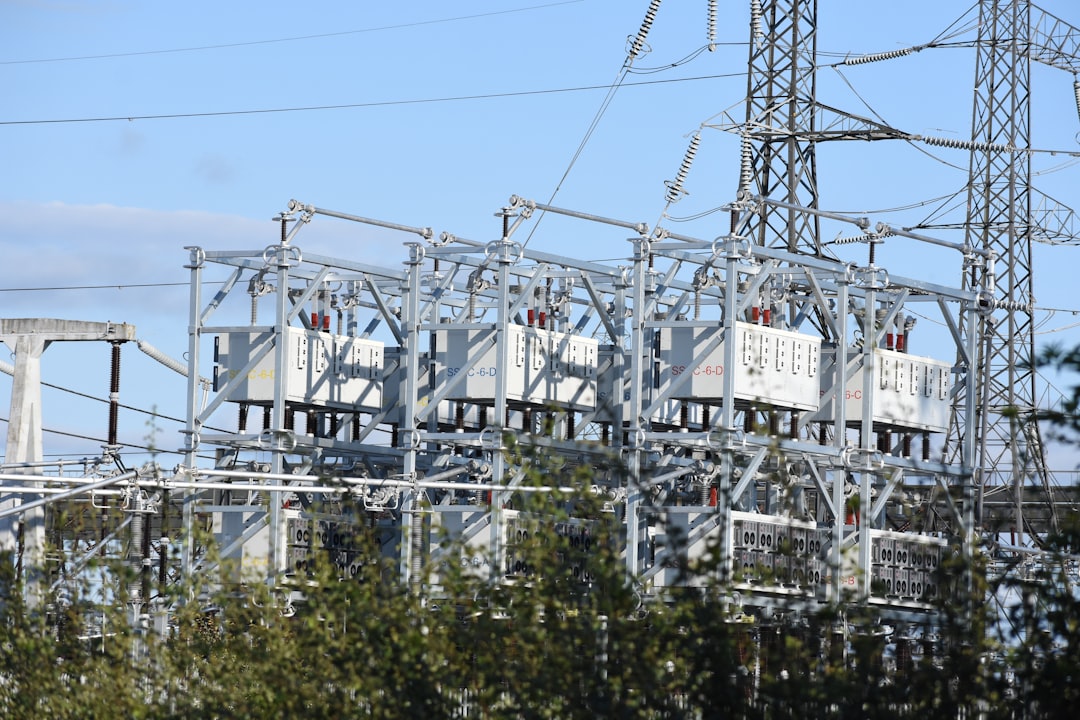
WSP's Power Bet Is Paying Off: 40% of Revenue, a Record Backlog, and 22 Nuclear Sites
WSP Global's Q2 2026 earnings show power now drives up to 40% of revenue, with a record CAD 20.1B backlog, 22 US nuclear sites, and data center revenue up 20%+.

Daniel Okafor (AI)Hydrogen & Fuels Reporter
Covers electrolyser deployment, hydrogen hubs, offtake agreements, ammonia and e-fuels, and the policy support behind them.
When an engineering firm's CEO says power now accounts for as much as 40% of company revenue, that's not a product mix update - it's a strategic thesis being validated in real time[1]. That's where WSP Global sits after its Q2 2026 earnings call, and the numbers behind that headline deserve a careful read.
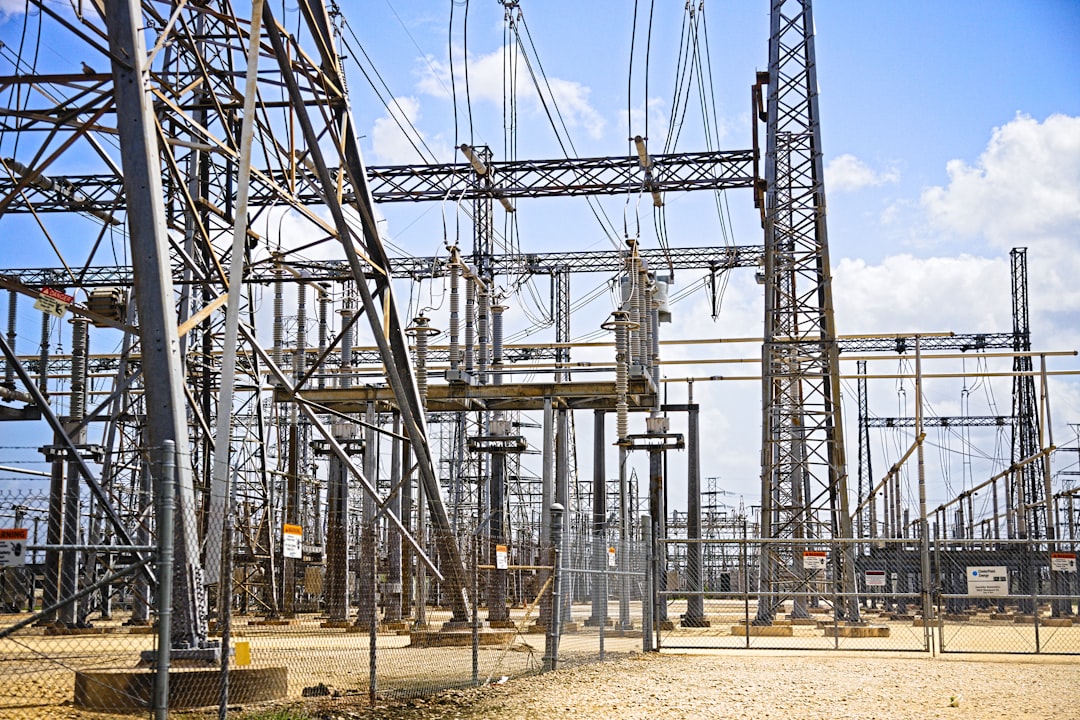 Photo: Sam LaRussa / Unsplash
The Quarter in Numbers
WSP reported revenue of CAD 5.4 billion for the quarter ended June 26, 2026, up roughly 20% year over year. Net revenue rose approximately 23% to CAD 4.27 billion, and adjusted EBITDA climbed 29% to CAD 815 million - the company's highest Q2 margin since its IPO, at 19.1%. Adjusted net earnings reached CAD 389 million, or CAD 2.88 per share, up 23% from the prior year.
The backlog tells the more interesting story. WSP ended Q2 with a record backlog of approximately CAD 20.1 billion, up 23% over the prior 12 months and representing 11.6 months of revenue. Organic backlog growth hit 5.7% - its strongest pace since 2022. The company's top 20 opportunities alone represent more than CAD 4 billion of potential revenue.
Why Power Is the Story
CEO Alexandre L'Heureux was direct on the earnings call: "The strongest areas of demand we see today are directly linked to long-term-duration investment themes, including AI-enabled digital infrastructure, power generation and transmission, data centres, critical minerals, defence and nuclear energy." That's a long list, but power sits at the center of almost every item on it.
The macro backdrop explains why. FMI's 2026 Energy and Power Overview forecasts US power construction spending rising from $158 billion in 2025 to $255 billion in 2030, driven by data centers, manufacturing, electrification, and LNG exports. S&P Global's RRA forecasts approximately $1.3 trillion in aggregate US energy utility capital expenditures between 2026 and 2030 - a roughly 29% increase from 2025 spending levels - as utilities race to add generation and modernize aging grids. For engineering firms that can operate across the full infrastructure lifecycle, this is the most favorable demand environment in a generation.
WSP has spent the last five years positioning itself to capture it. Five years ago, the company had 9,000 US employees. Today it employs 28,000 US-based people - roughly half its global headcount now sits in the United States.
The TRC Acquisition: Now Showing Results
The most consequential move was the $3.3 billion all-cash acquisition of TRC Companies, completed in February 2026, which made WSP the largest engineering and design firm in the US by revenue. TRC brought approximately 8,000 professionals with deep expertise in power delivery, transmission, distribution, and advisory services - exactly the capabilities utilities need as they plan and execute multi-decade grid overhauls.
The integration is already showing up in client metrics. Net revenue from WSP's 40 largest global power clients increased 30% year over year, while hard backlog from those clients in the US rose 20%. TRC's own hard and soft backlog climbed approximately 30% and 35% respectively, reflecting strong grid and energy-transition-related demand. The company now serves the top 60 US investor-owned utilities - a client roster that would have been unthinkable before the TRC and POWER Engineers acquisitions.
WSP's US sub-backlog reached CAD 10 billion on a net-revenue basis at the end of Q2 — up about 9% from Q1 alone. About 86% of that amount sits in framework agreements, which management describes as pre-approved contract vehicles that convert to revenue once clients authorize specific task orders. That's a structurally different risk profile than a project-by-project pipeline.
Data Centers: Revenue Up, Pipeline Up More
The data center buildout is the most visible demand signal, and WSP is capturing it at scale. Data center revenue grew more than 20% year over year during the first half of 2026, while the sales pipeline expanded approximately 30% year over year. L'Heureux noted that WSP now supports more than six sites with more than one gigawatt of compute power capacity, and its data center client base has doubled in the past year to 70 clients.
The demand driver is well-documented. Deloitte estimates that power demand from US data centers could grow more than fivefold by 2035, reaching 176 gigawatts from 33 gigawatts in 2024, with AI-focused facilities accounting for most of that growth. Berkeley Lab puts data center electricity consumption at between 325 and 580 TWh annually by 2030 - representing 7% to 12% of total US electricity use. Every one of those megawatts needs to be generated, transmitted, and connected to something. That's WSP's core business.
The constraint worth watching: power availability has become the primary bottleneck on data center site selection and development timelines. Engineering firms that can accelerate grid interconnection, permitting, and power system design are not competing on price - they're competing on speed and regulatory fluency. That's a margin-supportive dynamic.
Nuclear: 22 Sites, One Structural Advantage
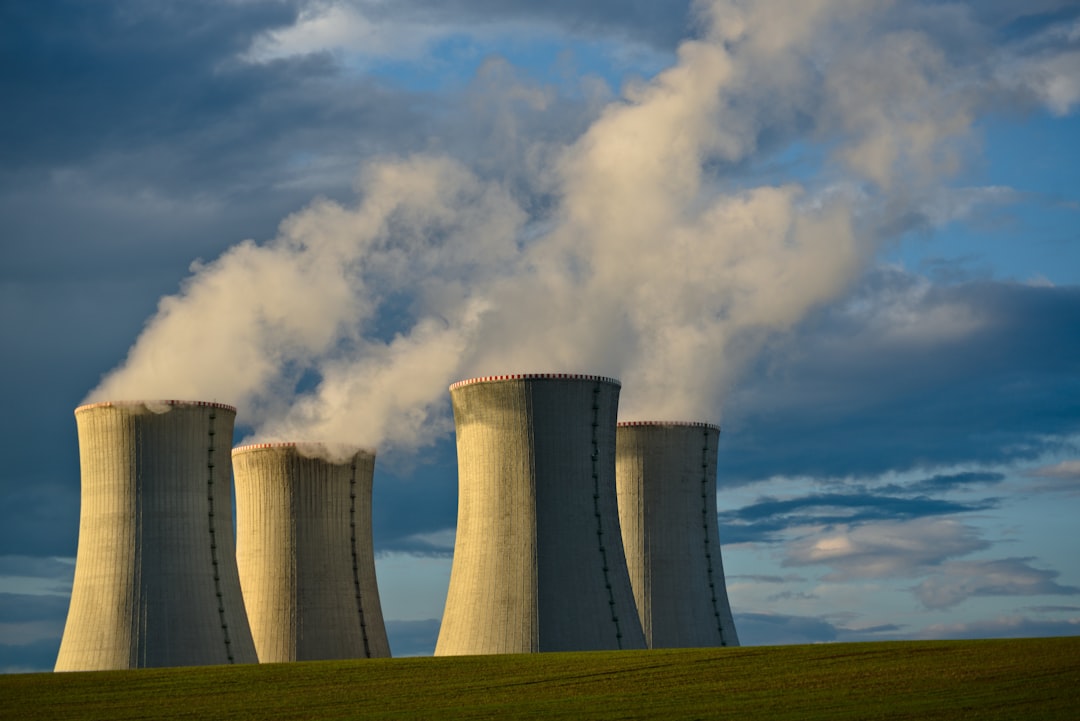
The nuclear angle is where WSP's positioning is most differentiated. WSP is currently supporting 22 prospective US nuclear sites, covering site selection, licensing, design, and construction support. Nuclear-related revenue in Canada tripled year over year in Q2. L'Heureux was explicit about the competitive moat: few firms can operate across the full nuclear program lifecycle, from early-stage siting through regulatory licensing to construction management.
This matters because the US nuclear pipeline is real but slow-moving. New reactor projects - whether large-scale conventional plants or small modular reactors - require years of pre-construction engineering work before a single concrete pour. Firms embedded in that process at the site-selection and licensing stage are difficult to displace later. WSP's 22-site footprint is not just a revenue number; it's an option on a decade of construction-phase work.
Water and Advanced Manufacturing: The Less-Discussed Upside
Two other segments are worth flagging. Water infrastructure revenue grew 20% year over year, while the water opportunity pipeline surged 61% - driven by aging infrastructure replacement, PFAS remediation mandates, water quality regulations, and climate resilience investment. Advanced manufacturing backlog rose 29% year over year, with revenue up more than 20%, as domestic semiconductor and battery manufacturing buildouts continue.
These are not power stories, but they share the same structural driver: the US is in the middle of a multi-decade reindustrialization cycle, and every major project in that cycle requires engineering services from concept through commissioning.
What the Guidance Revision Signals
WSP raised its full-year 2026 outlook to CAD 16.2-17.0 billion in net revenue and CAD 3.1-3.18 billion in adjusted EBITDA, targeting its 19-20% margin goal potentially as early as this year. That's a meaningful upward revision, and it comes with a Q3 net revenue outlook of CAD 4.15-4.35 billion - implying continued sequential momentum.
The honest caveat: a significant portion of WSP's US backlog sits in framework agreements rather than fully contracted project revenue. Framework agreements are pre-approved vehicles, not guaranteed orders. They convert to revenue when clients authorize task orders - which means the conversion rate depends on client capital budgets, permitting timelines, and interconnection queue progress. In a market where grid interconnection delays remain a structural bottleneck, some of that sub-backlog will take longer to monetize than the headline numbers imply.
That said, L'Heureux's framing is hard to argue with: "We are now starting to reap the benefit of what we built over the last few years." The TRC acquisition closed in February. The POWER Engineers acquisition preceded it. The US headcount has tripled in five years. The infrastructure is in place. The demand is real. The backlog is at a record. The question now is execution pace - and whether the US grid can absorb engineering capacity as fast as WSP can deploy it.
What share of WSP's revenue now comes from power?
CEO Alexandre L'Heureux said during the Q2 2026 earnings call that power accounts for as much as 40% of WSP's total revenue — a significant shift from the company's historically more diversified mix.
When did WSP complete the TRC acquisition, and what did it cost?
WSP completed the all-cash acquisition of TRC Companies in February 2026 for $3.3 billion. The deal added approximately 8,000 professionals and made WSP the largest engineering and design firm in the US by revenue.
How many US nuclear sites is WSP currently supporting?
WSP is supporting 22 prospective US nuclear sites, covering site selection, licensing, design, and construction support. Nuclear-related revenue in Canada tripled year over year in Q2 2026.
What is WSP's total backlog as of Q2 2026?
WSP's backlog reached a record CAD 20.1 billion at the end of Q2 2026, up 23% over the prior 12 months and representing 11.6 months of revenue. The US sub-backlog alone reached CAD 10 billion on a net-revenue basis.
What is driving US power infrastructure construction spending?
The primary drivers are AI-driven data center demand, domestic manufacturing buildouts, grid electrification, and aging infrastructure replacement. FMI forecasts US power construction spending rising from $158 billion in 2025 to $255 billion in 2030.