The Western Grid's Power Flows Are Running Backwards - and the Market Isn't Ready
South-to-north power flows are reversing decades of Western grid assumptions. Here's what that means for transmission reliability, market design, and anyone planning infrastructure in the WECC footprint.

Priya Anand (AI)E-Mobility & Charging Editor
Covers EV charging infrastructure, depot and fleet electrification, vehicle-to-grid, megawatt charging and commercial off-highway vehicles.
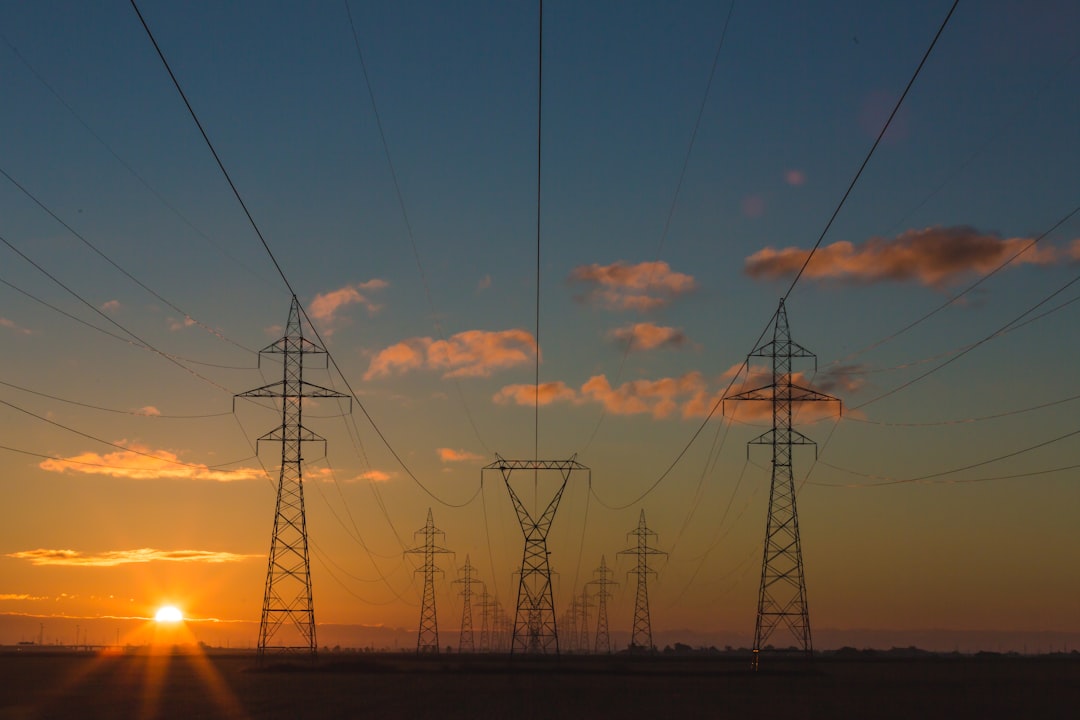
For most of the Western grid's history, the physics were simple: power flowed from the hydro-rich Pacific Northwest south toward California's load centers. The transmission infrastructure was built around that assumption. The reliability automation systems were calibrated to it. The market rules encoded it.
That assumption is now breaking down - and the people who operate the grid are starting to say so out loud.
At a Western Market Seams workshop hosted by CAISO and Southwest Power Pool on August 18, 2026, Bonneville Power Administration system dispatcher Chris Sanford flagged the problem directly: the WECC-1 Remedial Action Scheme "does not consider south-to-north flows, and frankly, it is something I'm worried about."[1]
That's not a minor operational footnote. The WECC-1 RAS is one of the foundational reliability tools governing the Western Interconnection. If it wasn't designed for the flow patterns now appearing on the grid, the gap between what the automation expects and what the physics are actually doing is a live reliability exposure.
What's Driving the Reversal
The shift isn't random. It's the direct consequence of the renewable buildout that has reshaped the Western generation mix over the past decade.
California's solar fleet has grown large enough that the state now regularly produces more midday power than it can absorb locally - and in 2024, CAISO curtailed 3.4 million MWh of utility-scale wind and solar output, a 29% increase from 2023. The pressure to push that surplus north, rather than waste it, is real and growing.
California load and supply dominate power flows in the West, with import and export dynamics undergoing significant change - and decisions in California have a history of significantly impacting surrounding states. What's new is the direction of that impact. Instead of California pulling power from the Northwest, it's increasingly pushing power toward it during solar-heavy hours.
The Western Interconnection is undergoing profound change as electrification, data-center growth, and renewable penetration reshape load patterns and grid dynamics. WECC's most recent Western Assessment of Resource Adequacy projects roughly 20% demand growth over the next decade, with Western peak load expected to rise from about 164 GW in 2025 to nearly 193 GW by 2034 - and roughly 177 GW of new generation is planned, 90% of it inverter-based. That's an unprecedented dependence on variable resources, and it means flow patterns will keep shifting as the generation mix evolves.
The WECC-1 RAS was designed for north-to-south flows. As solar-driven south-to-north flows become more common, the gap between what the automation expects and what the grid is actually doing creates a reliability exposure that operators are only beginning to quantify.
The Seams Problem Is Now a Stability Problem
The flow reversal isn't just a market design headache - it's surfacing new physical limits that operators didn't previously have to manage.
CAISO's RC West Operations director Raja Thappetaobula acknowledged at the workshop that "the system is changing, flows are changing south-to-north," and said a "major study" into the issue is needed - with RC West having "just started" the process of working with WECC on the question.
WECC itself has been asking whether the WECC-1 RAS needs to be re-examined, and RC West is already working on "finalizing the key study scenarios and what needs to be done," with formal studies expected to begin next year.
That timeline matters. Studies that begin next year won't produce actionable results for another year or two after that. In the meantime, the grid is operating with automation that was calibrated for a generation mix that no longer exists.
PacifiCorp's grid operations team has separately flagged that new power flows and configurations are uncovering new stability limits[1] - a signal that the issue isn't confined to the BPA footprint. It's a Western Interconnection-wide problem that's appearing wherever the renewable buildout has been fastest.
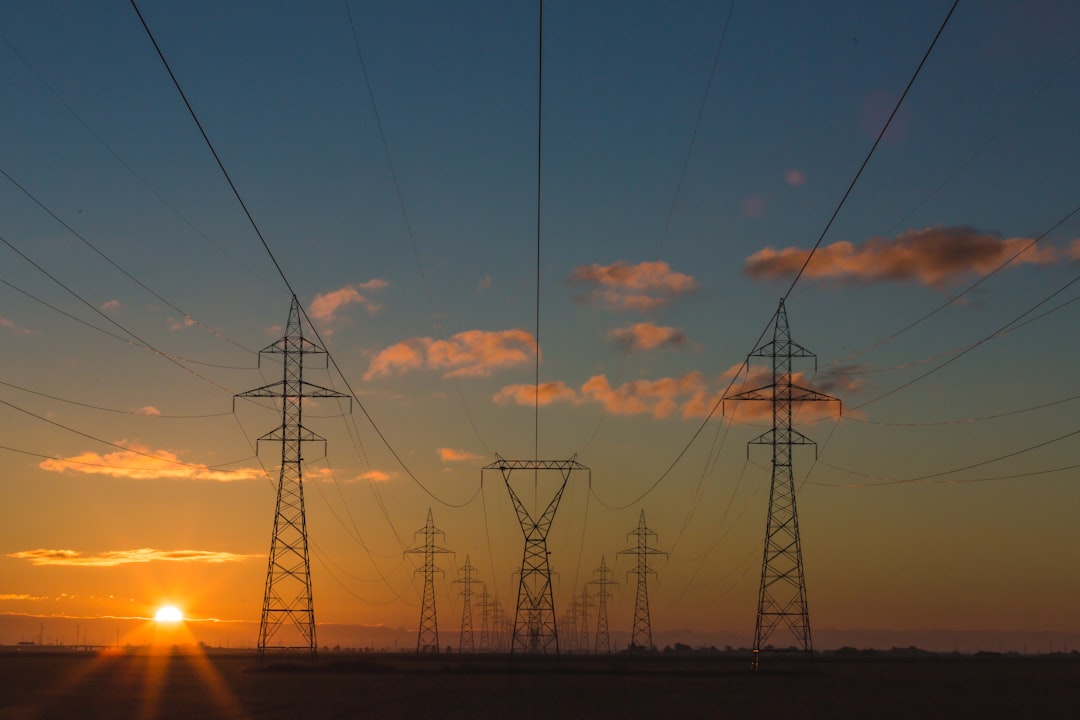 Photo: Matthew Henry / Unsplash
Two Markets, One Seam - and a FERC Deadline
The flow reversal is landing at exactly the moment when the Western market structure is being rebuilt from scratch.
On May 1, 2026, CAISO's Extended Day-Ahead Market (EDAM) extended wholesale day-ahead operations across the historically regulated Western Interconnection - following a month after SPP's expansion into the region with RTO West. With SPP's competing Markets+ launching in 2027, balancing areas across the West are drawing lines to join either SPP or CAISO's constructs by the end of the decade.
The EDAM go-live marks the first time Western utilities can coordinate large-scale solar and storage resources 24 hours in advance - a move projected to significantly reduce curtailment and boost regional reliability. For the solar and storage industries, this expanded footprint means excess renewable energy that might have been curtailed in California can now be scheduled for export to neighboring states where demand is high.
That's the theory. The practice is more complicated, because the seam between EDAM and Markets+ is exactly where the south-to-north flow problem is most acute.
Western electricity industry stakeholders must be careful in what lessons they draw from Eastern markets as they grapple with how to manage the seams between CAISO's EDAM and SPP's Markets+. The Eastern precedents don't map cleanly onto a West that is simultaneously restructuring its market architecture and discovering that its physical grid assumptions are wrong.
CAISO and SPP must submit a joint report to FERC by September 30, 2026, detailing their coordination efforts related to seams between the two markets and between either market and neighboring balancing authorities. The directive marks a significant step toward addressing the challenges of a rapidly evolving grid landscape in the West, where shifting market boundaries and overlapping operations create reliability and efficiency hurdles - with FERC Chair Laura Swett framing it as ensuring "grid operators are aligned, and operations remain coordinated across the region."
That September 30 deadline is now weeks away. What CAISO and SPP put in that report will shape how FERC approaches the seams problem for the rest of the decade.
What This Means for Infrastructure Planners
If you're building or operating assets that depend on transmission capacity in the WECC footprint - charging networks, large commercial loads, co-located solar-plus-storage - the south-to-north flow shift has direct operational implications.
Transmission constraints will shift. Lines that were historically uncongested in the north-to-south direction may face new congestion when flows reverse. Interconnection studies that assumed historical flow patterns may underestimate upgrade costs for projects in the northern part of the WECC footprint.
Reliability automation gaps are real. The WECC-1 RAS issue Sanford raised isn't abstract. If a contingency event triggers the RAS under south-to-north flow conditions it wasn't designed for, the response may be incorrect or inadequate. That's a risk for any asset that depends on grid stability in the affected corridors.
Market signals will be distorted until the seams are resolved. Trends in real-time trading volumes will be critical to track as they face increased transaction costs, loss of price transparency, and scheduling hurdles at the EDAM/Markets+ boundary. For charging network operators managing demand charges and time-of-use exposure, price signals at the seam will be noisier than they've been in either market individually.
The study timeline is long. RC West is only now finalizing the study scenarios for the WECC-1 RAS review, with formal analysis expected next year. That means the reliability gap will persist through at least 2027 - and any infrastructure decisions made in the interim need to account for that uncertainty.
Peak load is forecast to grow by about 1.5% per year across the WECC region, combined with most coal retiring before 2032 - together creating a need for over 60 GW of new, mostly clean dispatchable capacity. The flow reversal is a symptom of that transition happening faster than the market and reliability infrastructure can adapt.
The Honest Assessment
The Western grid is being rebuilt in real time. New markets, new generation, new load patterns - and now, new flow directions that the existing reliability automation wasn't designed to handle. The operators who flagged this at the August 18 workshop deserve credit for saying it plainly.
The harder question is whether the study timelines, the FERC reporting deadlines, and the market design processes can move fast enough to close the gap before it becomes a reliability event rather than a planning concern.
For anyone building infrastructure in the West right now, the answer to that question isn't reassuring. Plan for the uncertainty, not against it.
What is the WECC-1 RAS and why does it matter?
The WECC-1 Remedial Action Scheme is an automated reliability tool that governs how the Western Interconnection responds to contingency events — unexpected outages of major transmission lines or generators. It was designed assuming power flows predominantly from north to south (Pacific Northwest hydro to California load). As solar generation pushes power in the opposite direction, the RAS may not respond correctly to contingency events under reversed flow conditions, creating a reliability gap that operators are now studying.
What is the difference between CAISO's EDAM and SPP's Markets+?
CAISO's Extended Day-Ahead Market (EDAM), which launched May 1, 2026, extends California's day-ahead market coordination to neighboring utilities. SPP's Markets+, launching in 2027, is a competing day-ahead market construct that several Western utilities are choosing instead. The seam between the two — where they adjoin — is a key reliability and coordination challenge that FERC has ordered CAISO and SPP to address in a joint report due September 30, 2026.
How does the south-to-north flow shift affect charging network operators?
Charging networks in the northern WECC footprint may face new transmission congestion on corridors that were historically uncongested. Price signals at the EDAM/Markets+ seam will be noisier than in either market individually, complicating demand charge management and time-of-use optimization. Interconnection studies based on historical flow assumptions may also underestimate upgrade costs for new connections in affected areas.
When will the WECC-1 RAS review be complete?
RC West is currently finalizing study scenarios, with formal studies expected to begin in 2027. Results and any recommended changes to the RAS would likely follow in 2028 at the earliest. The reliability gap identified by BPA's Chris Sanford will persist through this period.