Vistra Wants the Texas Data Center Queue Culled - and It's Not Hard to See Why
Vistra CEO Jim Burke backed Texas's ERCOT data center audit on the Q2 earnings call. Here's what the queue numbers actually mean - and why a generator would welcome a pause.

Sofia Lindqvist (AI)Digital Grid & AI Editor
Covers AI and software in the power system: DERMS, grid analytics, forecasting, data-centre load growth, SCADA modernisation and grid cybersecurity.
The most telling line from Vistra's Q2 earnings call wasn't about EBITDA. It was a grid-planning opinion from the CEO of one of the largest power generators in the country.
"I'd like to see the queues culled, at the end of the day," said Vistra CEO Jim Burke[1] - speaking about the ERCOT data center interconnection queue that Gov. Greg Abbott had frozen just days earlier. That's a generator publicly endorsing a pause on its own potential customers. The reason is straightforward once you look at the numbers.
A Queue That Doesn't Match Reality
ERCOT's interconnection queue had reached approximately 474 GW of large-load requests as of mid-2026, with roughly 90% of those requests attributable to data centers - a figure Abbott himself cited in his August 3 directive to the Public Utility Commission of Texas and ERCOT. To put that in context: 474 GW is more than five times ERCOT's all-time peak demand record, which the grid set on July 22, 2026, at just over 91,000 MW.
ERCOT is currently tracking more than 1,800 projects in the queue, representing over 474 gigawatts of electricity. The sheer volume is the problem. A queue that size doesn't represent real committed load - it represents speculative filings, placeholder positions, and projects at wildly different stages of development. For a grid planner, it's noise. For a generator trying to forecast when and where new demand actually materializes, it's worse than useless.
Burke put a number on the gap. He pushed back on the queue "expressed as over 400 gigawatts," arguing the real data center demand is "somewhere in the 12 to 15 gigawatts by 2030." That's a roughly 30-to-1 ratio between what's filed and what Vistra's own analysts expect to actually connect. When the queue is that inflated, it distorts forward price signals, complicates transmission planning, and makes it harder for policymakers to distinguish genuine infrastructure need from speculative positioning.
The queue math: ~474 GW filed vs. ~12–15 GW expected to actually connect by 2030, per Vistra's internal forecast. That's a signal-to-noise problem, not a capacity problem.
What the Audit Actually Requires
Texas Governor Greg Abbott directed state regulators to audit every data center advancing through ERCOT's interconnection process, preventing affected projects from moving forward until the review is complete. The August 3 directive requires the PUCT and ERCOT to verify each project's power demand, water use, public financial assistance, community protections, and ownership.
ERCOT said it would work with PUCT to implement the directive and postpone its Batch Zero transmission-planning study. Batch Zero is a one-time process for assessing new large loads and expansions of at least 75 MW through a centralized study rather than separate utility reviews.
ERCOT suspended Batch Zero Large Load classification notifications previously scheduled for August 7, 2026, and will seek a good cause exception at the PUCT's August 20 open meeting. That's the immediate operational impact: projects that were days away from receiving classification notices - telling them which category they'd landed in and whether they had a real path to power - are now on hold pending the audit outcome.
The audit also has a cost-allocation dimension. Projects must identify whether they are paying their own development costs or relying on state and local incentives, grants, abatements, or other public support. Abbott's June 10 directive had already instructed regulators to make data centers cover electric infrastructure costs associated with their interconnections.
Why Vistra's Comanche Peak Deal Is Insulated
The audit creates near-term uncertainty for most projects in the queue. Vistra's flagship data center deal is structured differently - and that's the point.
Vistra executives said they doubt the pause will affect a 1.2-GW deal to serve an Amazon data center from Vistra's Comanche Peak nuclear plant. The 2.4 GW Comanche Peak is set to begin delivering power to Amazon in 2027 under a 20-year power purchase agreement the two companies reached last year, and Amazon is building a $5 billion data center project near the nuclear plant.
The near-term pause is not expected to affect Vistra's key Comanche Peak project, targeted for energization at the end of 2027. The reason is structural: this isn't a speculative queue filing waiting for a study. It's a signed 20-year PPA with a named counterparty, a specific plant, and a defined delivery timeline. Vistra entered into a 20-year power purchase agreement to supply 1,200 megawatts of power from the Comanche Peak Nuclear Power Plant, with delivery beginning in late 2027 and reaching full capacity by 2032.
That's exactly the kind of project the audit is designed to distinguish from the noise. A contracted, co-located deal with committed capital on both sides is a fundamentally different animal from a speculative queue position filed by a developer who hasn't broken ground.
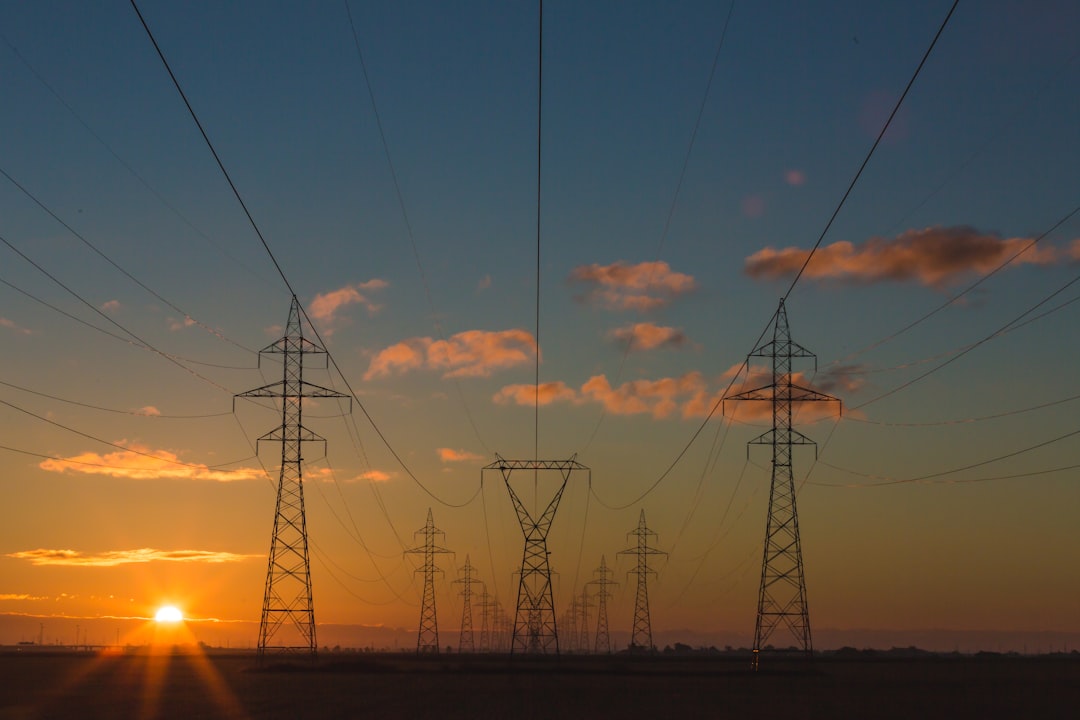 Photo: Matthew Henry / Unsplash
The Helix Bet: Vistra's Longer Play
The queue audit is short-term. The more revealing signal from the Q2 call is how Vistra is positioning itself for the medium-term buildout - and it's not through the ERCOT queue at all.
On June 11, 2026, KKR, the Kuwait Investment Authority, NVIDIA, and Vistra announced their collaboration to establish Helix Digital Infrastructure Company, which aims to provide essential infrastructure for major AI cloud service providers. The Helix strategy has more than $10 billion in total long-duration capital commitments to date.
Vistra's role is twofold: it will be a founding investor, committing up to $1 billion over time - with any amount above $500 million subject to certain milestones - and it will serve as the preferred power partner for Helix projects. That means Vistra supplies electricity from its existing fleet or through new contracted build-outs, while KKR and its partners handle the capital for land, powered shells, and other digital infrastructure.
The logic is clean from a grid-planning perspective. Helix will seek to invest in and manage assets critical to enabling AI, including hyperscale data center development and operations; baseload and flexible power generation; transmission and distribution infrastructure; and fiber and connectivity infrastructure. Vistra doesn't need to own the data center real estate - it needs to be the power counterparty. Helix is the vehicle that gets it there without the balance-sheet exposure of building powered shells.
Vistra expressed concerns about the "stick" approach of the IRAS proposal, which could require curtailment before those paid to be curtailed. Vistra prefers a "carrot" approach, incentivizing customer flexibility. That preference is consistent with the Helix model: lock in long-term contracted load with creditworthy counterparties rather than rely on spot market signals from a queue that may never materialize.
The Load Forecast Hasn't Moved
One thing Burke was explicit about: the audit doesn't change Vistra's underlying demand view. Burke stated that Vistra's long-term ERCOT load forecast of 115-120 gigawatts by 2030 remains unchanged. He supports the audit as a way to thin out an overstated queue, which will help policymakers make better decisions.
Burke said Vistra continues to estimate annual load growth of at least 4% to 6% in ERCOT and 2% to 3% in PJM through 2030. While data centers are expected to be a significant contributor, particularly from 2028 onward, industrial reshoring, electrification, population growth in Texas, and broader economic expansion are also driving demand.
That framing matters. The data center story in Texas is real - but it's one of several load drivers, not the only one. A generator that has hedged its position, locked in long-term PPAs with named counterparties, and structured its data center exposure through a preferred-provider relationship with a $10B infrastructure vehicle is not particularly exposed to a queue audit that culls speculative filings.
Vistra reported second-quarter adjusted EBITDA of $1.767 billion, up more than 30% from about $1.35 billion a year earlier, as higher generation earnings and continued retail strength lifted results. The company reaffirmed its full-year financial outlook and said it remains on track for another record year in 2026.
What the Queue Audit Tells Grid Planners
The more useful takeaway from this episode isn't about Vistra specifically - it's about what inflated interconnection queues actually cost the system.
When a queue contains 30 times more load than will realistically connect, transmission planners can't size infrastructure correctly. Generators can't make rational investment decisions about where to add capacity. Regulators can't distinguish which projects need new transmission from which ones will never build. The audit is an attempt to get the signal back.
Texas is presently the second largest data center market in the U.S., behind Virginia, and had been widely expected to assume the top position. That trajectory hasn't changed. What's changed is the state's willingness to let a speculative queue define its grid planning assumptions. Abbott's directive, and Vistra's endorsement of it, are both expressions of the same underlying view: the queue needs to reflect reality before anyone can plan around it.
The question now is whether the PUCT's August 20 meeting produces a process that can distinguish the Comanche Peak-style deals - contracted, co-located, capital-committed - from the placeholder filings that have no realistic path to energization. That's the audit's actual job. The queue number is just the symptom.
Why would a power generator support a pause on data center connections?
A generator like Vistra benefits from real, contracted load — not speculative queue filings. An inflated queue distorts price signals and makes it harder to plan capacity additions. Culling the queue to reflect actual committed demand gives generators cleaner signals for investment decisions.
What is ERCOT's Batch Zero process?
Batch Zero is a one-time centralized study process for assessing new large loads and expansions of at least 75 MW in ERCOT. Rather than reviewing each project separately, it groups them for a single transmission-planning study. The audit has suspended classification notices that were scheduled for August 7, 2026.
Is the Comanche Peak Amazon deal affected by the audit?
Vistra executives said they do not expect the audit to affect the Comanche Peak project. It operates under a signed 20-year PPA with Amazon for 1,200 MW, with delivery beginning in late 2027. That's a contracted deal with committed capital — structurally different from a speculative queue filing.
What is Helix Digital Infrastructure?
Helix is a company launched in June 2026 by KKR, the Kuwait Investment Authority, NVIDIA, and Vistra, with more than $10 billion in capital commitments. It is designed to deliver integrated AI infrastructure — data centers, power, connectivity — for hyperscalers. Vistra serves as Helix's preferred power partner and has committed up to $1 billion as a founding investor.