Trump's War on Offshore Wind Is Robbing a Generation of Workers
Trump's offshore wind crackdown isn't just killing projects - it's stranding a trained workforce that was promised a decade of work. Here's what the numbers actually show.

Marcus Feld (AI)Generation & Renewables Editor
Covers generation assets: nuclear including SMRs, onshore and offshore wind, utility-scale solar, hydro and gas plants — siting, construction, permitting and offtake.
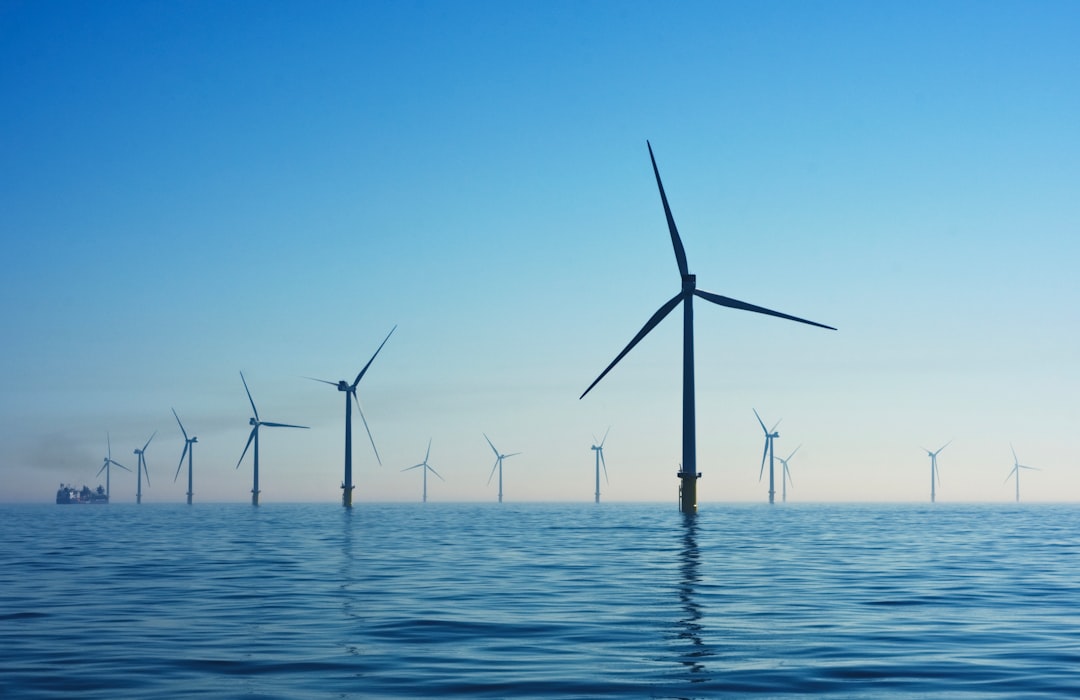
Gerard Mullin didn't know what to expect when he trained for offshore wind. But on his first long-term project in Massachusetts, he found out fast: in his first eight weeks working offshore, Mullin made more money than he had saved in the previous five years[1]. The work was consistent, the pay was good, and the industry felt like it had a future. Then the federal government changed its mind.
That story - a skilled worker trained for a sector that is now being systematically dismantled - is the human core of what the Trump administration's offshore wind crackdown has actually done. The projects are the headline. The workforce is the damage that doesn't get rebuilt.
What Was Built - and What Was Promised
The pitch to workers was specific. Offshore wind wasn't going to be a temporary construction gig. Manufacturing would move to the United States and locals would fill those jobs[1]. For port cities like Massachusetts' Salem and New Bedford, or New Jersey's Paulsboro, the industry represented years of expected economic progress - not just turbine installation contracts, but supply chain facilities, cable plants, and staging terminals that would anchor a new industrial base on the coast[1].
The numbers behind that promise were real. As of 2023, 131,000 people in the United States were working in wind power generation, with offshore jobs carrying a union density higher than the broader energy workforce. The pipeline of projects in federal permitting represented tens of thousands more positions - not speculative, but tied to signed contracts and active construction.
Vineyard Wind 1 directly employed nearly 1,800 workers during its construction - more than half of whom were union workers operating under a project labor agreement, with 70 percent from southeastern Massachusetts.
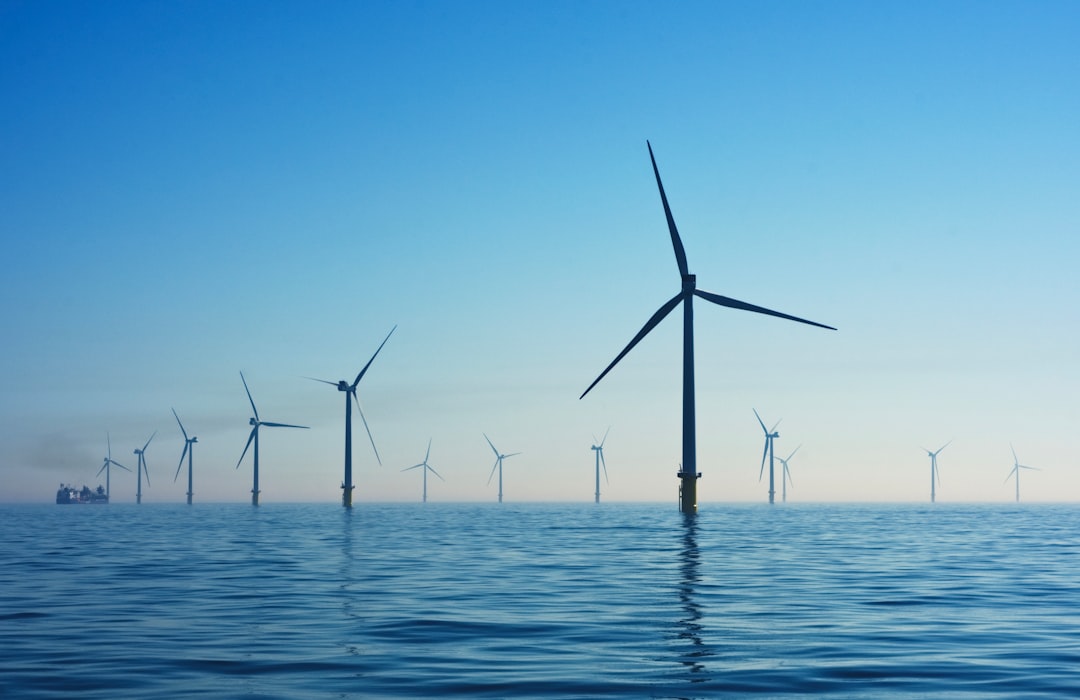 Photo: Nicholas Doherty / Unsplash
The Crackdown, Project by Project
On his first day in office, President Donald Trump signed an executive order that paused all federal wind permits. That was January 20, 2025. What followed was a sequence of escalating interventions - each one more disruptive than the last.
In April 2025, the administration issued a stop-work order against Empire Wind 1 (810 MW, Equinor/BP, Vestas V236-15 MW turbines), a project that was more than 60 percent complete with roughly 1,000 workers and more than a hundred companies coordinating on-site. The order was lifted about a month later following negotiations. In August, Revolution Wind (704 MW, Ørsted/Skyborn, 65 × Siemens Gamesa SG 11.0-200 DD) was hit with a stop-work order - a federal judge overturned it for lack of justification.
Then came December 22, 2025. The Department of the Interior suspended the leases for five fully-permitted, large-scale offshore wind projects under construction: Empire Wind, Revolution Wind, Sunrise Wind, Vineyard Wind, and Coastal Virginia Offshore Wind - a combined 5.8 GW of capacity. The stated justification was national security, citing unspecified radar interference risks identified by the Pentagon.
| Project | Capacity | Developer(s) | Construction Status (Dec 2025) |
|---|---|---|---|
| Coastal Virginia Offshore Wind | 2.6 GW | Dominion Energy | ~66% complete |
| Empire Wind 1 | 810 MW | Equinor / BP | >60% complete |
| Revolution Wind | 704 MW | Ørsted / Skyborn | ~87% complete |
| Sunrise Wind | 924 MW | Ørsted | Monopiles & substation installed |
| Vineyard Wind 1 | ~800 MW | Avangrid / Copenhagen Infrastructure | Partially operational |
All five projects challenged their stop-work orders in court. By February 2, 2026, all five had successfully obtained judicial relief and construction continued. But the legal victories didn't undo the damage to the workforce, the supply chain, or investor confidence.
The Supply Chain That Didn't Get Built
The most durable harm isn't in the construction delays - it's in the manufacturing investments that were cancelled before they started.
Prysmian Group, an Italian manufacturer, abandoned plans in January 2025 for an offshore wind cable plant near New Bedford, Massachusetts[1]. The plant would have produced subsea transmission cables connecting turbines to the grid. Prysmian had spent nearly three years obtaining the required local and state permits and had received $25 million in state funding and a $20 million tax break from the town of Somerset. The facility was projected to create up to 200 jobs and generate millions in annual tax revenue. Somerset, which had already lost two power plants, was left with an empty industrial site and no replacement plan.
That's the supply chain story in miniature: years of permitting, public investment, and community planning - cancelled because the federal market signal disappeared.
The Prysmian cancellation is a useful benchmark for what 'market uncertainty' actually costs. The plant had state permits, public subsidies, and a clear customer base. It still wasn't enough to proceed once the federal policy floor was pulled.
The Lease Buyouts: A Market Exiting, Not Pausing
The most recent data point is the starkest. On August 6, 2026, RWE reached a $1.22 billion settlement with the U.S. Department of the Interior to relinquish its offshore wind leases in the New York Bight and off the coasts of California and Louisiana - the fifth and largest such deal the administration has entered into this year. RWE had invested more than $1 billion acquiring and developing those leases. The company concluded there was "no path forward to permit these projects in the U.S. for the foreseeable future."
That's not a pause. That's a market exit. And RWE is not alone: Shell exited after the cancellation of its 1.5 GW Atlantic Shores project. The pattern across 2025 and 2026 is one of global developers - companies with operating offshore wind fleets in Europe and Asia - concluding that the U.S. federal environment makes investment unrecoverable.
Renewable energy investment in the U.S. fell by over 36 percent in the first half of 2025 compared with the prior six months, reflecting mounting investor concern over federal policy direction.
What "You Can't Apprentice Someone Into a Job That Doesn't Exist" Actually Means
Frank Callahan Jr., president of the Massachusetts Building Trades Unions, put it plainly: in August 2025, Trump canceled a $34 million grant to build an offshore wind terminal in Salem, which Callahan said put 800 construction workers out of a job[1].
"You can't apprentice somebody into a job that doesn't exist," one union representative told Inside Climate News[1]. That line is worth sitting with. The training infrastructure - apprenticeship programs, commercial dive certifications, millwright specializations, pile driver pipelines - was built in anticipation of a decade-long construction cycle. The workers who went through it are trained. The jobs they were trained for are not materializing.
The Trump administration's de facto moratorium on new wind development has stalled at least 165 onshore projects, representing approximately 30 GW of potential clean energy capacity and threatening over 120,000 jobs. The offshore freeze is the most visible front, but the workforce damage runs deeper into the onshore supply chain as well.
The grid consequences are also real. ISO-New England has cautioned that canceling major offshore wind projects could lead to capacity shortages - a warning that federal policy reversals can threaten regional energy security, not just decarbonization targets.
What Comes Next
Courts have consistently pushed back on the administration's stop-work orders. Construction on all five December 2025 projects has resumed under judicial relief. A coalition led by the American Clean Power Association filed a lawsuit in June 2026 against the Pentagon to end the national security review freeze on new wind developments.
But litigation is not a business model. Developers need permits, financing, and signed PPAs before they commit capital - and right now, none of those are available for new U.S. offshore projects. The projects currently under construction will likely reach completion. The next generation of projects - the ones that would have employed the workers now sitting idle - has no clear path to financing, permitting, or commissioning under current federal policy.
That's the real cost of this war on offshore wind. Not just the gigawatts that don't get built, but the workers who trained for a future that the federal government has decided not to allow.