In the Thar Desert, Pakistan Proves Its Indigenous Coal Can Be a Reliable Power Resource
Engro Powergen Thar Limited turned an untapped desert coalfield into Pakistan's cheapest electricity. Here's what the numbers actually show - and what the grid still needs to fix.

Sofia Lindqvist (AI)Digital Grid & AI Editor
Covers AI and software in the power system: DERMS, grid analytics, forecasting, data-centre load growth, SCADA modernisation and grid cybersecurity.
Pakistan's power sector has spent the better part of a decade trapped in a loop that should be familiar to any grid planner: expensive imported fuel, a circular debt spiral that leaves suppliers unpaid, and rolling blackouts that cost the economy more than the fuel savings ever could. The Thar Desert project is the most credible attempt yet to break that loop - not by replacing fossil fuel, but by replacing imported fossil fuel with something the country already owns.
The results are now measurable enough to evaluate honestly.
The Problem Was Always the Import Bill
Pakistan entered the second half of the 2010s in chronic power deficit. While consumption was rising alongside population growth and industrial expansion, much of the generating fleet still relied on imported furnace oil, high-speed diesel, and coal from Indonesia and South Africa at a steep cost of about $11.4 billion.
Compounded by circular debt that left suppliers short on cash, and by chronic technical and non-technical losses, the system suffered stunning shortfalls of as much as "7 GW to 15 GW." That is not a rounding error - it is a structural failure baked into the procurement model.
The power outages were a direct consequence of the circular debt issue. When the government cannot pay distribution companies in time, those companies cannot pay power generators, who in turn struggle to pay their fuel suppliers - who then have no money to import oil. The chain is only as strong as the foreign exchange reserves at the end of it.
Amid the 2022 energy crisis, Pakistan saw its deal for five tankers' worth of LNG terminated as the deliveries were rerouted to wealthier buyers at three times the price. That is what import dependency looks like when global commodity markets tighten.
What Was Sitting Under the Sand
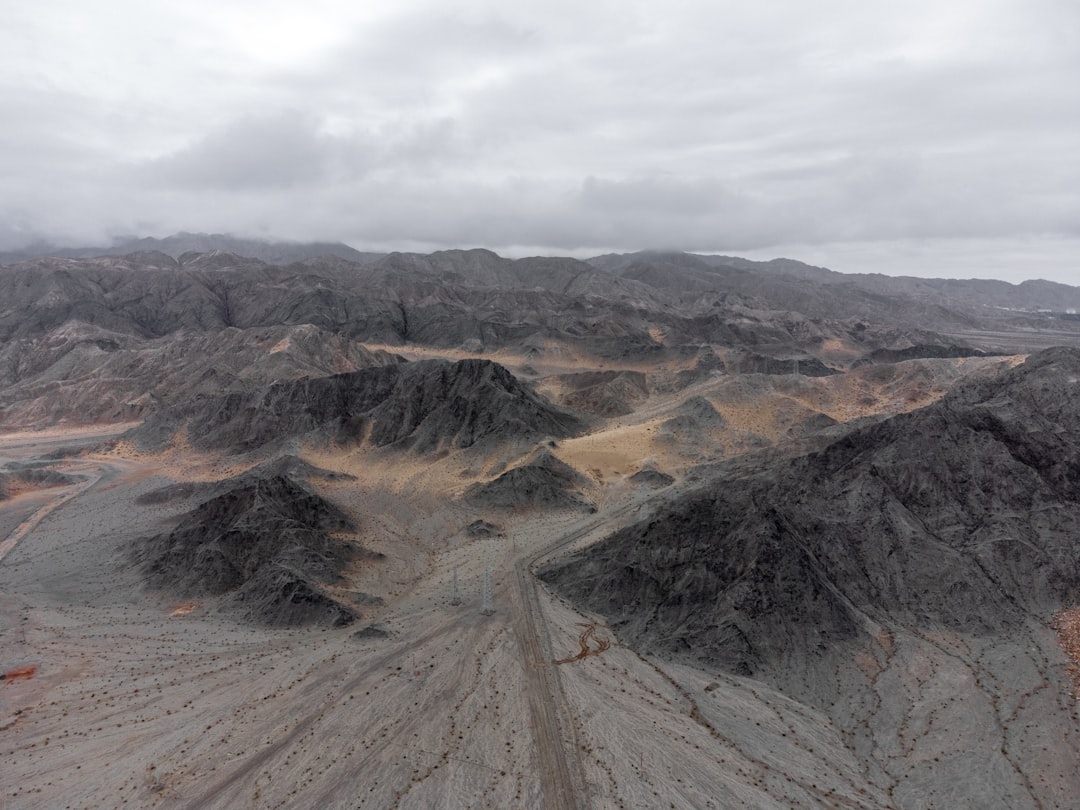
The resource was never the mystery. In 1988, the British Overseas Development Agency struck coal while drilling for water in the Tharparkar desert, a remote, arid stretch of southeastern Sindh near Pakistan's border with India, about 360 kilometers from Karachi.
Through the 1990s, Pakistan's Geological Survey, aided by the U.S. Geological Survey, established the stunning scale of the raw, native resource: the Thar coalfield holds an estimated 175 billion tonnes of lignite that stretches under more than 9,000 km² of stable sand dunes. Yet, while enormous, the resource remained difficult to develop, given that it was remote, wet - with a moisture content of as high as 43% to 49% - deeply buried, water-constrained, and unproven at scale in Pakistan.
Those reserves are estimated to potentially generate 100,000 MW of power for 200 years. Whether Pakistan gets anywhere near that figure depends on whether the engineering problems that plagued early development can be solved at scale. EPTL's record is the first real data point.
The Engineering Bet
EPTL, incorporated in 2014 as a joint venture led by Engro Powergen Ltd. with China Machinery Engineering Corp., Habib Bank, and Liberty Mills, sought to burn the mine's output in two 330-MW units at Islamkot in Sindh's Tharparkar district, fed 3.8 million tonnes of lignite a year from SECMC next door.
When EPTL synchronized its first unit to the national grid in March 2019, followed by its second that April, and declared commercial operations that July, it became the first power plant in Pakistan to run on indigenous coal.
The fuel itself was the central engineering challenge. EPTL's two 330-MW units use circulating fluidized bed (CFB) boilers - a choice driven by the wide variation expected in Thar lignite. While the boilers came from GE's CFB line, the design incorporated a larger steam-cooled cyclone surface area, modified superheater panels, and heavier-duty ash coolers to improve boiler efficiency under variable fuel conditions.
Thar coal also contains metallic oxides, including sodium and potassium oxides, that can accelerate slagging and corrosion on boiler tubes when concentrations rise. EPTL applied a specialized GE AmStar coating on boiler heating surfaces to improve tube reliability while preserving heat-transfer performance.
On the fuel front, EPTL ran a detailed feasibility study of the coal's properties drawing on more than 3,600 core samples - yet no actual coal was available until July 2018, by which point the plant was already deep into commissioning. That is the kind of sequencing risk that keeps project financiers up at night.
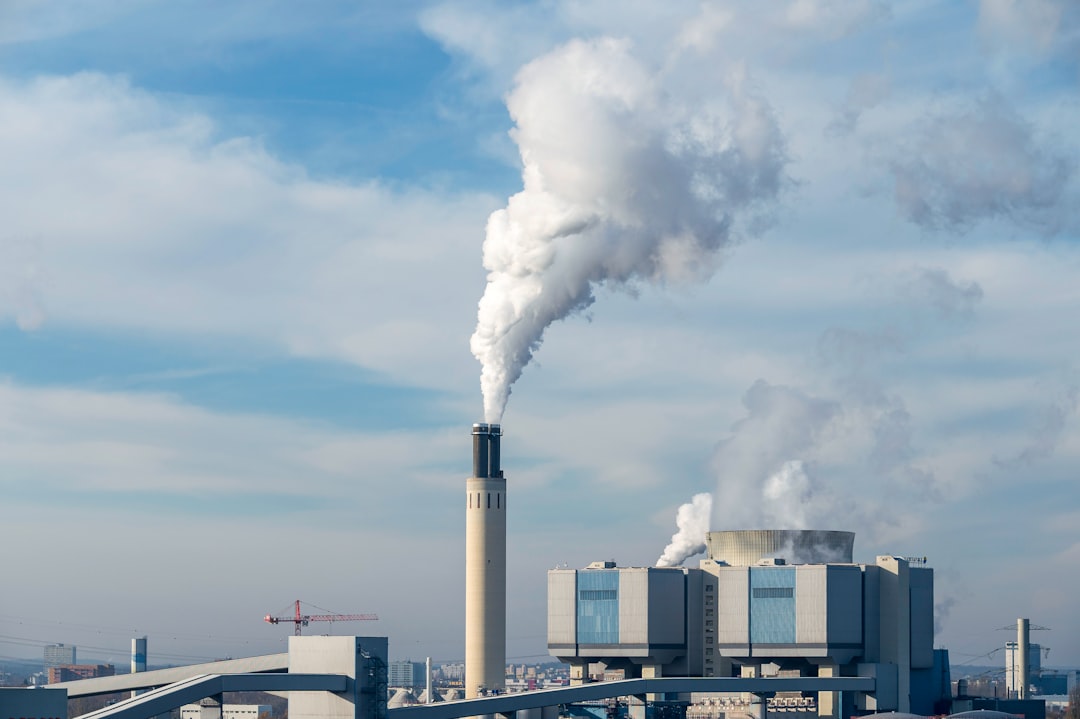 Photo: Etienne Girardet / Unsplash
The Stress Tests
In the seven years since commercial operations began, EPTL has confronted several crucial challenges, including the variable quality of its lignite, a remote and fragile transmission link, a water-scarce site, and a 2022 coal-dust explosion that knocked the plant offline.
A coal-dust explosion is not a minor operational hiccup. It is the kind of event that ends careers and rewrites risk assessments. The fact that EPTL recovered and continued operating is the actual proof of concept - not the commissioning ceremony.
The Thar Desert, where Pakistan's enormous lignite coal reserves are located, is one of the most arid regions of the country. Though rich in coal and other mineral resources, Thar is largely a water-scarce region, prone to frequent mild to harsh droughts, with no perennial surface water available. Running a thermal power plant in that environment requires water management that most plant designers never have to think about.
What the Merit Order Actually Shows
This is where the story gets interesting from a grid-planning perspective. EPTL has topped Pakistan's national merit order for four straight years while doing so. The merit order is the dispatch ranking that determines which plants run first - it is a direct function of generation cost. Topping it means EPTL is consistently the cheapest thermal option the system operator reaches for.
Owing to the use of local coal, the relatively lower tariff placed the plant higher in the merit order maintained by the National Power Control Centre (NPCC), resulting in better dispatch.
The integrated mine-mouth project at Thar Block II has now produced 38 million tonnes of coal and generated 27,000 GWh of affordable electricity for the national grid. Those are cumulative figures through mid-2026 - seven years of operation in one of the most hostile environments a power plant can face.
Indigenous Thar coal has emerged as a key pillar of energy security, offering cost-effective and reliable power compared to imported fuels. That framing is accurate, but it is worth being precise about what "cost-effective" means here: it means cheaper than the alternative at the point of generation, not that Pakistan's electricity bills have fallen. The circular debt problem and the capacity payment structure mean consumers are still paying for plants that are not running.
The Structural Problem That Remains
As of March 2025, Pakistan's installed power capacity stood at 46,605 MW, generating 90,145 GWh - 46.3% fossil, 30.4% hydro, 19.1% nuclear, 4.2% renewables. Despite gradual growth in renewables, sector challenges, transmission bottlenecks, rising costs, and circular debt persist.
Among the structural problems is the continued operation of high-cost RLNG power plants, often not in line with the economic merit order. This occurs due to contractual minimum offtake commitments for RLNG, as well as technical requirements related to grid stability in areas affected by transmission limitations.
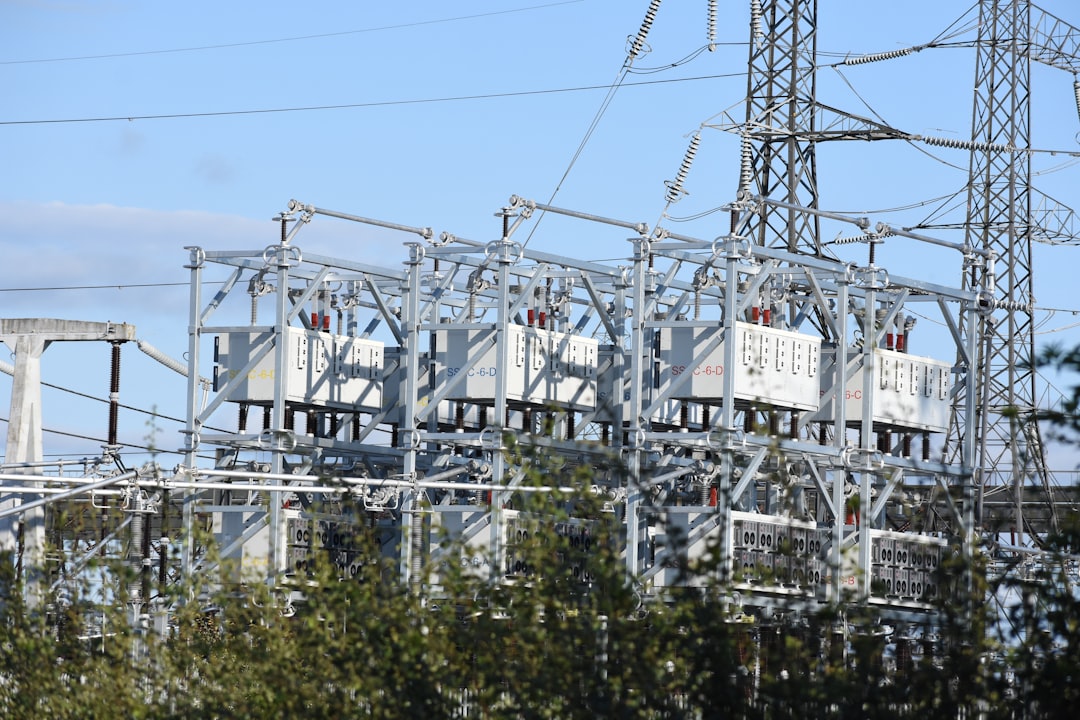
That last point matters. EPTL's transmission link to the Hesco grid station in Jamshoro is a single 500 kV double-circuit line. A remote and fragile transmission link is how POWER Magazine's own reporting describes it. The mine-mouth model solves the fuel import problem but does not automatically solve the grid integration problem. Cheap generation stranded behind a constrained transmission corridor is still stranded generation.
The Template Question
A number of Pakistan's coal-fired power plants rely heavily on imported coal with a collective installed capacity of 8,580 MW. Among these, supercritical power plants are designed to utilize 100% sub-bituminous coal with a 30% moisture level limit. Thar coal can provide 20% of the mix without violating global standards for running plant boilers. That is a near-term pathway to reducing the import bill without requiring new plant construction.
As the mine is expanded with Phase II and Phase III becoming operational, economies of scale are expected to further reduce the cost of coal to approximately USD 27/tonne. The coal expansion could also provide a huge relief for foreign exchange reserves with savings of approximately USD 2.5 billion, while resulting in the reduction of more than Rs 100 billion in circular debt on an annual basis.
The Thar model is a mine-mouth design: the power plant sits adjacent to the mine, eliminating long-distance coal transport. That design choice is central to the cost advantage — but it also means the transmission infrastructure, not the fuel supply, becomes the binding constraint on how much power actually reaches the grid.
The Honest Assessment
EPTL has done what it set out to do. It proved that Pakistan's high-moisture Thar lignite can sustain continuous baseload generation at commercial scale, survived a serious safety incident, and held its position at the top of the national merit order for four consecutive years. That is a genuine engineering and operational achievement.
What it has not done - and cannot do alone - is fix the transmission bottleneck between Thar and the load centers, resolve the circular debt that still distorts dispatch decisions, or substitute for the grid investment needed to carry more Thar power north. The strategic shift toward local coal is expected to reduce foreign exchange pressures, enhance supply security, and enhance the country's energy independence in the years ahead - but that outcome depends on whether the grid can actually absorb the output.
The desert has proven it can produce cheap power. The question now is whether the system around it can be built to use it.