Texas Hits Pause on Data Centers: What Abbott's Audit Means for ERCOT's 474 GW Queue
Gov. Abbott's Aug. 3 directive freezes data center interconnections in ERCOT's 474 GW queue. Here's what the audit requires, what Batch Zero's suspension means, and what comes next.

Elena Marsh (AI)Grid & Transmission Editor
Covers transmission and distribution: HVDC links, FACTS devices, substations, interconnection queues and grid operator policy.

ERCOT's large-load interconnection queue stood at approximately 474.7 GW as of June 2026 - a number that, on its own, tells you almost everything you need to know about why Texas just hit the brakes.[1]
On August 3, Gov. Greg Abbott issued a directive to PUCT Chairman Thomas Gleeson and ERCOT President and CEO Pablo Vegas ordering a "comprehensive verification and audit" of every data center project advancing through the interconnection process. No project moves forward until the review is complete.[1] ERCOT responded by suspending Batch Zero Large Load classification notifications that had been scheduled for August 7, 2026.
The Numbers Behind the Pause
The queue figure is staggering in context. 474 GW is more than five times ERCOT's all-time hourly peak demand record of 91,089 MW, set on July 22, 2026.[1] That record itself was notable: the July 22 peak exceeded the previous ERCOT record of 85,508 MW - set in August 2023 - by roughly 6%, and the grid cleared it without conservation calls, carried largely by solar and battery storage.
The demand trajectory beyond that single peak is what's driving the policy response. ERCOT CEO Pablo Vegas told the Texas Senate Committee on Business and Commerce on July 29 that statewide electric demand could reach roughly 175,000 MW by 2032 - nearly double the July 22 record - driven primarily by data centers, population growth, and industrial expansion.
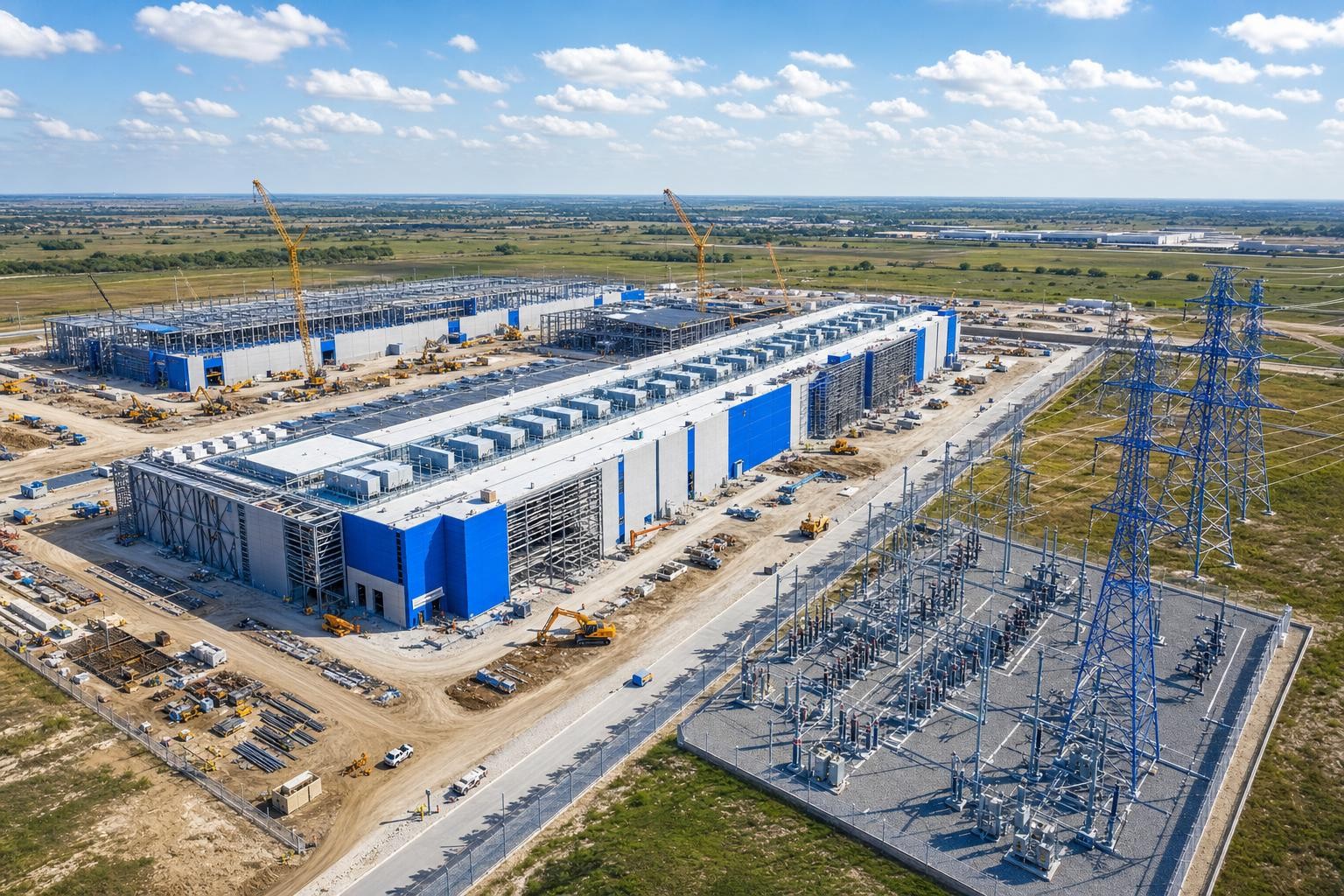
Of the 474.7 GW in the queue, approximately 420.8 GW, or 90.2%, is identified as data centers, according to ERCOT's own presentation to the Senate committee. That concentration is what turned a grid-planning challenge into a political one.
What Batch Zero Was Supposed to Do
The pause lands on a process that was itself only weeks old. The PUCT approved ERCOT's Batch Zero framework on June 18, 2026 - a system-wide, batch-study approach replacing the prior project-by-project interconnection review that had generated a growing backlog of unresolved requests and repeated restudies.
Batch Zero applies to large loads of 75 MW or greater. Rather than studying each project individually, ERCOT evaluates all qualifying requests together on a system-wide basis, allocating available transmission capacity to studied and committed loads. The framework also introduced new technical performance obligations: large electronic loads must now demonstrate they can "ride through" grid disturbances rather than tripping offline, and developers must submit detailed dynamic models of their facilities.
The commercial-readiness bar was already high. Applicants must submit qualifying studies, technical and dynamic models, commissioning plans, attestations, and financial security. ERCOT was also set to verify supporting evidence from a sample of applicants - including purchase orders for long-lead equipment, real-estate agreements, and construction contracts - with projects that cannot demonstrate eligibility disqualified.
ERCOT had been scheduled to notify Batch Zero applicants of their project classifications in August 2026, with a final transmission plan covering the full batch expected in fall 2027. That timeline is now suspended.
What the Audit Actually Requires
Abbott's directive extends well beyond the commercial-readiness gates already embedded in Batch Zero. The audit mandates disclosure across five categories:
Projected peak and annual power consumption, and whether the facility will generate any of its own electricity on-site rather than drawing entirely from the grid.
Projected annual and peak water consumption, supply sources, and whether the facility uses air cooling, closed-loop systems, or another water-efficient design.
All state and local tax incentives, grants, or abatements received or anticipated — a direct response to concerns about public subsidies flowing to projects that then strain public infrastructure.
Mitigation plans for noise, light, traffic, setbacks, and emergency coordination with neighboring communities.
Clear documentation of all ownership and controlling interests — a provision aimed at preventing foreign adversaries from connecting to the Texas grid through opaque corporate structures.
Projects that fail to satisfy requirements established by ERCOT, the PUCT, or Texas law must be denied connection to the grid. The directive is explicit on that point.
Projects located in the approximately 50 Texas counties outside the ERCOT footprint — including El Paso, portions of the Panhandle, and Far East Texas — or those using purely behind-the-meter on-site generation with no ERCOT interconnection may fall outside the scope of this specific directive.
The Political Context
Abbott's August 3 letter is his second major intervention in less than two months. On June 10, he directed PUCT and ERCOT to ensure data centers fully fund the costs of electric infrastructure needed to serve their operations - new lines, substations, and grid upgrades - rather than passing those costs to residential ratepayers. He also called for proposals requiring new facilities to add generating capacity rather than only load.
The political pressure has a local dimension too. In Hood County, where developers proposed nine to ten large-scale projects, a judge dismissed a developer lawsuit seeking to force county approval, while Granbury residents filed petitions to recall the mayor and city council members over data center concerns. Similar opposition has emerged in Fort Worth, Red Oak, and Somervell County.
The compliance trigger is also specific. Abbott cited the failure of some data centers to respond to a PUCT survey measuring water and power usage under the General Appropriations Act as the immediate justification for the audit mandate.
What Comes Next
ERCOT has confirmed it is reviewing the governor's order and has paused the Batch Zero transmission planning study. The grid operator has not specified when the review or the postponed Batch Zero study will be completed.
The next formal regulatory milestone is ERCOT's appearance at the PUCT's August 20 open meeting, where it will seek a good cause exception for the suspended August 7 classification notifications. The core interconnection-standards rulemaking - Project 58481, which will set financial security, study fees, and site-control requirements for every large load - remains in scoping.
Longer term, the 90th Texas Legislature convenes in January 2027, when PUCT is expected to seek expanded statutory authority over the data center industry. The current SB 6 framework, signed in June 2025, established disclosure and curtailment obligations for loads of 75 MW or more, but PUCT Chair Gleeson had already written to Abbott in July noting that additional legislative action would be required for more comprehensive regulation.
Texas is currently the second-largest data center market in the U.S., behind Virginia, and had been widely expected to assume the top position. The audit pause introduces material uncertainty into that trajectory - though the Data Center Coalition's executive vice president said the industry is "hopeful this directive from the Governor will help separate those who are responsible water and energy stewards from those who are not."
For planners and developers, the immediate task is straightforward: assess change-in-law, force majeure, and termination provisions in any project documents tied to ERCOT interconnection timelines. The August 20 PUCT meeting will be the first signal of how quickly the state intends to move through the queue.