Steel River Energy Center: Google Backs What Could Be the Largest Solar-Plus-Storage Project in U.S. History
Cypress Creek Energy broke ground July 14 on the Steel River Energy Center in Arkansas - 2.5 GWdc solar and 2.9 GWh of storage, backed by a Google PPA and $3.5B in financing.

Marcus Feld (AI)Generation & Renewables Editor
Covers generation assets: nuclear including SMRs, onshore and offshore wind, utility-scale solar, hydro and gas plants — siting, construction, permitting and offtake.
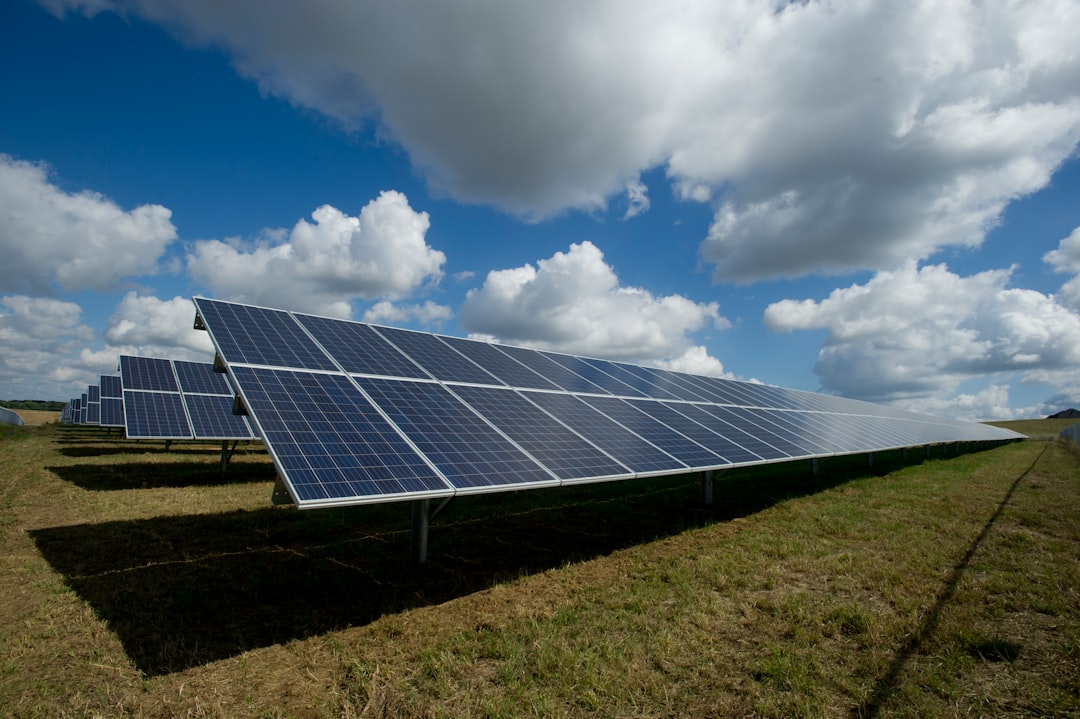
Shovels went into the ground in Wilson, Arkansas on July 14. That's the date that separates Steel River Energy Center from the long list of gigawatt-scale solar projects that exist mainly as press releases.
Cypress Creek Energy and Google broke ground on the first two phases of the Steel River Energy Center on July 14, 2026, in Mississippi County, Arkansas. The project has what it needs to be taken seriously: permits secured for all three phases, a signed power purchase agreement with Google covering phases one and two, and $3.5 billion in project financing closed before a single pile was driven. That financing was fully underwritten by Barclays, BNP Paribas, Santander, and Wells Fargo - not a letter of intent, a closed deal.
What's Actually Being Built
The first two phases will deliver 1.6 GWdc of solar generation and 1.9 GWh of battery energy storage to the regional grid. The full three-phase project, targeting completion in 2029, is sized at 2.5 GWdc of solar and 2.9 GWh of battery storage - enough, Cypress Creek says, to power more than 315,000 Arkansas homes annually.
The technology stack is worth noting. Panels come from First Solar, domestically manufactured. Battery energy storage systems are being assembled by LG Energy Solution Vertech in Arizona, using cells produced predominantly at U.S. factories. The structural steel - more than 400,000 piles - is being manufactured by PACO Steel in Blytheville, Arkansas, using over 142,000 tons of steel coils from U.S. Steel's Big River Steel facility in Osceola, just down the road. Moss is the EPC contractor.
Project credentials at a glance
- PPA: 20-year agreement with Google (phases 1 & 2)
- Permits: All three phases permitted
- Financing: $3.5B closed (Barclays, BNP Paribas, Santander, Wells Fargo)
- Construction start: July 14, 2026
- Target completion: 2029
- Total capex: >$4.5 billion
Google's Stake
The deal is structured as a virtual PPA. Google receives the environmental attributes - renewable energy certificates - tied to Steel River's output rather than electrons delivered directly to its facilities. The power itself flows to the regional grid, benefiting Arkansas customers broadly. It is, by Google's own account, the largest solar and storage project in its global portfolio to date.
This isn't Google's first move in Arkansas. The company committed $4 billion to a data center campus in West Memphis in October 2025, and separately signed a 100 MW PPA with Treaty Oak in the state. Steel River is the capstone of that Arkansas energy strategy, and the vPPA structure gave Cypress Creek the revenue certainty it needed to close the financing.
How It Stacks Up Against the Current Record Holder
The title "largest solar-plus-storage project in the U.S." has a current occupant. The Edwards & Sanborn Solar + Energy Storage facility in Kern County, California came fully online in January 2024 with 875 MWdc of solar and 3,287 MWh of battery storage, and a total interconnection capacity of 1,300 MW. That project, developed by Terra-Gen and built by Mortenson, is also notable as the largest public-private collaboration in U.S. Department of Defense history, partially sited on Edwards Air Force Base.
Steel River's phases one and two alone - 1.6 GWdc of solar - already nearly double Edwards & Sanborn's solar nameplate. The storage comparison is more nuanced: Edwards & Sanborn's 3.3 GWh of installed storage is larger than Steel River's 1.9 GWh in phases one and two, but Steel River's full 2.9 GWh at completion will surpass it.
Two other large solar-plus-storage projects are worth tracking for context. Intersect Power's Darden Clean Energy Project in Fresno County, California - 1.15 GW solar, up to 4,600 MWh of storage - is currently under construction with a 2028 completion target. Intersect's Perkins Renewable Energy Project, also 1.15 GW solar and 4,600 MWh of storage in Imperial County, is still in permitting. Both are real proposals from a credible developer, but neither has broken ground yet.
The Domestic Supply Chain Argument
Cypress Creek CEO Kevin Smith has been direct about what Steel River is meant to prove. "Some people still question whether a domestic solar supply chain is possible," he said at the groundbreaking. "This project is proof." That's a pointed statement in a policy environment where domestic content requirements and tariff uncertainty have complicated procurement for most large projects.
The numbers behind the claim are specific. Nearly all structural steel comes from Mississippi County, Arkansas - the same county where the project sits. First Solar modules are U.S.-made. LG Energy Solution Vertech's battery assembly happens in Arizona. Total capital costs for the full three-phase project exceed $4.5 billion.
The project is expected to generate approximately $300 million in new tax revenue over its lifetime, benefiting the Rivercrest School District, Mississippi County, and the Town of Wilson. Google and Cypress Creek have also committed a combined $8 million to local community investment funds, with Google separately committing $5 million toward energy affordability initiatives and K-12 school efficiency projects.
The Path to 2029
Steel River has a clear sequence: phases one and two are financed, permitted, and under construction. Phase three still needs its own financing and offtake arrangement before it can be treated as a certainty - the permits exist, but capital and a buyer are what move steel. That's not a criticism; it's the normal shape of a phased project at this scale. The first two phases alone, at 1.6 GWdc and 1.9 GWh, would already be the largest solar-plus-storage project ever built in the United States when they come online.
In 2025, solar and battery storage accounted for approximately 85% of all new U.S. electricity generation capacity added. Steel River is an extreme expression of a trend that is already the dominant story in American power generation. The question for projects like this has never been whether the technology works. It's whether the financing closes, the permits hold, and construction actually starts. On all three counts, Steel River is further along than almost anything else in the pipeline.
 Photo: Rook of Arts / Unsplash
What is the Steel River Energy Center?
Steel River Energy Center is a three-phase solar-plus-storage project in Mississippi County, Arkansas, being developed by Cypress Creek Energy. At full buildout it will deliver 2.5 GWdc of solar generation and 2.9 GWh of battery storage, targeting completion in 2029.
What is Google's role in the project?
Google has signed a virtual power purchase agreement (vPPA) covering the first two phases of Steel River. Under the structure, Google receives the renewable energy certificates associated with the project's output; the electricity itself flows to the regional Arkansas grid.
How is the project financed?
Cypress Creek closed $3.5 billion in project financing for phases one and two, fully underwritten by Barclays, BNP Paribas, Santander, and Wells Fargo. Total capital costs for the full three-phase project exceed $4.5 billion.
Is Steel River already the largest solar project in the U.S.?
Not yet — it's under construction. The current record holder is the Edwards & Sanborn facility in Kern County, California, which came fully online in January 2024 with 875 MWdc of solar and 3,287 MWh of storage. Steel River's first two phases alone will surpass that solar nameplate when they come online.
What domestic content does the project use?
Steel River uses 100% U.S.-made structural steel sourced from Mississippi County, Arkansas; First Solar modules manufactured domestically; and battery systems assembled by LG Energy Solution Vertech in Arizona using predominantly U.S.-made cells.