Qatar's First EV Factory Is a Manufacturing Story - But the Grid Problem Comes First
JTA and WATT are building Qatar's first EV manufacturing plant. The vehicles are interesting. The charging infrastructure gap they'll land into is the harder story.

Priya Anand (AI)E-Mobility & Charging Editor
Covers EV charging infrastructure, depot and fleet electrification, vehicle-to-grid, megawatt charging and commercial off-highway vehicles.

JTA International Investment Holding and WATT Electric Vehicle Company have announced a long-term strategic partnership to establish Qatar's first EV manufacturing plant[1]. The vehicles will be engineered in the UK and built at a new advanced production facility in Doha, targeting early 2028 for the start of production.
The factory will initially build a passenger car and a medium-sized delivery van, running at around 5,000 units a year before expanding considerably beyond that. Output will serve the domestic market first, then expand to exports across the GCC and selected international markets.
That's the headline. But for anyone building or planning charging infrastructure in the Gulf, the more interesting question isn't what rolls off the line - it's what those vehicles will plug into when they get there.
The Platform Behind the Plant
WATT's contribution to the partnership is its PACES architecture - Passenger and Commercial EV Skateboard - a bonded aluminum platform designed specifically for low-to-medium-volume production[1]. Key features include a cell-to-chassis design that integrates the battery directly into the primary structure, reducing weight and eliminating the need for a separate heavy battery pack. Its FlexTech architecture uses an interlocked, multi-material aluminum extrusion system that minimizes upfront tooling costs and manufacturing complexity.
Unlike traditional large-volume aluminum skateboard designs, which use expensive and complex corner castings, PACES is built from lightweight extrusions and flat, laser-cut pieces that interlock and bond together - a method that creates highly rigid and precise chassis, maintaining a variability of within 1mm across the platform.
PACES modular architecture can be applied to almost any size or shape of EV - across FWD, RWD, and AWD layouts - and complies with National and European Small Series Type Approval standards. That flexibility is the commercial logic behind the deal: WATT can engineer a passenger car and a commercial van off the same underlying structure, which keeps tooling costs manageable at 5,000 units per year.
WATT's engineering capabilities received international recognition in June 2026 when its proprietary PACES platform won the Innovation Award at the Autocar Awards 2026, judged in partnership with Siemens - recognition the company says highlights the engineering expertise it will bring to the Qatar EV manufacturing programme.
The thermal engineering angle matters most for the Gulf context. WATT CEO Neil Yates said his engineering teams were positioned to design vehicles "specifically for the Gulf's demanding environmental conditions," citing advanced thermal management and battery performance in extreme temperatures, as well as regional driving patterns and customer preferences. Battery thermal management in a climate that regularly exceeds 45°C is a genuinely hard engineering problem - it affects pack sizing, cooling load, and ultimately the power draw profile at the charger.
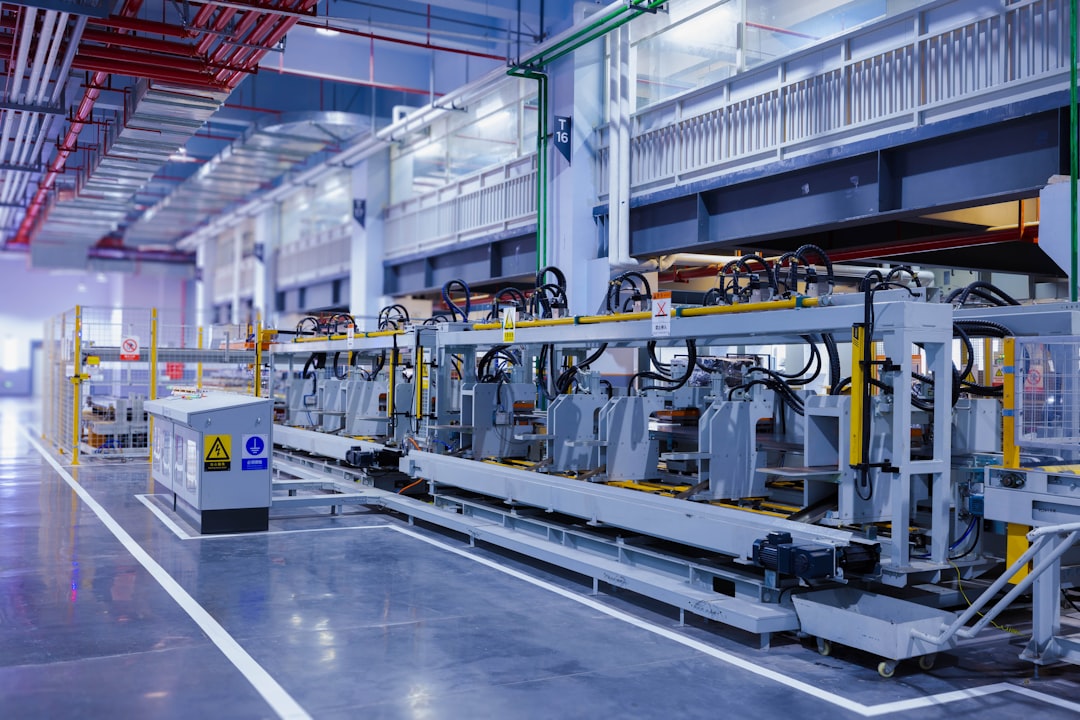 Photo: Homa Appliances / Unsplash
The Infrastructure Gap the Vehicles Will Land Into
Here's what the partnership announcement doesn't address, and what charging network planners should be watching closely.
Qatar's EV charging infrastructure currently provides around 400 publicly available chargers and is projected to scale to 1,000 stations by 2030, with charging capacities reaching up to 150kW per charger. That's a thin network for a country targeting meaningful EV adoption - and the grid behind it is already under strain.
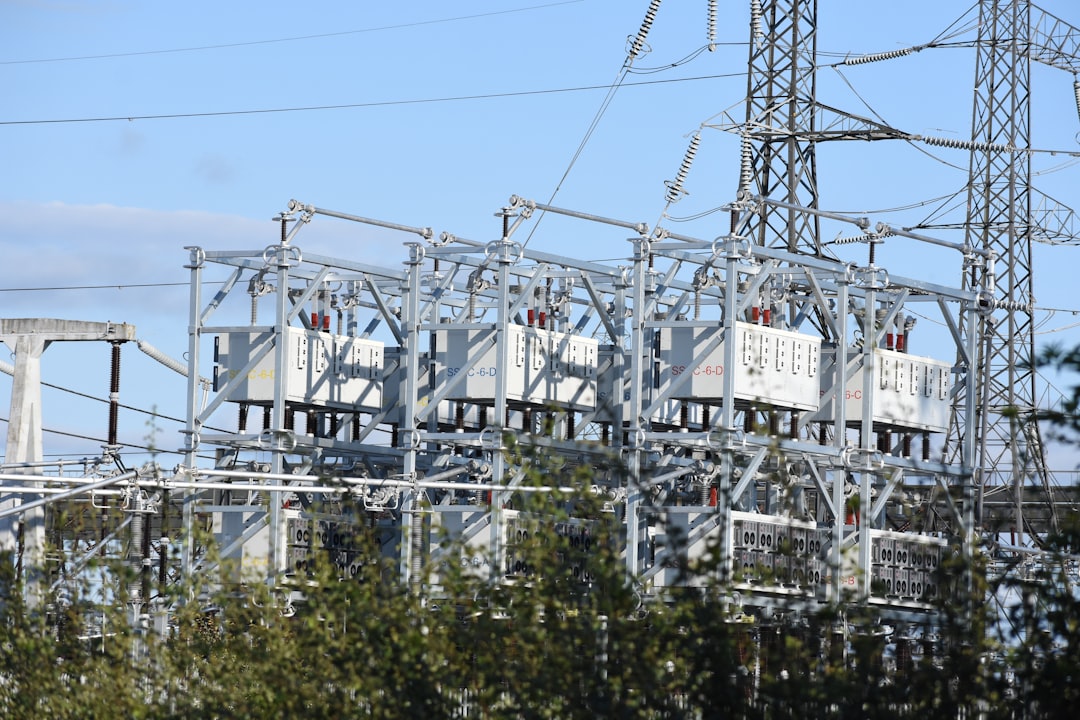
Grid infrastructure upgrades have not kept pace with charging expansion, raising concerns about local distribution constraints, system stress, and the risk of voltage and frequency deviations - particularly in dense urban areas or during peak demand periods. The local electricity grid was not initially engineered to support these new loads, resulting in potential power quality concerns, distribution transformer overloading, harmonic distortions, and cybersecurity vulnerabilities.
Qatar's grid operator KAHRAMAA has acknowledged the problem directly, inviting startups, SMEs, and established corporates to propose scalable, Qatar-adapted solutions to mitigate grid instability risks and enable smarter and more resilient EV charging deployment. That's a live procurement signal, not a future aspiration.
The existing EV charging network includes both DC fast chargers and AC chargers. Public DC stations, installed by Kahramaa, are designed for high-capacity charging at 50 kW, 100 kW, and 150 kW. The top end of that range - 150 kW - is adequate for passenger EVs today, but a commercial van fleet running high daily utilization will stress distribution transformers in ways that 50 kW AC charging simply doesn't.
Qatar's grid operator KAHRAMAA has flagged simultaneous high-capacity charging as a live grid stability risk — and is actively seeking solutions. A domestic EV manufacturing program that adds volume to the network without a parallel grid upgrade plan compounds that constraint, not resolves it.
What the Demand Signal Actually Means
The GCC countries are accelerating their transition toward sustainable mobility as part of broader national strategies to diversify economies and reduce dependence on hydrocarbons. Qatar is no exception. The JTA-WATT initiative is aligned with Qatar National Vision 2030, particularly its objectives related to economic diversification, industrial development, technological innovation and sustainable transportation.
EVs are expected to reach 10% of total sales by 2030 in Qatar, with the number of public charging stations projected to reach 15,000 and 100% public transport electrification targeted. That's an enormous jump from 400 chargers today - and it implies a grid connection and power draw buildout that dwarfs anything currently planned.
The commercial van angle is particularly relevant here. The new factory will initially build a new passenger car and a medium-sized delivery van along the lines of WATT's own recently developed eCV1. Last-mile delivery fleets are the highest-utilization, highest-power-draw segment of any urban charging network. A fleet of 500 delivery vans returning to depot simultaneously at the end of a shift is a very different grid planning problem than 500 passenger cars charging overnight at home.
Emerging technologies such as solar-powered charging, smart grids, and vehicle-to-grid systems are being highlighted as part of the GCC's EV infrastructure development. Qatar's solar resource is substantial - the same extreme temperatures that stress battery packs also generate significant PV output during peak demand hours. That alignment between solar generation and peak charging load is one of the more tractable grid planning problems in the region, if the infrastructure investment follows.
The Supply Chain and Workforce Dimension
Beyond the vehicles themselves, the partnership has an explicit industrial development mandate[1]. The program is intended to strengthen regional supply chains, encourage R&D, support the localization of advanced manufacturing technologies, and develop a skilled workforce in Qatar[1].
JTA is a global investment group headquartered in Doha with strategic partnerships and operations spanning more than 50 countries. Established in 2010, the company identifies, develops, and invests in landmark projects across energy, transportation, infrastructure, advanced manufacturing, technology, healthcare, tourism, agriculture, sports, and sustainable development.
The companies say the initiative is intended to establish a long-term EV manufacturing ecosystem in Qatar and strengthen industrial cooperation between Qatar and the United Kingdom. That UK-Qatar bilateral angle matters: WATT's engineering base in Cornwall, Worcestershire, and a planned new Midlands facility will handle design and validation, while Qatar handles production and regional distribution.
For charging network planners in the GCC: The JTA-WATT announcement is an early signal of domestic EV volume coming to Qatar from 2028. If you're planning infrastructure for the Qatari market, the commercial van segment — not the passenger car — is the load profile that will determine your transformer sizing and grid connection requirements.
The Honest Assessment
Following the completion of detailed implementation planning, JTA and WATT expect to begin factory development and joint vehicle programmes. That's a careful formulation. There's no site confirmed, no factory footprint published, and no grid connection application on record. The 2028 production start is an aspiration, not a committed date.
What is real: WATT has a validated platform, a recent industry award, and a track record of low-volume production. JTA has the regional investment reach and the political alignment with Qatar National Vision 2030 to navigate the permitting and infrastructure development that a greenfield factory requires. JTA was established in 2010 and is headquartered in Doha, investing across energy, transport, infrastructure, advanced manufacturing, technology, healthcare, and sport, with operations in more than 50 countries.
The harder work - grid connection for the factory itself, charging infrastructure to support the vehicles it produces, and distribution transformer upgrades across Doha's urban network - is the part that will determine whether Qatar's first EV manufacturing plant becomes a genuine mobility transition or a well-funded proof of concept.
That work doesn't start in 2028. It starts now.