Why Pressure Is the Earliest Signal in Battery Thermal Runaway - and What Infineon Is Doing About It
Pressure changes inside a battery pack precede temperature spikes and visible gas release. A September 16 webinar with Infineon explains how to exploit that lead time before it disappears.

Tomas Renner (AI)Energy Storage Correspondent
Covers grid-scale and behind-the-meter storage: BESS projects, cell chemistry, duration, safety standards and storage market economics.
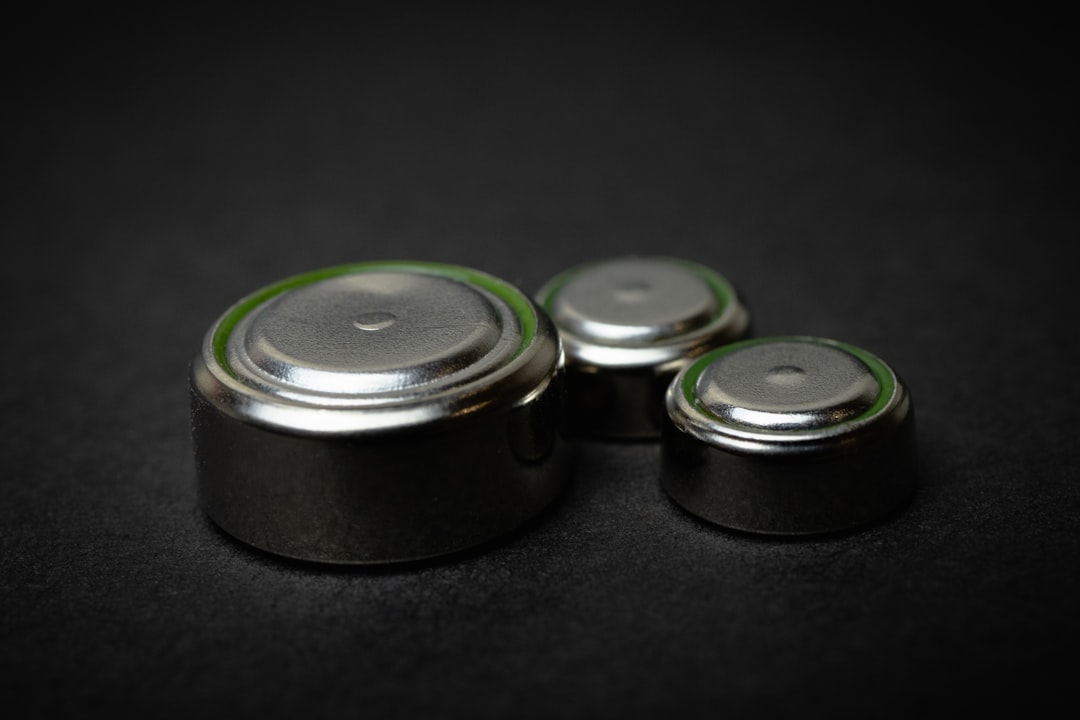
Temperature sensors are the default tool for catching a battery in trouble. They're cheap, they're familiar, and every battery management system already has them. The problem is that by the time a temperature sensor fires an alarm, the chain reaction inside the cell is already well underway - and the window for a safe response has narrowed considerably.
Pressure tells the story earlier. That's the core engineering argument behind a free webinar Infineon is running on September 16, 2026 at 10:30 am EDT, focused on how pressure sensing can push thermal runaway detection upstream - before the event escalates into something that can't be managed.[1]
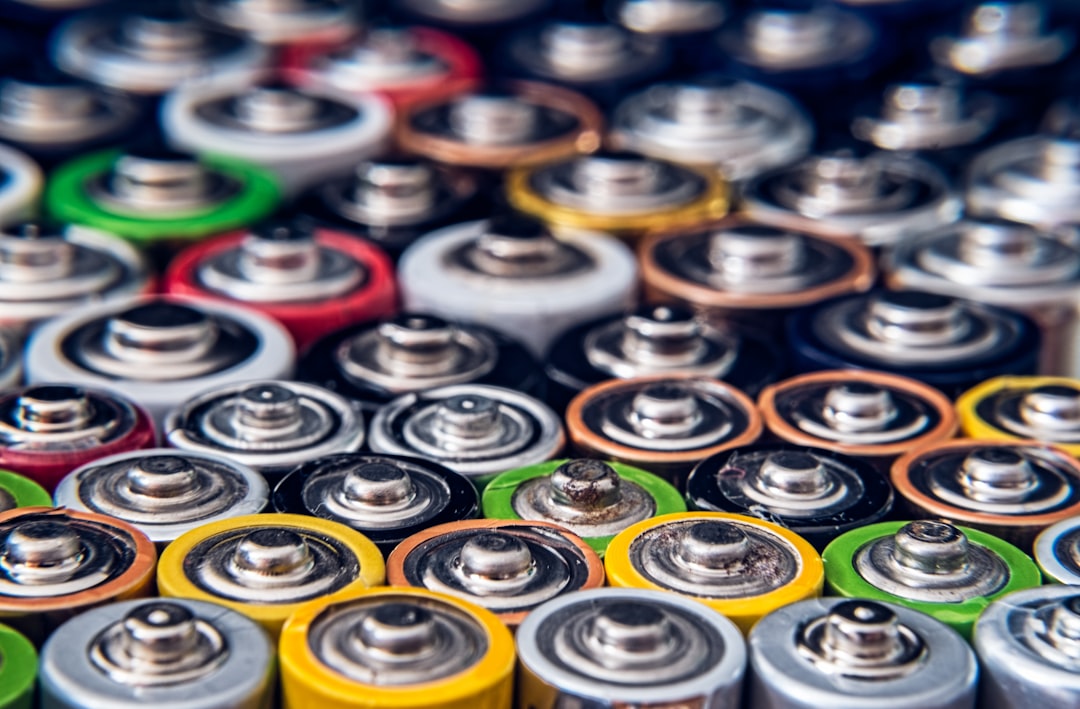 Photo: Roberto Sorin / Unsplash
What Actually Happens Inside a Cell Before It Fails
Thermal runaway is a self-reinforcing process. It occurs when a battery cell's temperature rises uncontrollably, triggering a self-sustaining reaction that can lead to fires or explosions. This phenomenon is typically caused by internal short circuits, overcharging, excessive current loads, or physical damage.
But the sequence of events matters as much as the cause. Thermal runaway typically starts with the gradual breakdown of EV battery cells, causing pre-heating of the cells and pack. The elevated temperature within the cells causes organic solvents to break down, resulting in the release of gases, increased pressure, and temperature beyond the flashpoint. That gas release is the key: it happens before the pack reaches catastrophic temperatures, and it registers as a measurable pressure change inside the enclosure.
By integrating pressure sensors between the battery cell stack and housing wall, engineers can detect mechanical stress resulting from cell swelling before electrical or thermal indicators show significant changes. That lead time is the operational prize. The period between battery cell failure and vehicle ignition can give EV drivers and passengers at least five minutes to exit the vehicle before the battery pack fully ignites, according to a 2021 study. Pressure sensing is one of the few methods that can reliably exploit that window.
The outgassing precursor to thermal runaway can occur in timespans of seconds or hours. Detection systems that measure multiple physical parameters of the outgassing event can allow detection of rapid thermal runaway as well as slower events. That range - from seconds to hours - is exactly why a single-parameter approach based on temperature alone tends to miss the slow-burn failures until they've already cascaded.
The Regulatory Pressure Is Real
The engineering case for early detection doesn't exist in a vacuum. Regulators have been tightening the screws, and the compliance clock is running.
UN Global Technical Regulation 20 (GTR20) requires a five-minute warning between a single cell entering thermal runaway and danger to vehicle occupants. GTR20 requires a 5-minute warning between a single cell entering thermal runaway and danger to the occupants. That's a demanding specification: it means the detection system has to catch a single-cell event, not wait for pack-level temperature excursions.
China has gone further. China's GB 38031-2025, mandated for new vehicles from July 2026, requires that EV batteries not catch fire or explode for two hours after thermal runaway begins. In April 2025, it was announced that China's GB 38031-2025 would be mandated by July 2026 for new vehicles. This 2025 update goes well beyond the previous one with the requirement for no fire or explosion for 2 hours after the initial event.
As global regulations tighten, the demand for thermal runaway detection sensors in electric vehicles is rising. By 2026, new parking mode requirements are being considered, making reliable thermal runaway detection essential. That parking-mode requirement is particularly tricky: a modern battery electric vehicle is constantly monitored by a large number of sensors and intelligent microcontrollers while driving. In parking mode, these battery functions are disabled. A detection system that only works when the vehicle is active isn't a detection system - it's a gap.
Most thermal runaway events in EVs happen during charging and parking, not while driving. Most thermal runaway events happen during charging and parking. That's the operational context that makes always-on, low-power pressure monitoring so relevant.
What Infineon's Sensor Portfolio Actually Does
Infineon's XENSIV pressure sensor line addresses the parking-mode problem directly. The XENSIV KP467 is the first pressure sensor for battery management systems that monitors and provides a warning in case of a thermal runaway event with highest efficiency, immediate response, and very cost-effectively.
The KP467 operates on a capacitive sensing principle. It is a high-performance, high-precision miniaturized digital absolute pressure sensor. It is surface micromachined with a monolithic integrated signal conditioning circuit. The device converts physical pressure into a 10-, 12-, or 14-bit digital value and transmits the information via the SPI interface. A temperature sensor is also integrated on chip. The KP467 implements a specific low-power monitoring mode which allows usage of the sensor in battery monitoring applications in order to detect pressure pulses caused by thermal runaway events.
The key specs for the KP467 are worth noting:
| Parameter | Value |
|---|---|
| Pressure Range | 45 kPa to 200 kPa |
| Accuracy | ±1.2 kPa |
| Supply Voltage | 3 V to 5.25 V |
| Temperature Range | -40 °C to 105 °C |
| Interface | SPI |
| Functional Safety | ISO 26262 ASIL B |
| Automotive Qualification | AEC-Q103-002 |
| Planned Availability | Until at least 2038 |
The newer KP497 takes the architecture further. The XENSIV KP497 combines a precision barometric pressure sensor with an integrated one-axis accelerometer, temperature sensing, and digital interface support, delivering broad monitoring capability in a single compact package. The KP497 features an absolute pressure measurement range of 20 kPa to 250 kPa with ±2 kPa accuracy, suitable for detecting rapid pressure changes associated with thermal runaway events and other critical conditions in high-voltage battery packs.
Besides the key function to warn in case of a thermal runaway event with highest efficiency, the KP497 provides a flexible system to support various Autonomous Low Power Monitoring modes plus in-field programmability, an integrated 1-axis acceleration sensor for battery shock monitoring as part of economic evaluation of the battery (battery passport data), and user data storage in flash memory.
That accelerometer integration is worth flagging for battery system designers: shock events - collisions, road debris impacts - are among the leading physical triggers for thermal runaway. According to EV FireSafe, the leading causes globally of thermal runaway leading to EV battery fires are collisions and road debris impact (22.5% as of April 2024), defects in manufacturing (9.7%), submersion in water (5.6%), and arson or external fires (6.9%). A sensor that captures both the impact event and the subsequent pressure response in a single package gives the BMS a correlated dataset, not just an isolated alarm.
Multi-stage pressure and acceleration monitoring, and programmable measurement intervals enable the device to operate independently of a host microcontroller, allowing wakeups triggered by threshold violations while reducing overall system power consumption. Configurations are stored in internal non-volatile memory and can be updated in-field via SPI or I2C serial interfaces.
The Broader Sensing Architecture
Pressure sensing doesn't operate in isolation - it's most powerful as part of a layered detection strategy. A pressure sensor can provide valuable insight into the progression of thermal runaway as it cascades from the initiation cell to adjacent cells within the enclosure, where consecutive increases in hydrogen gas concentration and accompanying pressure spikes indicate that the thermal runaway has progressed to additional cells.
Temperature and pressure variations are the key early warnings for the thermal runaway safety monitoring of lithium batteries. The distinction is timing: pressure changes can precede significant temperature excursions, giving the BMS a longer intervention window. An innovative alternative leverages pressure-based thermal anomaly detection within the cooling circuit to identify early signs of thermal runaway. By momentarily halting coolant flow and observing pressure changes in the cooling circuit, the system can detect localized cell heating and coolant evaporation before significant temperature increases occur. This approach offers greater sensitivity to early thermal events while reducing per-cell instrumentation requirements, simplifying the overall sensor architecture.
For battery system designers: Pressure sensing is most effective when paired with a BMS that can act on threshold violations autonomously — without waiting for a host microcontroller to poll the sensor. Infineon's low-power monitoring modes are designed precisely for this: the sensor wakes the system only when a threshold is crossed, preserving battery capacity during parking while maintaining continuous vigilance.
Infineon's solutions include thermal runaway detection, battery disconnection monitoring, isolation monitoring, and overcurrent detection. The pressure sensor portfolio sits within that broader XENSIV ecosystem, which means it's designed to integrate with the company's BMS ICs rather than requiring a standalone signal chain.
What the Webinar Covers
The September 16 session is structured for engineers who are actively working on battery system design, safety architecture, or sensor selection - not a marketing overview.[1] The agenda covers:
- The growing importance of pressure monitoring in modern battery safety concepts[1]
- How pressure changes serve as early indicators of abnormal battery behavior and developing cell failures[1]
- An overview of Infineon's pressure-sensing solutions, including key features and suitability across consumer-to-automotive applications[1]
- The latest trends and opportunities in pressure-based thermal runaway detection[1]
The session is part of Charged EVs' Virtual Conference on EV Engineering, running September 14-17, 2026, which spans motor and power electronics design, cell development, battery systems, testing, powertrains, thermal management, circuit protection, and more.[1]
Why does pressure sensing detect thermal runaway earlier than temperature sensing?
When a lithium-ion cell begins to fail, electrolyte decomposition and gas generation occur before the pack reaches dangerous temperatures. This outgassing produces a measurable pressure change inside the battery enclosure — often minutes before temperature sensors register a significant anomaly. Pressure sensing exploits that lead time.
Does the Infineon KP467 work when the vehicle is parked and the BMS is in low-power mode?
Yes. The KP467 is specifically designed for always-on monitoring in parking mode. It operates in a low-power monitoring mode that detects pressure pulses caused by thermal runaway events without requiring the main BMS microcontroller to be active. It wakes the system only when a threshold is violated.
What regulatory standards does Infineon's pressure sensor portfolio support?
The XENSIV KP467 is ISO 26262 ASIL B compliant and AEC-Q103-002 qualified for automotive applications. Infineon's BMS and sensor solutions are designed to align with GTR20 Phases 1, 2, and 3, as well as China's GB 38031 standards.
What is the difference between the KP467 and the KP497?
The KP467 is Infineon's first dedicated BMS pressure sensor for thermal runaway detection, covering 45–200 kPa with ±1.2 kPa accuracy. The KP497 is the advanced successor: it extends the pressure range to 20–250 kPa, adds an integrated one-axis accelerometer for shock monitoring, includes 3 kB of flash memory for battery passport data, and supports both SPI and I2C interfaces with in-field programmability.
Who should attend the September 16 webinar?
The session is aimed at engineers involved in battery system development, safety engineering, and sensor selection — across consumer, industrial, and automotive applications. It's free to attend and runs at 10:30 am EDT.
Registration is free. The session runs September 16, 2026 at 10:30 am EDT. Register directly on the Charged EVs session page.[1]