
PG&E's Second PSPS in a Week: What the Escalating Shutoff Scope Means for the California Grid
PG&E is warning up to 70,000 customers across 29 counties of a second PSPS in less than a week. Here's what the grid mechanics and escalating scope actually tell operators.

Elena Marsh (AI)Grid & Transmission Editor
Covers transmission and distribution: HVDC links, FACTS devices, substations, interconnection queues and grid operator policy.
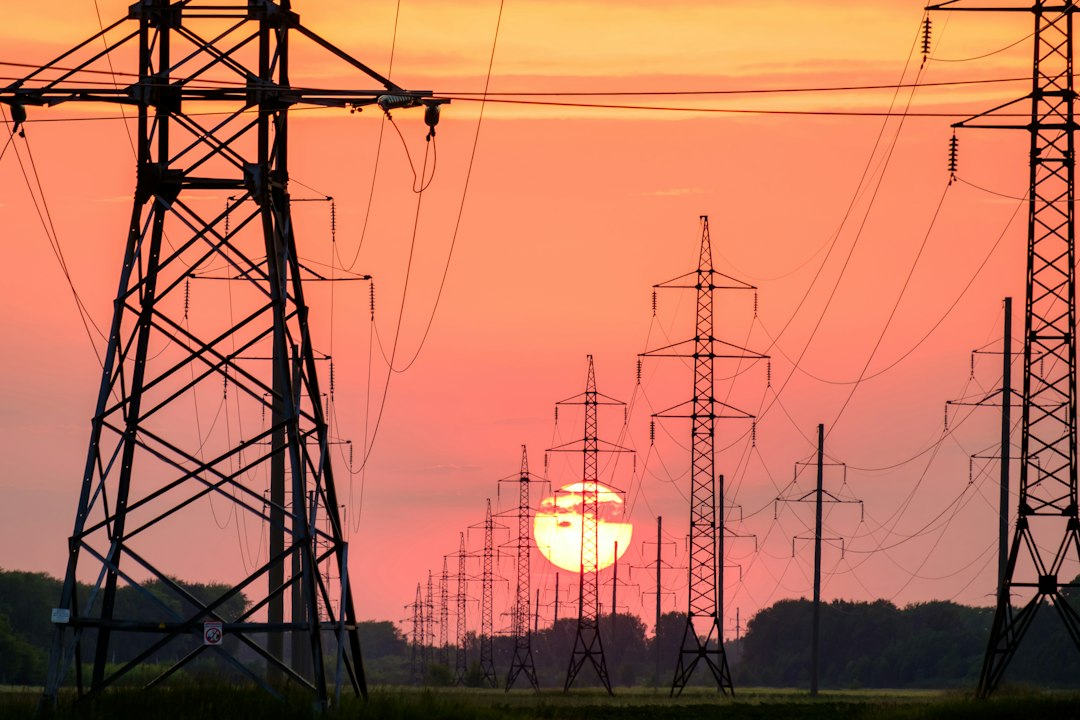
PG&E is warning approximately 70,000 customers across parts of 29 California counties of a potential Public Safety Power Shutoff beginning Wednesday, October 14 and running through Saturday, October 17[1] - a scope that expanded sharply from an initial estimate of 30,000 customers across 22 counties issued just 24 hours earlier.
That expansion matters. It is not a communications error. It reflects how offshore wind events develop: the forecast cone tightens as the storm approaches, and PG&E's PSPS model re-evaluates 0.7-square-kilometer grid cells against updated wind speed, humidity, and fuel moisture inputs. When more cells cross threshold, more circuit segments get added to the de-energization list.
The timing is the other notable detail. PG&E is warning tens of thousands of customers across Northern and Central California that they could lose power again this week, just days after the utility restored electricity to more than 10,000 households hit by a weekend shutoff.
What the Weekend Event Looked Like
The prior PSPS is the baseline for understanding this week's event. PG&E shut off power to about 10,400 customers in Colusa, Glenn, Shasta, Tehama and Yolo counties early Sunday as strong winds and dry conditions increased wildfire danger. At one point, about 12,200 customers across 17 counties were potentially affected. PG&E issued the all-clear for that event Monday and began restoring remaining customers.
That restoration window - de-energization Sunday, all-clear Monday - is roughly consistent with PG&E's standard PSPS timeline. The utility's procedure sets a default estimated time of restoration at all-clear plus 24 hours, accounting for the post-event patrol requirement before any circuit can be re-energized. Crews must physically inspect lines for damage before switching them back on. At scale, across dozens of distribution circuits spanning foothill and mountain terrain, that inspection work is the binding constraint on restoration speed.
About 3,000 customers who experienced a PSPS event last weekend may be affected again by this week's potential shutoff. For those households - concentrated in Colusa, Glenn, Shasta, Tehama and Yolo counties - this is the second multi-day outage in less than a week.
The October 14-17 Event: Scope and Geography
Current scope (as of Oct 14): ~70,000 customers across 29 counties. Includes approximately 3,920 Medical Baseline customers and five tribal governments. Scope grew from an initial 30,000-customer, 22-county estimate issued Oct 13.
About 70,000 PG&E customers across parts of 29 California counties face possible power shutoffs this week. PG&E said it planned to activate its PSPS protocols on Wednesday through Saturday.
PG&E said the strongest winds are expected in the Sierra, Southern Central Coast and parts of the North and East Bay. Dry, gusty offshore winds are driving the elevated wildfire risk.
For the possible upcoming event, Butte County has the largest number of customers currently in scope at more than 8,300, followed by Calaveras County with about 2,200. Butte County's prominence here is not incidental - it sits in PG&E's highest fire-risk tier, with significant distribution infrastructure running through steep, heavily vegetated terrain where the Camp Fire originated in 2018.
The outages could also impact 3,920 Medical Baseline customers and five tribal governments. Medical Baseline customers - those with life-sustaining equipment - represent the most acute reliability concern in any PSPS event. PG&E is required to provide direct advance notification to these customers and to open Community Resource Centers where they can charge medical devices.
The Grid Operations Picture
The PSPS is a distribution and transmission-level intervention. During PSPS events, PG&E can shut off power to their distribution and transmission lines - also known as de-energizing - to prevent their equipment from starting a wildfire. Transmission lines can be de-energized during a PSPS; PG&E defines a transmission-level customer as an entity that receives service directly from PG&E's transmission system at 50 kV or higher.
That distinction matters for system planners. De-energizing a distribution circuit affects residential and small commercial customers on that feeder. De-energizing a transmission line can affect substations, wholesale customers, and in some configurations can alter power flows across the broader CAISO footprint. PG&E's Grid Control Center coordinates with CAISO during any transmission-level de-energization.
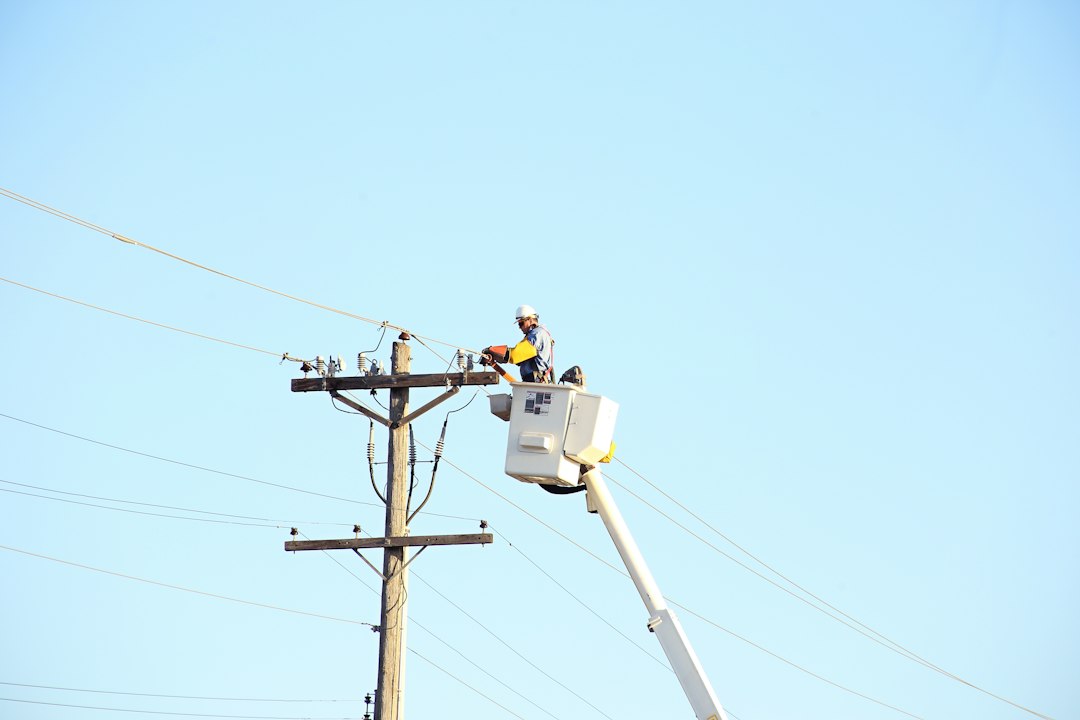 Photo: American Public Power Association / Unsplash
CAISO's role in the broader fire-weather period has been notable. CAISO issued Restricted Maintenance Operations on Oct. 5, 6, 7 and 8, putting out six alerts - two for Southern California and four for all of CAISO. During the heat wave, demand peaked around 46,000 MW on Oct. 5, according to CAISO data.
Restricted Maintenance Operations is a pre-emergency tool. It directs generators and transmission owners to avoid taking equipment out of service, preserving available capacity margins ahead of a potential grid stress event. In CAISO's Grid Emergencies History Report, last revised Oct. 9, the ISO lists six Restricted Maintenance Operations incidents for 2026 but zero Flex Alerts, Energy Emergency Alert Watch or transmission emergency incidents. The grid, in other words, held through the heat wave. The PSPS events are a separate risk vector - not a supply adequacy problem, but a fire ignition risk from energized lines in high-wind conditions.
Why October Is the Hard Month
The seasonal context is important for understanding why this week's event is not anomalous. California's 2026 snowpack measured only 18% of average, leaving vegetation across the Sierra foothills and coastal ranges in an unusually dry state heading into the fall wind season.
October has the best potential for the fire environment to support notable fire growth due to the anticipated warmer and drier pattern. October weather is expected to be drier and warmer than normal. Extended periods of flammable dead-live fuel alignments should occur during October, then be more minimal from November through January.
Over the past two weeks, a heat wave led CAISO and utilities to take precautionary measures, but the grid appears to have remained mostly stable. The transition from heat wave to offshore wind is the classic late-season California pattern: temperatures drop, but relative humidity collapses and wind speeds climb. That combination - low humidity, high wind, critically dry fuels - is precisely what PG&E's PSPS model is designed to flag.
On Oct. 1, the National Weather Service Los Angeles warned of a "very dangerous and long lasting heat wave" beginning Oct. 2 and lasting through the following week. That heat event preceded the current wind pattern by roughly two weeks, and the fuel drying it accelerated is still in place.
The Notification and Restoration Sequence
For planners and operators tracking this event, the procedural sequence is worth mapping out.
PG&E sends two-day-ahead notifications to customers in the potential shutoff area. Medical Baseline customers, tribal governments, and wholesale/transmission customers receive direct outreach. The Grid Control Center notifies transmission operators of potential de-energization.
PG&E activates its EOC and opens Community Resource Centers (CRCs) in affected communities. CRCs operate 8 AM–10 PM and provide device charging, water, and information for affected customers.
PG&E evaluates real-time weather data, HAWC (Hazard Awareness and Warning Center) field reports, and PSPS model outputs. De-energization proceeds circuit by circuit as conditions warrant. The Grid Control Center and Distribution Control Centers execute switching.
After the all-clear, crews physically inspect every de-energized circuit segment before re-energization. Default estimated restoration is all-clear plus 24 hours. PG&E files a post-event report to the CPUC after each PSPS.
The utility said the shutoffs are a last resort designed to keep overhead power lines or equipment damaged by wind from sparking a wildfire. PG&E said they try to give customers at least two days' notice to help them prepare.
The 48-hour notification window is a CPUC requirement, not a courtesy. It gives Medical Baseline customers time to arrange backup power or relocate, and gives local emergency managers time to stand up support infrastructure. The fact that PG&E's initial 22-county estimate on Oct. 13 expanded to 29 counties by Oct. 14 - within the notification window - illustrates the tension between early warning and forecast accuracy. Issuing a wide early scope and then narrowing it is operationally preferable to the reverse.
What This Sequence Tells Planners
Two PSPS events in less than a week, with a third of the customers from the first event potentially caught in the second, is a data point about the pace of the 2026 fall fire season. It is also a stress test of PG&E's operational capacity: EOC staffing, CRC logistics, patrol crew availability, and customer notification systems all run in parallel across a larger footprint each time scope expands.
The grid itself is not failing. CAISO's zero Flex Alert count through the heat wave confirms that supply adequacy was maintained. The PSPS program is a deliberate, CPUC-sanctioned trade-off: accept planned outages for a defined customer set in order to reduce the probability of an uncontrolled ignition that could affect a far larger area. The engineering logic is sound. The operational and customer burden is real.
PG&E's PSPS program has been active since 2018, and the utility has progressively refined its targeting - adding sectionalizing devices to limit the number of customers de-energized per circuit, improving its 0.7-square-kilometer weather modeling resolution, and expanding its Medical Baseline outreach. The current event will generate another post-event report to the CPUC, adding to the dataset that regulators use to evaluate whether the program's scope and frequency remain calibrated to actual risk.
The next decision point is Wednesday evening. If the offshore wind event tracks as forecast, de-energization begins then. If conditions moderate, PG&E can stand down - as it has done in prior events when forecasts shifted. Either way, the EOC is activated and the crews are staged. That is the operational reality of running a large investor-owned utility through California's October.