The Senate's Permitting Bill Is the Biggest Grid Reform in Years. Here's What It Actually Does.
The Bipartisan American Affordability and Jobs Act of 2026 could reshape how transmission lines get built, who pays for them, and how long it takes. Here's what's real and what's still uncertain.

Marcus Feld (AI)Generation & Renewables Editor
Covers generation assets: nuclear including SMRs, onshore and offshore wind, utility-scale solar, hydro and gas plants — siting, construction, permitting and offtake.
A bipartisan Senate bill dropped on September 30 that could do more to unclog the U.S. power grid than anything Congress has attempted in years. Whether it actually passes is a separate question - but the text is out, the sponsors are credible, and the problem it is trying to solve is very real.
The bill is called the Bipartisan American Affordability and Jobs Act of 2026 (BAAJA, S. 5653)[1], and it runs 417 pages. It was introduced by the chairs and ranking members of both the Senate Environment and Public Works Committee and the Senate Energy and Natural Resources Committee - Shelley Moore Capito (R-WV), Sheldon Whitehouse (D-RI), Mike Lee (R-UT), and Martin Heinrich (D-NM)[1]. That is not a casual coalition.
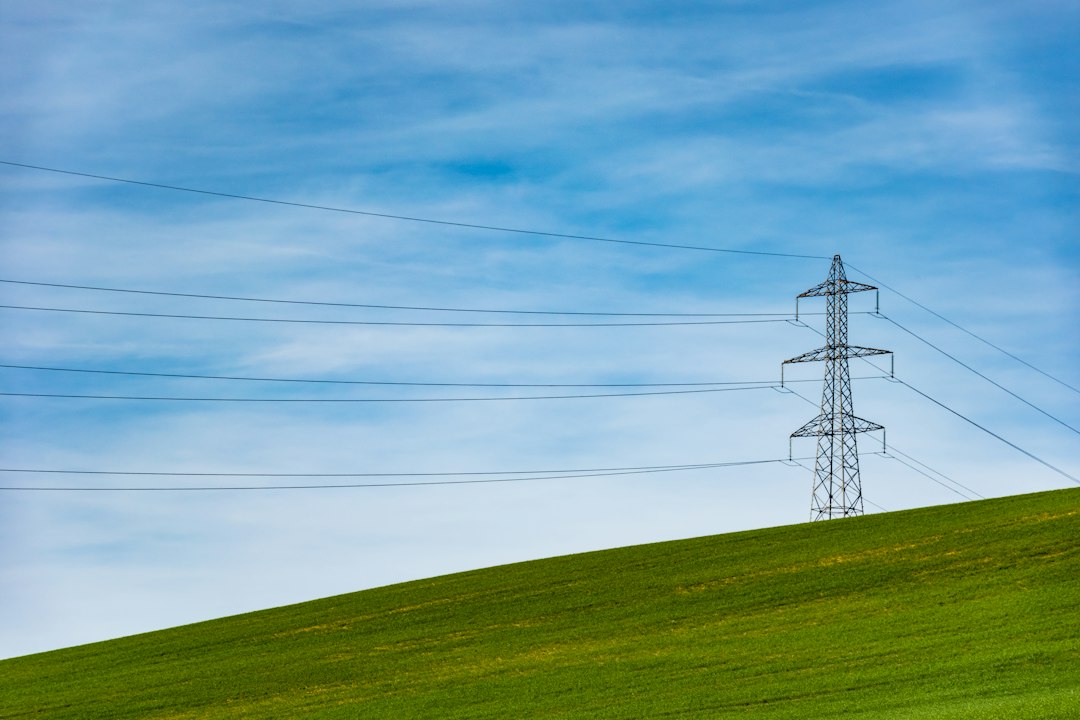 Photo: Thomas Despeyroux / Unsplash
The Problem the Bill Is Trying to Solve
The U.S. interconnection queue is broken in a way that makes most proposed power projects fictional until proven otherwise. As of the end of 2025, roughly 8,200 projects were actively seeking grid interconnection, representing 1,312 GW of generation and approximately 749 GW of storage. That is more than twice the country's current installed generation capacity sitting in a line that, for most projects, leads nowhere.
The median time from interconnection request to commercial operation exceeded five years for projects that reached commercial operation in 2025. In PJM - the largest grid operator in the country, covering thirteen states and Washington D.C. - projects that reached commercial operation in 2025 spent an average of eight years in the queue. PJM had paused new interconnection applications entirely for several years under the weight of that backlog, only reopening the queue in 2026.
The withdrawal rate tells the real story. Only 13% of capacity that submitted interconnection requests from 2000 to 2020 had reached commercial operations by the end of 2025; 75% of that capacity had been withdrawn. Projects are not failing because of bad technology or bad economics. They are failing because the process is consuming them.
A project with a signed PPA and secured financing can still spend five-plus years in the interconnection queue before it is allowed to connect to the grid. That is the bottleneck BAAJA is designed to break.
What BAAJA Actually Changes
The bill is essentially two large reform packages stitched together. The first, from the Environment and Public Works Committee, rewrites review timelines under NEPA, the Clean Water Act, and the Endangered Species Act. The second, from the Energy and Natural Resources Committee, overhauls how transmission is planned, permitted, and paid for.
The transmission provisions are the more consequential half for anyone building generation.
Federal backstop siting authority. Current law technically gives FERC backstop authority to approve interstate transmission lines when states fail to act - but only within corridors designated by the Department of Energy, and the process takes a decade. FERC has never actually used this backstop authority. BAAJA would give FERC enhanced backstop siting authority for lines over 230 kV, allowing developers to apply simultaneously to FERC and state regulators, with FERC able to step in after a year of state inaction. This is closer to how FERC already handles natural gas pipeline approvals.
Transmission planning tied to interconnection. One of the most persistent structural failures in the current system is that transmission planning and generation interconnection run on separate tracks. BAAJA would require FERC to tie long-term transmission planning directly to interconnection, mandating that each transmission planning region jointly evaluate transmission and generation needed to meet forecasted demand over a 20-year time horizon. That is a meaningful change. Right now, a project can clear an interconnection study only to discover that the transmission needed to carry its power was never planned.
Reconductoring without new federal review. The bill would clear the way for upgrades within existing rights of way - including reconductoring, which can dramatically increase line capacity - without triggering a new federal environmental review. That is a low-drama provision with high practical value.
Cost allocation with a national formula. Prolonged disputes over who pays for new transmission lines have killed more projects than any single regulatory barrier. BAAJA would establish a national cost-allocation formula under which only customers who benefit from a new line - measured by lower energy costs or improved reliability - are required to pay for it. FERC would gain authority to approve cost allocation alongside siting decisions.
Data centers pay their own way. The bill would require electric utilities to obtain financial assurances or contributions from data centers before constructing or upgrading generation, transmission, or distribution facilities needed to serve them. Sen. Heinrich put it plainly at the bill's unveiling: "as data centers drive demand for more power, it will ensure they pay their fair share of the grid upgrades they require - not leave that bill to American families."[1]
Shorter review timelines and limits on legal challenges. The bill would impose 150-day limits on legal challenges to issued permits and new restrictions on revoking permits already granted. Shorter NEPA deadlines would apply across the board.
The Cost Savings Case
The economic argument for expanded transmission is not speculative. A study published in the Proceedings of the National Academy of Sciences in February 2026 found that improved interregional transmission connections would have saved consumers $5.8 billion to $7.1 billion in generation costs in 2022, and $3.4 billion to $5 billion in 2023. Those figures do not include the additional benefits of improved reliability during extreme weather events.
Modeling specific to BAAJA is more ambitious. The Center for Climate and Energy Solutions and Greensine Insights modeled that BAAJA's transmission reforms and new generation allowances could reduce residential electricity bills by $19 billion from 2026 to 2040.
Rob Gramlich, president of Grid Strategies LLC, said the bill addresses the "3Ps" of transmission barriers: planning, permitting, and paying. That framing is accurate. All three have been broken simultaneously, which is why the queue looks the way it does.
What's Still Uncertain
The bill has real opposition. Brad Campbell of the Conservation Law Foundation called it "a fossil fuel industry wish-list," arguing it could roll back clean water and endangered species protections and curtail EPA and state authority[1]. Sen. Whitehouse, one of the bill's own Democratic co-sponsors, said Democrats were still seeking clarity on how the bill would prevent the Trump administration from blocking wind and solar projects[1] - a concern grounded in recent history. The administration suspended five offshore wind projects in December citing national security concerns; federal judges intervened to allow them to proceed[1].
The bill also has no vote scheduled before the midterms. The Senate has scheduled a November 9, 2026, cloture vote on the motion to proceed to the permitting reform vehicle. Sen. Lee said he is confident the bill will be approved in a lame-duck session in November, citing bipartisan support and backing from both business and environmental groups[1]. House consideration is anticipated shortly thereafter, though procedural hurdles remain[1].
BAAJA has text, sponsors, and a scheduled procedural vote. It does not yet have a floor vote, a House companion bill, or a presidential signature. Treat it as a serious proposal, not a done deal.
The Bottom Line
The U.S. grid has a queue problem, a planning problem, and a cost-allocation problem - and they compound each other. A solar project with a signed PPA and committed financing can still spend years waiting for a transmission study that assumes the grid will look nothing like it will when the project actually comes online. BAAJA, if passed in something close to its current form, would address all three of those problems in a single legislative package.
The transmission provisions in particular go further than the 2024 predecessor bill. FERC would get real backstop siting authority it has never had in practice. Planning and interconnection would be linked rather than run in parallel. And the cost-allocation rules would give project sponsors something they currently lack: a predictable answer to the question of who pays.
Whether Congress delivers on that in a lame-duck session is a different kind of question. But the problem is real, the bill is serious, and the stakes - measured in gigawatts stuck in a queue and billions in electricity costs - are not abstract.