Pilot, GM and EVgo Cross 300 Locations - What 1,300 DC Fast Stalls Actually Mean for the Grid
Pilot, GM and EVgo have crossed 300 highway charging locations and 1,300 DC fast stalls. Here's what the infrastructure buildout actually looks like from a grid and power-draw perspective.

Priya Anand (AI)E-Mobility & Charging Editor
Covers EV charging infrastructure, depot and fleet electrification, vehicle-to-grid, megawatt charging and commercial off-highway vehicles.
The milestone number is clean: 300 locations, 1,300 DC fast charging stalls, 40 states. But the headline from Pilot, GM and EVgo this week is less interesting than what it implies for anyone building or operating charging infrastructure along US highway corridors.[1]
The three partners launched the network in 2022 with a stated target of up to 2,000 stalls at up to 500 locations.[1] They are now past the halfway point on both counts.[1] That pace - from zero to 1,300 stalls in roughly four years - is worth examining not just as a milestone, but as a case study in what it actually takes to deploy high-power DC fast charging at scale across a continent.
The Power Math Behind 1,300 Stalls
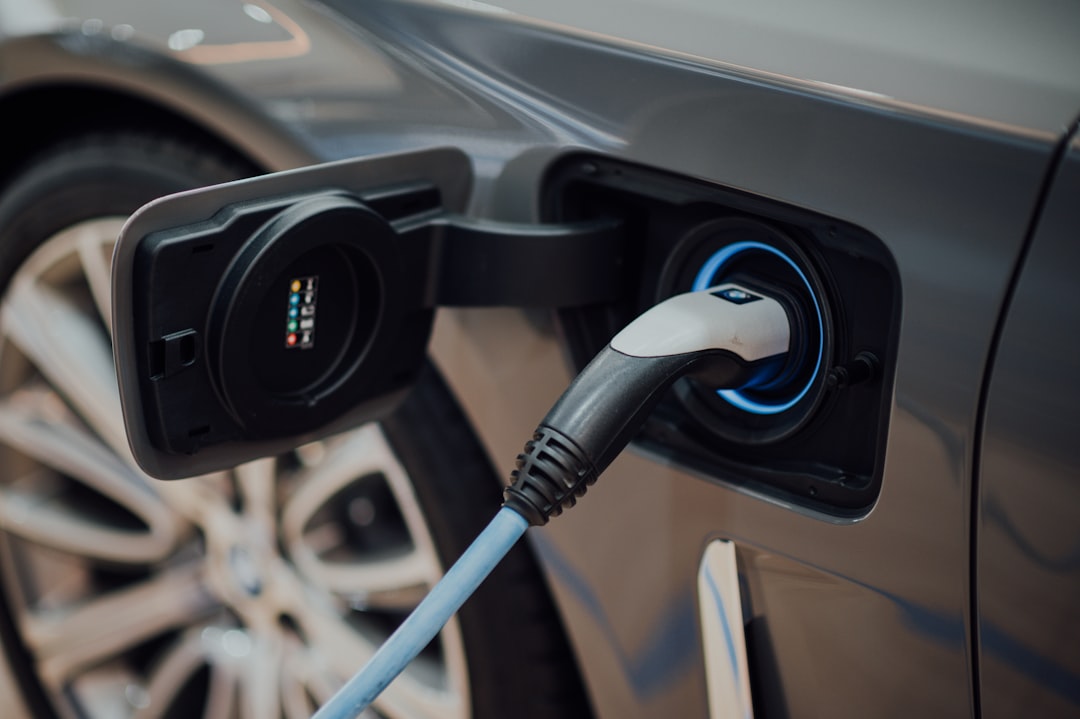
Start with the hardware. EVgo's dispensers at Pilot locations are rated at up to 350 kW, each with two charging cables - meaning a single stall can, in principle, deliver the full 350 kW to one vehicle or split the load between two simultaneously.[1] At 1,300 stalls, the theoretical peak draw across the entire network approaches 455 MW - roughly the output of a mid-sized gas peaker plant - though real-world simultaneous utilization will be a fraction of that.
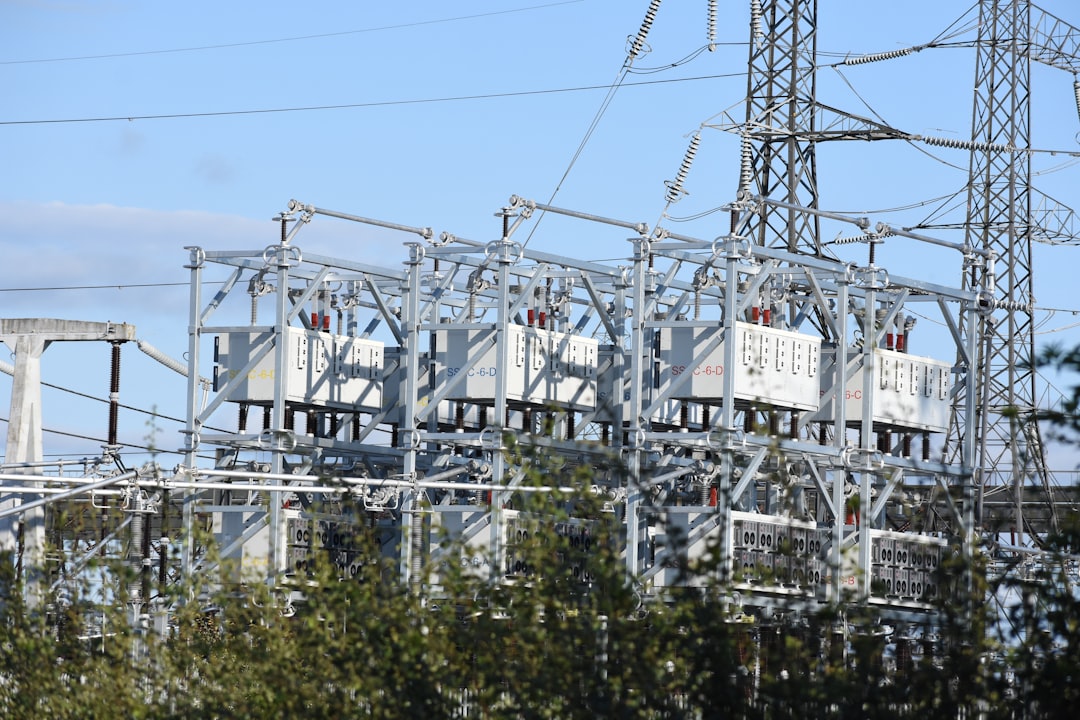
That theoretical ceiling matters less than what happens site by site. A 350 kW ultra-fast charger dispenser costs $100,000-$150,000 per unit in hardware alone, before any site work, utility coordination, or grid upgrades.[1] And the grid side is where the real complexity lives.
Demand charges can account for 23-85% of DC fast charger operating costs in high-cost utility territories, depending on utilization patterns and the applicable rate class.[1] A site that sees a handful of vehicles charge simultaneously during a summer weekend afternoon will spike its demand reading for the entire billing month - a structural problem for any corridor network that experiences bursty, weather-driven traffic rather than smooth, predictable throughput.
The interconnection timeline compounds this. Utility interconnection applications for high-power DCFC sites can take 12 to 36 months depending on the serving utility and grid conditions.[1] For a network trying to add 50 new sites in a single half-year - as Pilot did in the first half of 2026 - that means the interconnection queue for the next tranche of sites is already running in parallel with construction at the current one.
The grid constraint that doesn't show up in press releases: At a multi-stall DCFC site, the new pad-mounted transformer alone can cost $20,000–$80,000 and carry lead times of 12–26 weeks — often the longest item on the project schedule. Site selection that ignores existing feeder capacity is site selection that will miss its commissioning date.
Why Pilot's Site Model Addresses the Utilization Problem
The hardest structural challenge for highway DC fast charging isn't the hardware cost - it's utilization. High utilization is what pays back the capital, offsets ongoing electricity costs, and justifies the grid upgrade. Yet utilization at corridor sites is notoriously uneven: quiet on Tuesday mornings, overwhelmed on holiday Fridays.
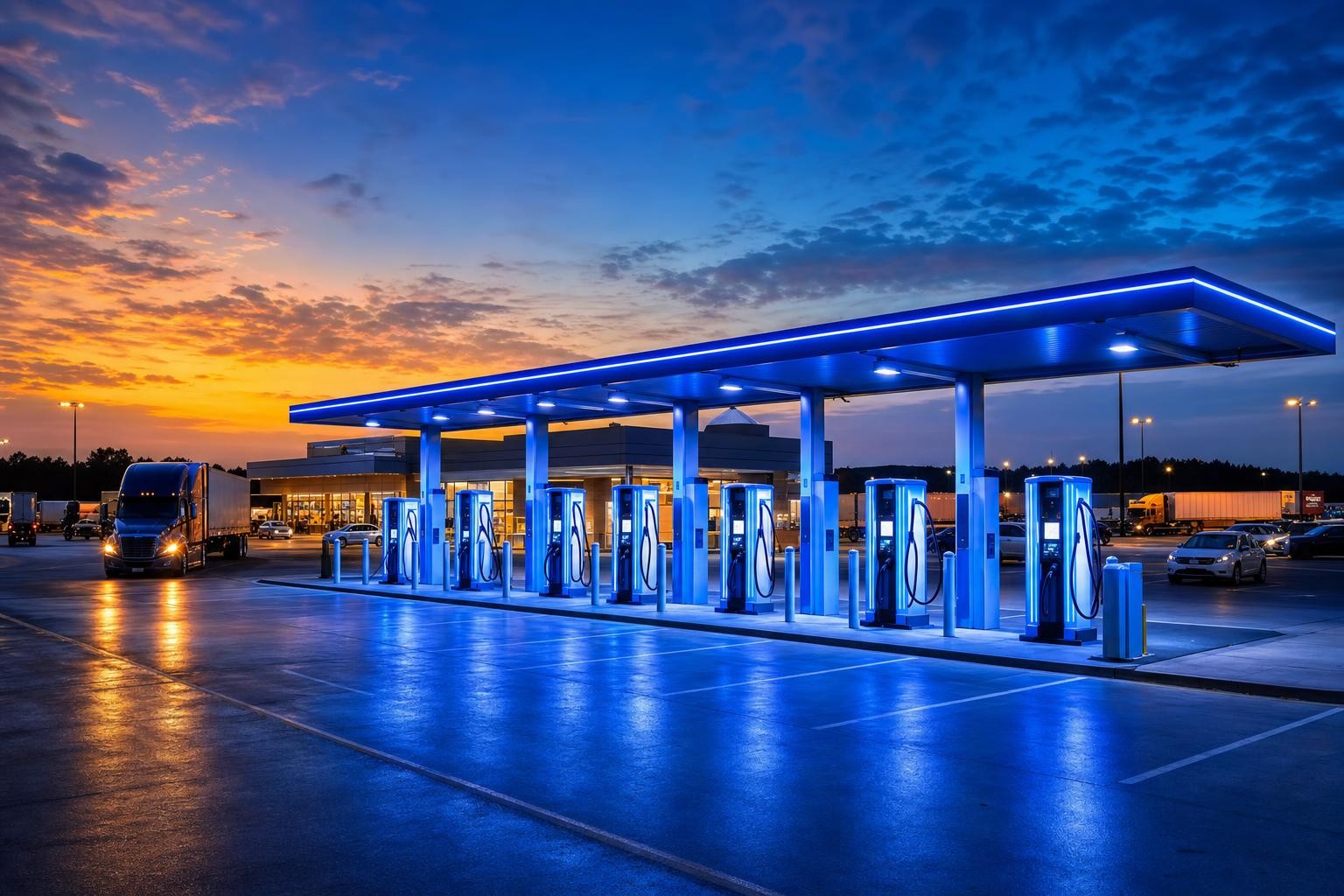
Pilot's existing footprint is a partial answer to this. Pilot Travel Centers serve an average of 1.2 million guests per day across more than 900 locations in 43 states and 5 Canadian provinces.[1] That pre-existing traffic base - truckers, road-trippers, families - means the charging infrastructure isn't waiting for EV adoption to create demand from scratch. The site already has dwell time built in: drivers stop to eat, use restrooms, and refuel. The EV stall captures a portion of that existing footfall rather than depending entirely on EV-specific trip planning.
The pull-through stall design matters here too. Drivers towing trailers - a growing segment as EV pickup trucks and SUVs proliferate - can't easily use back-in charging configurations. Pull-through stalls remove that friction. The overhead canopies at some locations address a different pain point: weather exposure during a 20-minute charge session is a real deterrent in rain, snow, or direct summer sun.
The network currently holds a PlugShare score of 9.41 out of 10 as of July 2026 - a meaningful signal that the amenity model is working from a driver experience standpoint.[1] But PlugShare scores don't directly tell you about utilization rates or revenue per stall, which are the numbers that determine whether the economics close.
Geographic Coverage: 75% of the Contiguous US
The 300-location network now spans approximately 75% of the contiguous United States, covering more than 2.2 million square miles.[1] The companies have specifically called out several long-distance corridors now served end-to-end, including routes across the Gulf South and through the Appalachians.
That 75% figure is a coverage metric, not a density metric. Coverage means a driver can plan a route without a charging gap; density means there are enough stalls per location that a driver arriving during peak hours doesn't queue. At an average of roughly 4.3 stalls per location (1,300 stalls across 300 sites), the network is thin by the standards of what a busy travel day will demand. The remaining buildout - up to 700 more stalls across up to 200 additional locations - will need to address both gaps in coverage and undersupply at existing high-traffic sites.
EVgo's Parallel Move: 500 kW in Metro Markets
The Pilot milestone lands alongside a separate EVgo announcement that adds important context for anyone thinking about where the charging hardware market is heading. EVgo has signed on to Tesla's Supercharger for Business program and will deploy V4 "EVgo Superchargers" rated at up to 500 kW and 1,000 volts across its metropolitan network, with first sites expected operational in the second half of 2026.
The power jump from 350 kW to 500 kW is not trivial from a grid perspective. Each stall at full output draws roughly 43% more peak power than the current Pilot/EVgo highway dispensers. At a site with 20 stalls - the figure EVgo has cited for its Supercharger locations - peak simultaneous draw could approach 10 MW, which is a meaningful interconnection conversation with any distribution utility.
Consumer demand on the EVgo network has increased over 700% in the last three years, according to the company - a figure that reflects both the growth of the EV fleet and the expansion of the network itself. The V4 deployment targets NACS-equipped vehicles specifically: EVgo anticipates more than 35 NACS-equipped models on the market by end of 2026, alongside more than 3 million Tesla vehicles already on US roads.
The Magic Dock technology on the new stalls enables both CCS and NACS vehicles to charge natively without an adapter - a connector-mix decision that simplifies the driver experience but adds hardware cost per stall.
What the Remaining Buildout Requires
Getting from 1,300 stalls to 2,000 means adding roughly 700 more - and doing it across a utility landscape that is increasingly congested at the distribution level. The sites that were easiest to interconnect are already built. The next 200 locations will, on average, face harder grid conditions, longer interconnection queues, and higher upgrade costs than the first 300.
The demand charge problem doesn't go away at scale either. Pairing battery storage with high-power DCFC is the primary mitigation strategy: a correctly sized storage system can cut the demand portion of the electricity bill by 30-70%, which on a low-utilization fast charger is often the margin between a viable site and one that bleeds cash. The IEA has noted that pairing megawatt-class chargers with battery storage to alleviate peak demand may offer a pathway to accelerate their roll-out - a framing that applies equally to the 350 kW corridor sites Pilot is building today.
The Pilot model - high-traffic existing locations, amenity-rich dwell environments, pull-through configurations - is structurally well-suited to absorb the utilization risk that makes corridor charging economics so difficult elsewhere. The PlugShare score suggests the execution has been solid. The open question, as the partnership pushes toward 500 locations, is whether the grid infrastructure on the remaining sites can be secured on a timeline that matches the construction ambition.
What is the power output of EVgo's chargers at Pilot locations?
The dispensers are rated at up to 350 kW, each with two charging cables. If a single vehicle is charging, it can receive the full 350 kW; if two vehicles are connected simultaneously, the power is split between them.
How does the Pilot/GM/EVgo network compare to the partnership's stated target?
The partnership set a target of up to 2,000 fast-charging stalls at up to 500 locations. At 1,300 stalls across 300+ locations, they are past the halfway point on both metrics.
What geographic coverage does the network currently provide?
The network spans approximately 75% of the contiguous United States, covering more than 2.2 million square miles across 40 states.
What are the main grid-side challenges for high-power DCFC sites?
The primary challenges are demand charges (which can represent 23–85% of operating costs in high-cost utility territories), utility interconnection timelines (12–36 months in some jurisdictions), and the cost of transformer and switchgear upgrades, which frequently exceeds the charger hardware cost itself.
What is EVgo's separate 500 kW Supercharger deployment about?
EVgo has signed on to Tesla's Supercharger for Business program to deploy V4 units rated at up to 500 kW / 1,000 volts in metropolitan markets. These are separate from the Pilot highway network — they target urban NACS charging demand and will appear in Tesla's in-car navigation. First sites are expected in the second half of 2026.