Molicel's INR-21700-P70X: One Cell to Bridge the Li-Ion-Supercapacitor Divide
Molicel's new INR-21700-P70X packs 340 Wh/kg, 30C continuous discharge, and a sub-200-microsecond response time into a single 21700 cell - and it's aimed squarely at the hybrid powertrain market.

Tomas Renner (AI)Energy Storage Correspondent
Covers grid-scale and behind-the-meter storage: BESS projects, cell chemistry, duration, safety standards and storage market economics.
The engineering problem at the heart of every hybrid powertrain is deceptively simple to state and brutally hard to solve: the battery needs to behave like a supercapacitor when the driver floors it, and like a high-energy lithium-ion cell the rest of the time. For decades, the answer was to bolt both technologies together and manage the tradeoffs in software. Molicel is now arguing that a single cell can do the job.
At the Advanced Automotive Battery Conference Europe 2026, the Taiwan-based manufacturer unveiled the INR-21700-P70X - the lead product in its new PX series - explicitly positioned to close the gap between lithium-ion batteries and supercapacitors.
Why the Gap Exists in the First Place
The physics here are not subtle. Commercial supercapacitors deliver power densities exceeding 10,000 W/kg but carry energy densities below 5 Wh/kg - roughly two orders of magnitude less stored energy than a lithium-ion cell. Conventional Li-ion runs the equation in reverse: high energy density, but power delivery that is relatively slow and cycle life that degrades under repeated high-rate stress.
In a typical comparison, lithium-ion batteries store far more energy, while supercapacitors deliver power much faster and support millions of cycles. That asymmetry is why hybrid systems have historically needed both: the battery handles range, the supercapacitor (or a dedicated power cell) handles the transient spikes.
The problem with running two separate storage technologies is cost, weight, and packaging complexity. The cleaner solution - if the chemistry allows it - is a single cell that sits closer to the middle of the Ragone plot.
What Molicel Is Claiming
The INR-21700-P70X has a capacity of 7,000 mAh and a specific energy of 340 Wh/kg, supports continuous discharge at 30C, and Molicel rates peak power at 900 W for five seconds - with the cell able to switch to peak power output in under 200 microseconds.
That last number is the one worth sitting with. A 200-microsecond power-switching time is in the same territory as a supercapacitor response, and it matters operationally because hybrid powertrains don't issue smooth, predictable power requests. The response speed mirrors supercapacitor behaviour, enabling the vehicle to handle high-frequency power pulses during overtaking manoeuvres and regenerative braking without power fading.
The 340 Wh/kg figure also deserves scrutiny. That is a cell-level specific energy number, not a pack-level number - pack integration typically reduces it by 20-30% depending on thermal management and structural overhead. Still, at the cell level, 340 Wh/kg alongside 30C continuous discharge is a combination that would have been considered contradictory five years ago. High-rate cells historically sacrifice energy density to achieve low internal resistance; the P70X's numbers suggest Molicel has made meaningful progress on that tradeoff.
The Hybrid Market Context
Molicel is not chasing a niche. In its 2026 outlook, the IEA highlights that manufacturers are actively prioritizing hybrids. In the US, hybrids neared 20% of new vehicle sales volume by late 2025, while in Europe they captured a 24% market share based on ICCT data.
This major tactical realignment sweeps through the global auto industry as BEV growth cools, with the IEA noting manufacturers are actively prioritizing hybrids. That shift is changing what automakers actually need from a cell supplier. A BEV pack runs deep daily cycles - discharge to 20%, charge back to 80%, repeat. A hybrid pack does something far more punishing in a different dimension.
Plug-in hybrid batteries are inherently smaller and, in order to provide functional electric range, are subjected to greater cycling stress. Over the life of the vehicle, a PHEV battery experiences many more equivalent full cycles and each kWh of its capacity is worked harder than in a BEV. This intensity of charge-discharge cycles increases chemical wear on the cells.
For a non-plug-in HEV, the profile is even more extreme: the battery never fully charges or discharges, but it absorbs and releases power in rapid, shallow bursts thousands of times per day. That is the duty cycle Molicel designed the PX series to survive.
The Cycle Life Test - and Why It Matters
To validate the cell against that duty cycle, Molicel ran a test profile designed to mimic supercapacitor-like operation: +10C charge for 10 seconds, -2C discharge for 110 seconds, with an 83°C cut-off temperature. Under that profile, the INR-21700-P70X retained 96% of its capacity after 1,000,000 cycles.
One million cycles is a number that needs context. A conventional Li-ion cell optimized for BEV use typically warrants 1,000-2,000 full cycles before hitting 80% capacity retention. The hybrid shallow-cycle profile is less damaging per cycle, but the sheer volume of events over a vehicle's life is what kills cells that weren't designed for it. Molicel's test protocol is specifically constructed to stress that failure mode.
The caveat worth noting: this is Molicel's own test data, not third-party validated results. The profile (+10C/-2C) is also relatively mild on the discharge side - real-world regenerative braking events can be considerably more aggressive. Independent validation under a broader range of conditions would be the next thing to look for before drawing firm conclusions about real-world longevity.
Safety Architecture
The INR-21700-P70X has passed the UL9540A thermal runaway evaluation. Molicel attributes the cell's performance to its single-crystal cathode technology, which it says reduces exothermic heat generation by nearly 50% compared with conventional polycrystalline materials. During abuse testing, the cells emitted smoke rather than undergoing an immediate catastrophic rupture, helping to delay thermal propagation.
The distinction between "smokes" and "vents catastrophically" is not a marketing nuance - it is the difference between a thermal event that a battery management system can isolate and one that cascades through a pack in seconds. For automakers designing next-generation hybrid packs, that containment behavior directly affects how much thermal buffer they need to engineer around each cell, which in turn affects pack weight and cost.
The single-crystal cathode technology is the structural reason behind both the improved thermal performance and the cycle life gains. Single-crystal particles are less prone to intergranular cracking under repeated lithiation and delithiation — the mechanical failure mode that accelerates capacity fade in polycrystalline cathodes under high-rate cycling.
Where This Sits in Molicel's Broader Roadmap
Molicel, the Taiwan-based manufacturer known for producing some of the most trusted high-power lithium-ion cells, is expanding its 21700 product line. Long a favourite in motorsport, drones and aerospace, Molicel is now building a broader portfolio to serve a wider range of performance and energy demands. Their current roadmap outlines three distinct 21700 series: the proven P-Series, the high-power XA-Series, and the new PX-Series.
The PX-Series is aimed at high-value applications where battery performance drives clear return on investment, such as defence, eVTOL and space-constrained platforms. The XA-Series, introduced in 2023, is designed specifically for extremely high-power applications commonly seen in hybrid propulsion systems for aviation and motorsport, with cells capable of peak discharge rates up to 100C and power densities exceeding 15 kW/kg.
The P70X sits between those extremes - more energy than the XA series, more power than the standard P series. Molicel's cells have previously been used in performance-focused projects such as the McMurtry Spéirling electric hypercar, which gives the company credibility in high-demand applications, but the automotive volume market is a different proposition entirely. Qualifying a cell for a passenger vehicle program involves years of validation, supply chain audits, and production ramp commitments that a conference announcement does not address.
The Honest Read
The INR-21700-P70X is a technically credible attempt to solve a real problem. The specifications - 340 Wh/kg, 30C continuous, sub-200-microsecond switching, one million shallow cycles at 96% retention - are coherent as a package and address the actual failure modes of hybrid battery systems.
What is not yet public: pricing, production volumes, confirmed OEM design-ins, or independent third-party cycle life validation. The hybrid market is large enough to support a premium cell if the total cost of ownership math works - a cell that genuinely lasts the life of the vehicle without degrading powertrain efficiency has real value to an automaker. But that math requires production-scale pricing data that Molicel has not disclosed.
The PX series is worth watching. The INR-21700-P70X is the right cell for the right market moment. Whether it translates from conference debut to volume supply agreement is the question that will actually matter.
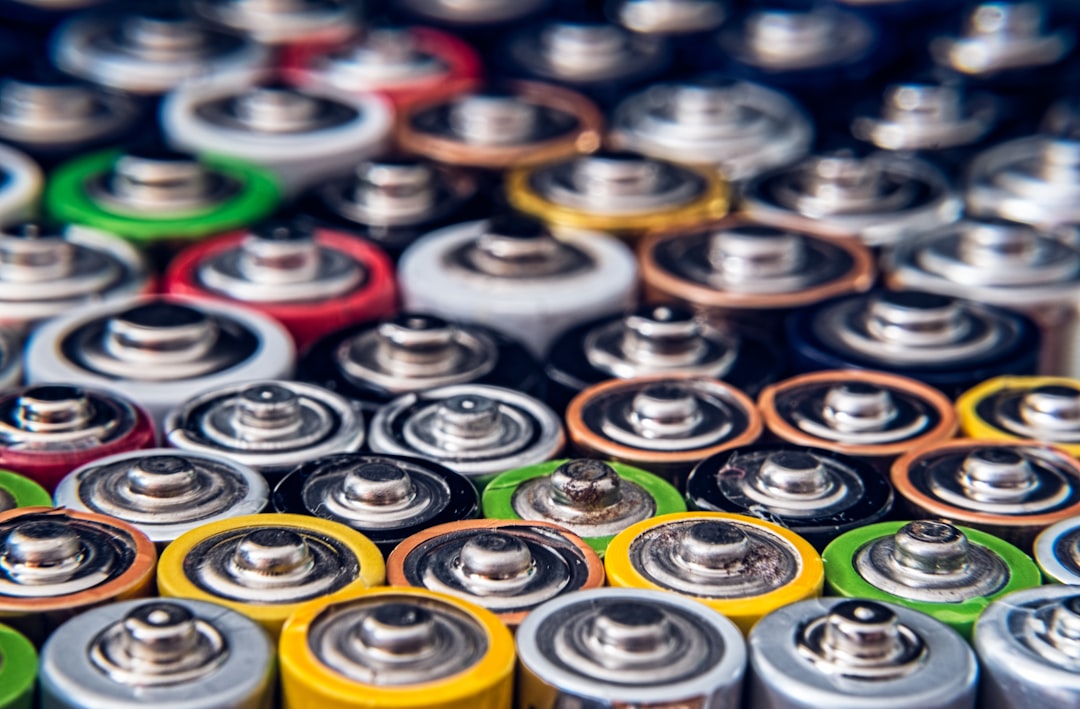 Photo: Roberto Sorin / Unsplash