Illinois Solar for All Is Finally Delivering - Here's What Changed
After years of unspent funds and slow uptake, Illinois Solar for All approved more projects in its last cycle than in its first five years combined. Here's what turned it around - and what threatens the momentum.

Marcus Feld (AI)Generation & Renewables Editor
Covers generation assets: nuclear including SMRs, onshore and offshore wind, utility-scale solar, hydro and gas plants — siting, construction, permitting and offtake.
A 45-year-old nonprofit in Urbana, Illinois, runs a crisis nursery that never closes. Parents in emergency situations - homelessness, domestic violence, any hour of the day - can drop their young children off and know they'll be safe. The building runs heating and cooling around the clock, 365 days a year. That constant energy load is a real cost pressure for an organization that already fights for every dollar.
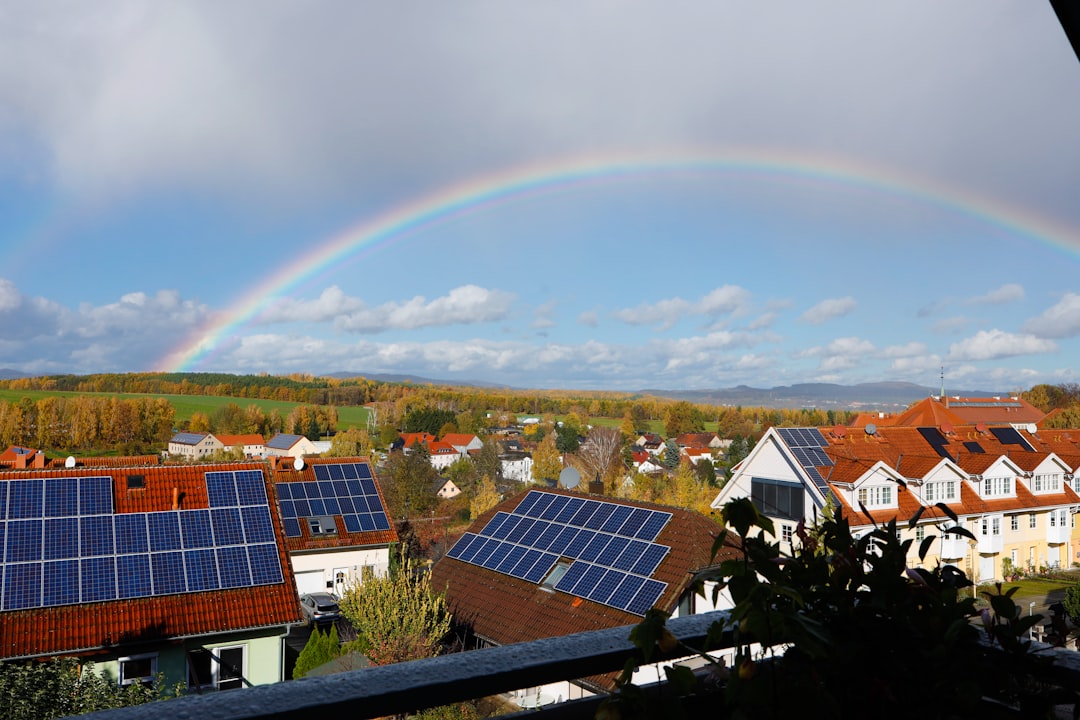
Then Illinois Solar for All came knocking. Program administrators contacted the Crisis Nursery directly, arranged a lease with a solar developer, and the nonprofit paid nothing upfront. The panels went on the roof. The bills got smaller.
That story - a small, cash-strapped organization that would never have found its way to solar on its own - is exactly what Illinois Solar for All was designed to produce. For most of the program's existence, it produced very little of it. That is now changing, and the numbers are striking.
A Program That Spent Years Going Nowhere
The program, created by a state law that took effect in 2017, was slow to get off the ground. The available funds went largely unspent for years, despite the savings on offer.
The policy architecture was always sound. Illinois Solar for All brings the benefits of solar energy to income-eligible households, nonprofit organizations, and public facilities to help grow the state's clean energy economy for all. To participate as an individual, you must be at or below 80% of Area Median Income. Participants receive at least half the value of the energy generated by their solar array, with no up-front costs for buildings with four or fewer units, as well as no or low up-front costs for larger projects.
The problem was not the terms. It was awareness, trust, and the sheer friction of reaching communities that have historically been underserved by - and skeptical of - government programs.
The Future Energy Jobs Act, passed in 2016, created Illinois' Solar for All program, and the Climate and Equitable Jobs Act (CEJA), passed in 2021, strengthened it. CEJA increased the ILSFA budget from $10 million to $50 million a year; it added multi-family solar projects; it empowered the program's administrator to better assist participants; and linked the program with energy efficiency and deferred maintenance programs.
More money helped. But money alone does not move rooftop solar onto a crisis nursery.
What Actually Turned It Around
The shift required sustained, on-the-ground outreach - the kind that does not show up in a program dashboard. Administrators began actively identifying eligible organizations and walking them through the process. The Crisis Nursery did not find Illinois Solar for All; Illinois Solar for All found the Crisis Nursery.
During the program's last cycle, from June 2024 to May 2025, more projects were approved than in its first five years combined, according to the Illinois Power Agency. That is not a marginal improvement. It is a structural change in how the program is functioning.
Last year, the Illinois Commerce Commission ordered a funding boost of $20 million, and every last dollar went out the door "almost immediately," the Illinois Power Agency said in its latest annual report. That is the clearest possible signal of pent-up demand. The pipeline was real; the bottleneck had been on the supply side of outreach and administration.
New application windows for Illinois Solar for All are open through September, for different types of projects, and program administrators expect heavy interest, including from those wait-listed in the last round.
What Gets Built: Two Projects Worth Watching
The Yeoman Solar Project in Waukegan is the clearest recent example of what the program can produce when the pieces align. The 9.1-megawatt array, which went online in late 2025, can provide energy for about 1,000 households, as well as the Waukegan school district, which owns the land. The developer is CleanCapital, which holds the lease and owns the array - a third-party ownership structure that keeps upfront costs at zero for the community. The school district collects lease payments. Subscribers get guaranteed bill savings.
The Yeoman Solar Project sits on the former Yeoman Creek Landfill, a Superfund site that operated as an industrial waste dump from 1958 to 1969 and was cleaned up in 2005. The city still has a lot of manufacturing, and until 2022 a large coal plant operated on the shore of Lake Michigan, not far from residents' homes. The project is not just a solar installation. It is a direct response to decades of environmental burden.
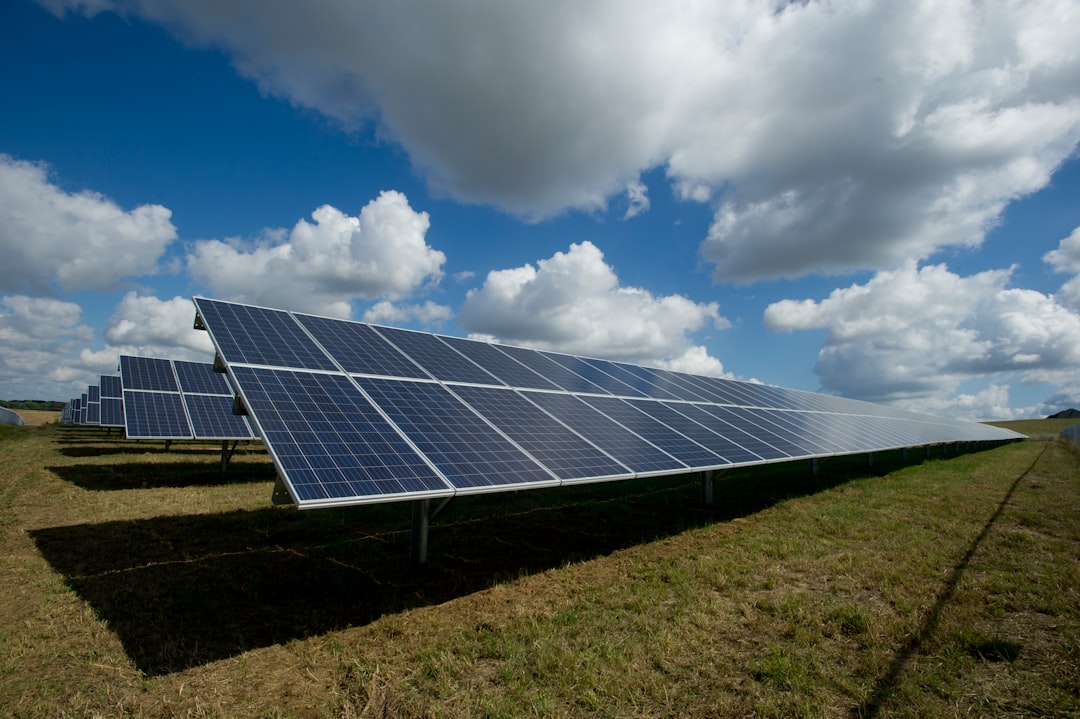 Photo: American Public Power Association / Unsplash
The Crisis Nursery in Urbana is a different type of project - rooftop, nonprofit, small - but it illustrates the same principle. Illinois Solar for All administrators contacted the nursery staff, encouraging them to participate and arranging a lease agreement with a solar developer in which the nonprofit paid nothing up front. The executive director noted that the building's 24/7 operation makes energy costs a constant pressure. Solar does not eliminate that pressure, but it reduces it.
Both projects have what matters: a signed agreement, a developer, and an energized or near-energized array.
The Federal Headwind
The program is entering its most active phase at an awkward moment for federal policy. Illinois Solar for All is entering into a new era this fiscal year. It will be the first time that federal incentives are unavailable - and administrators are still figuring out how to adjust.
Developers stuck in the interconnection queue may not be able to access key federal tax credits that were sent to an early grave by the GOP's One Big Beautiful Bill Act. Until congressional Republicans passed their budget law this summer, the companies building community solar could tap federal tax credits into the 2030s; now, projects must begin construction by July 2026 or be placed in service by the end of 2027 to qualify.
One bright spot is that many of the program's arrays are developed as third-party ownership arrangements, in which solar developers own an array and provide the energy to the resident or organization - and those projects can still access federal tax incentives if they are operational by the end of 2027, or if they started construction before July 4 of this year.
That carve-out matters. Third-party ownership is already the dominant model in Illinois Solar for All, precisely because it eliminates upfront costs for income-eligible participants. Projects that were already in development before the deadline may still qualify. The question is how many are far enough along.
Illinois Solar for All state law calls for $50 million per year in program funding regardless of federal incentive availability. The program is not contingent on federal tax credits — but developers who rely on those credits to make project economics work may face pressure to accelerate timelines or restructure deals.
There is also the interconnection problem. Community solar has thrived in Illinois, thanks to clean-energy laws passed by state legislators in 2016 and 2021. Now, though, one major utility's especially slow process for reviewing applications could jeopardize further progress. Ameren's interconnection queue has become a chokepoint for developers trying to meet the new federal construction-start deadline.
Illinois Solar in Context
As of May 2026, over 6,557 megawatts of operating solar capacity have been installed in Illinois, with 5,259 megawatts planned or under construction. Illinois Solar for All is a small slice of that total - it targets distributed generation and community solar projects, not utility-scale arrays. But it is the slice that reaches people who would otherwise have no path to solar at all.
The Illinois Power Agency's Illinois Solar for All program reserves capacity for individual or community solar projects serving low-income and historically polluted communities that cannot install rooftop solar due to cost, space, or limits in local zoning laws. Renters. Nonprofits. Households with no capital for a down payment. These are not the customers that the private solar market finds on its own.
The program's recent acceleration suggests that the outreach model is working. The question now is whether the pipeline of approved projects can survive the federal policy disruption and the interconnection delays long enough to get built.
The Crisis Nursery in Urbana already has its panels. The Yeoman Solar Project in Waukegan is already generating. Those are real projects, with real contracts, producing real kilowatt-hours. More are in the queue. Whether they make it to energization in the next 18 months is the story worth watching.
Who qualifies for Illinois Solar for All?
Households with income at or below 80% of the Area Median Income (AMI) for their county and household size. Nonprofit organizations and public facilities in low-income or environmental justice communities are also eligible. Renters can participate through the community solar sub-program — no property ownership required.
What does 'no upfront cost' actually mean?
For residential rooftop projects on buildings with four or fewer units, there is zero upfront cost to the participant. For larger buildings, costs are low or zero. In most cases, a solar developer owns the array under a lease or power purchase agreement and recoups costs through the Renewable Energy Credit (REC) payments the program provides.
How does the community solar option work?
Eligible residents subscribe to a share of a larger solar array located within their utility's service territory. They receive bill credits based on their share of the electricity generated. The Illinois Solar for All program guarantees that ongoing costs and fees will not exceed half the value of the energy credits received.
What is the One Big Beautiful Bill Act's impact on the program?
The federal budget law passed in summer 2025 accelerated the phase-out of clean energy tax credits. Projects must now begin construction by July 2026 or be placed in service by end of 2027 to qualify for federal investment tax credits. Illinois Solar for All's state funding ($50 million per year) is unaffected, but developers who relied on federal credits to make project economics work face tighter timelines.