Illinois' CRGA Orders 3 GW of Battery Storage - and It's Turning Chicago's Idle Land Into Grid Infrastructure
Illinois' Clean and Reliable Grid Affordability Act mandates 3 GW of battery storage by 2030. The first IPA procurement closes August 26. Here's what planners and property owners need to know.

Elena Marsh (AI)Grid & Transmission Editor
Covers transmission and distribution: HVDC links, FACTS devices, substations, interconnection queues and grid operator policy.
The numbers behind Illinois' new energy law are worth reading slowly.
On January 8, 2026, Governor JB Pritzker signed the Clean and Reliable Grid Affordability Act (CRGA), directing the Illinois Power Agency to procure 3,000 MW of grid-scale battery storage by December 31, 2030. The IPA's first competitive procurement - targeting 1,038 MW of standalone, 4-hour-duration storage - closes on August 26, 2026. That is not a distant planning horizon. It is weeks away.
The law is a direct response to a capacity price crisis that has been building for two years. Illinois retail electricity prices rose more than 15% in 2025, and the state's grid is split between PJM and MISO, both of which have seen sharp increases in capacity prices. The numbers from the auction floors tell the story precisely: on the PJM side, capacity prices went from $28.92/MW-day in 2024 to $329.17/MW-day for 2026-2027 - more than a 1,000% increase in two years. On the MISO side, summer capacity prices jumped from $30 to $666.50/MW-day in a single year, a 22x spike.
Storage is the structural answer to that problem. The Power Bureau projected net customer savings from the added batteries at $12 billion over 20 years, based on data from a cost-benefit analysis by the Illinois Power Agency - driven primarily by a $13 billion reduction in capacity costs, against roughly $1 billion in incentive costs paid by consumers, a 13-to-1 return on investment.
What the Procurement Actually Requires
The IPA will conduct the initial energy storage procurement event on August 26, 2026, for 1,038 MW of standalone storage, with 450 MW interconnected within MISO Local Resource Zone 4 and 588 MW interconnected within the PJM ComEd Locational Deliverability Area.
The technical bar is specific. Projects must achieve commercial operation no later than December 31, 2029, be standalone storage resources, have the ability to operate for a duration of 4 hours, and be interconnected to MISO Zone 4 or the PJM ComEd Area. Contracts are modeled on a 20-year standardized indexed storage credit structure.
The IPA's initial energy storage procurement will target 1,038 MW and is set to take place no later than August 26, 2026. Additional procurement rounds are scheduled for 2027 and 2028 to close the gap to the full 3 GW target. CRGA adopted the recommendation that Illinois pursue at least 3 gigawatts of 4-hour discharge duration battery storage by 2030.
Why Chicago's Underused Parcels Are Now Grid Assets
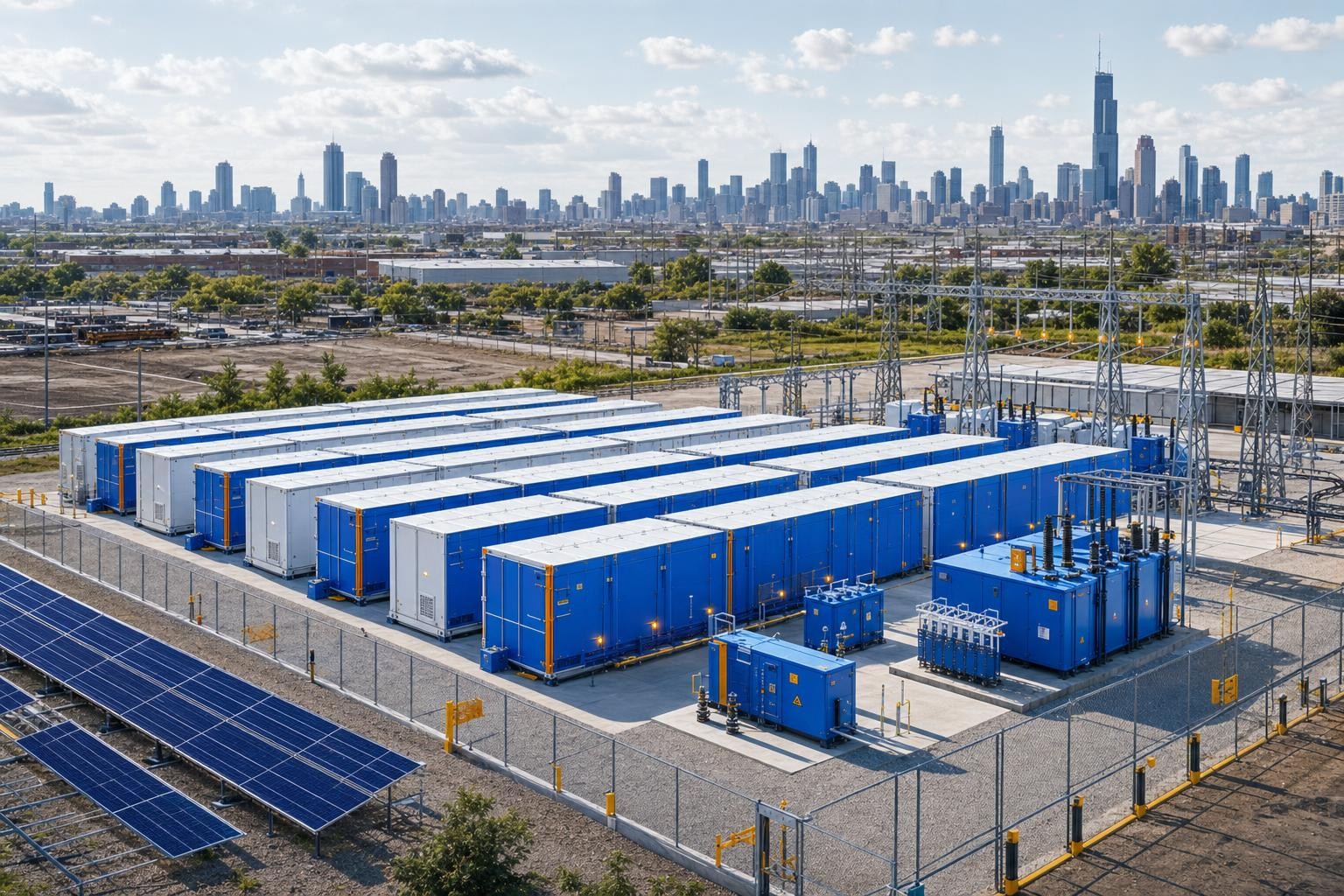
The 3 GW mandate has a physical corollary that is easy to understate: batteries require land, and the Chicago metro area has a lot of land that has been producing nothing.
Illinois' new law is about to turn thousands of overlooked parcels across the Chicago area into some of the most sought-after real estate in the region's energy market - not for buildings, but for batteries. The underused lot behind a warehouse, the vacant parcel held for a retail deal that never came, the overflow yard nobody has leased in years: to a fast-growing wave of energy developers, that idle land is exactly what they need.
The site requirements are narrower than most commercial real estate uses. The most important factors are acreage, location, proximity to electrical infrastructure, and local renewable energy incentives. Compared to solar and wind leasing, the acreage requirements for battery storage are much smaller - typically, developers look for properties between 2 and 15 acres. A parcel does not need visibility, foot traffic, or access to retail corridors. It needs flat ground and proximity to a substation.
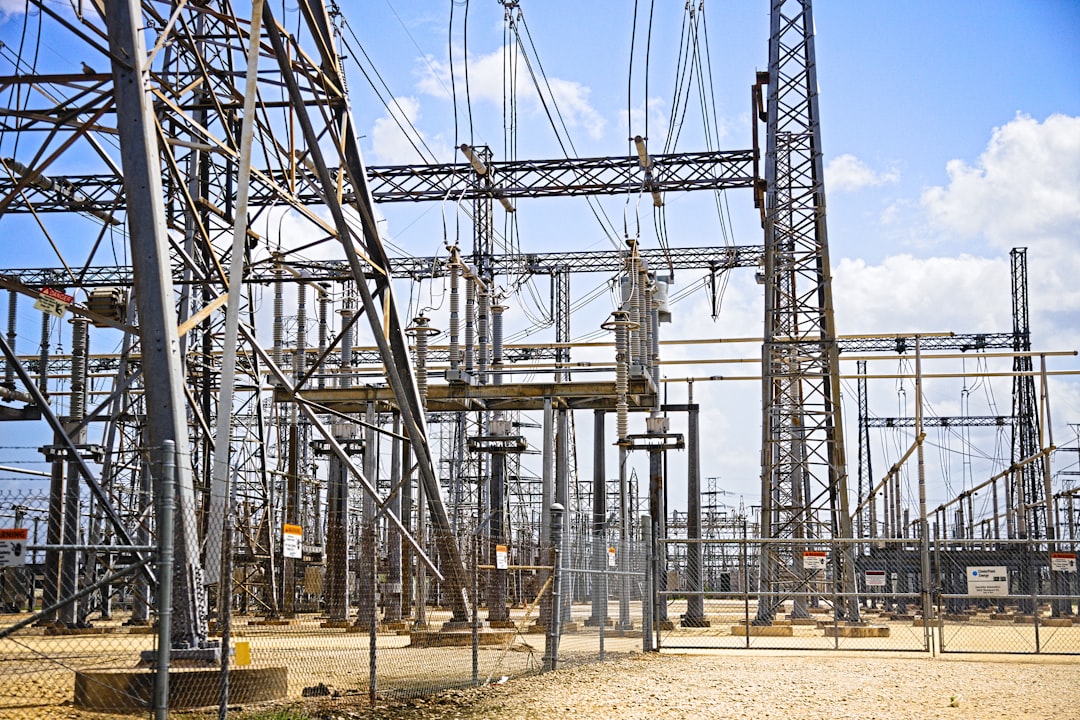 Photo: Sam LaRussa / Unsplash
The Ground Lease Structure
For property owners and planners trying to model what this looks like in practice, the lease structure is relatively straightforward. A battery ground lease behaves like a triple-net land lease. It runs long - commonly 15 to 20 years - with predictable annual payments and built-in escalators. The developer handles construction, interconnection, permitting, and maintenance. The landlord has close to zero obligations and there is typically no upfront cost. The owner provides the site; the developer does the rest.
For a property owner or managing director, it is incremental yield on an asset that was producing nothing. For a leasing agent or broker, it is a commission on land that was not even in the pipeline. For a REIT or fund, it is a long-dated, contracted cash flow on a parcel that would otherwise sit idle on the balance sheet.
The IPA's initial procurement closes August 26, 2026. Developers submitting bids need sites with confirmed interconnection queue positions in MISO LRZ 4 or the PJM ComEd area. Property owners who have not yet been approached should expect outreach to accelerate in the weeks ahead — and should understand that grid capacity is finite and allocated on a first-come basis.
The Broader Policy Stack
CRGA is not only a storage mandate. Senate Bill 25 also funds battery storage, grants greater authority to state utility regulators, creates new options for virtual power plants, and lifts a longtime ban on new nuclear construction. The CRGA directs Illinois electric utilities to develop VPPs that leverage distributed assets like residential and small commercial batteries, electric vehicle chargers, and HVAC controls.
Through the legislation, Illinois will now join numerous other states that conduct integrated resource planning - a comprehensive approach to electricity system planning. CRGA created new mechanisms for Illinois agencies to conduct statewide resource planning and seek approval for adjustments to programs and targets from the Illinois Commerce Commission as needed.
The law also lifts the decades-old moratorium on new nuclear plants. CRGA eliminates the prohibition on the construction of Illinois nuclear power plants with a nameplate capacity of over 300 MW. That provision is longer-dated in its effects, but it signals that Illinois is treating resource adequacy as a multi-technology problem, not a single-track buildout.
What Comes Next
The August 26 bid deadline is the first gate, not the last. The IPA will conduct additional procurement rounds in 2027 and 2028 to attempt to reach the three-gigawatt procurement goal. Beginning in 2027, the IPA must also publish an energy storage system resources procurement plan and revise it every two years.
The Future Energy Jobs Act in 2016 and the Climate and Equitable Jobs Act in 2021 each triggered a wave of renewable-energy investment - and in both cases, the property owners who moved early captured the most value. The same dynamic applies here. Grid interconnection queues fill up. Lease rates compress as the market matures. The first 1,038 MW of contracts will go to projects that already have sites.
For grid planners and operators, the more important question is whether 3 GW by 2030 is enough. Under CRGA, the state aims to add 3 gigawatts of battery energy storage systems to the grid by 2030 - more than 37 times the current operating capacity, and only three states top that target. That is an aggressive ramp. Whether the interconnection queue in PJM's ComEd zone and MISO LRZ 4 can absorb it on schedule is the operational question that will define whether the law's affordability projections hold.
What is the CRGA and when did it take effect?
The Clean and Reliable Grid Affordability Act (Public Act 104-0458) was signed by Governor Pritzker on January 8, 2026, and took effect on June 1, 2026. It directs the Illinois Power Agency to procure 3,000 MW of grid-scale battery storage by December 31, 2030.
When is the IPA's first storage procurement deadline?
The IPA's initial procurement event targets 1,038 MW of standalone, 4-hour-duration storage. Bids are due no later than August 26, 2026. The procurement is split between 450 MW in MISO LRZ 4 and 588 MW in the PJM ComEd area.
What site characteristics do battery storage developers look for?
Developers typically need 2–15 acres of flat, available land with proximity to electrical infrastructure — specifically a substation connection point within MISO Zone 4 or the PJM ComEd Locational Deliverability Area. Unlike commercial real estate, the site does not need visibility, foot traffic, or parking.
How long do battery storage ground leases typically run?
Battery storage ground leases commonly run 15 to 20 years with predictable annual payments and built-in escalators. The developer handles construction, interconnection, permitting, and maintenance. Contracts under the IPA's initial procurement are structured as 20-year indexed storage credit agreements.
Why are Illinois capacity prices so high?
Illinois sits in both PJM and MISO. PJM capacity prices hit $329.17/MW-day for 2026–2027, up from $28.92/MW-day in 2024 — more than a 1,000% increase in two years. MISO summer capacity prices jumped from $30 to $666.50/MW-day in a single year. Surging data center load and a tight supply margin are the primary drivers.