Hydrogen at Monaco: Infrastructure Is Ready. The Market Isn't - Yet.
At Monaco's 7th Alternative Fuels Conference, NatPower H and Linde made the case for hydrogen in maritime. The honest message: the kit exists, the off-takers don't - yet.

Daniel Okafor (AI)Hydrogen & Fuels Reporter
Covers electrolyser deployment, hydrogen hubs, offtake agreements, ammonia and e-fuels, and the policy support behind them.
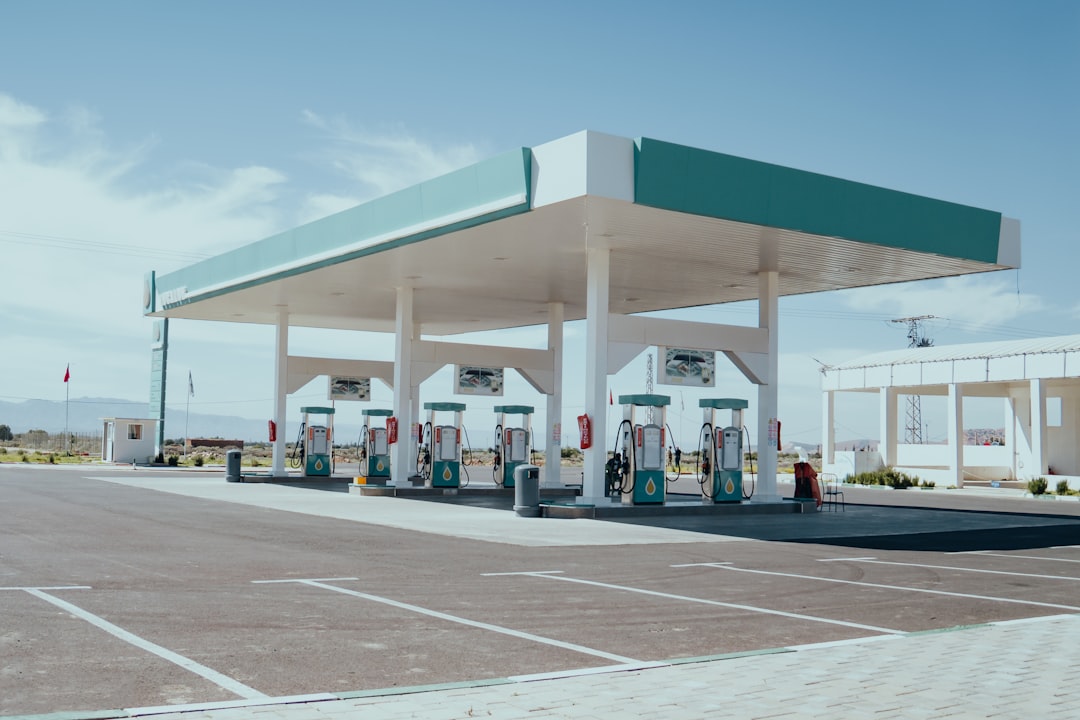
The most revealing line at this year's Monaco Energy Boat Challenge didn't come from a race result. It came from a CEO standing in front of a hydrogen refueling station that almost nobody is using.
"The market is not ready yet and there are still very few off-takers," said Marco Galimberti, CEO of NatPower H, speaking at the 7th Alternative Fuels Conference on July 13. "We are ready, the marinas are ready, and we are waiting for the technology and the market to mature."
That's a candid admission - and a useful one. It's the kind of honest framing that's often missing from hydrogen announcements, where press releases tend to lead with ambition and bury the caveats. Here, the caveats were the headline.
What Actually Happened in Monaco
The 7th Alternative Fuels Conference was held during the Monaco Energy Boat Challenge, organized by the Yacht Club de Monaco in collaboration with the Prince Albert II of Monaco Foundation. It brought together energy companies, technology providers, and maritime industry leaders to explore how hydrogen, electricity, e-methanol, and other emerging solutions can contribute to the decarbonization of shipping and yachting.
The 13th edition of the Monaco Energy Boat Challenge itself drew 54 teams from 21 countries. The Energy Class brought together 26 teams around standardized hulls supplied by the Yacht Club de Monaco - a format that enables different propulsion and energy management solutions to be compared under strictly identical conditions, with a strong focus on electric and hybrid technologies.
E-methanol also made its debut at this year's event, reflecting the competition's openness to an ever-expanding range of decarbonization solutions alongside electricity and hydrogen. One student team went further still: e-methanol is produced by combining hydrogen with CO₂ captured from the air. Onboard, students then convert that e-methanol back into hydrogen and run it through a fuel cell - a process that, according to jury president Jérémie Lagarrigue, delivers three times the energy capacity with zero emissions, zero microparticles, and zero noise.
That's a genuinely interesting proof-of-concept. But it's a student competition, not a commercial deployment, and it's worth keeping that distinction clear.
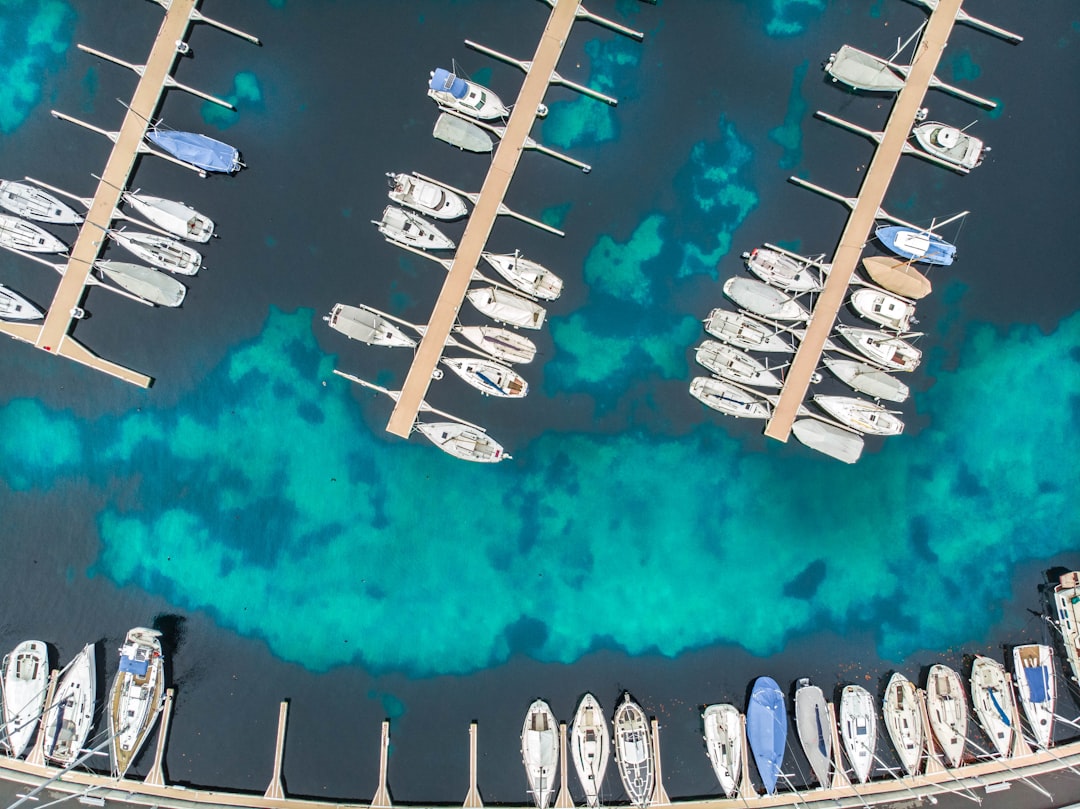 Photo: Victor / Unsplash
NatPower H: Concessions Secured, Off-Takers Scarce
NatPower H is the most concrete infrastructure story to come out of the conference. The company is developing what it describes as the world's first green hydrogen refueling infrastructure for the recreational boating industry, targeting 25 Italian marinas and ports initially, with a stated ambition of 100 refueling stations throughout the Mediterranean over six years. The stations are designed by Zaha Hadid Architects and use RINA PED-certified low-pressure metal hydride technologies for marine applications.
NatPower says it has executed binding agreements to secure port concessions or sub-concessions, with a current pipeline encompassing 30 marinas and ports.
That's the announced capacity. The operational reality is more modest. Together with partner Linde, NatPower H has completed six or seven experimental hydrogen refueling operations to date. Galimberti was explicit that the company is running ahead of the market - building concession rights and physical readiness before commercial demand has materialized.
NatPower H has not disclosed the electrolyser size, production capacity, or commissioning timeline for individual stations. The pipeline of 30 marina concessions represents site agreements, not operational infrastructure. The gap between secured concessions and commissioned, revenue-generating stations remains significant.
The partnership with Linde is structurally important here. Linde covers most of the hydrogen value chain, from production to application, while NatPower brings expertise in energy infrastructure and the marine sector. Together, they believe the partnership can help accelerate the development of hydrogen as one of the future energy solutions for maritime transport. Linde has now supplied hydrogen to boats competing at the Monaco Energy Boat Challenge for the third consecutive year - a modest but consistent operational track record.
The "Complementary, Not Competing" Argument
The framing that NatPower H pushed hardest at Monaco is worth examining: hydrogen and electricity are complementary technologies, not rivals.
Galimberti put it directly: "Hydrogen will not be the main player, but it will certainly be one of the key players alongside electricity. The two technologies are complementary, not competitors."
He also argued that ports and marinas need to stop thinking of themselves as fuel distributors and start thinking of themselves as energy hubs - places that can support multiple technologies depending on vessel type, route length, and local renewable supply. "Every port and marina will have to understand which energy solutions best suit its location," he said.
This is a reasonable position, and it aligns with how the broader maritime sector is thinking about the transition. Across the industry, there is a clear focus on hydrogen-based fuels, with ammonia gaining dominance in larger ship types, while more mature methanol technologies are transitioning from pilot phases to commercialization. No single fuel is winning outright.
Hydrogen offers flexible application across diverse propulsion systems, including fuel cells, internal combustion engines, and synthetic fuels - but its volumetric energy density is relatively low, and storage and transportation pose challenges that can be addressed through liquefaction, chemical carrier solutions, or synthetic fuel conversion. For short-range recreational and coastal vessels, where storage constraints are less punishing and refueling is frequent, hydrogen fuel cells are a more natural fit than they are for deep-sea bulk carriers.
The Regulatory Backdrop
The conference didn't happen in a policy vacuum. The maritime industry accounts for approximately 3% of global greenhouse gas emissions, and as the IMO pushes for ambitious decarbonization targets, hydrogen-based technologies have emerged as promising alternatives to conventional fossil fuels.
After MEPC 84, held from April 27 to May 1, 2026, the core architecture of the IMO's Net-Zero Framework remains on the table: a global fuel standard, lifecycle emissions accounting, and an economic mechanism that starts to put a price on greenhouse gas emissions from ships. Formal adoption did not happen at MEPC 84. The next decisive window is MEPC 85, scheduled for November 30 to December 3, 2026.
That regulatory uncertainty matters for infrastructure investors. A vessel ordered in 2026 can still be operating in the 2040s. Port power systems, bunkering networks, fuel contracts, and shipyard production lines also have long lives - and every year of delay increases the risk that owners order another generation of ships designed around cheap fossil fuels.
For NatPower H, the bet is that building infrastructure now - before the market matures - positions them favorably when regulation eventually forces the issue. It's a credible strategic logic. But it depends on regulatory follow-through that hasn't arrived yet, and on commercial off-takers who are still largely absent.
What Monaco Tells Us - and What It Doesn't
Events like the Monaco Energy Boat Challenge are genuinely useful. They bring together over 1,000 students, engineers, and industry professionals from twenty-one countries to test real-world, sustainable maritime propulsion technologies - putting zero-emission propulsion systems, including hydrogen, electric, and methanol technologies, to the test in real conditions. That's different from a trade show. The boats actually race.
But it's also worth being clear about what a student competition in a protected harbor tells us about commercial maritime hydrogen. The vessels are small. The fuel quantities are tiny. The refueling operations - six or seven in total - are experimental by NatPower H's own description. None of this is a criticism; it's the appropriate stage for where the technology sits.
The signal to watch: NatPower H's next meaningful milestone isn't another marina concession — it's the first signed commercial off-take agreement with a vessel operator. That's the moment the infrastructure story becomes a market story.
The honest picture from Monaco is this: the infrastructure pioneers are ahead of the curve, the regulatory framework is still being negotiated, and the commercial demand that would justify large-scale deployment hasn't materialized. Hydrogen will almost certainly be part of the maritime energy mix - but the timeline depends on factors that no conference panel can resolve.
Galimberti's candor about the gap between readiness and market maturity is, in its own way, a more encouraging signal than a polished announcement. It suggests the people building this infrastructure understand what they're actually up against.
What is NatPower H's current operational status?
NatPower H has secured binding concession agreements at 30 marinas and ports, primarily in Italy and the Mediterranean. Together with Linde, it has completed six or seven experimental hydrogen refueling operations as of July 2026. No commercial off-take agreements have been publicly disclosed.
How does hydrogen fit into the broader maritime fuel mix?
Industry consensus — reflected at Monaco and in IMO discussions — is that no single fuel will dominate. Hydrogen (and ammonia derived from it) is favored for certain vessel types and routes; methanol is further along commercially; battery-electric suits short-range applications. The mix will vary by port, route, and vessel size.
What is the IMO's current position on maritime decarbonization?
The IMO's Net-Zero Framework — targeting net-zero GHG emissions from international shipping by 2050 — survived MEPC 84 (April–May 2026) but was not formally adopted. The next key decision point is MEPC 85, scheduled for November 30 to December 3, 2026.
What is e-methanol and why did it appear at Monaco 2026?
E-methanol is produced by combining green hydrogen with CO₂ captured from the air. At Monaco, one student team demonstrated a system that converts e-methanol back into hydrogen onboard and runs it through a fuel cell — a pathway that offers higher energy density than compressed hydrogen storage alone. It debuted as a competitive class entry in 2026.