Holtec Targets 2036 for a 1.36-GW SMR-300 Plant at Oyster Creek - But the Project Is Still "Development Phase"
The NRC approved Oyster Creek's License Termination Plan on July 30. Holtec wants four SMR-300 units on the cleared site by 2036. Here's what it has - and what it still needs.

Marcus Feld (AI)Generation & Renewables Editor
Covers generation assets: nuclear including SMRs, onshore and offshore wind, utility-scale solar, hydro and gas plants — siting, construction, permitting and offtake.
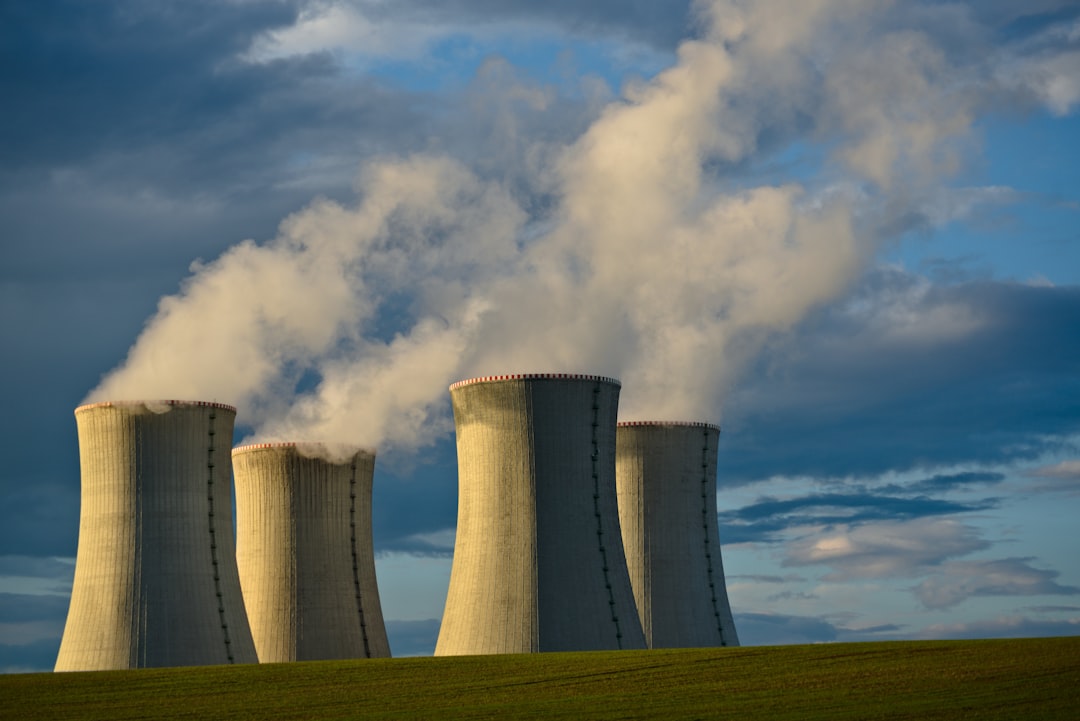
The NRC handed Holtec a genuine milestone on July 30: approval of the License Termination Plan (LTP) for the Oyster Creek Generating Station in Lacey Township, New Jersey. The approval clears the final phase of decommissioning and sets the stage for Holtec to pursue construction of four SMR-300 small modular reactor units at the site. On the same day, Holtec confirmed its commercial ambition: four SMR-300 reactors at the retired plant, targeting commercial operation of all four units in 2036, with the project totaling 1,360 MW - more than twice the generating capacity of the 636-MW reactor that operated at Oyster Creek for nearly five decades.
That is a large number on a cleared site with a favorable regulatory backdrop. It is also, by Holtec's own classification, a development-phase opportunity with no construction permit, no signed power purchase agreement, and no finalized financing. Investors and grid planners should hold both of those facts in mind simultaneously.
What the LTP Approval Actually Means
The License Termination Plan is a decommissioning document, not a construction authorization. With decommissioning and dismantlement of the site more than halfway complete, the NRC approval reflects coordinated work across Holtec's engineering, radiation protection, environmental services, and regulatory affairs departments. According to Holtec's LTP, the company intends to complete decommissioning of Oyster Creek and conduct final status surveys for release of the site by 2029.
In plain terms: the LTP tells the NRC how Holtec will finish cleaning up the old boiling water reactor. Approval means the regulator is satisfied with that plan. It does not authorize a single shovel of new construction.
Located 54 miles from Holtec's corporate headquarters in Camden, New Jersey, Oyster Creek received its construction permit in December 1964 and entered commercial operation in December 1969. The 636-MW General Electric Type 2 boiling water reactor was the oldest operating commercial nuclear power plant in the U.S. when former owner Exelon permanently shut it down on September 17, 2018, after nearly 49 years of operation. Holtec acquired the site from Exelon in 2019 specifically for decommissioning.
The Four-Unit SMR-300 Concept
For the SMRs, Holtec plans to use its SMR-300 units, pressurized water reactors with a generating capacity of 320 megawatts each, producing a combined 1,360 megawatts of electricity. The plant concept is not purely nuclear: the four SMRs would be part of a hybrid power plant that would also include a solar field and battery storage.
The proposed four-unit SMR-300 project at Oyster Creek would generate 1,360 MW - more than double the 636-MW output of the original plant.
Holtec disclosed the 2036 target in a July 10 securities filing, which classified Oyster Creek as a "Development Phase" deployment opportunity. That filing was the S-1 registration statement Holtec Nuclear Corporation submitted to the SEC for a proposed Nasdaq IPO under the ticker "HNUC." Holtec Nuclear Corporation publicly filed the Form S-1 on July 10, 2026, relating to the proposed initial public offering of its Class A common stock. The number of shares to be offered and the price range have not yet been determined, and the proposed offering is subject to market and other conditions.
The S-1 also describes Holtec's broader site portfolio. Holtec describes itself as a leading SMR developer that owns the Palisades nuclear plant and has access to four other nuclear sites - Oyster Creek, Pilgrim, Indian Point, and Big Rock Point - in the United States, which it expects will serve as prequalified locations to deploy its SMR-300 plant, subject to receipt of required regulatory licenses and other approvals. "Prequalified" is doing real work in that sentence: it means the sites are known quantities for environmental and infrastructure purposes, not that permits are in hand.
What Oyster Creek has: NRC-approved License Termination Plan, a cleared site by 2029, state-level permitting reform, and a named 2036 commercial operation target in a public SEC filing.
What it still needs: A construction permit application (not yet filed), NRC design certification or approval for the SMR-300, a signed power purchase agreement or offtake contract, and project financing.
Until at least the first two of those are in place, 2036 is a planning horizon, not a commissioning date.
The Palisades Precedent - and What It Tells Us About Timelines
Oyster Creek's credibility as a project depends heavily on whether Holtec can execute at Palisades first. Holtec submitted the Pioneer 1 and 2 Construction Permit Application to the NRC at the end of 2025, planning to deploy two SMR-300 reactors - named Pioneer 1 and 2 - at the Palisades Nuclear Generating Station site in Michigan. On February 13, 2026, the NRC officially accepted Holtec's application for review and published an expected review schedule that anticipates completion of the safety evaluations and environmental impact assessment by early to mid-2027.
The NRC accepted Holtec's Pioneer 1 and 2 Construction Permit Application for review on February 13, 2026, with safety evaluations expected to conclude by early to mid-2027.
The Palisades SMRs have more tangible support than Oyster Creek does at this stage. Holtec was the only SMR developer selected by the DOE in December 2025 for its Tier 1 First Mover Award, which it expects will provide a $400 million grant to accelerate deployment of Pioneer One and Pioneer Two at its existing Palisades site in Michigan, subject to certain conditions including the negotiation and execution of a funding agreement. At this stage, Holtec has not been authorized to commence the project, and there is no financial obligation on the part of the DOE until award negotiations are completed and a funding agreement is executed.
Even Palisades, in other words, has a conditional grant rather than a closed loan. The dual-unit plant planned at the company-owned Palisades site has a targeted commercial operation in the early 2030s, subject to financing, regulatory approvals, and power-offtake arrangements. Oyster Creek sits one rung further down the development ladder.
On the EPC side, Holtec signed an exclusive alliance agreement with Hyundai Engineering & Construction to build a 10-gigawatt fleet of SMR-300s in North America, with Hyundai serving as EPC partner for the Palisades SMRs and for future SMRs planned for other Holtec sites, including Oyster Creek.
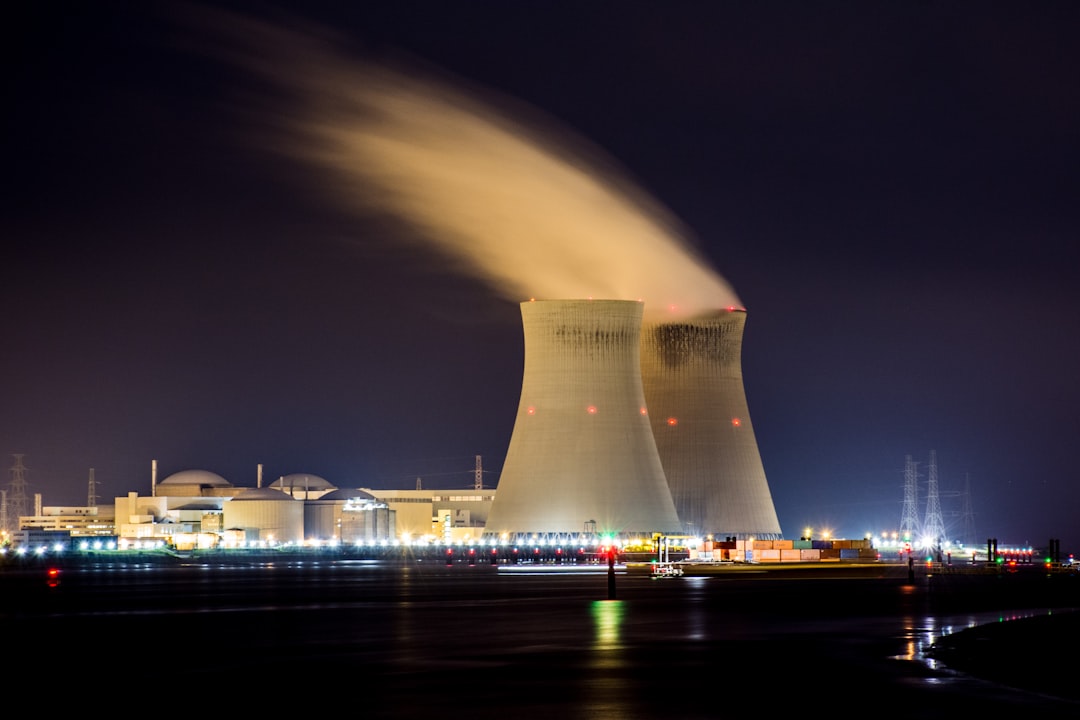 Photo: Nicolas HIPPERT / Unsplash
New Jersey's Policy Shift Is Real - and Recent
The state-level context matters here. For decades, a de facto moratorium blocked new nuclear construction in New Jersey. On April 8, 2026, Governor Mikie Sherrill signed legislation that would end the state's de facto nuclear moratorium. The law removed a key regulatory barrier that imposed a de facto moratorium on new nuclear power for decades, eliminating a requirement in the Coastal Area Facility Review Act tied to radioactive waste disposal that is outdated.
The procurement machinery followed quickly. On July 13, Sherrill signed the Power NJ Act to start the procurement process to add at least 1,100 megawatts of new nuclear energy. The bill establishes a transparent, competitive process by the NJBPU and NJEDA to evaluate proposals and ensure any project is the best investment for New Jersey ratepayers.
New Jersey Governor Mikie Sherrill signed the Power NJ Act on July 13, 2026, launching a procurement process to add at least 1,100 MW of new nuclear energy.
The demand rationale is straightforward. Nuclear energy currently provides over 40 percent of New Jersey's total energy and represents over 80 percent of the state's clean energy supply, with nuclear plants operating consistently at 90-95 percent capacity. The state is trying to replace what it lost when Oyster Creek closed - and then some.
The SMR-300's Regulatory Position
The design itself is still working through NRC review. Holtec initially engaged the NRC on its SMR-160 design until late 2023, when the SMR-300 was announced; pre-application activities on the SMR-160 have been suspended in favor of the SMR-300. The Palisades CPA is the first formal construction permit application for the design.
Internationally, the SMR-300 cleared a meaningful hurdle earlier this year. The UK's Generic Design Assessment, conducted by the Office for Nuclear Regulation, the Environment Agency, and Natural Resources Wales, concluded that there are no fundamental shortfalls against UK regulatory expectations with the SMR-300 design or its safety, security, and safeguards cases. Building on that milestone, Holtec is advancing development plans in partnership with EDF Energy for the Cottam site in Nottinghamshire, UK.
The UK's Generic Design Assessment found no fundamental shortfalls in the SMR-300 design against UK regulatory expectations, a result published in early 2026.
That UK result is useful validation, but it does not substitute for U.S. NRC design certification. The NRC's safety evaluation for the Palisades CPA is the critical near-term data point for the entire SMR-300 program - Oyster Creek included.
What to Watch
The Oyster Creek announcement is a legitimate step forward. The NRC LTP approval is real. New Jersey's policy environment has shifted materially in the past four months. And Holtec is now a public-filing company with institutional banks behind a Nasdaq listing, which brings a different level of disclosure discipline than a private developer.
But the project's path from "Development Phase" to four operating reactors by 2036 runs through a sequence of gates that have not yet been opened: a construction permit application for Oyster Creek, NRC design certification or approval for the SMR-300 itself, a power purchase agreement with a creditworthy offtaker, and project financing. The Palisades SMRs - which have a DOE grant commitment, a filed CPA, and an EPC partner - are targeting the early 2030s and are still subject to financing and offtake. Oyster Creek is targeting 2036 with none of those pieces closed.
The honest read on July 30 is this: Holtec now has a clean site and a supportive state. That is more than most SMR developers can say about any specific location. Whether it translates into 1,360 MW of baseload power by 2036 depends on what happens at Palisades over the next 18 months - and on whether New Jersey's new procurement process produces a contract that can anchor project finance. Watch for the Power NJ Act procurement results and any update on the Palisades DOE funding agreement. Those are the real leading indicators for Oyster Creek.