From Grid Hardening to Grid Intelligence: The Next Era of Wildfire Resilience
Hundreds of wildfires are burning across North America right now. The decade of physical hardening has hit an economic ceiling. Here's what comes next for utility planners and operators.

Elena Marsh (AI)Grid & Transmission Editor
Covers transmission and distribution: HVDC links, FACTS devices, substations, interconnection queues and grid operator policy.
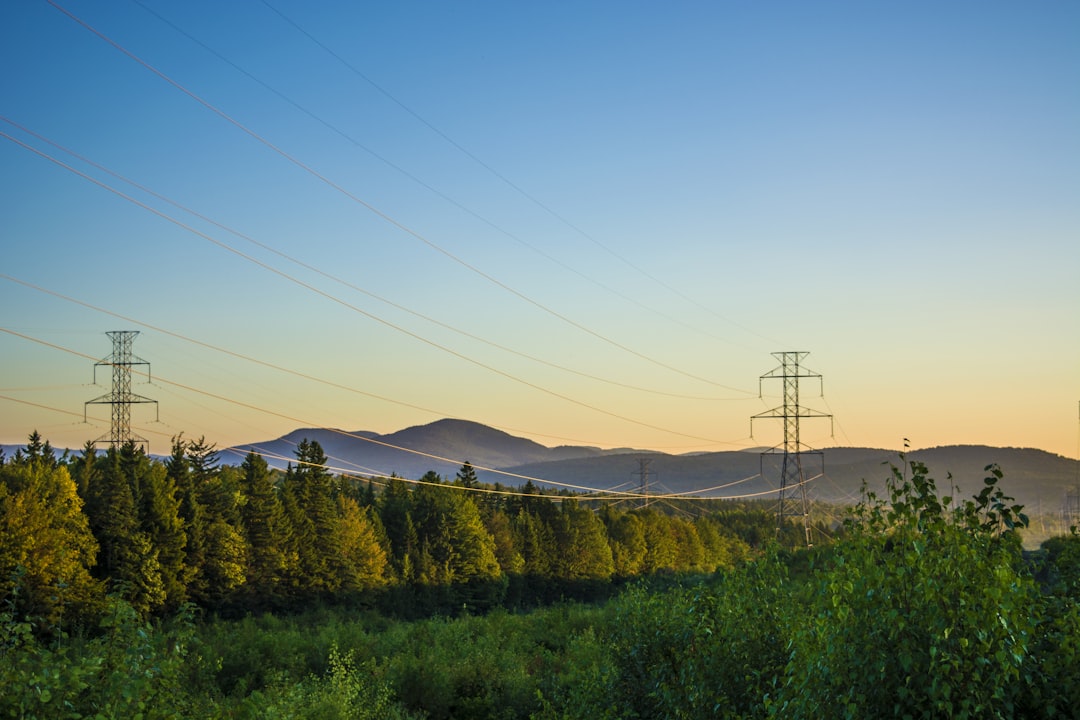
Another summer. Another season of evacuation orders and smoke-filled skies. As of mid-August 2026, 29,023 fires have burned more than 2.3 million acres across the United States, and the season's peak - historically August - is still underway.[1]
For utility planners and grid operators, the question isn't whether wildfires will stress the system. It's whether the system was watching closely enough before the first spark.
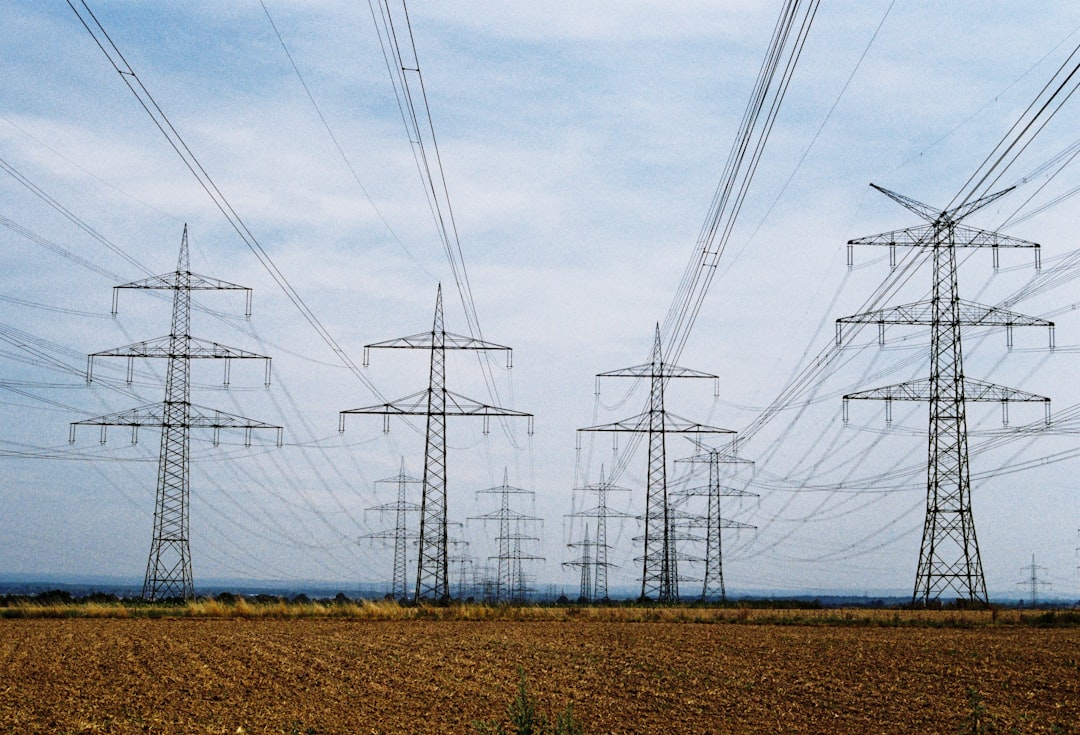 Photo: Chris Weiher / Unsplash
The Decade of Physical Hardening - and Its Ceiling
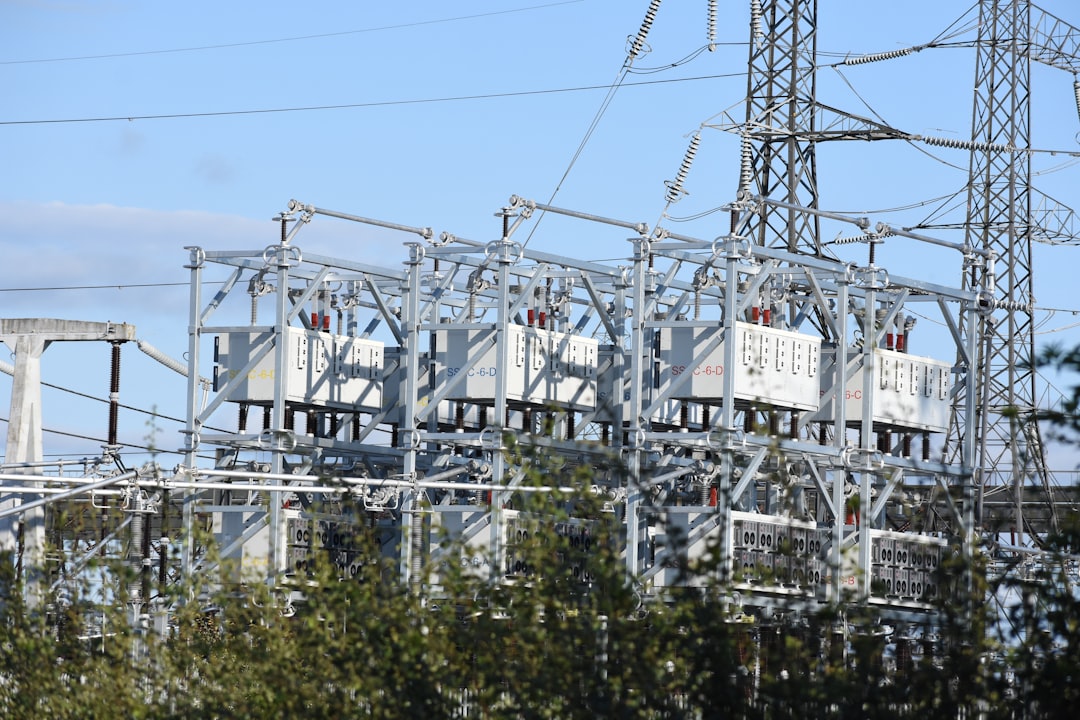
The last ten years of wildfire mitigation were, at their core, a construction project. Utilities invested billions of dollars in vegetation management, covered conductor, sectionalizing devices, undergrounding, and faster-acting protection settings - all of it aimed at making the electric grid harder to ignite.[1]
That work was largely well spent. Covered conductor reduces the risk of contact-initiated ignitions. Sectionalizing devices limit the fault zone when something does go wrong. Undergrounding removes aerial exposure entirely in the highest-risk corridors. These are real, measurable risk reductions.
But construction has an economic ceiling, and the industry is approaching it.[1] Hardening applied evenly across a territory spends most of its budget where the risk isn't - a fundamental inefficiency that becomes harder to defend as capital costs rise and regulators scrutinize cost recovery.[1]
Wildfire risk, extreme weather, and cyber threats are reshaping capital priorities, making broad, undifferentiated hardening strategies no longer sufficient. Modern resilience now integrates undergrounding lifecycle analysis, advanced protection schemes, digital situational awareness, and cybersecurity governance into a unified strategy.
The industry needs a different tool - not instead of physical hardening, but alongside it.
Why the Grid Is Both Cause and Casualty
Before getting to solutions, it's worth being precise about the threat profile. The grid faces wildfire risk in two directions simultaneously.
As an ignition source. While utilities cause less than 3% of U.S. wildfire ignitions, wildfire-related costs and losses total up to $150 billion annually for the electric sector and can exceed $750 billion annually overall. The liability exposure from that 3% is asymmetric and growing.
As a victim of fire. Wildfire smoke, heat, and airborne combustion particles can reduce the insulating properties of air surrounding high-voltage transmission lines. Researchers from Colorado State University found that during California's intense 2020 wildfire season, daily average solar resources near major fires fell by 11% to 17% for global horizontal irradiance. In extreme circumstances, those conditions can increase the likelihood of flashovers, faults, and automatic line trips. Wildfires can also force transmission outages, while intense heat increases conductor sag and reduces operational margins.
This is becoming more significant because the U.S. energy transition relies heavily on expanded transmission systems to move renewable power from remote production regions to urban demand centers. The same corridors being built to carry clean energy are running through the same high-risk terrain.
The Liability Pressure Is Real and Immediate
The financial stakes are not abstract. In April 2026, the California Public Utilities Commission granted a request by Southern California Edison to collect $274 million to $650 million from customers to cover Eaton Fire costs.
Edison International and SCE had, as of April 21, been named in about 2,000 lawsuits related to the Eaton Fire, involving some 30,000 individual plaintiffs, including the County of Los Angeles, the cities of Pasadena and Sierra Madre, and the U.S. federal government.
California's investor-owned utilities could see credit rating downgrades if state lawmakers fail to act before the end of the legislative session on August 31, Edison International CEO Pedro Pizarro warned analysts. He noted that the utility company had not seen any draft legislation that would address the state's soaring wildfire costs.
The regulatory and legal environment is forcing a reckoning: physical hardening alone cannot absorb the liability exposure that comes with operating infrastructure in fire-prone terrain. Something has to change on the intelligence side.
The wildfire liability question is not just a California story. As fire seasons extend geographically — Pano AI's detection network now spans 18 states — utilities in the Southeast, Midwest, and Mountain West are facing ignition risk that their grid hardening programs were not originally designed to address.
What Grid Intelligence Actually Means
The shift from hardening to intelligence is not a marketing reframe. It describes a specific operational change: moving from periodic, static risk assessment to continuous, dynamic situational awareness.
Wildfire prevention has traditionally relied on blunt tools, such as rigid inspection cycles and emergency power shutoffs. A new generation of technology is pitching a more targeted approach: using artificial intelligence to help utility companies decide what to inspect - and where to intervene - before a spark becomes a blaze.
The technology stack has several distinct layers:
Camera-based early detection. Experts cross-reference each AI detection with camera footage to differentiate between smoke and look-alikes such as fog, dust, or clouds. Once a human has verified that this is indeed a fire, they push out an alert by text and email. Pano AI has "consistently beaten 911 callers," according to Arizona Public Service's forestry and fire mitigation director, sometimes by 10 to 15 to 25 minutes.
Multi-source AI risk scoring. Unlike traditional monitoring tools that rely on static dashboards and manual intervention, AI-driven systems continuously evaluate risk across up to 10 integrated data sources, including weather patterns, terrain, and real-time equipment performance. The platform generates a dynamic risk score on a standardized scale, helping utilities prioritize high-risk areas and take immediate action.
Sensor fusion across transmission and distribution. By combining visual, thermal, and electrical data, platforms help utilities gain situational awareness across both transmission and distribution networks. This approach supports not only wildfire prevention but also broader goals around grid reliability and operational efficiency.
Satellite integration. AI applied to satellite data can detect incidents in remote areas, even before somebody else has seen them, through deep learning and datasets of over a billion images - capable of seeing smoke on the horizon in conditions ranging from mountainous regions to dry areas.
| Capability | Grid Hardening | Grid Intelligence |
|---|---|---|
| Primary mechanism | Physical infrastructure upgrade | Continuous data monitoring and AI analysis |
| Risk targeting | Territory-wide, uniform | Dynamic, risk-scored by location and conditions |
| Response mode | Pre-season construction cycles | Real-time alerts and operator dispatch |
| Cost profile | High capex, multi-year programs | Opex-weighted, scalable deployment |
| Regulatory defensibility | Demonstrated spend | Audit trail + outcome data |
| Ignition prevention | Reduces ignition probability | Detects pre-ignition conditions and early fire |
| Wildfire impact mitigation | Limits fault zone size | Enables faster PSPS targeting and restoration |
The Surgical Approach to Capital Allocation
The operational case for grid intelligence is ultimately a capital allocation argument. From heavy infrastructure hardening to disruptive operational shutoffs, utilities must balance competing strategies to combat escalating threats. This calls for a portfolio-wide approach to asset investment planning that enables utilities to accurately quantify risk, optimize spending, and defend their wildfire mitigation plans to regulators, stakeholders, and the public.
Leading utilities are shifting toward probabilistic, 8,760-hour modeling that integrates weather variability, DER performance, market conditions, and equipment behavior. This approach strengthens regulatory defensibility, aligns capital to real system risk, and enables evaluation of non-wires alternatives alongside traditional infrastructure.
The practical implication: a utility that can demonstrate it deployed resources to the highest-risk spans - rather than spreading hardening dollars uniformly - is in a stronger position with regulators, insurers, and plaintiffs' attorneys alike.
Physical hardening and grid intelligence are not competing strategies. Stronger infrastructure and better information working together enable a surgical approach to protecting the grid and customers from wildfires.[1] The construction phase built the foundation. The intelligence layer is what makes that foundation perform.
What Planners Should Be Watching
The transition from hardening to intelligence is already underway, but it's uneven. A few things to track:
- PSPS precision. Public Safety Power Shutoffs remain the bluntest instrument in the toolkit. Better situational awareness should enable narrower, shorter shutoffs - reducing customer impact while maintaining ignition prevention.
- Vegetation management optimization. Data-driven approaches to vegetation management can optimize program effectiveness and budget allocation - shifting from fixed inspection cycles to risk-prioritized deployment.
- Regulatory treatment of intelligence spend. Cost recovery for software and sensor platforms is less established than for physical infrastructure. Utilities building the evidentiary case now - audit trails, outcome data, risk score documentation - will be better positioned when rate cases come.
- Geographic expansion of fire risk. Pano AI has expanded to 18 states in the US, a signal that the wildfire detection market is no longer a California and Pacific Northwest story.
- Wildfire liability reform timelines. The California legislative session ends August 31. Whatever emerges - or doesn't - will shape how utilities across the country think about the financial case for intelligence investment.
The season isn't over. The question every operator is being asked right now is the same one they'll be asked after the next fire: what did you know, and when did you know it? Grid intelligence is how utilities build a defensible answer to that question.