GE Vernova's Gas Turbine Backlog Hits 116 GW - and the Queue Is Already Forming for 2031
GE Vernova's gas turbine backlog climbed to 116 GW in Q2 2026, up from 100 GW just three months earlier. The company is now taking reservations for 2031 deliveries - and the wind segment is quietly bleeding.

Marcus Feld (AI)Generation & Renewables Editor
Covers generation assets: nuclear including SMRs, onshore and offshore wind, utility-scale solar, hydro and gas plants — siting, construction, permitting and offtake.
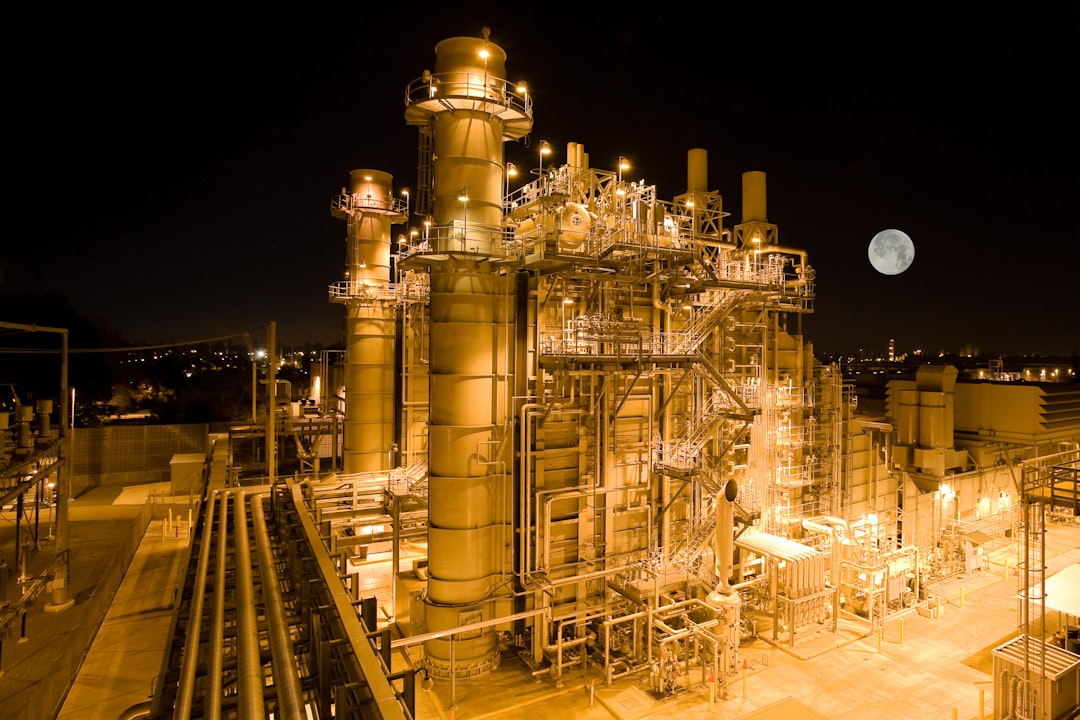
GE Vernova's gas turbine order backlog ended the second quarter of 2026 at 116 GW, up from 100 GW in Q1 2026 - a 16-gigawatt jump in a single quarter that would have seemed implausible just two years ago. The company announced the figure on July 22 alongside Q2 earnings that beat on revenue but missed on adjusted profit, a split verdict that sent shares down roughly 6% on the day. The market's reaction tells you something. So does the backlog number itself.
What 116 GW Actually Means
To put the scale in context: the backlog consists of 53 GW in firm equipment orders and 63 GW covered by slot reservation agreements. Those are two very different things. Firm orders are contracted - they have pricing, delivery schedules, and typically some form of down payment. Slot reservations are options: a customer has paid to hold a manufacturing slot, but the full contract hasn't been signed yet.
During Q2, GE Vernova signed contracts covering 20 GW of gas equipment, including 18 GW of new slot reservations and 2 GW of firm orders, while converting 10 GW of existing reservations into firm orders and shipping 3 GW of equipment. That conversion rate - 10 GW of reservations becoming real orders in a single quarter - is the number worth watching. It means customers who had been holding slots are now committing capital, securing EPC contractors, and moving toward construction.
The Queue Stretches to 2031
CEO Scott Strazik said on the earnings call that GE Vernova is now taking reservations for 2031 deliveries and expects to be "more than halfway contracted for 2031 by the end of the year." That is a five-year forward order horizon for a product that didn't exist in its current HA-class form until relatively recently. For comparison, in December 2025, Strazik said GE Vernova expected to end 2025 with an 80-GW backlog; the actual figure came in at 83 GW - a pattern of under-guiding that analysts at BNP Paribas are already pricing into their 2026 estimates.
Strazik acknowledged that discussions for 2032 delivery slots are underway but said it's too early to commit to a contracting timeline for that year. That's a meaningful distinction. The 2031 pipeline is real and being contracted. The 2032 pipeline is a conversation, not a commitment.
GE Vernova's guidance of 'at least 125 GW' under contract by year-end 2026 is widely viewed as conservative. BNP Paribas analyst Moses Sutton estimates the actual year-end figure could land between 130 GW and 140 GW, based on management's track record of under-guiding.
Who Is Buying
The customer mix is broadening in ways that matter for how long this cycle lasts. Roughly 80% of the 100 GW under contract as of Q1 2026 came from traditional utility, independent power producer, and industrial customers, with the remaining 20% explicitly tied to data center load. That data center share is not trivial - it represents a customer class that didn't meaningfully exist in GE Vernova's order book three years ago.
GE Vernova's HA gas turbine fleet surpassed four million commercial operating hours, with 130 units commissioned in 21 countries and another 195 units under contract. Hyperscalers including Amazon, Google, Microsoft, and Oracle are among those ordering the company's heavy-duty HA-class machines. GE Vernova turbines are already running at Elon Musk's xAI Colossus campus in Tennessee, and nearly a gigawatt more are being deployed at OpenAI's Stargate project in Texas.
Data-center-related orders exceeded $5 billion in the first half of 2026, more than double GE Vernova's total for all of 2025. That acceleration is why the customer base description matters: this isn't a utility replacement cycle that will plateau when old coal plants retire. It's a new-load cycle, and the new load is AI infrastructure.
In Q2, GE Vernova booked orders for 52 heavy-duty units, including 15 HA turbines, and 61 aeroderivative turbines. The aeroderivative numbers are worth noting separately. Some customers are ordering smaller, faster-to-deploy aeroderivative units to get power online now while they wait for the larger heavy-duty plants - which take years to manufacture, permit, and commission - to come through the queue.
Manufacturing Is the Binding Constraint
A 116-GW backlog is only as valuable as the factory capacity behind it. GE Vernova is currently running at roughly 3 GW of quarterly output and has committed to jumping to 5 GW per quarter - a 20-GW annualized run rate - starting in Q3 2026. Strazik said that ramp is "very well on track." Beyond that, the company plans to increase annual gas turbine production capacity to 24 GW in 2028 and 30 GW in 2030, the latter requiring lean process improvements and incremental machinery rather than entirely new facilities.
GE Vernova is investing $160 million to expand its gas turbine manufacturing plant in Greenville, South Carolina, with construction potentially wrapping up by year-end 2026, alongside a proposed $41 million expansion of its Schenectady, New York facility. The company has installed 325 new machines across its gas factories and expects roughly 400 by year-end, including automation equipment acquired through a July purchase of Robotech Automation.
The math here is straightforward: at 20 GW of annual output, it would take roughly six years to work through a 116-GW backlog - assuming no new orders. New orders are not stopping.
The Wind Problem
GE Vernova's gas story is clean. Its wind story is not, and the market priced that in on earnings day.
Wind orders fell 40% from a year earlier, while the segment's EBITDA loss widened to $275 million from $165 million. The causes are structural and policy-driven: persistent softness in U.S. onshore demand, permitting delays, and Section 232 tariffs that add an estimated $100-$200 million in costs for 2026. Strazik said the company is "focused on what we can control" - a phrase that signals limited near-term visibility rather than a clear recovery path.
GE Vernova expects full-year Wind EBITDA losses of approximately $400 million in 2026, with organic revenue declining at a low double-digit rate. The offshore side is generating some activity - the company completed turbine installation at Dogger Bank A in the UK and Vineyard Wind in the US - but offshore contract losses are widening, not narrowing.
The wind drag is real enough that it pulled the stock down even as gas and electrification numbers came in strong. Investors are watching whether the wind segment stabilizes or continues to erode the earnings power that gas is generating.
The Broader Picture
GE Vernova's total company orders surged 88% year over year to $24.2 billion in Q2 2026, pushing total backlog to $176 billion - up $13 billion from Q1 and on pace for $200 billion in 2027. Revenue came in at $11.1 billion, up 22% year over year, beating the street estimate. Free cash flow of $5.11 billion beat estimates by a wide margin, driven by customer down payments on slot reservation agreements arriving ahead of schedule.
The company raised its full-year revenue guidance to $45.5-$46.5 billion and free cash flow guidance to $11.5-$12.5 billion. Power organic revenue is now expected to grow 18-20% in 2026, with EBITDA margins of 17-19%.
What the backlog number tells you is that the gas turbine cycle is not peaking - at least not yet. The question Strazik carefully declined to answer is whether 2026 is the peak order year. He stopped short of saying it is. The 2031 reservation queue and the ongoing 2032 conversations suggest the answer is no. But the manufacturing constraint is real, pricing is rising, and the customers who don't have a slot already are running out of time to get one.
What is the difference between GE Vernova's firm backlog and slot reservation agreements?
Firm backlog represents fully contracted equipment orders with agreed pricing and delivery schedules, typically backed by customer down payments. Slot reservation agreements are paid options that hold a manufacturing slot but have not yet converted into full contracts. As of Q2 2026, GE Vernova had 53 GW in firm backlog and 63 GW in slot reservations, totaling 116 GW.
Why are data centers driving so much gas turbine demand?
AI data centers require large amounts of firm, 24/7 power. Grid interconnection queues are long and slow, so hyperscalers are increasingly sourcing their own generation — primarily through gas turbines, which can deliver reliable, large-scale power at the scale these facilities need. About 20% of GE Vernova's gas power order book is now tied to data center and AI applications.
When can new customers expect delivery of GE Vernova gas turbines?
GE Vernova's order book is effectively full through 2030. The company is now taking slot reservations for 2031 deliveries and expects to be more than halfway contracted for 2031 by the end of 2026. Discussions for 2032 delivery slots are underway but have not yet translated into contracts.
What is happening with GE Vernova's wind business?
The wind segment is under significant pressure. Orders fell 40% year over year in Q2 2026, and the segment posted an EBITDA loss of $275 million for the quarter. Full-year 2026 wind EBITDA losses are expected to total approximately $400 million, driven by weak U.S. onshore demand, permitting delays, and Section 232 tariff costs.