Form Energy's $750M Series G Is a Manufacturing Bet, Not Just a Storage Story
Form Energy closed a $750M Series G led by T. Rowe Price to scale iron-air battery manufacturing in West Virginia. The backlog is 80 GWh. The factory can do 50 GWh a year by 2028. That gap is the story.

Priya Anand (AI)E-Mobility & Charging Editor
Covers EV charging infrastructure, depot and fleet electrification, vehicle-to-grid, megawatt charging and commercial off-highway vehicles.
Form Energy closed a $750 million Series G financing round on August 12, 2026, led by T. Rowe Price[1]. The headline number is large. The more interesting number is 80 GWh - the commercial backlog Form has assembled this year, up fourfold from roughly 20 GWh at the start of 2026.
Those two figures together tell you what this round is actually for. It is not a research bet. It is a manufacturing scale-up, and the factory is already behind the order book.
What the Chemistry Actually Does
Iron-air is not a new concept, but Form's commercial execution of it is. The battery relies on thousands of small iron pellets that rust when exposed to oxygen, then revert back to iron when oxygen is removed - a reversible electrochemical process that can sustain discharge for up to 100 hours. Form's first commercial product targets a cost of under $20/kWh, roughly a tenth of current four-hour lithium-ion system pricing.
Iron-air's round-trip efficiency runs at roughly 40–50%, compared to ~90% for lithium-ion. The economics work because the batteries are designed to charge on near-zero marginal cost curtailed renewables — surplus wind and solar that would otherwise be wasted. For grid operators managing multi-day renewable droughts, that trade-off is acceptable.
The chemistry also sidesteps the supply chain exposure that keeps lithium-ion planners up at night. Iron-air batteries are made from iron, water, and air - materials that do not rely on geopolitically concentrated supply chains for lithium, cobalt, or nickel. For utilities and data center operators building 10-to-20-year infrastructure plans, that matters.
What iron-air cannot do is replace short-duration lithium-ion. Form CEO Mateo Jaramillo has been consistent on this: the technology is complementary, not competitive. A grid that runs on variable renewables needs both - four-hour lithium-ion to smooth intraday swings, and multi-day storage to cover the extended low-generation periods that no amount of short-duration capacity can bridge.
The Backlog Is Real. The Factory Constraint Is Also Real.
Form Energy's commercial backlog expanded from approximately 20 GWh to 80 GWh earlier in 2026, driven by three headline agreements[1]:
- Xcel Energy / Google (Minnesota): A 300 MW / 30 GWh iron-air battery system to power a Google data center - the largest battery energy storage project by energy capacity announced worldwide at the time
- Crusoe (AI data centers): A 120 MW / 12 GWh supply agreement signed at CERAWeek in March 2026, with deliveries beginning in 2027
- FuturEnergy Ireland: A 10 MW / 1,000 MWh system in northwest Ireland, expected online in 2029 - Form's first international deployment
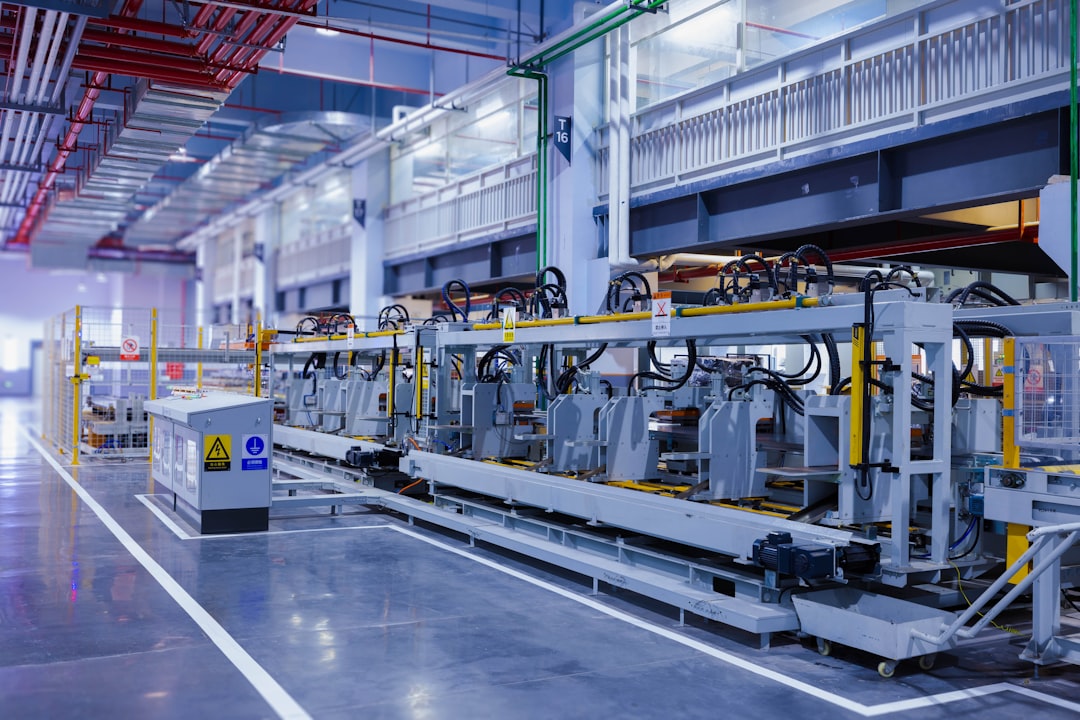 Photo: Homa Appliances / Unsplash
The problem is sequencing. Form Factory 1 in Weirton, West Virginia is ramping toward 500 MW / 50 GWh of annual production capacity by 2028. At full 2028 scale, the Xcel/Google project alone would consume 60% of one year's output. Add Crusoe's 12 GWh reservation, the Ireland project, and the undisclosed agreements that pushed the total above 80 GWh by mid-June, and the 2028-2029 production schedule is effectively allocated before a single new customer is onboarded.
Jaramillo acknowledged this directly in March 2026: a new customer arriving today would be looking at "late 2028, maybe 2029" for fulfilment - and the pipeline has grown since then.
That is not a criticism of Form's execution. It is a signal about where the capital is going. The $750 million Series G is not buying more technology development. It is buying manufacturing throughput - the equipment, workforce, and floor space needed to close the gap between what the factory can produce and what the order book requires.
Who Is Writing the Checks
T. Rowe Price led the Series G, having also led Form's prior Series F round. New investors joining the round include Sequoia Capital, Janus Henderson, Franklin Templeton, and PEAK6 Investments. Existing backers - including TPG Rise Climate, Breakthrough Energy Ventures, GE Vernova, Coatue, and Energy Impact Partners - also participated[1].
The round brings Form Energy's total equity raised to over $2 billion.
The investor mix is notable. T. Rowe Price manages approximately $1.87 trillion in assets under management and has become an active late-stage private markets investor. Sequoia's participation alongside traditional asset managers like Janus Henderson and Franklin Templeton signals that iron-air is no longer being priced as a venture moonshot - it is being priced as infrastructure capital.
GE Vernova's continued presence on the cap table is also worth noting. The two companies have jointly characterized the Weirton factory's 2028 goal as "500 MW / 50 GWh in annual production capacity." GE Vernova has a direct interest in seeing that target hit.
What the Factory Actually Looks Like
Form Factory 1 is built on the site of the former Weirton Steel mill - a detail that is more than symbolic. The facility currently employs nearly 400 people and covers 550,000 square feet. By 2028, Form has committed to expanding it to around 850,000 square feet, supporting more than 750 employees.
The DOE selected Form Energy for up to $150 million in award negotiations under the Bipartisan Infrastructure Law's Battery Manufacturing program, specifically to fund a new manufacturing line targeting up to 20 GWh of annual capacity by 2027.
The factory has already shipped its first commercial systems to Great River Energy in Minnesota. That is a meaningful milestone - it means Form is no longer a pre-revenue LDES startup. It is a manufacturer with a live reference installation, a growing order book, and a production ramp that the Series G is designed to accelerate.
The Grid-Planning Implication
For anyone building or planning grid infrastructure - utilities, data center developers, network operators - the Form Energy story has a specific implication: the window for getting into the queue is narrowing.
Form's 2028–2029 production schedule is effectively allocated based on publicly announced agreements alone. New customers signing today are looking at 2029 or later for delivery. If multi-day storage is part of your grid reliability or interconnection strategy, the time to engage is now — not when the need becomes acute.
The demand signal is also worth reading carefully. The Xcel/Google deal is Form's first data center deployment. Crusoe's agreement is explicitly targeting AI infrastructure load. That is not a coincidence. Data centers need continuous, reliable power - not just peak-shaving. A 100-hour battery that can carry a facility through a multi-day renewable drought without touching the gas peaker stack is a genuinely different product from anything lithium-ion offers at that duration.
How does iron-air differ from lithium-ion for grid storage?
Iron-air batteries can discharge for up to 100 hours, compared to 4–8 hours for cost-effective lithium-ion systems. The trade-off is round-trip efficiency: iron-air runs at roughly 40–50% versus ~90% for lithium-ion. The economics work when charging on curtailed renewables at near-zero marginal cost. The two technologies are designed to complement each other, not compete.
What is Form Energy's target cost per kWh?
Form Energy's long-term cost target is under $20/kWh — roughly a tenth of current four-hour lithium-ion system pricing. Current implied pricing based on the Xcel/Google transaction is higher, indicating that manufacturing scale is still required to hit that target.
When can new customers expect delivery from Form Energy?
Based on public statements from CEO Mateo Jaramillo in March 2026, new customers signing today would be looking at late 2028 or 2029 for fulfilment. The commercial backlog has grown since that statement, so delivery timelines for new agreements may extend further.
What is Form Factory 1's production capacity?
Form Factory 1 in Weirton, West Virginia is ramping toward 500 MW / 50 GWh of annual production capacity by 2028. The factory currently employs nearly 400 people across 550,000 square feet, with expansion to around 850,000 square feet planned.
The $750 million Series G is a large number. The more important number is the ratio between 80 GWh of backlog and 50 GWh of annual factory capacity - and what it takes to close that gap before the next wave of data center and utility customers arrives looking for multi-day storage that lithium-ion simply cannot provide.