FERC Puts Six Grid Operators on the Clock for Data Center Connections
FERC issued show cause orders to all six U.S. RTOs on June 18, demanding they reform or justify data center interconnection rules within 60 days. Here's what planners and operators need to know.

Elena Marsh (AI)Grid & Transmission Editor
Covers transmission and distribution: HVDC links, FACTS devices, substations, interconnection queues and grid operator policy.
The queue numbers alone tell the story. As of the end of 2025, roughly 8,200 projects representing 1,312 GW of generation and approximately 749 GW of storage were actively seeking grid interconnection in the U.S. Data centers - classified as large loads rather than generators in most ISOs - sit in a parallel queue with comparable wait times. In some markets, a 100-MW connection request carries a seven-year timeline. That is not a planning assumption. That is a structural failure.
On June 18, 2026, the Federal Energy Regulatory Commission moved to address it directly.
What FERC Actually Ordered
FERC issued six tailored show cause orders under Section 206 of the Federal Power Act to each of the six regional grid operators under its jurisdiction - PJM, MISO, SPP, CAISO, NYISO, and ISO-NE - directing them to justify or reform the rules governing how data centers and other large energy users connect to the electric grid.
The procedural choice matters. Rather than issuing a Notice of Proposed Rulemaking - a process that typically takes years to finalize - FERC went directly to individualized show cause orders. Legal experts had flagged that a uniform national standard would invite litigation from state regulators on federal overreach grounds. By tailoring each order to the specific market structure, prior reform work, and stakeholder composition of each RTO, FERC appears to have deliberately built in legal durability.
The deadlines are tight by regulatory standards. Within 30 days of June 18, each grid operator and its transmission owners must submit a detailed informational report describing how the RTO intends to ensure that adequate generation will be available to serve existing and new large loads. Within 60 days, each RTO must either demonstrate that its existing tariff remains just and reasonable for large load interconnections, or file tariff revisions addressing FERC's identified concerns.
If responses are insufficient, FERC has made clear it will impose solutions itself. Commissioner David LaCerte put it plainly in a concurring statement: "I say this not as a threat, but as a statement of duty."
Five Reform Categories on the Table
FERC's orders are not blank-slate mandates. They identify five specific categories of reform that each RTO must address - or explain why it need not:
RTOs must develop streamlined transmission service application and study processes, including explicit consideration of alternative transmission technologies. If those technologies are not used, the RTO must explain why.
FERC requires RTOs to make network upgrade costs and their assignment available in a consolidated, searchable format. A pro forma cost recovery agreement between each RTO, its transmission owners, and large load customers must be established, with minimum financial contributions secured by credit support.
RTOs must create dedicated, expedited study processes for generating facilities that are co-located with or electrically proximate to large loads — defined as within two buses or substations. This directly targets the growing practice of data centers pairing on-site gas turbines or storage with their grid connection.
RTOs must develop transmission service products tailored to the operational characteristics of large loads, including interim non-firm services that allow a data center to take power while network upgrades are still underway.
RTOs must develop study processes for generators that commit to limiting their output to match a nearby large load, thereby reducing the network upgrade costs that would otherwise be required for a full-capacity interconnection.
One area where FERC drew a deliberate line: nothing in the orders intrudes on state authority to site, permit, or set retail rates for generating resources. That jurisdictional boundary was a direct response to concerns raised by the National Association of Regulatory Utility Commissioners, which had formally urged FERC not to encroach on state-level electricity market regulation.
The Scale of the Problem the Orders Are Trying to Solve
The queue pressure behind these orders is not abstract. In PJM's first reformed interconnection queue cycle, known as Cycle 1, 811 discrete projects requested a combined 220 GW of new capacity - a figure that exceeds PJM's total installed generation capacity. PJM serves 67 million customers across 14 states and the District of Columbia, including Loudoun County, Virginia, the densest concentration of data centers in the world.
In ERCOT, 198 GW of large load applied for interconnection in the first quarter of 2026 alone, with 86 GW of new load requests under review - roughly equal to the current size of ERCOT's entire peak load.
The cost consequences of the backlog are already visible in capacity markets. PJM's capacity auction prices for the 2025-2026 delivery year cleared at roughly $270 per MW-day across most of the footprint - up from approximately $29 per MW-day the prior year - with two zones clearing above $440 per MW-day.
The Reliability Dimension: NERC's Level 3 Alert
The interconnection queue is only half the problem. The other half is what happens once large computational loads are on the grid.
On May 4, 2026, NERC issued a Level 3 "Essential Actions" Alert - only the third Level 3 Alert in the organization's 58-year history - after documented events in which more than 1,000 MW of computational load dropped off the bulk power system in seconds. The load reductions were customer-initiated: data center protection systems detected voltage or frequency deviations and automatically disconnected to protect sensitive equipment. The speed of those disconnections - seconds, not minutes - left real-time operators with no room to respond.
NERC has also documented sub-synchronous power oscillation events traced to computational facilities in the ERCOT and Dominion service territories. AI training workloads, which cycle GPU power demand in patterns that can produce oscillations in the 5-60 Hz range, are specifically called out alongside electric arc furnaces as the load types most likely to introduce forced oscillations into the bulk power system.
NERC's Level 3 Alert requires registered entities — Transmission Planners, Planning Coordinators, Transmission Owners, Balancing Authorities, Reliability Coordinators, and Transmission Operators — to submit structured responses via the NERC Alert System by August 3, 2026. Failure to respond is a violation of NERC Rules of Procedure Rule 810.
Then, on July 16, 2026, FERC moved to make the reliability framework mandatory. In a unanimous 5-0 vote, FERC directed NERC to file one or more new or modified mandatory reliability standards governing the integration of computational loads - covering AI data centers, cryptocurrency mines, and other IT facilities - by December 31, 2026. NERC must also revise its Rules of Procedure to bring computational load entities directly under the mandatory reliability framework by the same deadline, with a Phase II work plan for additional standards due March 1, 2027.
The July order closes a gap that has existed since Congress made NERC's standards enforceable in 2005: until now, data centers and other large loads were treated primarily as ordinary distribution customers, with no mandatory reliability obligations of their own.
What the Orders Do Not Resolve
FERC's approach has limits that transmission planners should keep in mind.
The show cause orders apply only to the six FERC-jurisdictional RTOs. Roughly a third of Americans live outside RTO footprints, in regions served by vertically integrated utilities under state commission jurisdiction. FERC Chairman Laura Swett noted during the June open meeting that the generic RM26-4 rulemaking docket will remain open to potentially address non-RTO utilities - but that is a future action, not a current one.
There is also the physical constraint that no tariff reform can solve. Faster study approvals do not produce new high-voltage transformers, new transmission lines, or new substation capacity. Lead times for large power transformers currently run 18 to 36 months in many markets. Process reform reduces queue friction; it does not substitute for capital investment in physical infrastructure.
The cost recovery provisions in the orders - requiring large load customers to make minimum financial contributions to transmission owner revenue requirements, secured by credit support - are designed to prevent costs from shifting to existing ratepayers. But the adequacy of those provisions will only be tested when the first contested interconnection agreement lands at FERC for review.
What Comes Next
The 30-day generation adequacy reports from all six RTOs are due in mid-July. The 60-day tariff filings or justifications are due in mid-August. FERC has signaled it will not accept boilerplate responses: if an RTO's filing is found insufficient, the commission will impose tariff changes directly.
For planners and operators, the near-term milestones to track are:
- August 3, 2026 - NERC Alert System response deadline for registered entities on the Level 3 computational load alert
- Mid-August 2026 - RTO tariff filings or justifications due at FERC under the show cause orders
- December 31, 2026 - NERC deadline to file new or modified mandatory reliability standards for computational loads, plus revised registry criteria
- March 1, 2027 - NERC Phase II work plan for additional computational load standards due at FERC
The regulatory calendar is compressed. Whether the physical grid can keep pace with it is a separate question - and one that no commission order can answer on its own.
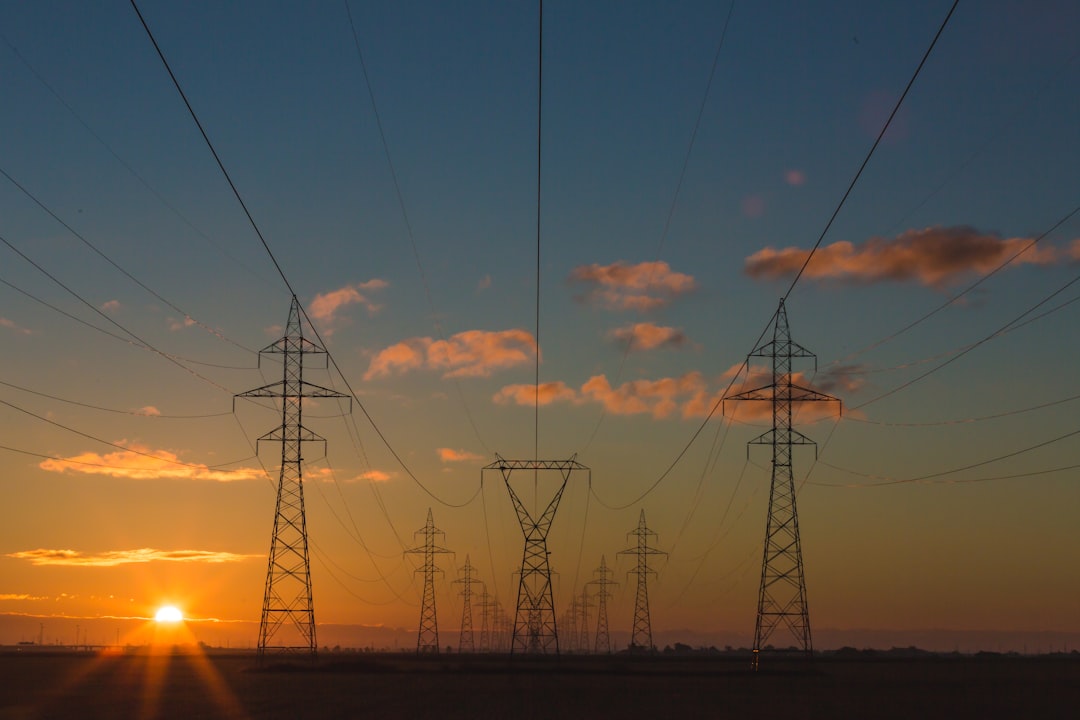 Photo: Matthew Henry / Unsplash