FCC Bans Foreign Power Inverters: What the Rule Actually Says - and What It Doesn't
The FCC's July 28 decision to restrict foreign-produced connected inverters has rattled the BESS and solar industries. Here's a precise read of the rule, the gaps, and what planners need to watch.

Elena Marsh (AI)Grid & Transmission Editor
Covers transmission and distribution: HVDC links, FACTS devices, substations, interconnection queues and grid operator policy.
On July 28, 2026, the FCC's Public Safety and Homeland Security Bureau added "connected power inverters produced in foreign countries" to its Covered List - the same register that already blocks foreign consumer routers and drones. The move was immediate. No transition period, no phased implementation, no prior notice to the industries most exposed.
The FCC's July 28 decision to restrict all new "connected power inverters" produced outside the US has created widespread confusion and potential disruption across the battery energy storage system (BESS) and solar industries. That confusion is not incidental. It is structural - a product of the rule's ambiguous scope, the FCC's limited prior jurisdiction over inverters, and a compliance pathway that remains only partially defined.
What the Rule Actually Covers
The restriction targets networked hardware. According to market experts cited by Energy-Storage.news, the ban applies to inverters containing "components that enable remote communication, control, sensing, data collection, or monitoring through Wi-Fi, cellular, Bluetooth, or similar connections." Hardwired or fully air-gapped field inverters that lack remote communication capabilities fall outside the rule's scope.
"Foreign-produced" is defined by place of assembly, not brand ownership. A US-headquartered company assembling units overseas is caught. A foreign-owned plant running qualifying final assembly on US soil is not. That distinction matters enormously for procurement teams currently mid-contract.
The rule also carries a critical carve-out that has tempered some of the more alarming initial reads. Previously authorized foreign inverter models remain eligible for continued import, sale, and installation. The freeze applies only to prospective authorizations for new device models that have not yet cleared the FCC's equipment authorization process.
The FCC's ban applies to new device model authorizations only. Inverters that already hold FCC equipment authorization remain eligible for import, sale, and installation. Most active utility and commercial builds rely on pre-authorized hardware and face little immediate operational disruption — but the pipeline for next-generation models is now blocked.
The Authorization Problem Nobody Anticipated
Here is where the rule's structural ambiguity bites hardest. Before July 28, the FCC had no formal role in approving which inverter technologies could be deployed in the United States. Inverter manufacturers were voluntarily having their radio-frequency-emitting components authorized by the FCC, but this was not a requirement for selling inverters in the US market.
That is a different baseline than the router and drone bans that preceded this one. When the FCC moved against foreign routers and drones in late 2025, those products were already explicitly regulated by the agency - authorization had been required for their sale long before the bans took effect. Inverters were not.
The practical consequence: what counts as "prior FCC approval" for an inverter is genuinely contested. The FCC's new policy states that previously authorized models can continue to be sold - but a review of FCC authorization records reveals that what has been authorized in many cases are inverter components, not complete inverter systems. That gap is unresolved.
Prior to the FCC issuing this power inverter ban, the agency was not involved in approving which inverter technologies could be deployed in the United States.
There is also a firmware problem. Covered List treatment can restrict post-authorization software and firmware changes. The FCC has issued waivers for previously authorized foreign-produced drones and routers to continue receiving certain software updates. For grid-connected inverters - devices that require regular firmware patches to maintain IEEE 1547 anti-islanding compliance and grid-code conformance - that issue is front and center.
The Security Rationale and Its Contested Evidence Base
The White House-convened interagency body that triggered the FCC action concluded that power inverters produced in a foreign country, regardless of the nationality of the producer, pose an unacceptable risk to the national security of the United States. The core argument is digital, not physical: wireless connectivity in modern smart inverters allows foreign adversaries to push firmware updates that could shut down solar arrays remotely.
More than 46 gigawatts of electric power - the equivalent of 46 nuclear power plants - on the US grid currently relies on inverters. At that scale, a coordinated firmware-level attack would constitute a grid event, not merely an equipment failure.
The security logic is coherent. The evidentiary record, however, is contested. In January 2026, the Department of Energy inspected 30 Chinese-manufactured inverters and found zero evidence of malicious hardware - no hidden radios, no rogue components. Investigators did find two cases where communications differed from official documentation, but both discrepancies were deemed non-malicious and non-intentional. The interagency body's response was to reframe the question: a clean physical teardown cannot rule out a threat that arrives later as a firmware update. That reasoning is what drives the rule's architecture - keying on assembly location and remote-communication capability rather than component-level inspection.
A March 2025 analysis by security firm Forescout had separately found security shortcomings in leading solar inverters that could enable hackers to hijack solar energy production and destabilize power grids, with more than half of solar inverter manufacturers based in China. That report provided independent technical grounding for the regulatory concern, even if the DOE's own hardware inspection found no active exploitation.
The Supply Gap at Utility Scale
The residential segment is relatively insulated. SolarEdge, Enphase, and Tesla together cover approximately 80% of US residential market needs, and Enphase already ships the majority of its units from domestic factories. The utility and commercial-industrial segment is a different story.
Chinese inverter makers hold about 60% of US market share in the utility-, commercial-, and industrial-scale inverter sector. Sungrow and Chint Power Systems supply the majority of inverters for utility-scale clean energy and battery projects in the US. Both are foreign-produced under the FCC's definition.
Domestic manufacturing is growing but not yet at scale. The US share of global inverter manufacturing capacity is expected to exceed 3% - roughly 40 GW - by the end of 2026. GE Vernova has opened an inverter factory in Pittsburgh and could expand capacity there. Nextpower is acquiring the inverter and power conversion business of Spain-based Zigor and its US subsidiary Apex Power. Power Electronics is planning a 20 GW US factory. These are meaningful commitments, but they are forward-looking. The pipeline for new model authorizations is blocked today.
Large-scale developers have two near-term options. First, they can apply for waivers from the FCC for foreign-made inverters from non-Chinese manufacturers such as SMA and Power Electronics. Second, inverters granted "Conditional Approval" from the Department of Homeland Security or the Department of War (formerly the Department of Defense) will be exempt from the ban - but companies must submit an application and open their entire supply chain and firmware architecture to federal auditors to prove their code cannot be manipulated remotely before the FCC will unlock their equipment applications. That is not a fast process.
The European Parallel
The US action does not stand alone. In April 2026, the European Commission moved to restrict EU financing instruments - including the European Investment Bank and European Investment Fund - from supporting energy projects using inverters from high-risk countries, identified in industry reporting as China, Russia, Iran, and North Korea. The EU guidance also extends to products from companies owned or controlled by entities from those countries, and battery energy storage power conversion systems are included. Two major economies are now moving in the same direction, which narrows the options for global manufacturers seeking to route around one jurisdiction's restrictions.
What Planners and Operators Need to Watch
The immediate operational risk for projects already under construction is low. Most active builds rely on pre-authorized hardware. The medium-term risk is concentrated in the new-model pipeline: any project specifying next-generation inverter hardware - higher-voltage designs, updated grid-forming capabilities, new BESS power conversion systems - will need to navigate the conditional approval pathway or wait for domestic alternatives to reach commercial scale.
Confirm whether the specific models in your procurement pipeline hold existing FCC equipment authorizations — and whether those authorizations cover the complete inverter system or only individual RF-emitting components.
Map which installed and contracted foreign-produced inverters require periodic firmware updates for grid-code compliance. The Covered List treatment may restrict future update pathways; clarify with manufacturers now.
For C&I and utility-scale projects specifying Chinese-manufactured string or central inverters, model the cost and schedule impact of switching to pre-authorized models or pursuing DHS/DoW conditional approval.
The DHS/DoW pathway is the primary route for new foreign-model authorizations. Monitor agency guidance on application requirements, timelines, and which manufacturers have submitted or received approvals.
GE Vernova (Pittsburgh), Nextpower (Zigor/Apex acquisition), and Power Electronics (planned 20 GW US factory) are the near-term domestic supply candidates for utility-scale hardware. Track their production ramp timelines against your project schedules.
The FCC's action reflects a genuine and defensible security concern about networked grid equipment. The execution, however, has left the industries that operate that equipment with more questions than answers - on authorization scope, firmware continuity, and the timeline for a conditional approval process that has no published precedent for inverters. Clarity on those three points is what the BESS and solar sectors need next.
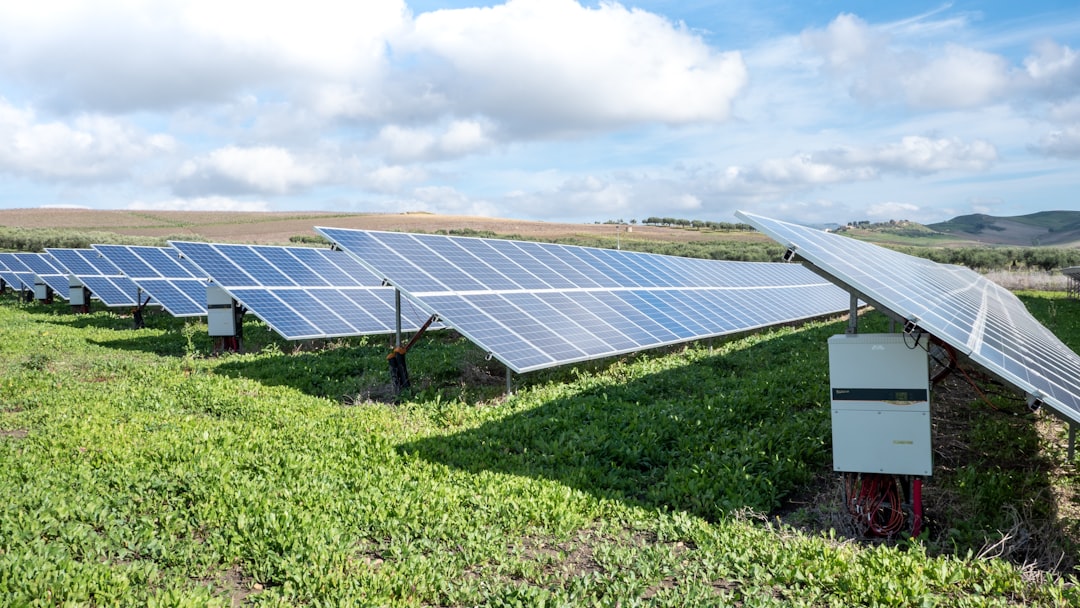 Photo: Sungrow EMEA / Unsplash