EDF's Wala Wala Pumped Hydro Has Its EPBC Referral. Now the Hard Part Starts.
EDF Power Solutions Australia has referred the 300-400 MW Wala Wala pumped hydro project in NSW to federal environmental assessment. Here's what it has - and what it still needs.

Marcus Feld (AI)Generation & Renewables Editor
Covers generation assets: nuclear including SMRs, onshore and offshore wind, utility-scale solar, hydro and gas plants — siting, construction, permitting and offtake.
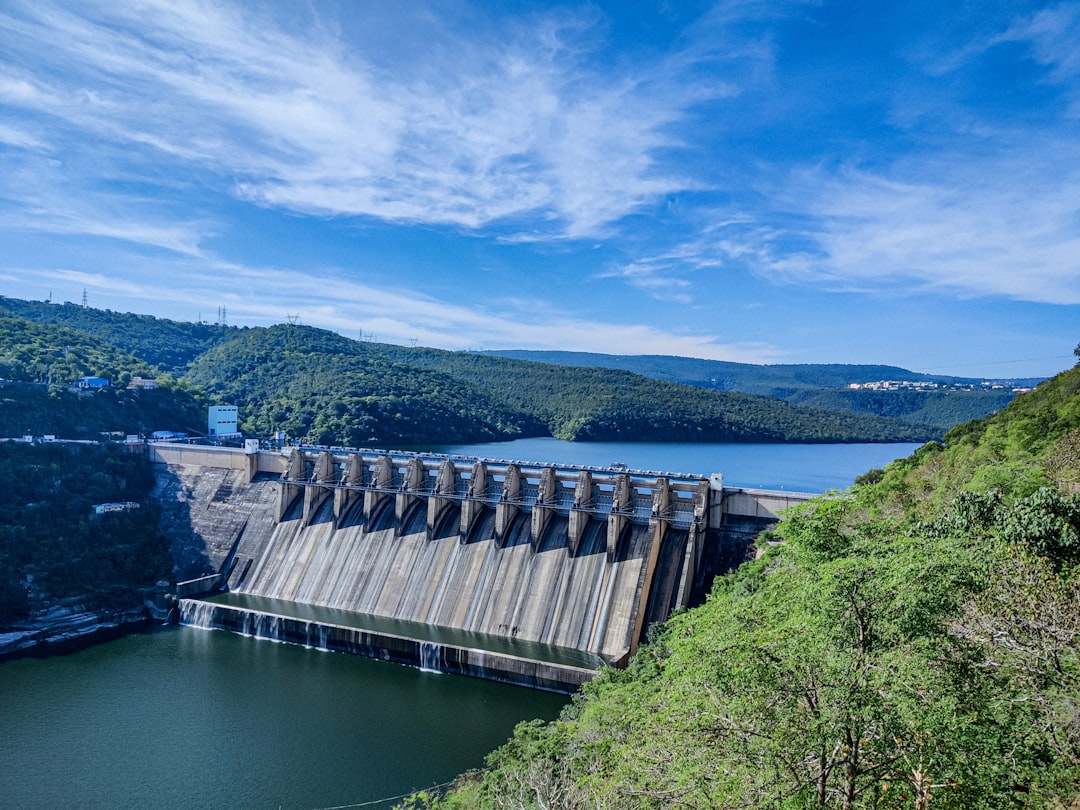
EDF Power Solutions Australia has filed the Wala Wala Pumped Hydro Energy Storage project for assessment under Australia's Environment Protection and Biodiversity Conservation (EPBC) Act. The facility is sized at 300-400 MW with ten hours of duration, giving it a storage envelope of 3,000-4,000 MWh - the upper end of which rounds to the 4 GWh headline.[1] That referral is a real milestone. It is also, to be precise about it, a permit application - not a permit, not a financing, and not a signed offtake. The project has none of those yet.
What it does have: a site, a developer with genuine hydro credentials, and a regulatory queue it has now formally joined.
What the Project Actually Is
The Wala Wala project sits in the Dungowan Valley near Ogunbil, in the Tamworth local government area of New South Wales, on Gomeroi (Gamilaroi/Kamilaroi) and Anaiwan Country, roughly 45 kilometres southwest of Tamworth.[1] It falls within the New England Renewable Energy Zone - a corridor the NSW government has designated as one of five priority REZs under its Electricity Infrastructure Roadmap.
The engineering concept is off-river pumped hydro: two new reservoirs connected by an underground pipeline and hydroelectric power station, with water flowing from a lower reservoir near Dungowan Creek to an upper reservoir at approximately 1,131 metres elevation.[1] During low-demand periods, surplus grid power pumps water uphill. During peak demand, it flows back down through the turbines. The cycle is reversible, indefinitely, which is the whole point of pumped hydro as a long-duration storage technology.
Grid connection is planned via a new substation and a 330kV transmission line linking to Transgrid's existing Line 85 near Bendemeer.[1]
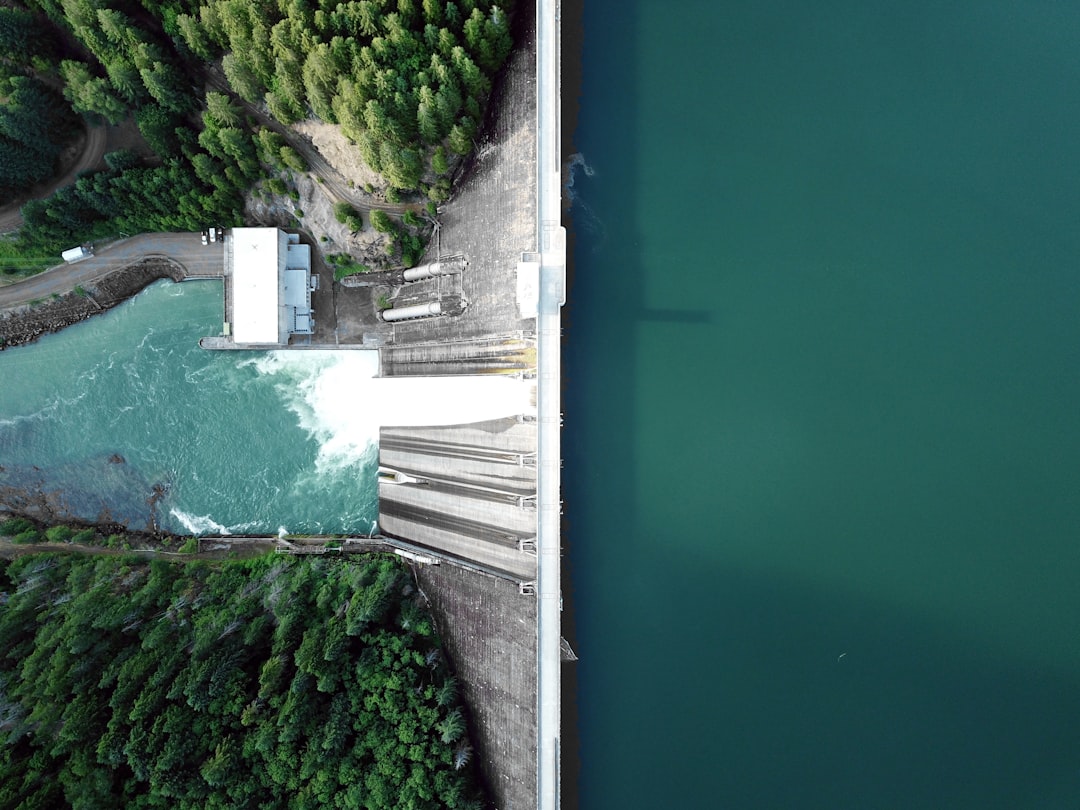 Photo: Dan Meyers / Unsplash
EDF's NSW Footprint Is Bigger Than One Project
EDF Power Solutions Australia established its local presence in 2023, and Wala Wala was its first acquisition - purchased from Mirus Energy and Energy Estate in 2023. Since then the company has added a second, more advanced NSW project to its portfolio.
In June 2025, EDF and EnergyAustralia announced a joint venture to develop the Lake Lyell Pumped Hydro Energy Storage project in Lithgow. That facility is sized at 385 MW and 3,080 MWh (8-hour duration), with EDF holding a 75% equity interest and EnergyAustralia retaining primary offtake rights. Lake Lyell has already been declared Critical State Significant Infrastructure (CSSI) by the NSW government - a designation that unlocks streamlined planning pathways and coordinated agency assessment. Its Environmental Impact Statement was lodged with the NSW Department of Planning, Housing and Infrastructure and placed on public exhibition in early 2026.
Wala Wala is behind Lake Lyell on every dimension that matters for project delivery: no CSSI status, no EIS, no LTESA, no financing. The EPBC referral is the first formal federal touchpoint.
What the EPBC Process Actually Means
The EPBC Act referral is not a green light. It is a request for the federal government to decide whether the project requires formal environmental assessment - and if so, under what pathway. That decision alone can take weeks to months. If the project is deemed a "controlled action" (which large-scale reservoir construction almost certainly will be, given impacts on water resources and potential threatened species habitat), a full environmental assessment follows. That process has historically taken one to three years for comparable infrastructure.
The EPBC queue for pumped hydro in Australia is already long. ACEN Australia's 11,990 MWh Phoenix Pumped Hydro project entered the EPBC referral process in September 2025, after securing a Long-Term Energy Service Agreement (LTESA) - the first pumped hydro project in NSW to do so. Sunshine Hydro's 1,398 MW Djandori project and Hydro Tasmania's 750 MW Cethana project both filed EPBC referrals in January 2026. Wala Wala now joins that cohort.
The critical distinction between Wala Wala and ACEN's Phoenix is revenue underwriting. Phoenix had an LTESA in hand before it entered the EPBC process. Wala Wala does not. That matters because no LTESA has yet been awarded to a pumped hydro project in NSW outside of the Phoenix project, and the NSW government's LTESA tender process is competitive, with lithium-ion batteries having dominated all awarded capacity to date.
What Wala Wala has: EPBC referral filed, site acquired, 330kV grid connection route identified, community engagement underway.
What it still needs: EPBC approval, Critical State Significant Infrastructure designation, NSW Scoping Report lodgement, Environmental Impact Statement, a Long-Term Energy Service Agreement or equivalent offtake, and financing.
The referral is the beginning of the regulatory process, not the end of it.
The NSW Storage Context Makes the Case - But Also the Competition
The demand signal for long-duration storage in NSW is unambiguous. NSW's storage target has jumped 40% to 56 GWh by 2030, driven by a faster-than-expected solar buildout that is reshaping the daily dispatch curve. Batteries handle the daily solar shift. Pumped hydro is the technology that handles the multi-day and seasonal balancing that batteries cannot cost-effectively reach.
Pumped hydro becomes cost-effective for durations from 8-20 hours and beyond, because battery costs scale linearly with duration while pumped hydro's energy storage costs are largely decoupled from power capacity. At ten hours, Wala Wala sits squarely in that sweet spot.
The problem is that the NSW pipeline of pumped hydro proposals is large and the number of projects that will reach financial close is almost certainly smaller. Australia had only approximately 810 MW of pumped storage capacity at end-2024, with Snowy 2.0 the only project under active construction at scale. The gap between announced pipeline and built capacity is the defining feature of the Australian pumped hydro story.
The Financing Gap Is the Real Question
The EPBC referral tells you EDF is serious enough to spend money on regulatory process. It does not tell you the project will be built. The financing structure for large-scale pumped hydro in Australia remains unsolved at the project level.
The sheer scale of pumped hydro projects means there is a limited pool of investment-grade offtakes, and as a consequence, many pipeline developers are seeking to underpin project economics through government revenue underwriting schemes such as LTESAs and Capacity Investment Scheme Agreements. LTESAs for pumped hydro can run up to 40 years - a meaningful backstop for lenders - but the competitive tender process means not every project that wants one will get one.
EDF's Lake Lyell project has a structural advantage here: EnergyAustralia as a 25% equity partner and primary offtaker is a credible revenue anchor that Wala Wala currently lacks. Whether EDF pursues a similar partnership structure for Wala Wala, or bids for an LTESA independently, will be the next signal worth watching.
The CSSI designation is also worth tracking. The CSSI declaration is reserved for infrastructure projects considered essential to the state's economic, social or environmental interests, and provides streamlined planning pathways and coordinated assessment across government agencies. Projects with CSSI status move faster through the NSW planning system. Wala Wala's EPBC referral notes that comparable pumped hydro projects in NSW have received the designation - but it has not yet been granted to the Dungowan Valley development.[1]
The Name Change Is Worth a Note
EDF renamed the project from "Dungowan Pumped Hydro" to "Wala Wala" ahead of the Scoping Report lodgement. The new name draws on the Aboriginal word "Wala Wala," said to mean "the place of many storms," and reflects growing engagement with Traditional Knowledge Holders connected to the site. The project sits on Gomeroi and Anaiwan Country. That engagement is not just symbolic - it is a material part of the environmental and social approvals process, and projects that get it wrong tend to find out the hard way.
What to Watch
The Wala Wala EPBC referral is a project moving through the right motions. EDF has the hydro expertise - EDF Group owns and operates over 20 GW of hydroelectric assets globally. The New England REZ location is strategically sound. The ten-hour duration is exactly what the NSW grid needs as coal retires and solar penetration deepens.
But the project is still years from a final investment decision, and the path between here and there runs through federal environmental assessment, a NSW Scoping Report, an EIS, a CSSI application, and some form of revenue underwriting. Each of those is a gate, not a formality.
The EPBC referral tells us EDF is in the queue. What gets built in that queue - and what quietly does not - will depend on which projects secure the financing structures and government agreements that turn permits into steel in the ground.