China's 15th Five-Year Carbon Peaking Action Plan: Big Storage Numbers, Softer Coal Language
China's State Council has released its 15th Five-Year Carbon Peaking Action Plan. The storage and renewable targets are ambitious. The coal commitments are not. Here's what planners need to know.

Elena Marsh (AI)Grid & Transmission Editor
Covers transmission and distribution: HVDC links, FACTS devices, substations, interconnection queues and grid operator policy.
China's State Council has released the 15th Five-Year Carbon Peaking Action Plan, the document that is supposed to translate President Xi's 2030 carbon-peaking pledge into operational targets for the 2026-2030 period. The headline numbers on storage and renewables are large. The language on coal is noticeably softer than what came before.
Both things matter for anyone tracking how the world's largest power system evolves over the next five years.
The Two Headline Targets
The Action Plan sets two binding 2030 targets: a 17% reduction in carbon dioxide emissions per unit of GDP from 2025 levels, and a 25% share for non-fossil energy in total energy consumption.
The carbon-intensity figure is the more consequential of the two. It determines how much absolute emissions can still grow before they must peak. Analysts at the Centre for Research on Energy and Clean Air note that the 17% target is actually weaker than the 18% reduction set for the 14th Five-Year Plan period - a target China missed, achieving only around 12.4% in reported carbon intensity improvement from 2021 to 2025.
The 17% carbon intensity target for 2026–2030 is lower than the 18% set for the previous five-year period, which China did not meet. Analysts warn it may not be sufficient to guarantee carbon peaking before 2030 in line with China's Paris commitments.
The non-fossil energy share target of 25% by 2030 is more straightforward. In 2025, renewable energy represented about one-fifth of China's total energy consumption of 6.2 billion tonnes of coal equivalent. Getting from roughly 20% to 25% in five years requires sustained deployment - but given China's recent installation pace, it is achievable.
Storage and Grid: The Specific Numbers
This is where the Action Plan gets concrete, and the numbers are significant for grid planners.
By 2030, the plan targets pumped hydro storage capacity of approximately 160 GW, new energy storage (primarily battery) of 300 GW, virtual power plant peak-regulation capacity exceeding 50 GW, and demand response covering more than 5% of peak load.
For context: China's grid-related energy storage capacity exceeded 213 GW in 2025. The 300 GW new energy storage target therefore implies roughly doubling that figure within five years, on top of a 160 GW pumped hydro fleet.
The plan also targets wind and solar accounting for more than 50% of installed electricity generation capacity by 2030, with non-fossil electricity generation reaching 50% of total power output. Offshore wind is expected to exceed 100 GW by the end of the decade, up from roughly 48 GW in 2025. Nuclear is targeted at 110 GW.
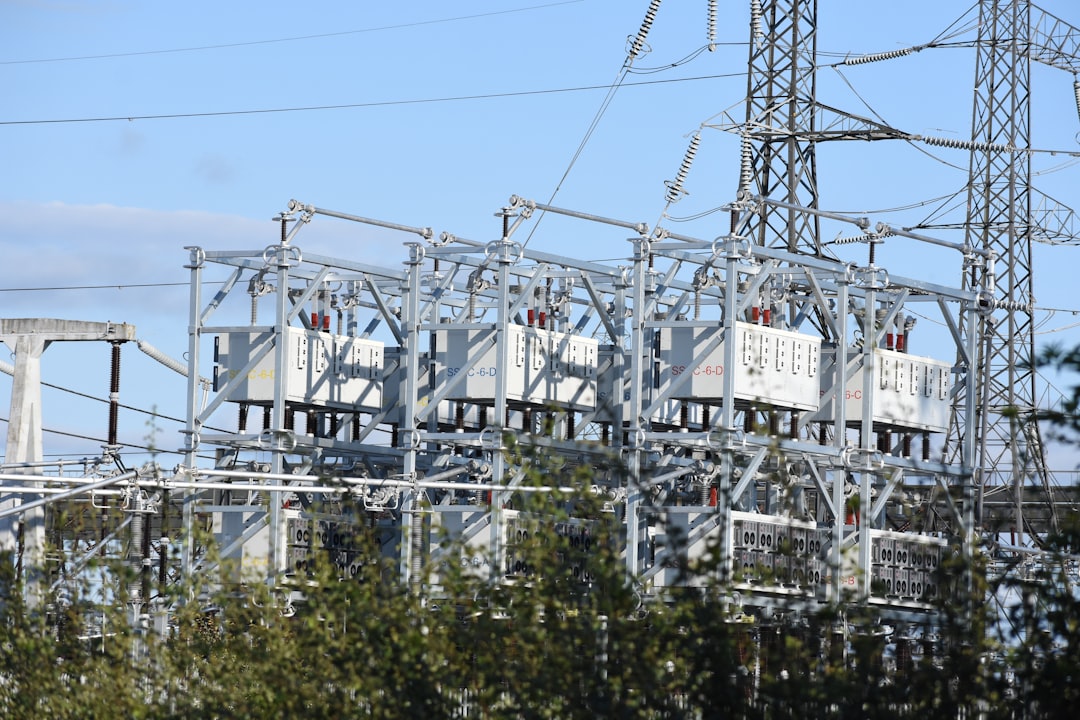
The grid-infrastructure framing is explicit. The plan calls for building a "new type power system" capable of incorporating large amounts of variable wind and solar, built around storage, smart grids, interprovincial electricity trading, and large-scale transmission. Vehicle-to-grid resources are targeted at around 50 GW. Smart microgrids, direct green electricity supply, and integrated energy systems all feature.
The Coal Problem
Here is where the plan diverges from what climate analysts had hoped to see.
The 14th Five-Year Plan called for "reasonably controlling the scale and pace of coal power development." That formulation is absent from the current document. Instead, the 15th plan uses language around "promoting the peaking" of coal and oil consumption - a softer framing that stops well short of a binding cap or a declining trajectory.
In H1 2025, 21 GW of new coal power was commissioned in China - the highest amount in the first half of any year since 2016 - with full-year projections exceeding 80 GW. New and revived coal projects reached 75 GW in H1 2025 alone, the highest in a decade.
As of Q1 2025, China's installed wind and solar capacity reached 1,482 GW, surpassing thermal power's 1,450 GW for the first time. That is a structural milestone. But the capacity crossover does not automatically translate into a generation crossover: thermal plants run at higher capacity factors, and coal still accounted for roughly 51% of power generation as recently as mid-2025.
The Action Plan contains no explicit power-sector emissions peaking target and no binding constraint against further coal power expansion. Analysts at the Centre for Research on Energy and Clean Air describe this as "acutely missing." Without a declining trajectory for coal power generation written into the plan, the storage and renewable targets exist alongside a coal fleet that continues to grow in absolute terms.
The plan omits binding caps on coal consumption in the power sector. New coal capacity commissioning hit a near-decade high in H1 2025. Planners should not assume the storage and renewable targets automatically crowd out coal — the two are currently expanding in parallel.
Industrial Decarbonization and Computing Load
Beyond the power sector, the Action Plan targets high-emission industries directly. It mandates energy-saving and decarbonization retrofits for steel, electrolytic aluminum, cement, flat glass, petrochemicals, and chemicals, while phasing out outdated capacity. It also accelerates hydrogen, green fuels, and carbon management services as emerging industries.
The computing load angle is notable. National Energy Administration data show computing centers consumed 170 billion kWh in China in 2025, with annual power use expected to rise by more than 100 billion kWh each year through the 15th Five-Year Plan period, reaching 800 billion kWh by 2030 - about 6% of total national electricity consumption.
The plan's response is a core principle of coordinating computing infrastructure with renewable energy deployment - essentially requiring data centers to co-locate with or directly procure from clean generation. The target of 100 national-level zero-carbon industrial parks and 500 zero-carbon factories sits alongside this.
The Renewables Five-Year Plan: A Companion Document
Released at the same time by the National Development and Reform Commission and the National Energy Administration, the 15th Five-Year Plan for Renewable Energy Development adds specificity on capacity targets.
China will aim to install 3,500 GW of total renewables capacity by 2030, of which 2,800 GW will be wind and solar. The country had previously pledged 1,200 GW of wind and solar by 2030 - a target it met six years early. As of June 2026, China had installed just under 2,000 GW of wind and solar, plus 454 GW of hydropower.
Meeting the 2,800 GW wind-and-solar target requires adding roughly 160 GW of wind and solar per year. China installed 315 GW of solar alone in 2025, so the annual pace required is well within demonstrated capability - the constraint is grid integration, not manufacturing.
The renewables plan also sets a target for renewable power generation to reach 6,000 TWh by 2030, with 4,000 TWh coming from wind and solar. Wind and solar are expected to supply more than 20% of total demand during peak periods in summer and winter evenings - a grid-reliability metric that directly shapes the storage and demand-response targets above.
What This Means for Grid Planners
The 15th Five-Year Carbon Peaking Action Plan is best read as two documents in one. The first is an aggressive infrastructure buildout plan: 300 GW of new energy storage, 160 GW of pumped hydro, 2,800 GW of wind and solar, 100 GW of offshore wind, 110 GW of nuclear, and a grid modernization program that touches smart grids, interprovincial transmission, and vehicle-to-grid integration. The scale is without precedent.
The second document is a carbon-peaking commitment with significant ambiguity. The intensity target is weaker than the previous plan. There is no absolute emissions cap. Coal retirement obligations are vague. The plan calls for coal consumption to peak - but does not specify when, at what level, or through what mechanism.
For operators and planners outside China, the practical read is this: Chinese manufacturing capacity for solar panels, batteries, and wind turbines will continue to scale, keeping global equipment costs under pressure. Chinese grid integration challenges - curtailment, storage dispatch, coal-plant utilization - will shape how quickly that capacity translates into actual emissions reductions. The 2030 deadline for carbon peaking is real, but the path there remains contested between the plan's clean-energy ambitions and its unresolved coal commitments.
The next set of sector-specific plans - covering electricity, coal, and nuclear - are expected in 2027. Those documents will determine whether the storage and renewable targets in this Action Plan are backed by the operational constraints needed to make them meaningful.