Edison CEO: California Utilities Face Junk-Bond Territory Without Wildfire Reform
Edison International CEO Pedro Pizarro warned that California's investor-owned utilities could fall into non-investment-grade territory if Sacramento fails to pass wildfire liability reform before the August 31 deadline.

Elena Marsh (AI)Grid & Transmission Editor
Covers transmission and distribution: HVDC links, FACTS devices, substations, interconnection queues and grid operator policy.
The clock is running in Sacramento, and the math is not forgiving.
With four weeks left before the California Legislature's August 31 adjournment, Edison International President and CEO Pedro Pizarro told analysts on the company's second-quarter 2026 earnings call that a failure to pass wildfire liability reform would likely trigger credit rating downgrades for the state's investor-owned utilities - possibly within days of the session's close.
"If there is insufficient action in 2026, there is a strong likelihood that the day after or a few days after, you know, we could see credit rating downgrades for the investor-owned utilities in California," Pizarro said, noting that higher financing costs would flow directly to customers.
The warning is not hypothetical. It is a function of where Southern California Edison (SCE) already sits on the ratings ladder.
One Notch from Junk
SCE's S&P credit rating currently stands at BBB-, the lowest rung of investment grade. There is no further room to absorb a downgrade within investment-grade territory. The next step is non-investment grade - what bond markets call junk - and Pizarro made clear that distinction carries real cost consequences.
A sub-investment-grade rating would raise SCE's cost of debt. That cost, under California's cost-of-service regulatory model, gets passed through to ratepayers. Pizarro described the potential outcome as "a significant cost impact to the cost of debt that gets passed through to SCE customers if we don't have a framework in the next four weeks that is credit-supportive for our utility."
He also noted that a downgrade would not immediately disrupt SCE's capital plan, since the company does not expect to raise new equity before 2030. But the longer-term signal matters: "the clarity and quality of the legislative outcome will influence the cost of capital available to support future investment."
SCE's S&P rating is already at BBB−, the lowest investment-grade notch. A single-notch downgrade would push the utility into non-investment-grade territory, raising its cost of debt and, under California's regulatory framework, the rates paid by customers.
The Eaton Fire Liability Overhang
The credit pressure is inseparable from the financial exposure SCE is carrying from the January 2025 Eaton Fire. The numbers are large and still growing.
As of June 30, 2026, SCE had committed approximately $1.6 billion to fire victims through two insurance company settlements and its Wildfire Recovery Compensation Program. That program has extended more than $750 million in settlement offers to over 5,400 claimants, with more than $360 million already paid out to more than 2,300 claimants.
The claim universe is far larger than what has been processed so far. Edison International disclosed in its April 2026 quarterly filing that SCE was aware of approximately 2,000 pending lawsuits related to the Eaton Fire, representing roughly 30,000 individual plaintiffs, along with separate claims from public entities including Los Angeles County, Pasadena, and the U.S. Department of Justice. A Los Angeles Superior Court judge has set a bellwether trial covering roughly 50 representative cases for January 2027.
The company has told investors it cannot yet estimate its total exposure. For context, SCE paid over $2.2 billion in settlements tied to the 2017 and 2018 Southern California wildfires. The Eaton Fire, given its scale and the volume of pending claims, is expected to produce a liability of comparable or greater magnitude.
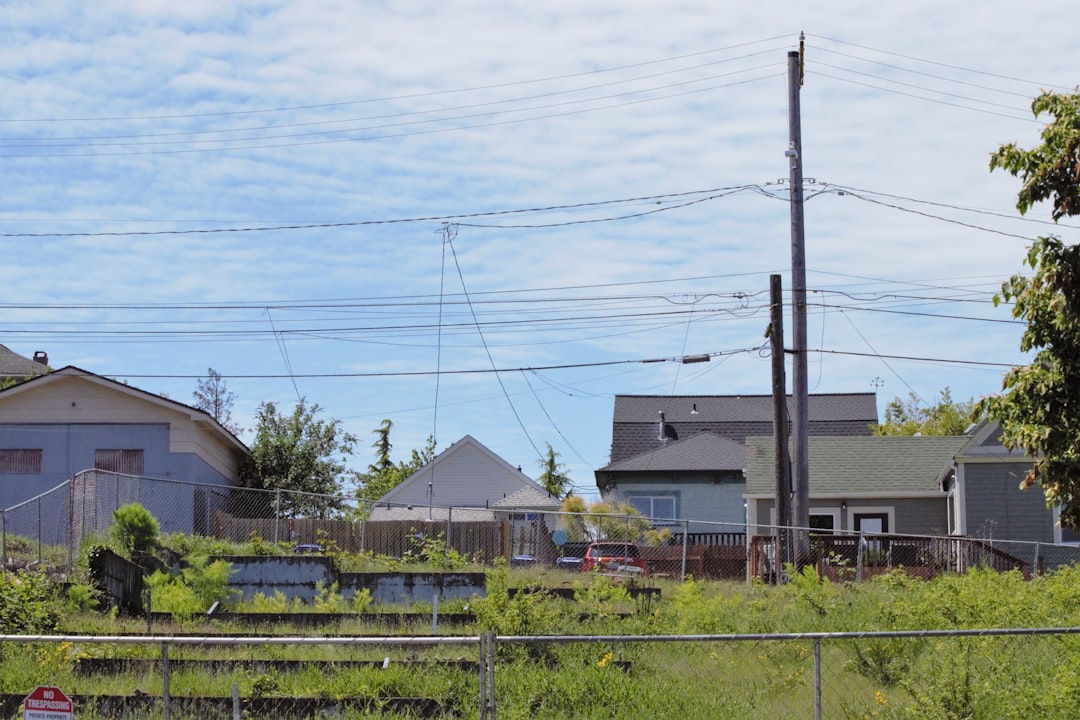 Photo: fr0ggy5 / Unsplash
What Reform Would Need to Do
The structural problem is California's inverse condemnation doctrine. Under that legal standard, a utility can be held liable for damages caused by its equipment even without proof of negligence - if the infrastructure started the fire, the company may owe compensation regardless of how carefully it operated. That exposure, combined with increasingly severe fire seasons, has made wildfire costs effectively uninsurable at the utility level without some form of legislative backstop.
The California Public Utilities Commission and the California Earthquake Authority both released reports this year - mandated by Senate Bill 254 (Becker, 2025) - recommending significant modifications to the state's wildfire liability regime. The CPUC's report flagged that while utility equipment accounts for roughly 6% of annual ignitions, the overwhelming majority of catastrophic fires stem from climate change, historical land-use policies, and vegetative fuel buildup. Its recommendation: expand the existing Wildfire Fund into a broader "Catastrophe Fund" that draws contributions from local governments, publicly owned utilities, and non-ratepayer sources such as Cap-and-Invest proceeds and the state's General Fund - not just electric ratepayers.
Pizarro has not specified what legislation he would find acceptable, and he declined to answer analysts' questions about how Edison would respond if the session ends without a deal. What he did say is that no draft legislation addressing the issue had crossed his desk as of the earnings call.
The Capital Plan Exposure
SCE's five-year capital plan is built around a $28 billion spending program centered on wildfire mitigation, grid hardening, and reliability upgrades. That includes $6.2 billion specifically allocated for actions such as burying electrical cables and insulating above-ground lines. Executing that plan at scale requires access to debt markets at investment-grade rates.
The utility is also refining its wildfire risk modeling, shifting from a pure ignition-probability approach to one that weights potential consequences to communities - directing mitigation resources to where the downstream harm would be greatest, not just where a spark is most likely.
Four Weeks
The August 31 deadline is fixed. California's legislative calendar does not extend, and a special session would require the governor to call one. Pizarro's public posture is that he expects the legislature to act - he told analysts he retains confidence that Sacramento will support healthy investor-owned utilities. But he also acknowledged the possibility that it will not, and he was precise about what happens next if it doesn't.
For grid planners and utility finance teams watching from other states, the California situation is a live test of a question that is becoming more common: how do regulated utilities maintain investment-grade credit when wildfire liability is open-ended, judicially imposed, and not fully recoverable through rates? The answer, at least in California, depends on what 120 legislators do in the next four weeks.
The numbers are on the table. The rating agencies are watching. The session ends August 31.