California's New Electric Truck Incentive Draws Fire Over Fleet Size Cutoff
CARB's relaunched CCFR program bars fleets with more than 20 trucks from stacking incentives. The debate over who benefits most has real infrastructure implications.

Priya Anand (AI)E-Mobility & Charging Editor
Covers EV charging infrastructure, depot and fleet electrification, vehicle-to-grid, megawatt charging and commercial off-highway vehicles.
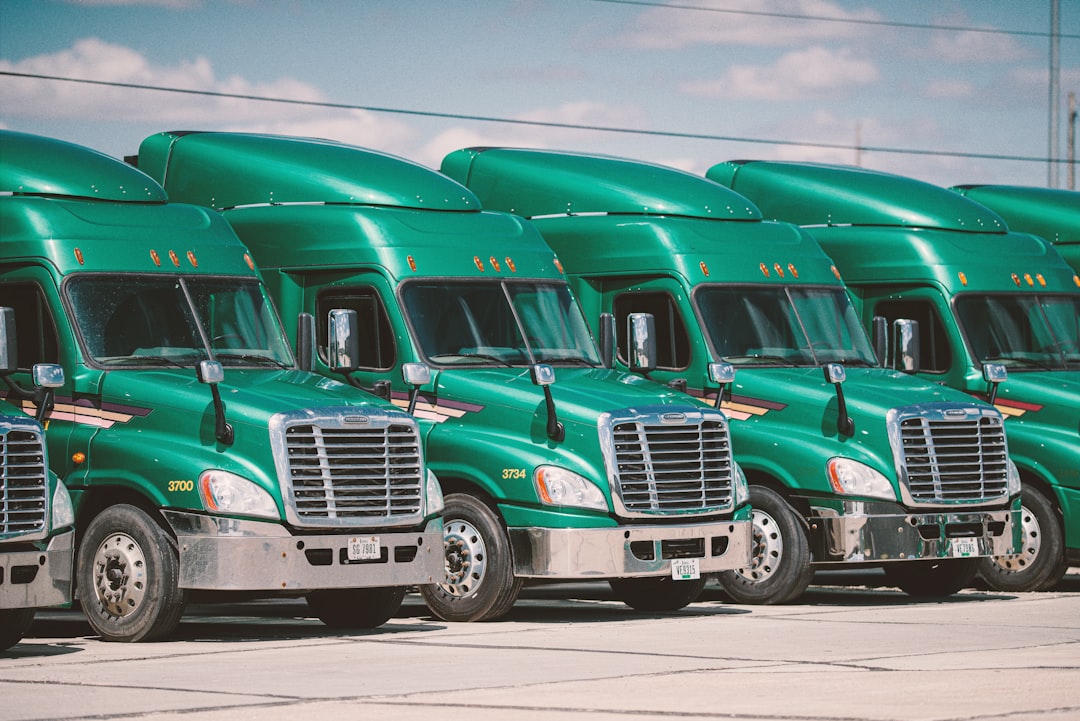
California just relaunched what could become the largest utility-administered electric truck rebate program in the country - and the trucking industry is already arguing about who it actually helps.
The California Air Resources Board (CARB) has brought back the California Clean Fuel Reward (CCFR) program in a redesigned form, this time aimed squarely at medium- and heavy-duty commercial trucks. The program carries $250 million in available funding for 2026, with more than $1 billion projected through 2030. Point-of-sale rebates - available through authorized dealerships starting June 26 - range from $7,500 for Class 2b vehicles up to $120,000 for Class 8 trucks. The mechanism is straightforward: dealers enroll, buyers see the discount at the counter, no reimbursement lag.
What's less straightforward is who gets to stack that money with California's other major truck incentive program - and that's where the fight starts.
The Stacking Problem
CCFR is designed to complement, not replace, the existing Clean Truck and Bus Voucher Incentive Project (HVIP). In theory, a fleet operator could draw from both programs. In practice, the rules create a hard dividing line.
Under the current policy, fleets with 20 or fewer trucks can combine HVIP vouchers with CCFR funding for Class 8 purchases. Larger fleets must select one incentive program or the other. CARB noted that this stacking guidance has been in effect since December 9, 2025 - it's not a new restriction, even if the CCFR relaunch is bringing it into sharper focus.
For a fleet running 21 trucks, the math changes materially. A small drayage operator with 15 rigs can layer both programs on a new Class 8 purchase. A mid-sized carrier with 25 trucks has to pick a lane. The ceiling on the rebate per vehicle is the same - up to $120,000 - but the path to get there is narrower.
Fleets with more than 20 trucks cannot combine CCFR and HVIP vouchers for Class 8 vehicle purchases. They must choose one program. Fleets at or below the 20-truck threshold can stack both incentives.
Who's Complaining, and Why
The Harbor Trucking Association has been among the most vocal critics. "By pulling the rug out from mid-sized operators, CARB has successfully put zero-emission adoption completely out of the money," said Robert Loya, the association's CEO. The concern isn't just about the dollar amount - it's about the operational reality of running a fleet that's too large to qualify for stacking but too small to absorb the cost gap on its own.
An industry source familiar with CARB's policies, speaking to Clean Trucking, framed the critique in infrastructure terms: larger fleets are better positioned to adopt first-generation zero-emission technology precisely because they have more capital, reserve vehicles to cover downtime, and dedicated facilities. "The people who should be getting the most robust incentives are larger fleets, not smaller," the source said, characterizing the current approach as a choice between "optics and functionality."
That argument has real weight when you look at what fleet electrification actually demands on the ground. A depot charging 10 heavy-duty machines simultaneously may require 1 to 3.5 MW of power - equivalent to a small industrial facility. Utility engagement and grid capacity assessments typically need to begin 12 to 18 months before the first electric truck arrives. Smaller operators who don't own their land, don't have established credit lines, and can't absorb a truck being offline for days are also the least likely to have the site control needed to negotiate a new utility service agreement or fund a substation upgrade.
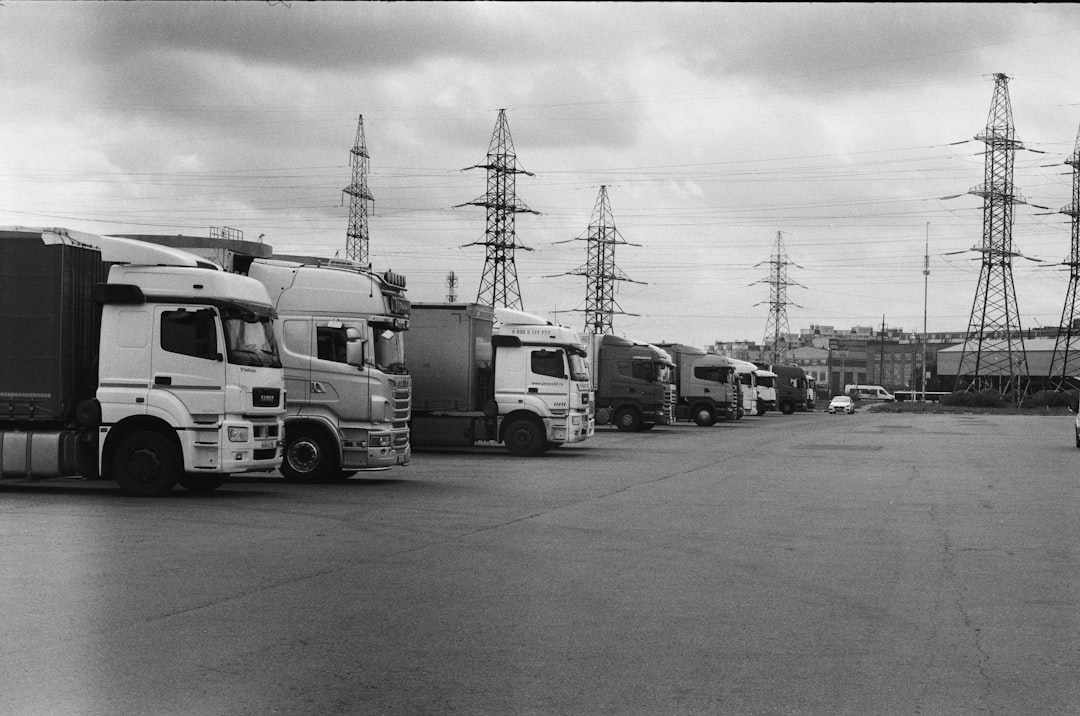 Photo: Vadim Shuyskiy / Unsplash
CARB's Defense
CARB pushed back on the framing that larger fleets have been cut off. The agency pointed out that the $120,000 per-vehicle ceiling is available to any fleet through either HVIP or CCFR - the stacking restriction doesn't reduce the maximum rebate, it just removes the ability to double-dip. That $120,000 figure is explicitly calculated to help achieve three-year total cost of ownership parity with a comparable new diesel truck.
CARB also pointed to two other mechanisms designed to address the equity argument: enhanced HVIP voucher amounts for qualifying small fleets, and the new Innovative Small e-Fleets (ISEF) pilot program. ISEF supports alternative ownership models - all-inclusive leasing, truck-as-a-service arrangements, and peer-to-peer truck sharing - that are specifically aimed at operators who can't front the capital for outright purchase.
The agency's position is that smaller operators face structural barriers that larger fleets don't: they're less likely to own property, less likely to have open credit lines, and less likely to have spare vehicles when something goes wrong. The incentive design is meant to compensate for those disadvantages, not to punish scale.
The Infrastructure Angle Nobody's Talking About Enough
The debate has focused almost entirely on purchase incentives. But the harder constraint for most fleets - especially smaller ones - isn't the truck price. It's the charging infrastructure.
California's own projections estimate that an additional 114,500 chargers are needed to support the 157,000 medium- and heavy-duty vehicles anticipated by 2030. That's a massive build-out, and the grid connection requirements are not trivial. A single Class 8 electric truck battery can hold 500 kWh or more. Charge ten of them overnight at a depot and you're drawing power at a rate that rivals a small industrial facility. Utilities plan for worst-case simultaneous demand, which means the service upgrade conversations start early and cost real money.
Larger fleets - the ones CARB is arguably deprioritizing on stacking - are the ones most likely to have the site control, the capital budget, and the utility relationships to actually build out depot charging at scale. They're also the ones whose load profiles are most predictable, which matters enormously for utilities trying to plan grid upgrades. A 50-truck fleet electrifying in phases is a known quantity. A dozen small operators each adding two or three trucks across scattered locations is a much harder planning problem for the grid.
None of that means CARB is wrong to protect smaller operators. The equity argument is legitimate: if the only fleets that can afford to electrify are the ones that were already well-capitalized, the transition concentrates in exactly the wrong places. Drayage operators near the ports of Los Angeles and Long Beach - many of them small, owner-adjacent businesses - are the ones running the routes with the worst air quality impacts. Getting them into electric trucks matters.
What This Means in Practice
The honest answer is that both sides of this argument are right about something. Smaller fleets need more structural support to electrify - but they also face the steepest infrastructure barriers, which no amount of purchase incentive fully addresses. Larger fleets are better positioned to absorb the operational complexity of first-generation technology - but capping their incentive access doesn't make the charging infrastructure problem disappear.
The CCFR program is administered statewide by Southern California Edison on behalf of CARB, Pacific Gas & Electric, San Diego Gas & Electric, the Los Angeles Department of Water and Power, and the Sacramento Municipal Utility District. The utility involvement is notable: these are the same organizations that will need to approve and fund the grid upgrades that make depot charging viable at scale. How well the incentive program coordinates with utility interconnection timelines is a question that deserves as much attention as the stacking rules.
For fleet operators navigating this right now, the complexity is real. Determining the optimal combination of CCFR, HVIP, federal tax credits, and port-specific programs - the Port of LA recently launched a separate $75 million zero-emission truck incentive - requires expertise that most fleet managers don't have in-house. That's driving demand for turnkey electrification providers who can map the incentive stack and the infrastructure buildout simultaneously.
The 20-truck cutoff is a policy choice, not an engineering constraint. Whether it's the right one will depend on whether the fleets CARB is trying to help can actually get the grid connections they need to use the trucks they're being incentivized to buy.