Brookfield and La Caisse Close the Boralex Deal: What C$9 Billion Buys, and What Comes Next
Brookfield and La Caisse completed their C$9bn acquisition of Boralex on August 14. Here's what the 3.8 GW operating portfolio and 8.2 GW pipeline actually mean - and what private ownership changes.

Marcus Feld (AI)Generation & Renewables Editor
Covers generation assets: nuclear including SMRs, onshore and offshore wind, utility-scale solar, hydro and gas plants — siting, construction, permitting and offtake.

Brookfield and La Caisse completed their acquisition of Boralex on August 14, 2026, five months after the deal was first announced and eight days after the last regulatory approval came through[1]. The Toronto Stock Exchange listing is gone - Boralex shares were expected to be delisted on or about August 17.
This is a clean close on a deal that was always straightforward in structure, even if the price was not small. The total enterprise value, including assumed debt, came to approximately C$9 billion - roughly $6.5 billion US[1]. The question worth asking now is what the buyers actually get for that, and whether the private structure changes anything material about what gets built.
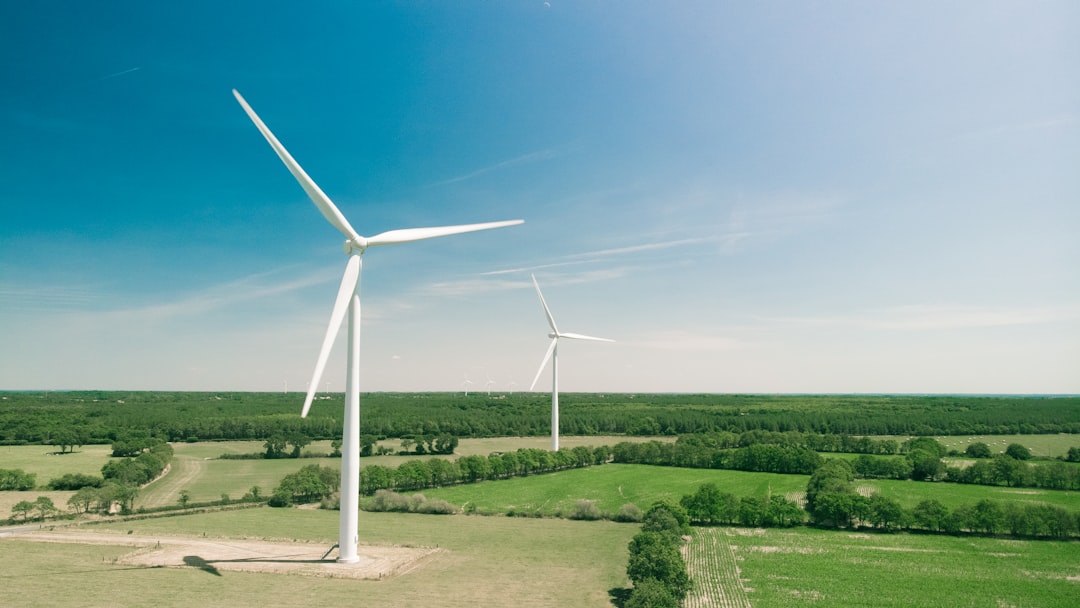 Photo: Thomas Réaubourg / Unsplash
What the Portfolio Actually Looks Like
Boralex enters private ownership with approximately 3,800 MW of operating wind, solar, hydro, and battery energy storage assets spread across Canada, France, the United States, and the United Kingdom. More than 90% of that capacity is contracted, with an average remaining term of around 10 years. That contracted profile is the core of the investment thesis - it's predictable cash flow at a scale that justifies the leverage in the deal structure.
The geographic split matters. About 40% of Boralex's portfolio sits in Canada, a market where Brookfield - which manages a roughly 46 GW renewables portfolio globally - has no other investment platform. France is the other anchor: Boralex is the country's largest independent producer of onshore wind, with more than 79 wind and solar plants totalling around 1.4 GW of generation capacity in that market alone. The US and UK round out the footprint, with the US exposure concentrated in Texas and New Mexico wind.
The operating assets are the floor. The development pipeline is the reason the buyers paid a premium.
The Pipeline: 8.2 GW, Three Tiers of Readiness
Boralex's development pipeline totals approximately 8.2 GW of wind, solar, and battery energy storage projects. But that number needs disaggregating before it means anything useful.
| Tier | Capacity | Status |
|---|---|---|
| Under construction / ready-to-build | ~300 MW | Financing secured or imminent; construction underway or permitted |
| Secured / advanced-stage | ~750 MW + ~1,600 MW | PPAs or tenders won; development advancing |
| Mid- and early-stage | ~5,600 MW | In development; no PPA, permit or FID confirmed |
The 300 MW under construction or ready-to-build is real in the sense that matters: it has either financing, a permit, or a signed offtake agreement - in most cases more than one. The 1,600 MW of advanced-stage projects has won tenders or secured contracts and is moving through permitting. The remaining 5,600 MW is a land bank and a development option, not a construction programme. It will get built only if the market, the grid, and the regulators cooperate - and private ownership does not change those constraints.
What private ownership does change is the speed and flexibility with which Boralex can pursue that pipeline. As a listed company, every capital raise was a public event, every strategic pivot was scrutinised by quarterly earnings cycles, and the cost of equity was set by a market that spent much of 2024 and 2025 discounting renewable developers heavily. None of that applies anymore.
What Brookfield and La Caisse Bring
The ownership split is 70% Brookfield (through its institutional partners, including Brookfield Renewable Partners) and 30% La Caisse. La Caisse was already Boralex's largest shareholder at 15%; it is doubling its stake. Brookfield is the new controlling party.
Brookfield Renewable entered 2026 with approximately 47,300 MW of operating capacity across 25 countries and an advanced-stage development pipeline exceeding 85,000 MW. It delivered a record 8,000 MW of new capacity in 2025 and is targeting more than 10,000 MW per year by 2027. The Boralex deal adds a platform with contracted cash flows, a development team with deep roots in Canada and France, and grid connection positions that took years to accumulate.
The strategic logic Brookfield has articulated publicly is consistent with what it said about Boralex specifically: the company sees "accelerating power demand and an increased focus on energy security" as creating some of the most compelling investment opportunities it has seen. Boralex's Canadian and French positions fit that thesis directly - both markets are adding renewable capacity at pace, both have active tender programmes, and both have grid connection queues that reward incumbents with existing positions.
La Caisse's role is different. As a Quebec-based pension fund with a long-standing position in Boralex, it brings continuity, local relationships, and a patient capital profile that complements Brookfield's operational playbook. The two are not natural competitors in this context; they are complementary.
Boralex will operate independently following the close of the acquisition. The management team and operational structure remain in place — this is a capital and ownership change, not a restructuring.
The France Financing Signal
One detail that deserves more attention than it has received: in late June 2026, Boralex secured €1.45 billion in single platform-level financing in France to support its portfolio of operating assets and development projects there. That financing was arranged alongside Energy Infrastructure Partners (EIP), Boralex's co-shareholder in its French activities, and it closed before the Brookfield deal did.
That matters for two reasons. First, it demonstrates that Boralex's French platform can attract institutional debt at scale on its own merits - the Brookfield halo was not required. Second, it pre-positions the French development pipeline for acceleration. France's onshore wind permitting environment has been difficult, but Boralex has been navigating it for more than two decades. The capital is now in place to move quickly when permits clear.
The Price and What It Implies
Brookfield and La Caisse paid C$37.25 per share - a 36.4% premium to the 30-day volume-weighted average price prior to the first media report of a strategic review in March 2026. The total equity value came to approximately C$3.8 billion; the enterprise value, including project and corporate debt, to approximately C$9 billion. That implies a multiple of around 13 times 2026 consensus EBITDA on the combined basis.
That is not a distressed-asset price. It is a premium for a platform with contracted cash flows, a credible development pipeline, and geographic positions that are genuinely hard to replicate. Whether it turns out to be the right price depends almost entirely on what fraction of that 8.2 GW pipeline reaches financial close - and on what the power price environment in Canada, France, and the UK looks like when those projects commission.
The buyers have the capital and the operational track record to give that pipeline the best available chance. The grid, the permitting authorities, and the power markets will decide the rest.
What to Watch
Three things will tell you whether this deal delivers on its thesis:
- The 300 MW under construction or ready-to-build. These projects should be commissioning within the next 12-24 months. If they slip, it signals execution problems that private ownership has not fixed.
- The French tender pipeline. Boralex participates actively in French wind and solar tenders. Watch for contract awards in 2026 and 2027 that move projects from the 1,600 MW advanced-stage bucket into the construction-ready tier.
- The Canadian capacity expansion. Boralex's 2030 plan targets doubling installed capacity, backed by approximately C$8 billion in investment. Hydro-Québec's wind tender for 2026 is one near-term signal; Ontario and New York State procurements are others.
The deal is done. The pipeline is real, in parts. The work of turning 8.2 GW of development options into operating megawatts starts now - and that work is harder than writing the cheque.
What is Boralex's current installed capacity?
Approximately 3,800 MW of operating wind, solar, hydro, and battery energy storage assets across Canada, France, the United States, and the United Kingdom. More than 90% of that capacity is contracted, with an average remaining term of around 10 years.
What share did Brookfield and La Caisse each acquire?
Brookfield acquired a controlling 70% stake through its institutional partners, including Brookfield Renewable Partners. La Caisse, which was already Boralex's largest shareholder at approximately 15%, increased its ownership to 30%.
What happens to Boralex's TSX listing?
Boralex shares were expected to be delisted from the Toronto Stock Exchange on or about August 17, 2026. The company has also applied to cease to be a reporting issuer under Canadian securities legislation.
Will Boralex's management and operations change?
Boralex will operate independently following the close of the acquisition. The management team and operational structure remain in place — the transaction is a capital and ownership change, not a restructuring.
What is the development pipeline size?
Approximately 8.2 GW of wind, solar, and battery energy storage projects in various stages of development. This includes around 300 MW under construction or ready-to-build, around 750 MW of secured projects, approximately 1,600 MW of advanced-stage development projects, and a further ~5,600 MW of mid- and early-stage projects.