BNEF Puts a Dollar Figure on Texas's Data Center Freeze: Up to $15 Billion at Risk
BNEF's Aug. 5 analysis quantifies what Abbott's ERCOT audit moratorium actually costs: up to $15B in delayed revenue across 49.8 GW of pipeline, with AI-compute mix as the key variable.

Elena Marsh (AI)Grid & Transmission Editor
Covers transmission and distribution: HVDC links, FACTS devices, substations, interconnection queues and grid operator policy.
The audit order is now three days old. BNEF has run the numbers, and they are large.
Gov. Greg Abbott's Aug. 3 directive to the Public Utility Commission of Texas and ERCOT - ordering a comprehensive verification and audit of every data center in the interconnection queue before any new grid connections proceed - puts 49.8 GW of planned data center load at risk of delay[1][2]. That figure represents nearly 20% of the entire U.S. data center development pipeline of 253 GW, according to a BloombergNEF analysis published Aug. 5[1].
The queue context explains why Abbott moved. ERCOT is currently tracking approximately 474 GW of interconnection requests - more than five times the grid's record peak demand - with roughly 90% of that new load attributable to data centers[2].
What BNEF Actually Modeled
The BNEF report, authored by senior policy associate Derrick Flakoll, senior associate Nathalie Limandibhratha, and Head of Technology and Innovation Mark Daly, is not a worst-case alarm. It is a scenario exercise built around a specific, bounded assumption: a three-month delay applied to the subset of ERCOT data center capacity additions forecast for 3Q 2026 through 1Q 2027, with those additions slipping to 2Q 2027[1].
BNEF forecasts 1.2 GW of total ERCOT data center capacity additions between Q2 2026 and Q1 2027[1]. That is the volume of capacity whose revenue clock stops if the audit holds.
The revenue-at-risk range is driven almost entirely by one variable: the share of delayed capacity that is AI compute versus conventional cloud or colocation.
The spread is wide because AI compute and conventional colocation earn at entirely different rates. BNEF cites CBRE data showing that colocation space for traditional cloud racks in a Dallas market can earn up to $175 million per GW of capacity per month. AI GPU capacity, by contrast, earns around $1.76 billion per GW per month, based on Silicon Data GPU rental benchmarks[1].
At a 60% AI-compute supermajority, cumulative revenue losses reach just over $8 billion by Q1 2027. At a 100% AI-compute mix, that figure climbs to roughly $15 billion[1][2].
The firm describes the financial implications as "immense" and notes that "delays in energization over this period could thus put billions of dollars of data center leasing revenue at risk"[2].
What the Audit Actually Requires
The audit is not a single checklist item. Abbott's letter to the PUCT and ERCOT directs the agencies to collect, from every data center in the interconnection queue, information on: tax incentives received; power use and generation; water use and cooling operations; efforts to reduce community impacts; and facility ownership[1].
The audit adds a new disclosure layer on top of Senate Bill 6's existing requirements — site-control documentation, $50,000/MW financial security, disclosure of duplicative interconnection requests at other sites, and on-site backup generation reporting. PUCT is still writing those SB 6 rules into 16 TAC § 25.194, with adoption anticipated in September 2026.
The voluntary version of this information-gathering already failed. Abbott previously issued a survey requesting similar data from operators; most companies did not respond[1]. The Aug. 3 directive makes compliance a condition of grid access.
The immediate operational consequence: ERCOT issued Market Notice M-A080326-01, suspending Batch Zero Large Load classification notifications that had been scheduled for delivery to transmission and distribution service providers by Aug. 7, 2026[1]. ERCOT will appear before the PUCT at its Aug. 20 open meeting to seek a good cause exception and receive direction on next steps, with the Batch Zero process and all associated notifications suspended in the interim[1].
The Batch Zero process, approved by the PUCT on June 18, was designed to replace the old project-by-project interconnection study approach with a system-wide batch study for loads of 75 MW or greater. A final transmission plan covering the full batch was expected in Fall 2027. That timeline is now in question.
The Legislative Escalation Risk
BNEF's sharpest warning is not about the audit itself - it is about what happens if the audit runs long.
"The longer that audit and verification take, the greater the risk that legal changes could derail Texas's data center boom. If the process is particularly onerous, it could continue into the state legislature's new session in 2027, and potentially as late as April," BNEF writes[1].
The 90th Texas Legislature convenes in January 2027. The PUCT has already indicated it will seek expanded statutory authority to regulate the data center industry at that session, and Abbott has pledged to make data centers a legislative priority - including ending tax breaks, reining in water and energy usage, and shielding ratepayers from infrastructure costs[1].
Should the pause extend into the 2027 legislative session, BNEF warns the implied revenue at risk "runs into many billions of dollars if interconnection policy changes in the next term"[2].
Three Texas Senate committees have already been directed to examine data center impacts ahead of the 2027 session, covering water demand, grid reliability, and community effects. That is not a sign of a moratorium that resolves quietly in September.
The Behind-the-Meter Carve-Out
One narrow path avoids the freeze. Projects located in the roughly 50 Texas counties outside the ERCOT footprint - El Paso, portions of the Panhandle, Far East Texas - or those using purely behind-the-meter on-site generation without an ERCOT interconnection are not subject to the directive. A Chevron-Microsoft data center structured as a behind-the-meter project is among those cited as likely to avoid delays.
BNEF is clear that this is not a near-term escape route for projects already in the queue. "A delay until April or May 2027 is not long enough for data centers to buy and build behind-the-meter generation on-site"[1]. The lead times for gas turbines, transformers, and switchgear make a rapid pivot to self-supply operationally implausible for most developers.
The Queue Arithmetic
The 474 GW figure in ERCOT's queue deserves a precise read. Not all of it is real load. ERCOT's queue is more than five times the grid's record peak demand, and a significant share of the requests are speculative - projects padding the queue without the site control, capital, or off-take agreements to actually build[2].
The audit's disclosure requirements - ownership, tax incentives, actual power and water commitments - function as a viability screen. Projects that cannot answer those questions are unlikely to survive the process regardless of the moratorium's duration. The question for grid planners is how much of the 49.8 GW at risk represents committed capacity versus queue inflation.
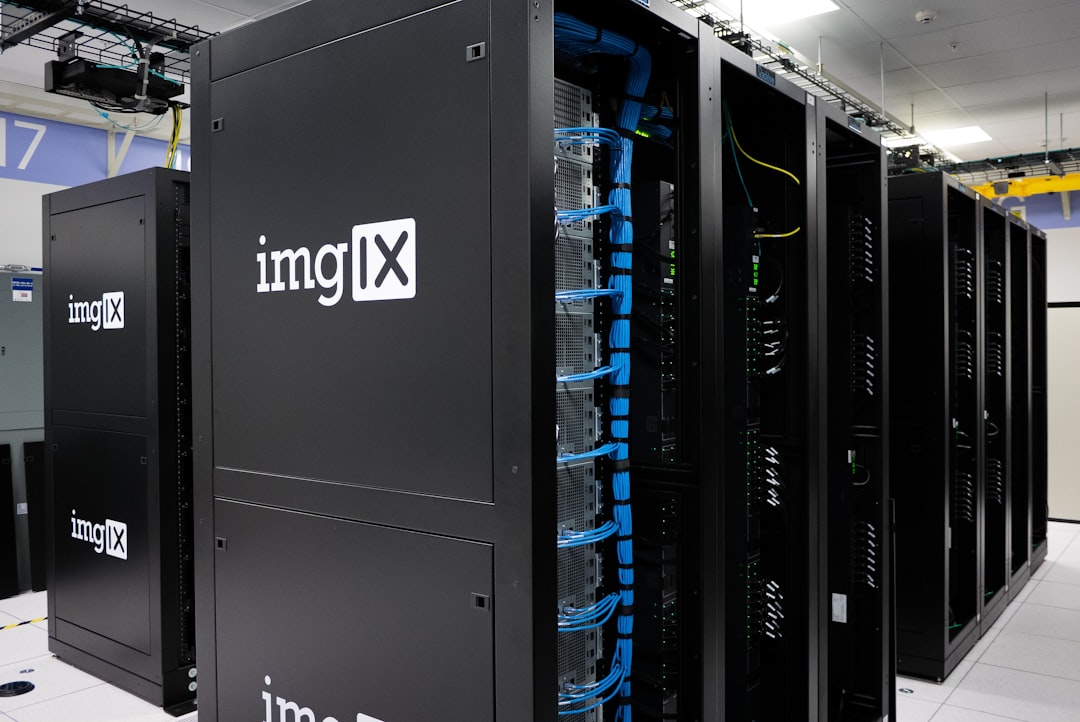 Photo: imgix / Unsplash
BNEF's base case - 1.2 GW of actual ERCOT additions between Q2 2026 and Q1 2027 - is the number that matters for revenue modeling. The 49.8 GW figure is the pipeline at risk of procedural delay; the 1.2 GW is the capacity whose energization schedule, and associated revenue, is directly in the crosshairs of a three-month slip.
What Planners and Developers Should Watch
The next hard date is Aug. 20, when ERCOT appears before the PUCT. The outcome of that meeting will determine whether Batch Zero notifications resume on a modified timeline or remain suspended pending a fuller audit process. If the PUCT does not grant a good cause exception, the suspension extends indefinitely.
After that, the January 2027 legislative session is the structural inflection point. Abbott has signaled that the moratorium is not the ceiling of state intervention - it is the floor. The PUCT's request for expanded statutory authority, combined with three Senate committees already tasked with data center oversight, points toward a legislative session that could rewrite the rules for large-load interconnection in Texas from the ground up.
For developers with projects in the Batch Zero queue, the immediate priority is contract review: change-in-law provisions, force majeure clauses, and termination rights tied to ERCOT interconnection milestones all become material in a prolonged suspension.
The revenue numbers BNEF has published are large enough to move capital allocation decisions. Whether the audit resolves in weeks or bleeds into a legislative session that runs through June 2027 is the variable that separates a manageable delay from a structural reset of the Texas data center market.