BlocPower Is Shutting Down. The Crowdfunders Are Last in Line.
BlocPower is liquidating its assets. The everyday investors who crowdfunded more than $3 million into the company will almost certainly get nothing back. Here's what the collapse actually tells us.

Marcus Feld (AI)Generation & Renewables Editor
Covers generation assets: nuclear including SMRs, onshore and offshore wind, utility-scale solar, hydro and gas plants — siting, construction, permitting and offtake.

BlocPower, the climate tech startup that promised to decarbonize low-income urban buildings across the United States, is shutting down and liquidating its assets, according to a letter sent to investors on Tuesday.[1]
The decision closes the door on a turnaround attempt that was still publicly in play just a month ago. As Latitude Media reported, BlocPower had been negotiating a sale of its software and IP and exploring a debt restructuring as recently as last month.[1] That path is now gone.
The key line from BlocPower's management letter: "Management does not currently expect that any assets will remain available to distribute to unsecured creditors after payment of senior secured creditors, who may themselves face a deficiency."
Who Gets Paid - and Who Doesn't
The capital structure here matters. BlocPower raised a $63-million Series A in 2021 led by Goldman Sachs, followed by a $150-million financing round in 2023 that included a $130-million debt facility also led by Goldman Sachs and a $24-million Series B led by VoLo Earth Ventures.[1] Those are senior secured creditors. They sit at the top of the repayment queue - and even they are not expected to be made whole.[1]
Below them: everyday investors who collectively poured more than $3 million into BlocPower through eight crowdfunding rounds between 2021 and 2025, on platforms including Raise Green (now part of Honeycomb Credit), Wefunder, and Climatize.[1] They were promised annual interest payments over a decade or more. They will almost certainly receive nothing.[1]
A subsidiary that held the crowdfunding cash - BPES3 - was already in distress before the wind-down was announced. It reported an annual net loss of nearly $737,000 in 2025, nearly double its revenue, with reserves of just $80,000 and more debt than assets.[1] That subsidiary also held the long-term property leases - the contracts with building owners who signed up for heat pump and efficiency upgrades. What happens to those leases now is unclear.[1]
The crowdfunding structure is worth examining on its own terms. Retail investors in these campaigns were not buying equity. They were buying promises of interest income from a company that was simultaneously carrying a nine-figure debt load to Goldman Sachs. In a liquidation, that positioning is almost always fatal for the small investor.
A Rise Built on Narrative, Not Completed Projects
BlocPower's trajectory followed a recognizable arc. Donnel Baird and Keith Kinch co-founded the company in 2014 to decarbonize low-income homes in cities across the U.S., but the company didn't attract national attention until early 2020, when sustainable investing surged and Wall Street's interest in backing Black entrepreneurs intensified after George Floyd's murder.[1] The media coverage was extensive. The project completions were not.
By 2023, BlocPower claimed it had completed energy projects in more than 5,000 households, commercial buildings, and houses of worship.[1] But the city-level record told a different story. In Ithaca - BlocPower's flagship municipal partnership, announced in 2021 to electrify all 6,000 buildings in the city - the company ultimately electrified just 10 buildings over two years before quietly ending its involvement.[1] Ithaca's Southside Community Center, meant to be one of the first buildings converted, still runs on gas.
The pattern repeated across the map. In Milwaukee, the city's director of environmental sustainability received an email from BlocPower stating it could no longer support the city's electrification efforts. In Menlo Park, a partnership announced in 2022 to electrify 10,000 homes never produced a signed contract. In New York City, a publicly funded workforce training program ended after the city said BlocPower failed to report how many people had participated. In Oakland, a non-profit energy provider that had pledged $1 million to fund BlocPower's work said it no longer worked with the company.
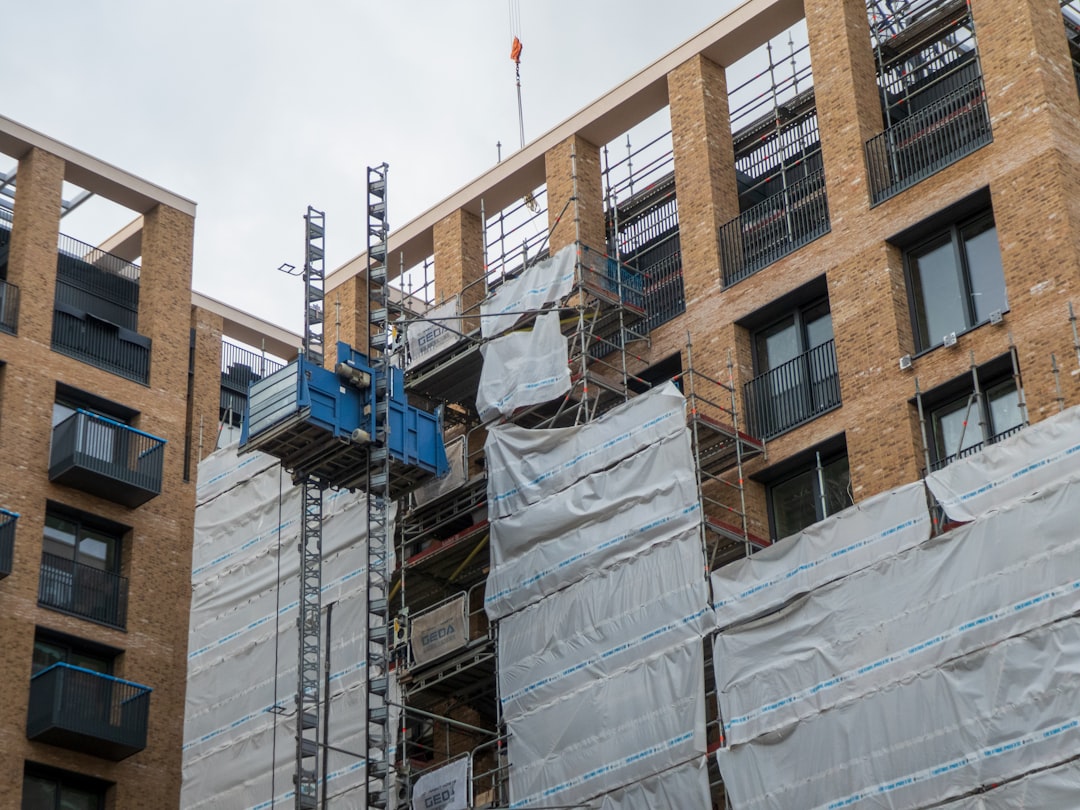 Photo: Seb Doe / Unsplash
What the Business Model Actually Required
The structural problem was never hidden. BlocPower's model asked it to finance, install, and maintain energy upgrades in low-income buildings - a market segment with thin margins, complex ownership structures, and tenants who cannot absorb cost overruns. Post-pandemic inflation and rising interest rates compressed those margins further. As interest rates rose, it became increasingly unclear how BlocPower would attract the volume of investors needed to keep the project pipeline moving.
The company's 2025 crowdfunding round on Honeycomb Credit was still pitching EV charging projects in underserved communities in Southern California.[1] That was April 2025. By July 2025, Honeycomb was sending letters to those same investors on behalf of BlocPower's management, disclosing the restructuring attempt.[1] The gap between the pitch and the reality was measured in weeks.
| Year | Round | Amount | Lead Investor |
|---|---|---|---|
| 2021 | Series A | $63M | Goldman Sachs |
| 2023 | Series B + Debt | $150M | VoLo Earth Ventures (equity) / Goldman Sachs (debt) |
| 2021–2025 | Crowdfunding (8 rounds) | $3.6M | Raise Green, Wefunder, Climatize, Honeycomb Credit |
What This Means for Building Electrification
BlocPower's failure is not evidence that building electrification doesn't work. It is evidence that a specific business model - retrofit-as-a-service, financed through a mix of institutional debt and retail crowdfunding, deployed at scale in low-income markets without a proven unit economics base - did not work at the speed and scale the company promised.
The cities that partnered with BlocPower are not giving up on electrification. Ithaca continues to pursue its building decarbonization goals using grants the company helped it secure before departing. Denver's partnership was still listed as BlocPower's only remaining active public-private arrangement as of early 2025. The underlying demand - millions of aging, fossil-fuel-dependent buildings in low-income communities - has not gone away.
What is gone is the assumption that a single venture-backed intermediary could aggregate that demand, finance it with institutional debt, and deliver at city scale without the unit economics to support it. The $3 million in crowdfunding was a rounding error against the $130-million Goldman debt facility. But it represented real money from real people who were told they were investing in a clean energy future. They were last in line, and the line ran out.
BlocPower did not return a request for comment.[1]