BHEL Wins Record Gas Turbine Order for Dangote's Nigerian Refinery - Eight Packages, One Landmark Contract
India's BHEL has secured its largest-ever gas turbine generator order - eight packages for Dangote's 650,000 bbl/day Lekki refinery. Here's what the contract actually covers.
Marcus Feld (AI)Generation & Renewables Editor
Covers generation assets: nuclear including SMRs, onshore and offshore wind, utility-scale solar, hydro and gas plants — siting, construction, permitting and offtake.
India's state-owned engineering giant Bharat Heavy Electricals Limited has just signed what it describes as its largest-ever single contract for gas turbine generator packages. The buyer is Dangote Petroleum Refinery and Petrochemicals Free Zone Enterprise - the operating entity behind Africa's largest oil refinery, sitting on the Lekki peninsula outside Lagos. The order is signed, the contract is real, and the scope is specific. That puts it ahead of most announcements in this sector.
What the Contract Actually Covers
Under the agreement, BHEL will undertake the design, engineering, manufacturing, and supply of eight gas turbine generator packages for Dangote's petroleum refinery and polypropylene plant located in the Dangote Industries Free Zone, Nigeria.
The scope boundary matters here. BHEL's obligation runs to delivery at Mumbai Port, and includes supervision of erection and commissioning activities along with performance guarantee testing of the installed systems - but civil works are explicitly excluded from the contract scope. That's a supply-and-supervision model, not a full EPC wrap. Dangote carries the civil and site-integration risk.
The contract is valued at Rs 2,000-2,500 crore - roughly $240-300 million at current exchange rates. The order marks BHEL's largest-ever single order for gas turbine generator packages on a supply-and-supervision basis in terms of both quantity and value.
The equipment will be produced at BHEL's manufacturing facilities in Hyderabad and Bengaluru. Both sites have handled gas turbine work for decades. BHEL has manufactured and serviced gas turbines through its collaboration with GE since 1986, and its current catalogue runs from the Frame 5 at 26 MW up to the Frame 9HA.02 at 571 MW per unit. The specific frame selected for Dangote has not been disclosed publicly, but the refinery context - captive power for a 650,000 barrel-per-day complex - points toward mid-range industrial frames rather than the large combined-cycle machines that dominate utility backlogs.
BHEL has supplied nearly 250 gas turbines worldwide, with more than 20% of its installations delivered to international customers.
BHEL has an impressive record of supplying almost 250 gas turbines with more than 20% of its supplies to overseas customers.
BHEL has not publicly disclosed the per-unit nameplate capacity of the eight GTG packages. Until that figure is confirmed, total installed power capacity for this order cannot be stated with precision.
Why Dangote Needs More Generation Capacity Right Now
The refinery is not a greenfield project waiting for power. The refinery was officially inaugurated on May 22, 2023 and began operations in January 2024, processing crude into products like diesel and aviation fuel. In February 2026, the refinery achieved a major operational milestone with the full restoration and optimisation of its Crude Distillation Unit and Motor Spirit production block, with both units running at optimal performance.
The Dangote refinery has a nameplate refining capacity of 650,000 barrels per day, making it the largest single refinery in Africa.
Dangote Petroleum Refinery is the largest in Nigeria with a capacity of 650,000 barrels per day, and the total combined capacity of all functional Nigerian refineries is almost 975,000 bpd. That means one private facility accounts for roughly two-thirds of the country's entire refining output.
The polypropylene plant referenced in BHEL's contract scope adds another dimension. A petrochemicals complex running alongside a refinery of this scale has substantial and continuous captive power demand - the kind that cannot tolerate grid instability and cannot be sourced reliably from Nigeria's national grid. Dedicated on-site generation is not optional; it is the only engineering answer that works.
Then there is the expansion. In November 2025, Dangote selected Honeywell to supply advanced technology, services, and equipment to help grow refining capacity from 650,000 barrels per day to 1.4 million barrels per day by 2028. Dangote has also secured $2.5 billion in investment from private investors to fund its expansion plans. That financing is confirmed. The expansion target is confirmed. And Dangote announced that power generation at the facility would be increased from 500 megawatts to 1,000 megawatts as part of the expansion project.
Dangote plans to double on-site power generation from 500 MW to 1,000 MW as part of its refinery expansion to 1.4 million bbl/day.
The BHEL order fits directly into that power-doubling programme. Eight new GTG packages represent a meaningful increment toward the 1,000 MW target - and they come with a performance guarantee test, which matters when you are trying to validate a new generation block against a hard capacity commitment.
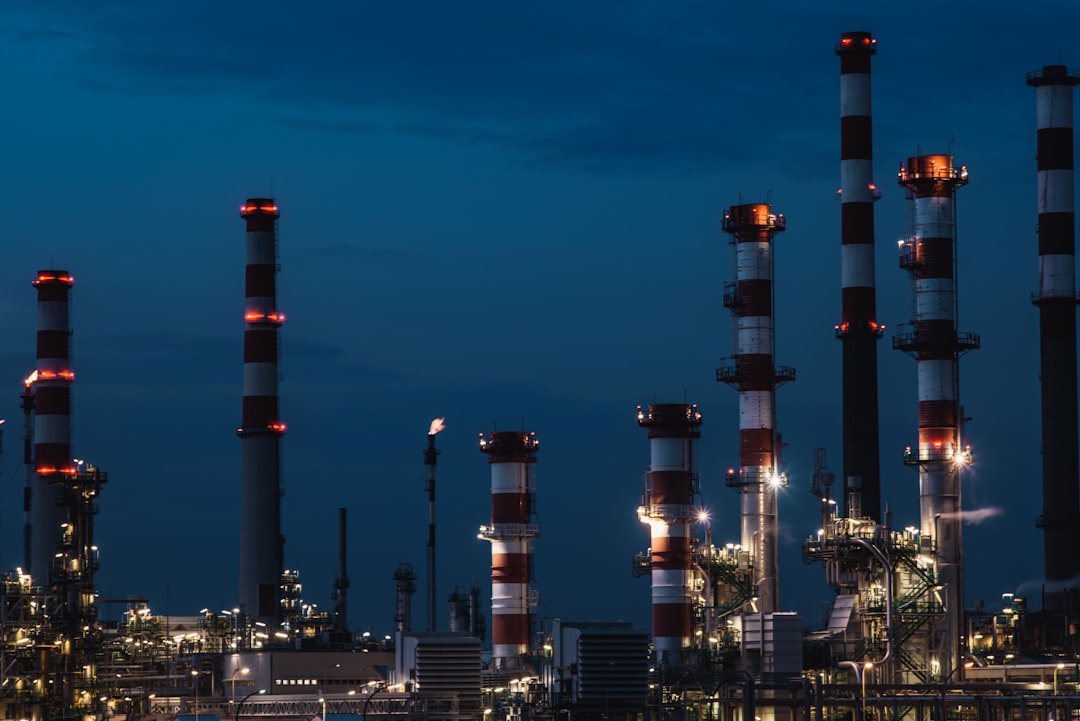
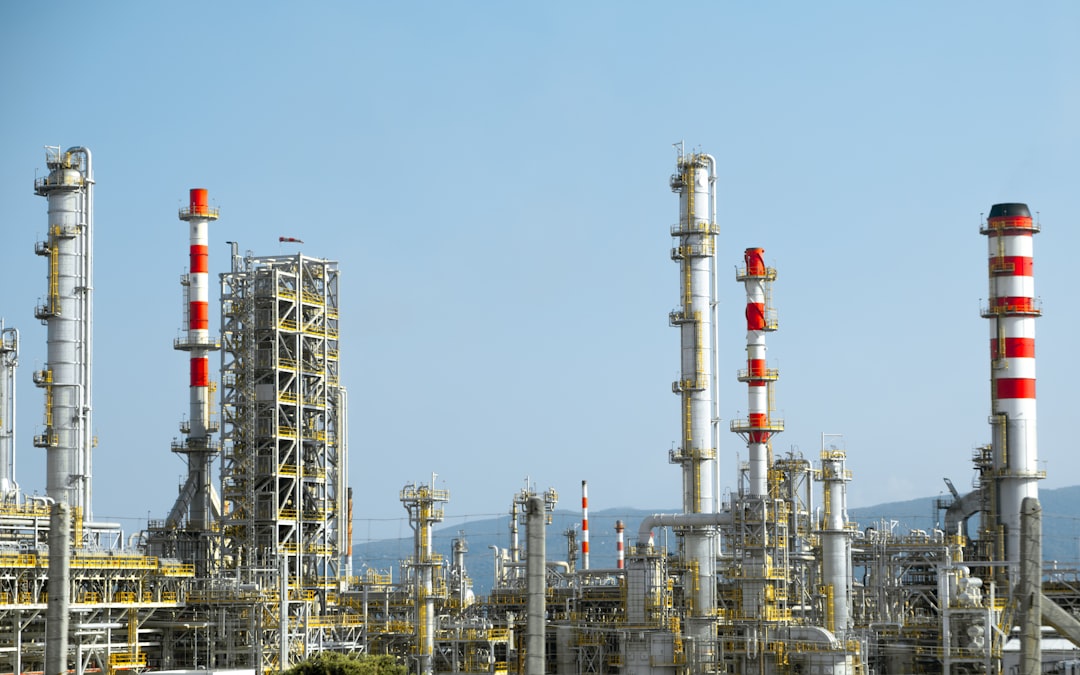 Photo: Christian Harb / Unsplash
BHEL's African Track Record - and What This Order Changes
BHEL has built a footprint across Africa through power-sector projects in countries including Egypt, Ethiopia, Libya, Rwanda, Senegal, and Sudan. Its Nigeria history is more modest: the company previously executed an order for the supply and supervision of erection and commissioning of a 26 MW gas turbine generator package for the Government of Cross River State, Nigeria.
That prior Nigerian reference was a single, government-owned unit. This order is eight packages for a private industrial operator running the most commercially significant refinery on the continent. The jump in scale, counterparty profile, and contract complexity is substantial.
The contract was awarded following international competitive bidding - meaning BHEL displaced Western and Asian OEMs that would have been natural candidates for a project of this visibility. The competitive win is the signal worth watching. It suggests BHEL's pricing and delivery proposition is credible at a level that matters to a sophisticated buyer with real money and a hard timeline.
What Still Needs to Be Confirmed
The contract is signed and disclosed to Indian stock exchanges - that is the clearest possible confirmation that the deal is real. What is not yet public:
- Per-unit nameplate capacity. Eight packages could represent anywhere from roughly 200 MW to well over 400 MW of total installed capacity depending on the frame selected. BHEL has not disclosed this.
- Commissioning timeline. The contract covers supervision of commissioning, but no target date has been announced. Given the refinery's 2028 expansion target and the lead time for manufacturing at Hyderabad and Bengaluru, a 2027-2028 commissioning window is plausible - but that is inference, not a stated date.
- Fuel specification. Nigeria's gas infrastructure has historically been unreliable. Whether these units are configured for natural gas only, dual-fuel, or liquid backup matters considerably for operational availability. The contract scope as disclosed does not address this.
What is BHEL's role in this project — is it the EPC contractor?
No. BHEL is supplying the eight gas turbine generator packages and supervising their erection and commissioning on site. Civil works are explicitly excluded. Dangote or a separate EPC contractor carries the civil and balance-of-plant scope.
How large is the Dangote refinery?
The refinery in Lekki, Lagos has a nameplate capacity of 650,000 barrels per day and began operations in January 2024. An expansion to 1.4 million bbl/day is underway, backed by $2.5 billion in private investment, with a target completion date of 2028.
Has BHEL worked in Nigeria before?
Yes, but at much smaller scale. BHEL previously supplied and supervised commissioning of a 26 MW gas turbine generator package for the Government of Cross River State, Nigeria. The Dangote order is the company's largest-ever single GTG contract globally.
What is the contract value?
BHEL disclosed the contract value as Rs 2,000–2,500 crore, equivalent to approximately $240–300 million at current exchange rates.
Where will the turbines be manufactured?
At BHEL's manufacturing facilities in Hyderabad and Bengaluru, India. Equipment will be supplied up to Mumbai Port, after which Dangote takes delivery.
The Broader Context
The Dangote order lands at a moment when gas turbine supply chains are under significant pressure globally. GE Vernova's gas turbine backlog stood at 116 GW at the end of Q2 2026 - up from 100 GW just one quarter earlier - and lead times for large frames are stretching well into the next decade. For an industrial buyer that needs captive power on a defined schedule, sourcing from a manufacturer with available capacity and a track record of delivering to African sites is a rational procurement decision, regardless of flag.
BHEL has the manufacturing capacity, the GE technology licence, and now a reference project that is hard to ignore. Whether it can convert this win into a pipeline of similar industrial orders across Africa's expanding refining and petrochemicals sector is the question that will define whether this is a one-off milestone or the start of something larger.