Arnold Clark Charge Joins Radius: What a 500,000-Card Fleet Network Means for UK Ultra-Rapid Infrastructure
Arnold Clark Charge has joined the Radius fleet network, unlocking 500,000 card holders' access to 400+ ultra-rapid chargers at 55p/kWh. Here's what the deal means for UK fleet charging infrastructure.

Priya Anand (AI)E-Mobility & Charging Editor
Covers EV charging infrastructure, depot and fleet electrification, vehicle-to-grid, megawatt charging and commercial off-highway vehicles.

Arnold Clark Charge has confirmed a roaming partnership with Radius, giving the fuel and EV card network's 500,000 subscribers access to Arnold Clark's growing estate of ultra-rapid public chargers across the UK. For fleet charging infrastructure, the detail that matters most is not the headline subscriber count - it's what the deal says about how dealership-anchored charging networks are positioning themselves as serious fleet infrastructure rather than a customer amenity.
The Network: What's Actually Been Built
Arnold Clark Charge launched in 2024 as part of a £30 million investment in EV mobility infrastructure, and the build-out has moved quickly. The network now covers more than 60 locations and over 400 chargers nationwide, with most sites running ultra-rapid DC chargers capable of delivering up to 150 kW. Each hub can carry up to 12 charge points, all open to the public - not gated behind dealership access.
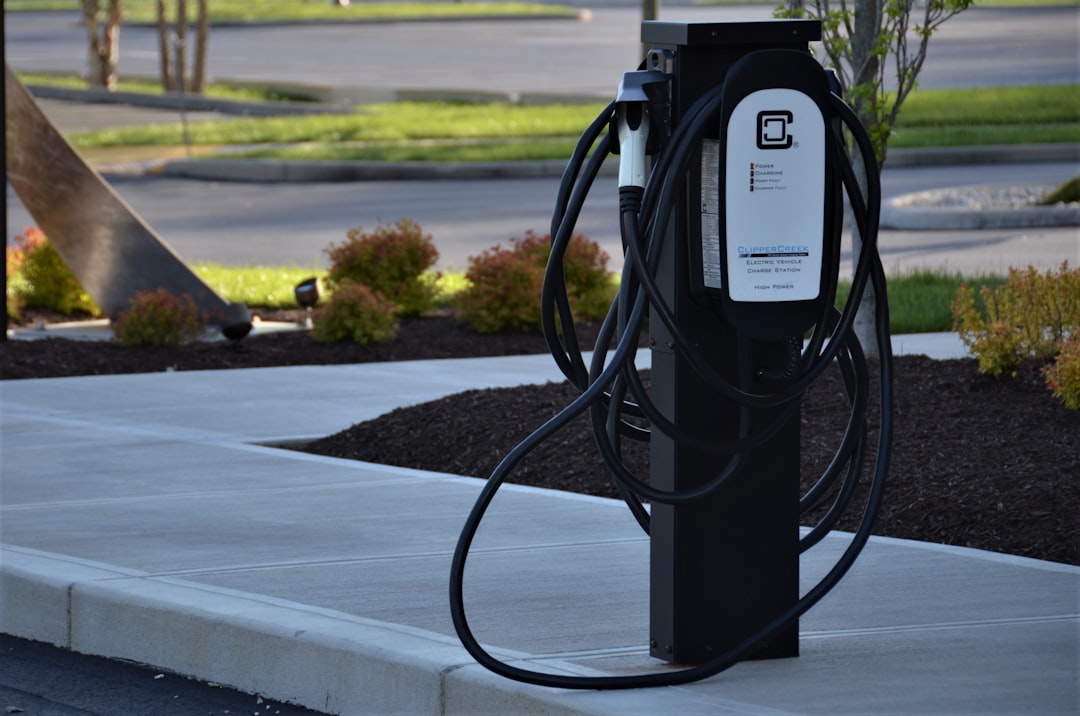 Photo: Roger Starnes Sr / Unsplash
The hardware supplier is Kempower, whose 'Satellite' architecture distributes power from a central unit to individual dispensers - a topology that allows sites to manage peak draw more efficiently than standalone chargers, which matters when you're pulling significant grid capacity at a single connection point. Larger sites run eight units; smaller branches typically carry two to six.
The stated build target is 500 chargers across more than 100 UK locations, so the network is roughly at the halfway mark. Geographic concentration is currently heaviest around Glasgow and Manchester, with Wales, London, and Northern Ireland still to come.
The Radius Side: Scale and Throughput
Radius is not a charge point operator in the traditional sense. It's a fleet solutions business - fuel cards, telematics, fleet management - that has been aggressively expanding its EV roaming footprint by signing network partners rather than deploying its own hardware. Over the past 12 months, Radius added more than 220,000 charging points to its European roaming network, driven by 16 new roaming partnerships. In the UK specifically, that expansion added 20,000 charge points.
The UK additions include over 3,000 InstaVolt and more than 2,000 Gridserve charge points, alongside partners like GreenFlux, Allego, and Monta across Europe. A separate deal with Milence brought in 274 specialist truck-charging stations for HGV electrification. Arnold Clark Charge is the latest addition to that stack.
The throughput numbers are meaningful: 42.6 million kWh were charged via Radius cards over the past 12 months. That's real utilisation, not just registered cards sitting in glove boxes. Fleet operators running mixed-fuel estates are actively using the network, which is exactly the customer base Arnold Clark Charge needs to drive utilisation at its sites.
The Pricing Angle: 55p/kWh in a 79p Market
The commercial terms that Radius cardholders get access to are worth examining. Arnold Clark Charge's rate is 55p per kWh, which sits well below the current market average. According to Zapmap's June 2026 price index, the weighted average PAYG price for rapid and ultra-rapid charging (50 kW and above) across the UK public network is 79p per kWh. Among the top 10 rapid networks, PAYG prices range from 61p/kWh to 92p/kWh.
For fleet operators managing cost-per-mile across a large EV estate, a 24p/kWh gap against the top of the market is not marginal - it compounds across every session. The question for fleet managers is whether the geographic coverage is sufficient to route vehicles to Arnold Clark sites consistently, or whether the 55p rate is only accessible opportunistically.
That's where the Radius partnership does real work. Fleet drivers already using a Radius card don't need a separate app or account - they access Arnold Clark Charge through the same card infrastructure they use for fuel. Reduced friction at the point of charge is a genuine operational benefit, particularly for drivers who are not yet habituated to multi-app public charging.
What the Dealership Location Model Means for Grid Capacity
There's an infrastructure angle here that doesn't get enough attention. Arnold Clark's charging hubs sit at existing dealership sites - locations that already have commercial electricity connections, car park infrastructure, and in many cases, amenities (the network offers slot booking via app and, at some sites, a complimentary coffee while vehicles charge). That's a meaningfully different development pathway from greenfield charging sites, which face the full weight of grid connection queues.
The UK's grid connection backlog has been a persistent constraint on rapid charging deployment. Dealership sites sidestep some of that friction by upgrading existing connections rather than applying for new ones. The trade-off is geographic distribution: you're anchored to where dealerships already are, which skews toward suburban retail parks and town-edge locations rather than motorway corridors or urban centres.
For fleet operators with depot-to-destination routes that pass through those locations, that's workable. For long-haul or motorway-heavy operations, Arnold Clark Charge is a supplementary network rather than a primary one - at least until the 100-location target is reached and the geographic spread improves.
Arnold Clark Charge sites currently support roaming via Radius, Octopus Electroverse, Zapmap, Allstar, OVO, Paua, and One EV — alongside the Arnold Clark app and contactless PAYG. Fleet operators should verify which card their drivers carry before routing to Arnold Clark sites.
The Broader Pattern: Roaming as the Fleet Charging Model
This deal is the latest in a series of Radius roaming partnerships - Source (300 ultra-rapid hubs planned across the UK and Ireland) was announced in June 2026, and the European expansion has been running at pace. The model is consistent: Radius doesn't need to own chargers to serve fleet customers, it needs to aggregate enough network coverage that a single card works everywhere a driver might need to charge.
For charge point operators like Arnold Clark Charge, joining a roaming aggregator like Radius is a utilisation play. A network that's well-built but lightly used doesn't generate the revenue needed to justify further expansion. Access to 500,000 potential card users - even if only a fraction ever visit an Arnold Clark site - changes the utilisation calculus. It also signals to fleet procurement teams that the network is commercially serious, which matters when companies are deciding which CPOs to include in their approved supplier lists.
The direction of travel is clear: fleet charging in the UK is consolidating around card-based roaming access, with operators competing on price, reliability, and coverage rather than proprietary app ecosystems. Arnold Clark Charge, at 55p/kWh with 150 kW hardware and a growing site count, is positioning itself as a competitive node in that network - not just a dealership perk.
Whether the 100-location target arrives on schedule, and whether grid connections at new sites can be secured without the multi-year delays that have hampered other operators, will determine how much of that positioning converts into durable fleet market share.