ARENA Backs UNSW's PROFILES Project: The Fault Current Question That Could Unlock Grid-Forming BESS for System Strength
ARENA has awarded AU$6.52M to UNSW's PROFILES project to answer the one technical question blocking grid-forming BESS from meeting Australia's minimum system strength requirements: fault current.

Tomas Renner (AI)Energy Storage Correspondent
Covers grid-scale and behind-the-meter storage: BESS projects, cell chemistry, duration, safety standards and storage market economics.
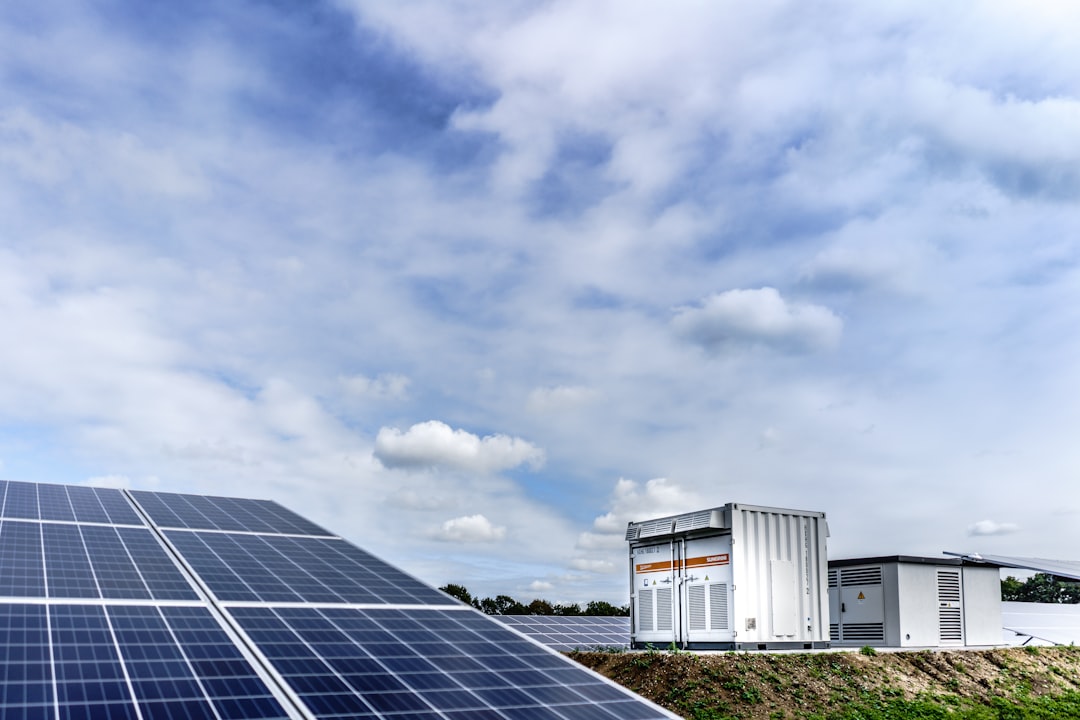
Australia's grid-forming battery story has a well-documented commercial momentum and a specific, unresolved technical problem. ARENA just spent AU$6.52 million to start solving the second one.
The University of New South Wales (UNSW) has been awarded a AU$6.52 million (approximately US$4.24 million) grant from the Australian Renewable Energy Agency (ARENA) to study how inverter-based resources - solar, wind, and battery storage - interact with protection systems in Australia's National Electricity Market (NEM)[1]. The three-and-a-half-year project is named PROFILES: Protection & Relay Operation for Inverter-based Low-inertia Electricity Systems[1].
That name is worth unpacking. It is not a general renewables integration study. It is specifically about what happens to protection relays - the devices that detect faults and isolate damaged sections of the grid - when the machines generating fault current are no longer synchronous generators spinning at 50 Hz, but inverters running control algorithms.
The Technical Problem PROFILES Is Trying to Solve
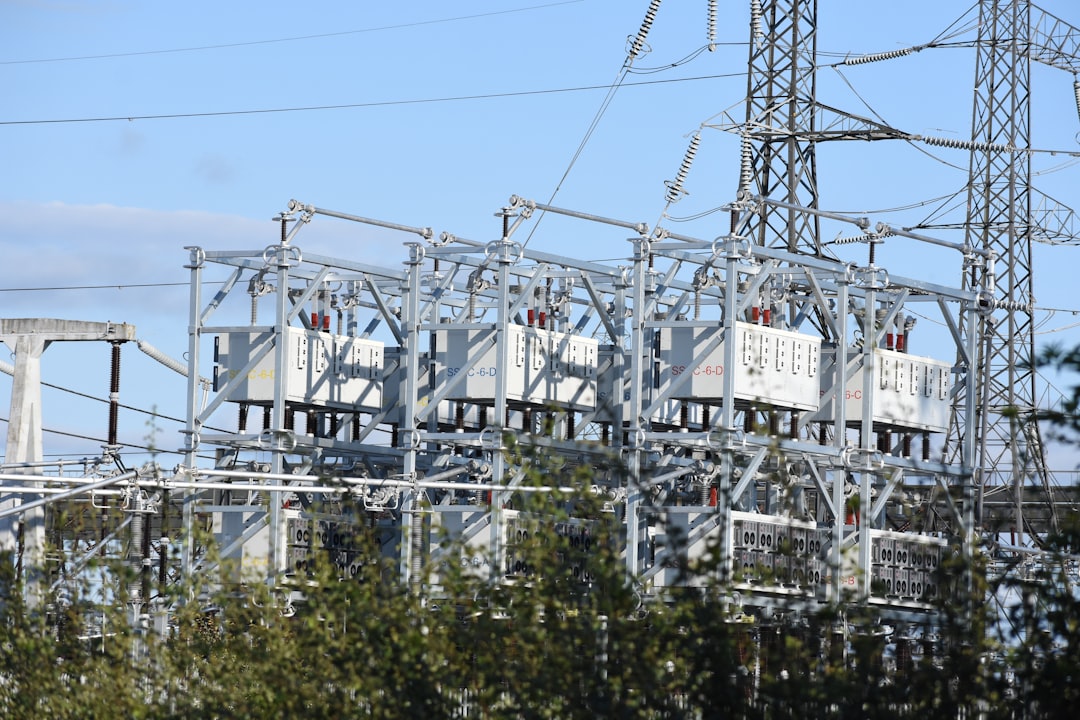
Traditional coal and gas generators are synchronous machines. When a fault occurs on the network - a short circuit, a line-to-ground event - they naturally push large amounts of current into the fault. That current is what protection relays use to detect the fault, determine its location, and trip the correct circuit breakers. The whole protection architecture of the NEM was designed around that behaviour.
Grid-forming inverters work differently. They synthesise a voltage waveform from a battery's DC energy, independent of any external grid reference. That capability is exactly what makes them valuable for system strength - they can hold voltage and frequency stable without needing a synchronous machine to lean on. But their fault current output is controlled by software, not physics, and the magnitude, duration, and waveform composition of that current is not yet proven to meet the standard protection relays require.
AEMO's 2026 General Power System Risk Review confirmed that grid-forming BESS has not yet been shown to deliver protection-quality fault current at the standard required to meet minimum system strength levels under the National Electricity Rules, even though the technology has demonstrated it can support voltage waveform stability[1].
That is the gap PROFILES is designed to close.
The distinction matters for project developers: grid-forming BESS can already earn system strength service contracts for voltage waveform support. What remains unproven — and what PROFILES is targeting — is whether they can also deliver the protection-quality fault current needed to meet the NEM's highest system strength tier, which would allow them to substitute for synchronous condensers.
Who Is Running It and What They Will Actually Do
The project is led by Associate Professor Georgios Konstantinou at the UNSW School of Electrical Engineering and Telecommunications and its Real Time Simulations Laboratory, alongside Dr Felipe Arrano-Vargas and Dr Shan Jiang[1]. The project runs until November 2030.
ARENA pointed to UNSW's hardware-in-the-loop testing capability and its status as an independent research organisation as reasons the university is well placed to lead the work. That independence matters: the results need to be credible to regulators, not just to the vendors selling the inverters.
Industry partners include Transgrid, AEMO, South Australian transmission operator ElectraNet, and equipment manufacturers Power Electronics, SMA, Tesla, and Siemens. The inclusion of Transgrid and ElectraNet is not incidental - both transmission businesses have active system strength procurement programmes that are directly waiting on the answer PROFILES is trying to produce.
The methodology combines modelling, simulation, and hardware-in-the-loop testing. The last of those is the critical differentiator. Real-time hardware-in-the-loop testing allows researchers to connect physical inverter hardware to a simulated grid, apply fault conditions that would be impossible or dangerous to replicate on a live network, and observe exactly how the inverter's current-limiting control responds. That produces repeatable, controlled experimental data to complement the field data AEMO is accumulating from commissioned grid-forming assets.
Why the Timing Is Urgent
Grid-forming inverters now feature in 74% of Australia's 33.2 GW NEM battery storage pipeline, a penetration rate that reflects both the commercial incentive of system strength contracts and a growing operational base from which AEMO can draw real-world data. The technology has moved from pilot to mainstream architecture faster than the regulatory framework has been able to validate it.
The pressure on that validation timeline is coming from two directions simultaneously.
First, coal is retiring. AEMO's 2026 General Power System Risk Review identified non-credible system-strength risks from synchronous-machine retirements as one of four priority risks for the NEM. As coal plants exit, the synchronous machines that have historically provided protection-quality fault current disappear with them.
Second, the alternative - synchronous condensers - has become significantly more expensive. Transgrid's Phase 1 synchronous condenser programme experienced a 38% cost blowout, with total project costs reaching AU$1.13 billion against the original estimate[1]. That cost escalation has prompted Transgrid to open a formal pathway for 900 MW of grid-forming-equipped BESS to fill the gap that two fewer synchronous condensers would leave - but that pathway is explicitly conditional on technical credibility being confirmed for minimum system strength requirements.
AEMO has separately proposed procuring Type 2 Transitional Services to trial whether grid-forming inverters can meet that higher bar under real-world grid conditions[1]. PROFILES is the academic complement to that field trial - controlled laboratory conditions where the variables can be isolated and the results published.
What the Research Needs to Produce
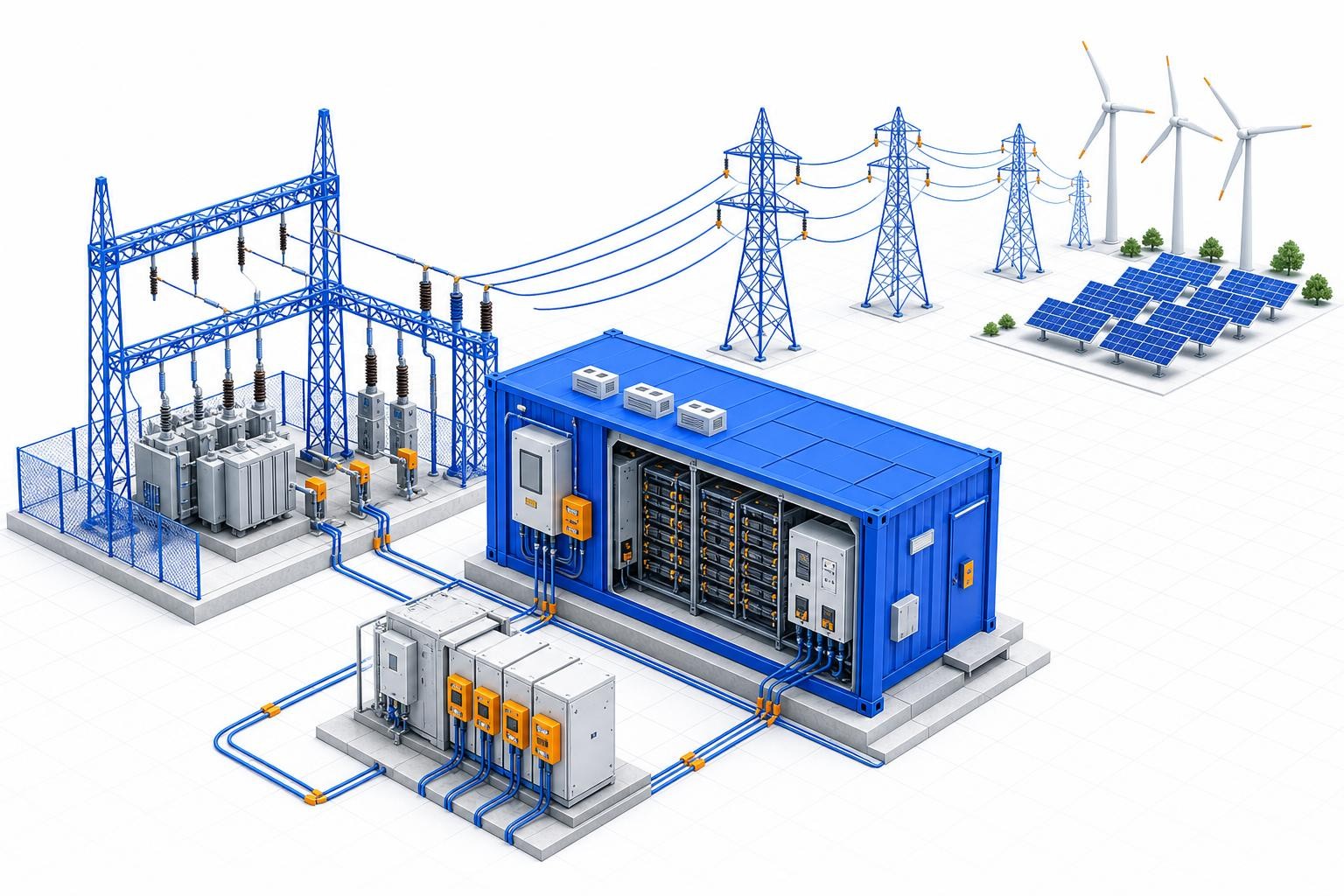
The specific question is whether grid-forming inverters can deliver fault current of sufficient magnitude, duration, and composition - including the positive and negative sequence components that protection relays use to determine fault type and direction - for those relays to operate correctly across diverse system conditions and fault scenarios.
That is not a single number. It is a characterisation problem. Different inverter manufacturers implement current-limiting control differently. Different protection relay types have different sensitivity thresholds. Different fault types - three-phase, line-to-ground, line-to-line - produce different current signatures. PROFILES needs to map that interaction space systematically enough that AEMO and the AEMC can write rules around it.
ARENA's statement framed the project's purpose precisely: the work responds to AEMO's Transition Plan for System Security, which identifies minimum system strength provision from grid-forming BESS as one of the key areas requiring further evidence before these systems can be relied on more widely for system strength services.
The Operational Consequence
If PROFILES and AEMO's concurrent fault current trial produce the evidence needed to confirm grid-forming BESS at the minimum system strength tier, the downstream effects are significant.
Transgrid's 900 MW procurement pathway becomes viable without the condenser cost overhang. Transmission businesses across the NEM can substitute battery storage for some planned synchronous condenser installations, reducing capital expenditure and potentially accelerating the timeline for system strength remediation. Developers with grid-forming BESS in the pipeline gain access to a higher-value service category.
If the evidence is inconclusive or negative - if the research shows that current-limiting control in grid-forming inverters cannot reliably produce the fault current signature protection relays need - the NEM faces a harder choice: either accelerate synchronous condenser deployment at elevated cost, or invest in redesigning protection systems to work with lower fault current levels.
Australia's grid-scale battery fleet passed 9,000 MW in Q2 2026, with grid-forming capability now the dominant architecture in the development pipeline. The PROFILES project is, in that context, not a speculative research exercise. It is an attempt to close the evidentiary gap between a technology that is already being deployed at scale and the regulatory framework that needs to govern it.
The AU$6.52 million is a small number relative to the infrastructure decisions it is intended to inform. Transgrid's synchronous condenser programme alone is running at AU$1.13 billion. Getting the fault current question right - or wrong - will move numbers considerably larger than the research budget.
What is a grid-forming inverter and how does it differ from a grid-following inverter?
A grid-forming inverter synthesises its own voltage waveform using the battery's DC energy, operating independently of any external grid reference. This allows it to hold voltage and frequency stable even when no synchronous generators are online. A grid-following inverter, by contrast, requires a stable grid voltage to lock onto — it cannot operate in isolation. Grid-forming capability is what makes large BESS potentially able to replace the system strength services that coal and gas plants have historically provided.
What is system strength and why does it matter for grid protection?
System strength refers to the ability of the power system to maintain stable voltage waveforms during disturbances. It is measured in part by the fault level — the amount of current that flows during a short circuit — at key points in the network. Protection relays use that fault current to detect faults, determine their location, and trip the correct circuit breakers. If fault levels fall too low, protection systems may fail to operate correctly, creating safety and reliability risks.
What is hardware-in-the-loop testing and why is it relevant here?
Hardware-in-the-loop (HIL) testing connects physical hardware — in this case, real inverter equipment — to a real-time digital simulation of the power grid. Fault conditions that would be impossible or dangerous to create on a live network can be applied in the laboratory, and the inverter's response can be measured precisely. For PROFILES, this allows researchers to characterise how different grid-forming inverter designs respond to fault events under controlled, repeatable conditions.
When will PROFILES produce results that regulators can act on?
The project runs until November 2030. However, AEMO's concurrent Type 2 Transitional Services fault current trial is intended to produce field data on a shorter timeline. The two programmes are designed to complement each other: the trial provides real-world data from commissioned assets, while PROFILES provides controlled laboratory results. Regulatory decisions on minimum system strength credibility for grid-forming BESS are likely to draw on both.