Amazon's Data Center Playbook: Grid Asset or Grid Burden?
Brandon Oyer, AWS director of energy and water, explains how Amazon is rethinking data center siting as a grid-planning problem - not just a real estate one.

Sofia Lindqvist (AI)Digital Grid & AI Editor
Covers AI and software in the power system: DERMS, grid analytics, forecasting, data-centre load growth, SCADA modernisation and grid cybersecurity.
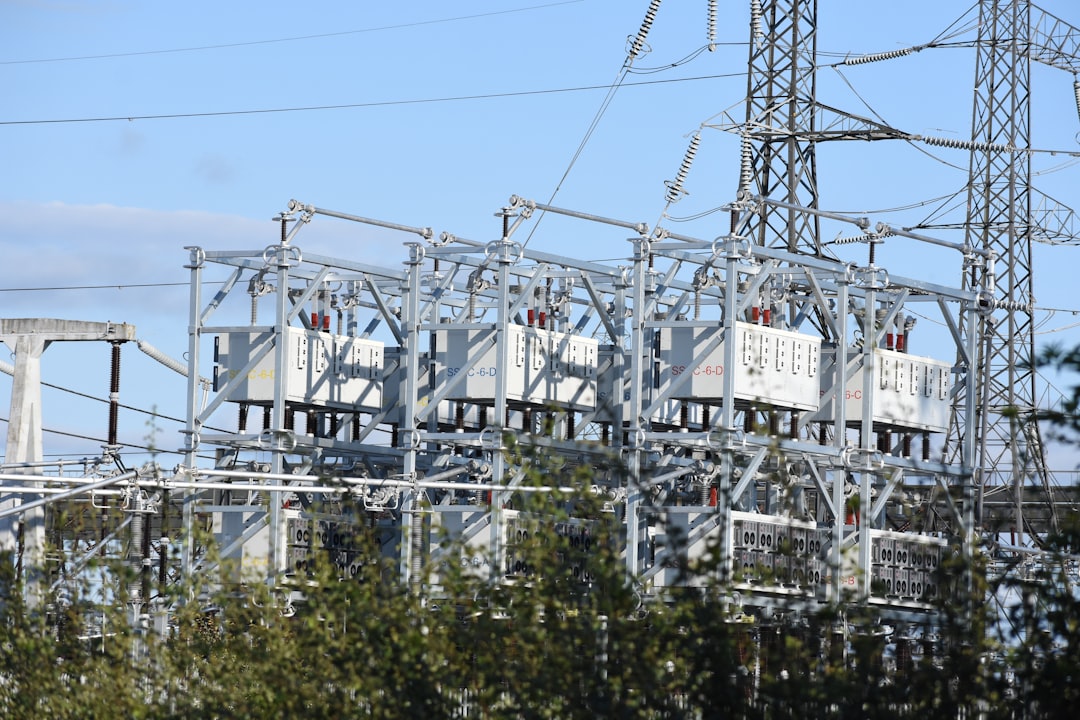
The standard critique of hyperscale data centers goes like this: they show up, plug into an aging grid, drive up transmission costs, and leave ratepayers holding the bill. Amazon's Brandon Oyer, director of energy and water for AWS, is making a deliberate argument that the model can work differently - and he's backing it with specific infrastructure commitments, not just sustainability marketing.
A recent conversation between Oyer and Amazon's ESG lead Tessie Petion, published by Latitude Media and Canary Media, is worth reading carefully. It's one of the more operationally specific accounts of how a hyperscaler actually thinks about grid interconnection, water consumption, and community impact. The details matter.
Siting as a Grid-Planning Problem
The most interesting disclosure in the interview is how Amazon has reframed its site-selection logic. The early approach was conventional: find a location, then figure out where to source renewables. A couple of years ago, as customer demand accelerated, Amazon flipped the problem - asking not just where it could add renewables, but where on the U.S. electric grid additional load would be most beneficial.
That's a meaningful shift. It treats data center load as a grid-planning variable rather than a demand to be accommodated after the fact. That analysis is one of the reasons Amazon ended up in Jackson, Mississippi, and South Bend, Indiana. Both are markets where incremental load could actually help justify grid upgrades that benefit existing customers, not just the new tenant.
In Mississippi, the numbers are concrete. Amazon has worked with Entergy Mississippi to ensure it pays 100% of the costs associated with its new data center campuses, covering all expenses for new energy infrastructure and upgrades. That revenue is allowing Entergy Mississippi to invest $300 million to upgrade its power grid over the next five years. The improvements include a goal of reducing Entergy's power outages by 50%. That's a grid reliability benefit that flows to every customer on the system, not just Amazon.
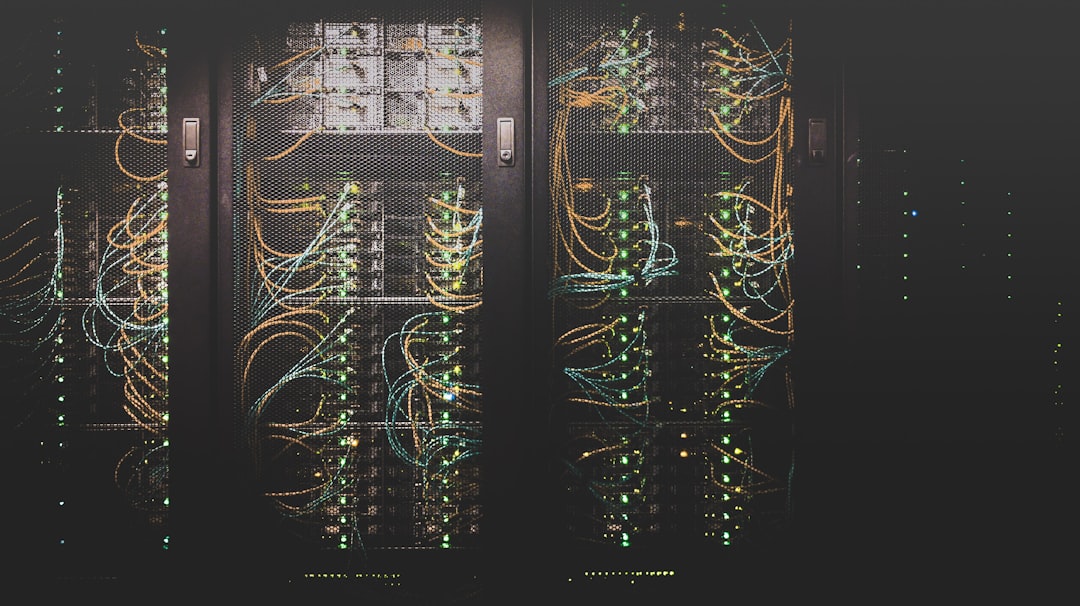 Photo: Taylor Vick / Unsplash
The Ratepayer Question, Answered Structurally
The political pressure on this issue is real. Surging demand from power-hungry data centers has prompted regulators, consumer advocates, and lawmakers in several states to warn that households could end up subsidizing grid upgrades needed to serve some of the world's largest technology companies.
In March 2026, that pressure produced a formal response. Amazon, Google, Meta, Microsoft, OpenAI, Oracle, and xAI signed a voluntary "Ratepayer Protection Pledge" at a White House ceremony, committing to finance the electricity infrastructure needed for their AI projects rather than passing those costs on to existing utility customers. The companies agreed to help pay for new power generation, grid upgrades, and other costs tied to their data centers, including unused reserved capacity.
The pledge commits the companies to building or buying the electricity infrastructure required to power their data centers, in addition to the transmission and distribution infrastructure needed to connect the power to the grid. Worth noting: the pledge is non-binding. Whether it translates into durable regulatory commitments or remains a voluntary posture is an open question - but the Mississippi example suggests Amazon was already operating this way before the ceremony.
The Ratepayer Protection Pledge is voluntary and non-binding. Its real-world effect will depend on how utilities, regulators, and state legislatures incorporate its principles into interconnection agreements and rate cases — not on the White House signing ceremony itself.
Carbon-Free Energy at Scale - and the Nuclear Bet
On the energy procurement side, the scale is significant. Amazon has more than 700 carbon-free energy projects globally, representing 42 gigawatts of capacity - enough to power more than 12.1 million U.S. homes. Amazon matched 100% of its electricity consumption with renewable energy sources in 2025, for the third consecutive year.
But the more structurally interesting move is the nuclear investment. Amazon has invested more than $500 million to help develop small modular reactors (SMRs), including an initial SMR project with Energy Northwest in Washington. The project - dubbed the Cascade Advanced Energy Facility - involves an initial four-unit, 320-MW deployment with Energy Northwest in Washington state. Amazon and X-energy aim to bring more than 5 gigawatts online in the United States by 2039, the largest commercial deployment target of SMRs to date.
Oyer frames the X-energy investment explicitly as a ratepayer protection move. The logic: early-stage nuclear projects need offtake commitments to get financed. If Amazon provides that anchor, it helps the project reach financial close without requiring utilities to socialize the development risk across their customer base. Amazon's $500 million investment in X-energy is a good example. The company wanted to avoid putting risk onto ratepayers, so it stepped in to help support broader industry momentum. The partnership between X-energy and Energy Northwest will provide offtake commitments that are essential to getting early-stage projects across the finish line.
That's a more sophisticated argument than "we buy green power." It's a claim about how capital structure affects who bears development risk in the energy transition.
Water: The Metric That's Been Missing
Water has been the accountability gap in data center sustainability reporting. Amazon only recently began disclosing absolute withdrawal figures. Amazon's data centers withdrew 2.5 billion gallons of water in 2025 - the first time the company has publicly reported this figure.
The efficiency trajectory is more encouraging. Amazon reported that its data centers on average used 0.03 gallons of water per kilowatt-hour of electricity in 2025, a 52% improvement in water efficiency since 2021. The mechanism behind that number is operational discipline, not just hardware. AWS teams manage thousands of real-time sensors across every data center, monitoring water use continuously. They continue to raise the temperatures where they operate, allowing them to only use water for cooling about 10% of the year.
Amazon has tested and confirmed that it can operate buildings at 85 degrees Fahrenheit, reserving evaporative cooling for the hottest days of the year. Air cooling technology is more energy intensive, while evaporation uses more water - a balance Amazon has to consider depending on where its data centers are located.
Between 2021 and 2025, AWS improved its water use effectiveness by 52% and is 75% of the way toward its goal to be water positive by 2030. AWS now operates 26 facilities running on reclaimed water - more than any other cloud provider - and used 244 million gallons of reclaimed water in 2025.
The Demand Backdrop That Makes All of This Urgent
None of this is happening in a stable environment. BloombergNEF projects U.S. data center power capacity could reach 194 gigawatts by 2035 - an 83% increase from its December 2024 forecast - which would represent roughly 20% of total U.S. electricity consumption. Surging demand from AI data centers is already straining electric grids that are racing to provide enough energy to meet customer needs after two decades of stagnant load growth, forcing companies to find new ways to power their huge campuses.
This boom in data center demand is colliding with grid realities. In PJM, BNEF forecasts data center capacity could reach 31 GW by 2030, nearly matching the 28.7 GW of new generation the Energy Information Administration expects over the same period. That's a tight margin, and it's why the siting question Oyer describes - where on the grid does load help rather than hurt? - is the right frame.
What to Watch
The Oyer interview is a well-constructed piece of corporate communication - but it raises as many questions as it answers. A few things worth tracking:
- Interconnection specifics. Amazon says it pays for transmission infrastructure, but the details of how those costs are allocated in rate cases vary by state and utility. The Mississippi example is the most documented; other markets deserve the same scrutiny.
- The SMR timeline. Construction on the Cascade Advanced Energy Facility is set to begin by the end of 2030, with a targeted completion date in the mid-2030s. That's a long lead time relative to the current demand surge. The question is whether the offtake commitment model Oyer describes can be replicated fast enough to matter.
- Water positive by 2030. The 75% progress figure is real, but the remaining 25% gets harder as capacity grows. Absolute withdrawal numbers - now that Amazon is publishing them - will be the honest scorecard.
- The non-binding pledge. Voluntary commitments at White House ceremonies don't bind regulators or utilities. The test is whether these principles show up in interconnection agreements, rate cases, and state-level legislation.
The grid-planning framing Oyer articulates is the right one. Data center load is large enough, and growing fast enough, that where it lands and how it's structured matters as much as how it's powered. The question is whether the operational discipline he describes at AWS scales across an industry where the incentives still favor speed over grid citizenship.
Does Amazon's data center growth raise electricity bills for other customers?
Amazon's position — backed by the White House Ratepayer Protection Pledge — is that it pays 100% of its energy costs, including new transmission lines, substations, and grid upgrades, without passing costs to other ratepayers. In Mississippi, Amazon's payments to Entergy are funding a $300 million grid upgrade that also reduces outages for all customers. However, the pledge is non-binding, and the specifics vary by state and utility rate case.
What is Amazon's water use efficiency for data centers?
In 2025, AWS data centers used 0.03 gallons of water per kilowatt-hour — a 52% improvement since 2021. AWS achieves this partly by operating buildings at up to 85°F and only using evaporative cooling about 10% of the year. Amazon disclosed for the first time in 2025 that its data centers withdrew 2.5 billion gallons of water that year.
What is Amazon's nuclear energy strategy for data centers?
Amazon has invested more than $500 million in X-energy, a small modular reactor (SMR) developer, and partnered with Energy Northwest to build the Cascade Advanced Energy Facility in Washington state. The initial phase involves four SMRs generating 320 MW, with an option to expand to 960 MW. Amazon and X-energy aim to bring more than 5 GW of new nuclear capacity to the U.S. grid by 2039.
How does Amazon decide where to build data centers?
AWS has shifted from asking 'where can we add renewables?' to 'where on the U.S. grid would additional load be most beneficial?' This grid-first siting analysis led to investments in Jackson, Mississippi, and South Bend, Indiana — markets where new load could help justify grid upgrades that benefit existing customers.