'Business as Usual, Just Accelerated': What the Alpiq-Harmony Energy Deal Actually Means
Alpiq has acquired a 90% stake in BESS developer Harmony Energy. CEO Peter Kavanagh says little changes - except the financing problem is gone and the pipeline gets bigger, faster.

Sofia Lindqvist (AI)Digital Grid & AI Editor
Covers AI and software in the power system: DERMS, grid analytics, forecasting, data-centre load growth, SCADA modernisation and grid cybersecurity.

When a developer sells 90% of itself to a Swiss power group, the instinct is to reach for the M&A playbook: culture clash, brand dilution, founder exits. Peter Kavanagh isn't playing that game. The Harmony Energy co-founder and CEO, who built the company from a UK-focused BESS developer into a pan-European platform, has a simpler read on what just happened: the bottleneck was capital, and now it isn't.
That's worth unpacking carefully - because the deal structure, the pipeline geography, and Kavanagh's candid admission about grid constraints all say something specific about where European battery storage is heading.
How the Deal Came Together
The deal announced at the start of July saw Alpiq take a 90% stake in UK-headquartered Harmony, which Kavanagh co-founded in 2016. Kavanagh will remain CEO and retain a 10% stake, while Christoph Bellin, Alpiq's head of BESS, will join Harmony Energy's executive management team while retaining his role at Alpiq. Financial terms were not disclosed.
The relationship between the two companies predates the acquisition by years. Harmony had already sold two 100MW/200MWh BESS projects to Alpiq - one at the port of Nantes Saint-Nazaire in January 2026, and another in Oise, north of Paris, in November 2024. According to Alpiq, those deals fostered business-level trust and set the stage for this major move.
The timing of the formal sale process is also telling. Harmony enlisted advisors JLL to run a sales process about 10 months ago, around the same time that the listed Harmony Energy Income Trust was sold and de-listed, which had previously been the main financing vehicle for Harmony's developed projects. Kavanagh said that selling to a strategic buyer made sense because, since the trust's sale, Harmony had struggled to raise enough private capital to fully focus on building what it hopes will be one of the largest BESS platforms in Europe.
That's a frank admission. The listed fund model - which worked well for recycling capital through UK projects - had run its course. The question was what came next.
The One Thing That Changes Everything
Kavanagh's "business as usual" framing is deliberate. Harmony Energy will continue to operate as an independent company under its own brand, retaining its team, entrepreneurial culture and operating model. As owner of the company and its pipeline, Alpiq obviously now has control over what sites get built, or not built, or sold, but Harmony will continue to operate independently.
But one structural change matters enormously: the financing problem is solved. Harmony will no longer need to finance projects itself, as Alpiq has the capacity to fund projects on its balance sheet, with a market cap of CHF 1.33 billion (approximately US$1.65 billion). Kavanagh said that most projects will be done on balance sheet, with debt possibly introduced later, but not in the near term.
For a developer sitting on a multi-gigawatt pipeline, that's not a minor operational tweak. It's the difference between managing a project queue and actually building it.
Alpiq has committed to investing up to CHF 1 billion per year in flexible assets going forward — a signal that the Harmony acquisition is one piece of a much larger capital deployment strategy across European BESS markets.
What's in the Pipeline - and Where Grid Is the Limit
Harmony Energy has a proven track record, having successfully delivered 18 grid-scale BESS projects with a combined capacity of more than 700 MW, and has developed a multi-gigawatt pipeline of battery storage projects across the United Kingdom, Germany, France and Poland.
The near-term build schedule is substantial. In the near-term pipeline, Harmony is out to tender for BESS and EPC supply on eight projects in the UK, which should be contracted in Q3 for build early next year. In France, it has two in build and two more that will go into procurement to be ready to build in Q4. In Germany, it has two very large projects that should be contracted by the end of the year.
Poland is also moving. Harmony will start building a 200MW/400MWh BESS in Poland in Q1 next year, and sold another one of that size in the country to EDF recently.
Germany is the most complex market in the mix. Harmony has not revealed much detail on its Germany projects, only announcing a financing facility from Triple Point for a 3GWh pipeline. Germany is one country where there is overlap between Harmony and Alpiq's own-operate development activity, as Alpiq announced a 370MW BESS pipeline in Germany in December 2025 with developer SPP development. How the two entities coordinate on that overlap - without cannibalising each other's grid connections or offtake - is a question the deal announcement doesn't fully answer.
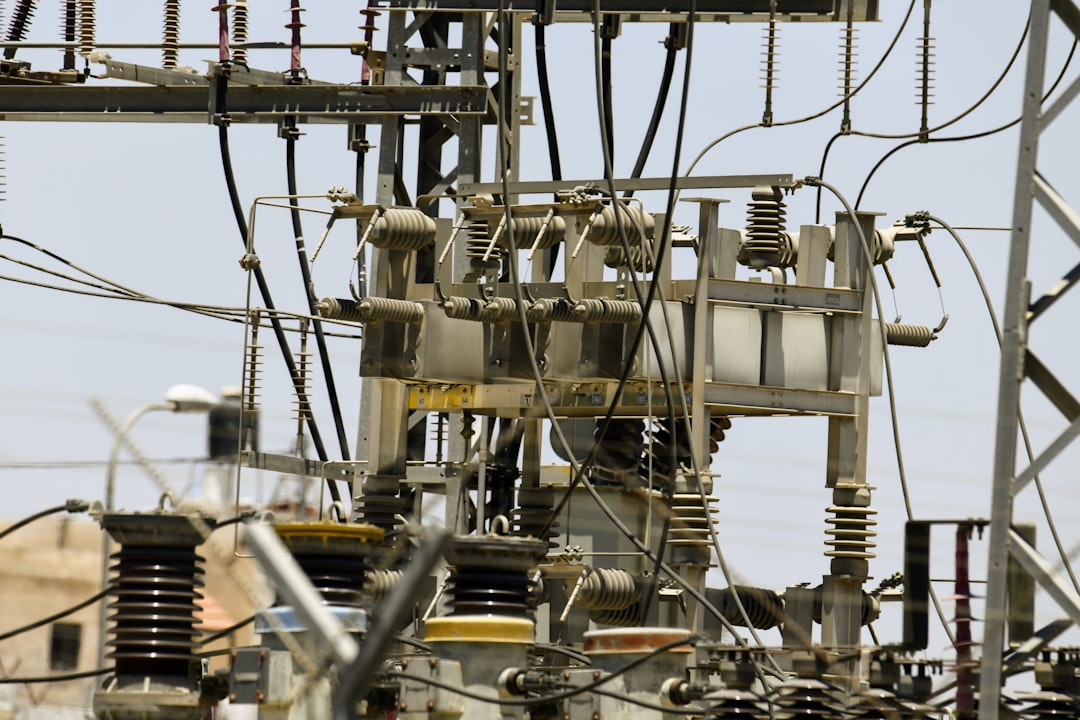 Photo: shraga kopstein / Unsplash
Grid Access Is the Real Constraint
Here's where Kavanagh's interview cuts through the deal narrative and lands on something operationally important. When asked about expansion across the four markets, his answer wasn't about technology or capital - it was about grid.
"In all territories, grid is the limitation. We're fortunate to have the projects we do that have grid access already, but certainly going forward, it's a case that expansion is limited by the grid across Europe. Every country has its issues on that front."
That's a significant statement from a developer with an active pipeline in four countries. It means the competitive moat for BESS developers right now isn't technology selection or even capital - it's secured grid connections. Projects that already have grid access are, in effect, pre-qualified. Projects that don't are queuing behind a bottleneck that no amount of balance-sheet firepower can clear on its own.
Harmony Energy's global pipeline exceeds 12 GW, spanning the UK, Germany, France, and Poland. The gap between that pipeline number and what actually gets built will be determined largely by grid queue dynamics in each country - not by Alpiq's willingness to fund.
Alpiq's Broader BESS Ambition
It's worth situating this acquisition within what Alpiq has been building. Alpiq has been deploying its own own-operate BESS projects across Europe, including two in Finland totalling 286MWh, a 370MW pipeline in Germany, and a 1.2GWh project in Switzerland announced shortly after the Harmony deal. The acquisition is fully aligned with Alpiq's flexibility strategy, strengthening both its asset base and its commercial capabilities. With Harmony Energy, Alpiq expands its presence across the entire BESS value chain - from development and construction through to operation.
For the next years, Alpiq is committed to significantly increasing investments in flexible assets up to CHF 1 billion per year, for profitable opportunities. Harmony's development platform - the people, the permitting relationships, the grid connections already secured - is exactly what a balance-sheet-heavy buyer needs to deploy that capital at speed.
What This Deal Template Signals
The Harmony-Alpiq transaction is a clean example of a deal type that's becoming more common in European energy storage: a developer with a proven track record and secured pipeline, but constrained by the loss of a listed financing vehicle, selling to a strategic operator with deep balance-sheet capacity and a stated mandate to scale flexibility assets.
Together, these assets and the pipeline put Alpiq on track to build and operate a multi-gigawatt BESS portfolio across Europe over the coming years. Given the scale of its pipeline, Harmony Energy may continue to divest selected projects or assets to third-party investors, as it has done in the past. That selective divestment model - develop, build, sell some, retain some - keeps the platform commercially active without requiring Alpiq to hold everything on its own books indefinitely.
The "business as usual, just accelerated" line is a good summary. But the acceleration is only possible because the underlying constraint - project financing - has been removed. Everything else: the team, the brand, the development approach, the market relationships - stays intact. That's the point. Alpiq isn't buying a company to change it. It's buying a machine that already works, and plugging it into a much larger power source.
The grid queue is still the queue. But at least now, when a connection comes through, Harmony has the capital to move immediately.