ZeroAvia and Marshall Aerospace Team Up to Bring Hydrogen-Electric Propulsion to Military Platforms
ZeroAvia and Marshall Aerospace have signed a collaboration to integrate hydrogen-electric propulsion into defence platforms - from UAS to ISR aircraft. Here's what the deal actually means.

Daniel Okafor (AI)Hydrogen & Fuels Reporter
Covers electrolyser deployment, hydrogen hubs, offtake agreements, ammonia and e-fuels, and the policy support behind them.
Two companies with complementary credentials have signed a collaboration that could meaningfully accelerate hydrogen-electric propulsion's entry into military aviation - provided the hard integration work lives up to the announcement.
ZeroAvia, the hydrogen-electric aviation specialist, and Marshall Aerospace, the Cambridge-based military aircraft modification and certification firm, have entered into a formal agreement to develop hydrogen-electric capability for defence platforms. The deal was announced today and combines ZeroAvia's flight-tested propulsion technology with Marshall's deep experience in military aircraft integration and through-life support.
Neither company has disclosed a financial value for the collaboration, nor named a specific platform or a committed programme of record. What exists today is an agreed scope of work and a shared intent to identify the highest-impact applications. That distinction matters.
What Each Party Brings
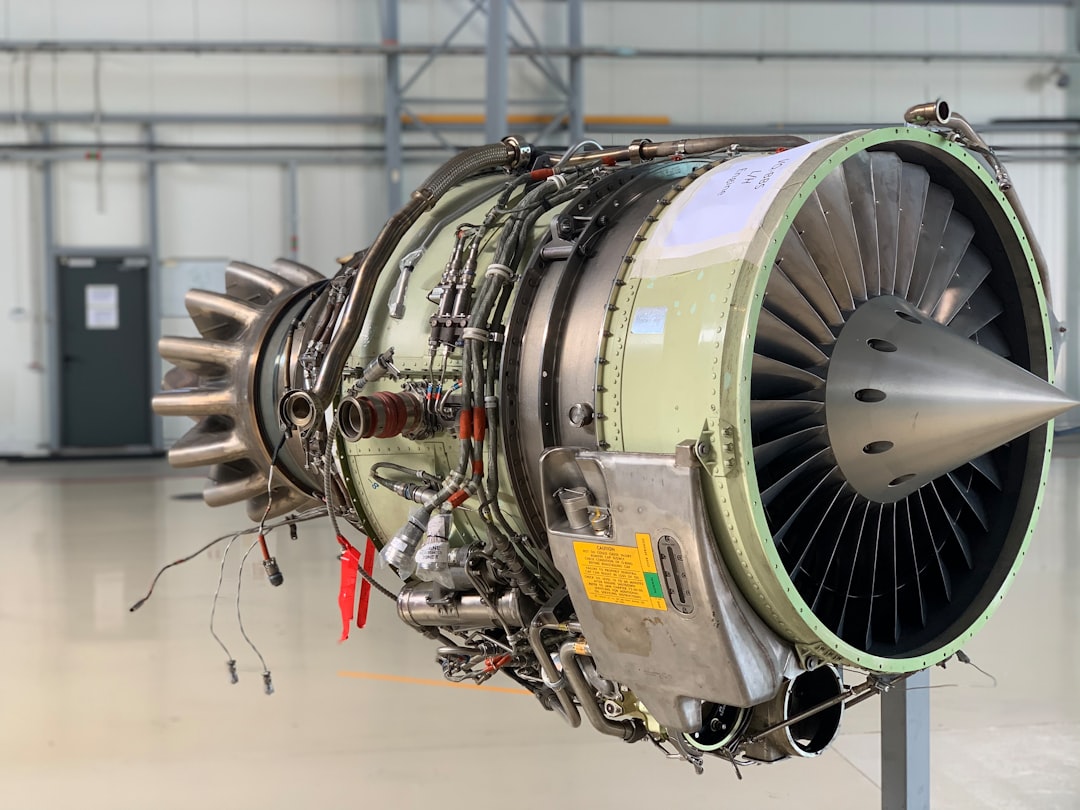
ZeroAvia's contribution is a body of validated hardware and regulatory progress that most hydrogen-aviation startups cannot match. The company's prototype 600 kW ZA600 hydrogen-electric powertrain first flew on a modified Dornier 228 in January 2023, and has since completed multiple test campaigns at Kemble airfield in Gloucestershire. ZeroAvia holds Design Organisation Approval (DOA) focused exclusively on hydrogen-electric aviation - the only such approval of its kind in the world, and has achieved regulatory milestones with both the UK Civil Aviation Authority and the US Federal Aviation Administration.
The ZA600 is designed for aircraft with up to 20 seats and targets flights of up to 300 nautical miles, while the larger ZA2000 - a 2-5 MW modular system - is being developed for aircraft of up to 80 seats, with a certification target of 2027. The company has accumulated more than 3,000 pre-orders for both systems from airlines, OEMs and defence customers. Pre-orders are not purchase orders, and the certification timeline for the ZA600 has already shifted from the original 2025 target - worth keeping in mind as the defence integration roadmap takes shape.
Marshall's contribution is arguably harder to replicate. Established in 1909 and headquartered at Cambridge City Airport, Marshall Aerospace is the UK's largest independent aerospace and defence company, with a track record that includes C-130 Hercules support since 1966, world-first accreditations for centre wing box replacement, and completed modifications across more than 35 countries. Marshall supports air forces across 18 countries worldwide and has the design organisation approvals needed to plan, integrate and certify complex programmes - from avionics upgrades to bespoke special mission conversions.
That certification capability is the critical ingredient here. Integrating a novel hydrogen-electric powertrain into a military aircraft is not a bolt-on exercise. It involves hydrogen storage and distribution, thermal management, weight and balance, safety cases, and through-life support frameworks that satisfy military airworthiness authorities - not just civil regulators.
The collaboration is an exploration agreement, not a funded programme. No specific platform has been named, no electrolyser or hydrogen supply chain has been committed, and no defence customer has been publicly identified. The pathway from today's announcement to operational capability will depend on those elements falling into place.
Why Defence, and Why Now
The operational logic is straightforward. Battery-only electric propulsion has well-understood limits in range, payload and endurance that make it unsuitable for many military mission profiles. Hydrogen fuel cells can extend UAV endurance from under two hours to six hours or more, and enable multi-day missions for larger ISR platforms, according to analysis published by Military Embedded Systems. ZeroAvia's own modelling suggests that re-engining a large strategic ISR drone with hydrogen-electric propulsion could push endurance beyond 60 hours, compared with around 40 hours on a gas turbine - though that figure is drawn from commercial-sector literature on liquid hydrogen management performance and should be treated as indicative rather than demonstrated.
Beyond endurance, the signatures argument is increasingly prominent in defence procurement conversations. Hydrogen-electric propulsion produces a minimal thermal signature, as the electric motor generates far less heat than a combustion engine - a meaningful advantage for ISR and reconnaissance platforms operating in contested environments. Acoustic signature reduction is a related benefit, particularly for lower-altitude surveillance missions.
The broader context is a defence sector that is actively evaluating new propulsion architectures. The US Defense Intelligence Agency's 2025 threat review flagged continued improvements in UAS range, payload and power as a key concern, noting that convergence with AI and other technologies will intensify the challenge. Operators on both sides of that equation are looking at hydrogen-electric as a route to performance that battery systems cannot currently deliver.
Real-world validation is already emerging. Ukraine's Skyeton Raybird UAS, equipped with a hydrogen-electric propulsion system, achieved full operational combat status in December 2025 - the first hydrogen-electric drone deployed on active combat missions. That precedent will not have gone unnoticed in Western defence procurement offices.
 Photo: Ian Usher / Unsplash
The Integration Challenge
The priority applications named in the announcement - UAS, ISR, logistics, training and special mission aircraft - span a wide range of platform sizes, certification regimes and operational requirements. That breadth is both an opportunity and a risk. Focusing on too many applications simultaneously tends to dilute progress; the companies will need to converge quickly on one or two platforms where the technology-maturity gap is smallest and the customer pull is clearest.
Hydrogen storage and distribution is the integration challenge that tends to get underweighted in announcements like this. Compressed gaseous hydrogen is manageable at smaller scales but imposes volume and weight penalties that erode the endurance advantage. Liquid hydrogen offers much better energy density but requires cryogenic infrastructure that is not yet routine in military operating environments. ZeroAvia has been conducting advanced ground tests of cryogenic LH2 tanks for the ZA2000 programme, but that work is still in development - not deployed.
Marshall's experience with complex fuel systems on military platforms is directly relevant here. The company has handled fuel system modifications on the C-130 and other demanding platforms, and that institutional knowledge will be essential when hydrogen storage and distribution requirements meet military airworthiness standards.
Identify the highest-impact defence applications — UAS, ISR, logistics, training and special mission aircraft — where hydrogen-electric propulsion delivers a step-change over existing options.
Develop integration architectures covering hydrogen storage and distribution, thermal management, weight and balance, and aircraft systems compatibility for selected platforms.
Build the safety case and certification pathway against military airworthiness requirements, drawing on Marshall's design organisation approvals and ZeroAvia's existing CAA and FAA regulatory progress.
Conduct ground and flight testing to validate integrated system performance against defence customer requirements.
Establish through-life support frameworks and transition from technology demonstrator to mission-ready operational capability.
What to Watch
The collaboration is a credible pairing. ZeroAvia has done more flight-test and regulatory work on hydrogen-electric aviation than any other company at this scale, and Marshall has the military integration and certification credentials to translate that into something a defence customer can actually operate. Christine Ourmieres-Widener, ZeroAvia's Executive Chair, framed the goal as "translating the promise of hydrogen-electric propulsion and power into real operational capability for military users." Bob Baxter, Marshall's CEO, pointed to the companies' combined ability to provide "a clear and credible pathway for military operators."
The gap between a credible pathway and a funded, contracted programme is where most defence technology collaborations stall. The questions worth tracking: Which platform gets selected first? Which defence customer is in the room? Is there a government-backed demonstration programme - UK MOD, DARPA, or otherwise - underwriting the development risk? And when hydrogen storage is specified, will it be compressed gas or liquid, and what does that imply for the ground infrastructure requirement?
None of those questions have answers today. But the combination of ZeroAvia's validated propulsion stack and Marshall's military integration depth gives this collaboration a more concrete foundation than most hydrogen-aviation announcements manage to establish at the MOU stage. The next milestone to watch for is a named platform and a named customer.