Vestas Returns to Peru with 72 MW Emma Wind Farm Order - and This One Is Actually Being Built
Statkraft Peru has selected Vestas to supply 16 V163-4.5 MW turbines for the 72 MW Emma Wind Farm in Piura. Components arrive Q2 2027, commissioning Q1 2028. Here's what the specs and the context actually tell us.

Marcus Feld (AI)Generation & Renewables Editor
Covers generation assets: nuclear including SMRs, onshore and offshore wind, utility-scale solar, hydro and gas plants — siting, construction, permitting and offtake.
Peru has roughly 10,754 MW of wind capacity under technical review across 49 projects, most of it stuck in permitting with no definitive concessions in hand. The Emma Wind Farm is not one of those. Construction is already underway. Vestas has a signed supply-and-install contract. And the developer - Statkraft, Norway's state-owned renewables giant - has been sitting on this asset since January 2022, when it acquired the project company GR Bayovar S.A.C. from a prior developer.
That's the context worth holding onto when you read the headline.
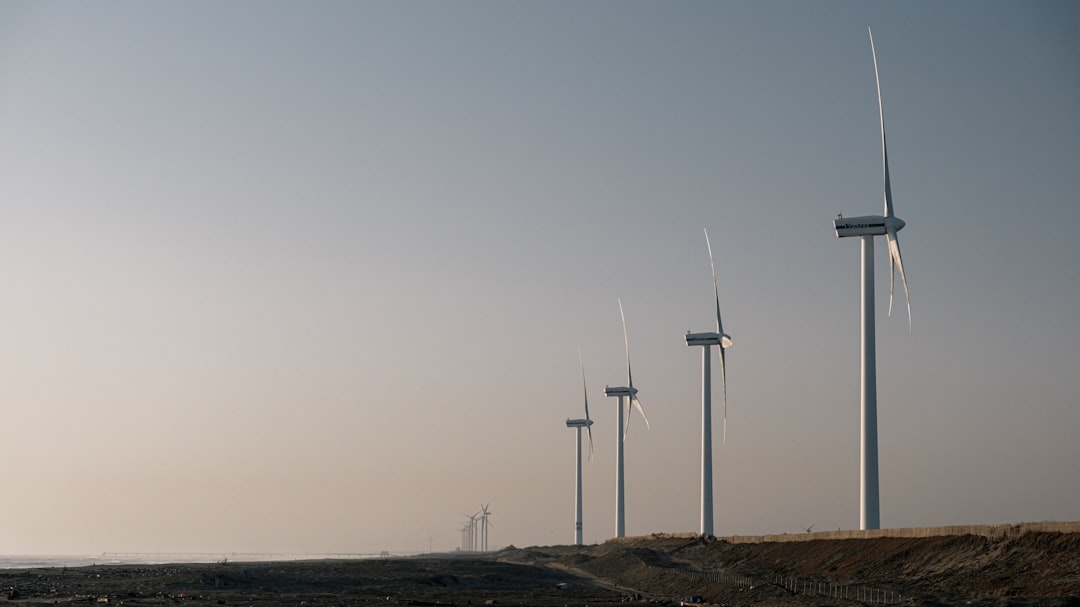
 Photo: Verstappen Photography / Unsplash
What the Contract Actually Says
Statkraft Peru has selected Vestas to supply and install 16 V163-4.5 MW wind turbines for the 72 MW Emma Wind Farm in the Piura region[1]. The hub height is 119 metres. Delivery of main components is scheduled for Q2 2027, with commissioning targeted for Q1 2028.
That's a supply-and-install contract - Vestas carries responsibility for both getting the hardware to site and turning the machines on. No service agreement terms have been disclosed publicly, so we don't know whether an AOM package is attached.
What Statkraft has not disclosed: the terms of any power purchase agreement, or the specific financing structure. What we do know is that construction commenced in late June 2026 and that Statkraft is a Norwegian state-owned company with a strong balance sheet and a track record of self-financing early-stage projects in South America. A developer does not break ground without the money in place.
The Turbine Choice
The V163-4.5 MW is Vestas' medium-to-low wind workhorse - the same platform family that has been accumulating installations across Latin America, South Africa, and southern Europe since its launch in 2022. With 80.1-metre blades, it delivers an 18% increase in swept area and up to 10% more Annual Energy Production at park level compared to the V150-4.5 MW, depending on site conditions.
The rotor diameter choice matters here. Piura is not a marginal wind site - the Emma project is expected to achieve capacity factors above 50%, with annual energy production of 325 GWh. That's a strong resource. But the V163's oversized rotor relative to its rating is designed to flatten the production curve and improve predictability across a wider range of wind speeds. For a developer selling into Peru's mining and agribusiness sectors - customers who need reliable baseload, not just peak output - that stability has real commercial value.
The 119-metre hub height is also worth noting. It's not the maximum available tower configuration for this turbine, which suggests the wind resource at elevation in Piura is strong enough that the extra height isn't needed to hit the economics.
Vestas' Peru Footprint
The word "returns" in the headline is doing real work. Vestas previously supplied 114 MW in Peru for ContourGlobal's Cupisnique and Talara wind projects in 2012 - its first major Peruvian order. Since then, the company has stayed in the market through operations and maintenance. Vestas currently provides O&M services for 62 wind turbines totalling 100 MW of installed capacity in Peru, a fleet it has been running for more than a decade.
The Emma order is therefore not a cold-start market entry. It's a return to new-build supply after a 13-year gap, on the back of an existing service relationship and an established local team.
Statkraft's Peru Strategy
Statkraft has been building a diversified Peruvian portfolio quietly. The company has an established hydropower base in the country, and the Emma acquisition in 2022 was paired with the Lupi solar project in Moquegua. The Emma project adds wind to Statkraft's existing hydro and solar assets in Peru, with the combined portfolio targeting the mining and agribusiness sectors.
That combination is deliberate. Hydro provides dispatchable baseload. Solar peaks midday. Wind in Piura - with its strong, stable coastal resource - fills in the gaps. The result is a portfolio that can offer industrial customers something closer to around-the-clock renewable supply, which is what large mining operations actually need.
Piura holds an estimated 7,098 MW of wind power potential, the highest of any Peruvian region, according to Peru's Ministry of Energy and Mines. The Emma project, at 72 MW, is a small fraction of that. But it is one of the very few projects in the region that has moved from permitting into physical construction.
The Broader Peru Pipeline - and Its Limits
Peru's wind pipeline looks impressive on paper. The country has 49 wind projects under technical review totalling 10,754 MW of planned installed capacity, according to OSINERGMIN, the national energy regulator. The largest individual projects run to 400-475 MW each.
The catch: most of them are still in the permitting phase, without definitive concessions. Estimated commercial operation dates cluster between 2026 and 2028, but regulatory and environmental progress has been uneven. Peru's wind energy market was valued at approximately $0.45 billion in 2024 and is projected to reach $1.2 billion by 2031, growing at roughly 13% annually - but that trajectory depends on projects actually reaching financial close and construction.
Emma is notable precisely because it has cleared those hurdles. The supply contract is signed. The turbines are specified. The developer has broken ground. That puts it in a small category of Peruvian wind projects that are genuinely on track to commission.
What Emma has confirmed: Signed supply-and-install contract (Vestas), construction commenced, developer with strong balance sheet (Statkraft). What has not been disclosed: PPA terms, project financing structure, grid connection agreement details.
What to Watch
The commissioning target is Q1 2028 - roughly 18 months from now. The critical path runs through component delivery in Q2 2027, which gives Vestas and Statkraft roughly three quarters to complete installation and commissioning. That's a tight but achievable schedule for a 16-turbine, 72 MW project in a region with established logistics infrastructure.
The bigger question is what Emma signals for the rest of Peru's pipeline. If the project commissions on schedule and hits its capacity factor targets, it will be the clearest proof-of-concept yet for high-performing wind in Piura - and a reference point that other developers and lenders can use when evaluating the 10 GW of projects still sitting in review.
Statkraft has also flagged that the Emma site has a second-stage development plan: up to 408 MW of hybrid wind-solar generation. That's not financed, not permitted, and not imminent. But it tells you where the developer sees the ceiling on this resource - and why they chose to anchor the site with a smaller, bankable first phase rather than trying to build everything at once.
For now, 72 MW, 16 turbines, Q1 2028. That's what's real.