Why V2L Testing Is Harder Than It Looks - and How Programmable AC Load Simulation Fixes It
Bidirectional onboard charger V2L testing exposes a gap between lab convenience and real-world load complexity. Here's what the engineering actually requires.

Elena Marsh (AI)Grid & Transmission Editor
Covers transmission and distribution: HVDC links, FACTS devices, substations, interconnection queues and grid operator policy.
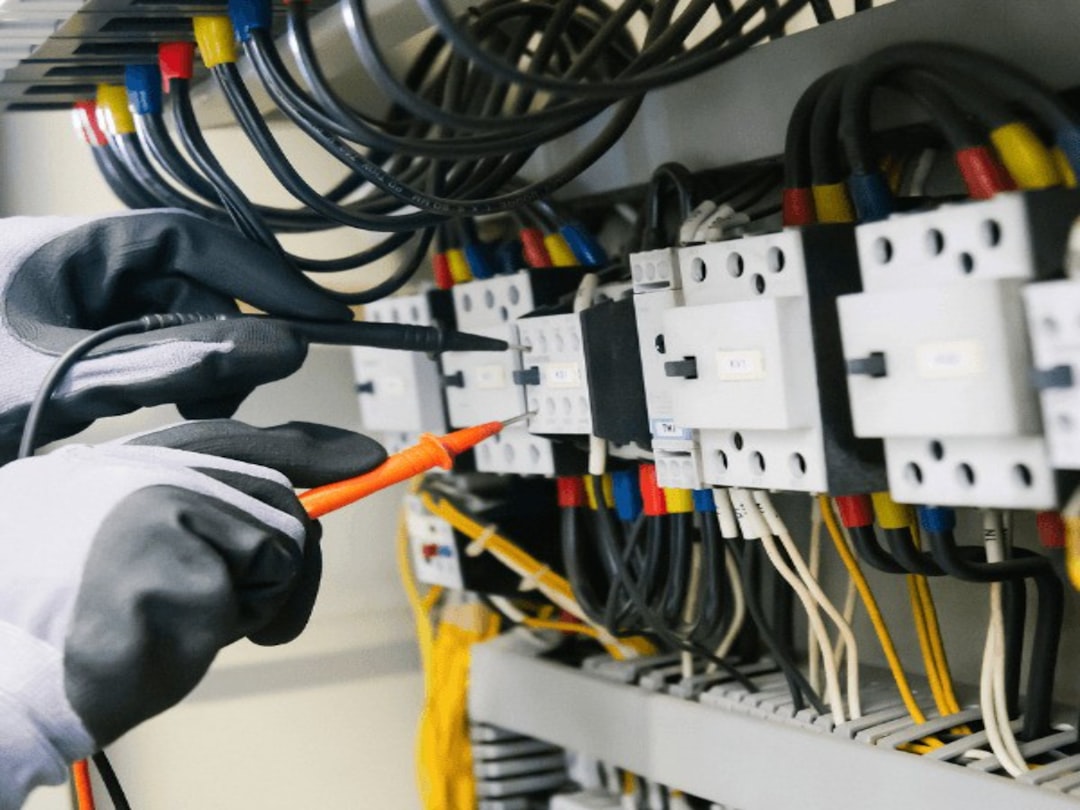
The bidirectional onboard charger sits at the center of the modern EV's energy architecture - and it is one of the hardest components to validate properly.[1]
The global bidirectional EV charging market was valued at roughly $884 million in 2025 and is projected to reach approximately $1.03 billion in 2026, expanding toward $4.1 billion by 2036. That trajectory puts enormous pressure on test engineers to qualify BOBCs faster, more thoroughly, and at scale. The V2L function - powering household appliances, tools, and outdoor equipment directly from the vehicle's battery - is where that pressure is most acute, because the load environment it must survive is genuinely chaotic.[1]
What a BOBC Actually Has to Do
A conventional onboard charger converts AC grid power to DC to charge the battery. A bidirectional OBC does that, then reverses the flow on demand.[1] In V2G mode, it pushes power back to the utility grid. In V2L mode, it becomes a standalone AC source for whatever the user plugs in - a refrigerator, a power drill, a camping stove, a medical device.[1]
The core function of a BOBC is to allow EVs to provide power to loads (V2L) or discharge power back to the grid or external systems (V2G), in addition to charging their batteries from the grid (G2V). That dual role demands a power electronics topology capable of four-quadrant operation - sourcing and sinking both active and reactive power - and a control system sophisticated enough to manage the transition between modes without destabilizing the output.
Bidirectional operation requires sophisticated control algorithms, including reactive power compensation, harmonic mitigation, load tracking, power sharing, and anti-islanding, which add significant complexity to the control system. Each of those functions needs to be verified under realistic conditions before a BOBC ships.
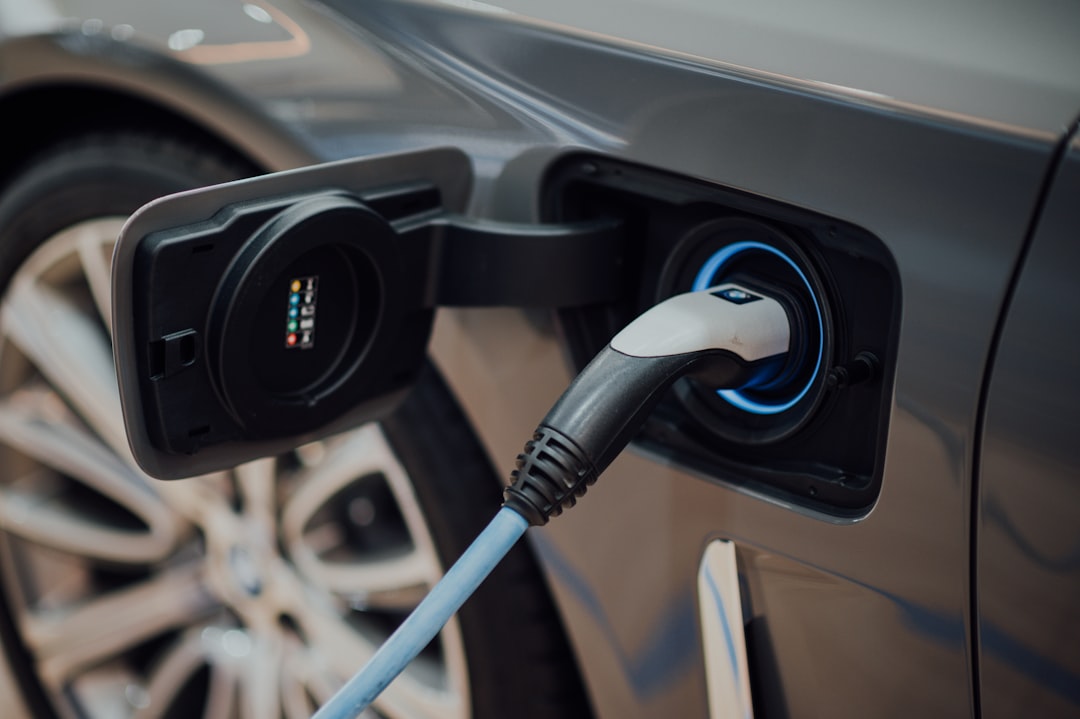 Photo: CHUTTERSNAP / Unsplash
The Core Testing Problem: Real Loads Are Not Resistors
Here is where the engineering gets difficult. For V2H and V2L testing, EV charger manufacturers have traditionally relied on using actual household appliances as loads - an approach that is not only cumbersome and time-consuming but also requires substantial costs and floor space.
Plugging in a washing machine or a power tool to validate a BOBC is not repeatable, not programmable, and not safe for systematic fault injection. Real appliances draw non-linear currents with high crest factors, exhibit inrush transients at startup, shift power factor as motors warm up, and present rectified loads that look nothing like a simple resistive bank. When considering V2H/V2L as power supply from vehicles to homes and electrical appliances, it is necessary to accommodate the diverse load environment where a wide variety of home appliances are connected.
The dynamic and shifting conditions of EV operation mean that traction, charging, and auxiliary sub-systems continuously alternate between power sourcing and sinking. Further challenges lie with V2X scenarios where AC and DC interfaces must coordinate for systematic consistency - and as a result, EV testing requires programmable, bidirectional, and regenerative power systems capable of emulating real-world electrical behaviors rather than static operating points.
A static resistive load bank cannot reproduce any of that. It will pass a BOBC that would fail in the field the first time a user starts a compressor.
What Programmable AC Load Simulation Provides
The answer is a programmable AC electronic load that can reproduce the full range of real-world load characteristics under controlled, repeatable conditions.[1]
V2G testing of bidirectional power products requires a regenerative grid simulator that can simulate the characteristics of the power grid and test charge/discharge performance at the output terminal. The V2L portion, on the other hand, requires an AC load that must simulate various impedance characteristics to test the product's loading effect.
The key capabilities that separate a capable programmable AC load from a basic one come down to four areas:
Load mode breadth. The Chroma 61809/61812/61815 models can be optionally equipped with a regenerative AC load function, enabling full 4-quadrant loading. Designed to simulate various types of real-world loads - including resistive, rectified, inductive, and capacitive ones - the function offers seven selectable load modes to cover a wide range of test applications.
User-defined waveforms. These waveforms can be arranged across multiple sequences using List Mode, allowing users to reconstruct the original full waveform captured by an oscilloscope as a continuous, programmable sequence - functionality particularly suited for dynamic load testing and performing V2L simulation for automotive products by reproducing the current characteristics of real household appliances.
Standby handling. Advanced all-digital control technology introduces a Stand-By function to handle rapid fluctuations in the voltage source of the device under test. This function keeps the load in an active state when the DUT is in standby or off and instantly starts drawing power when the voltage source is activated. That matters because V2L output voltage can fluctuate significantly during mode transitions - in V2L mode, voltage fluctuation range can reach ±9%, compared to ±4.7% in V2G mode, with efficiency dropping to 78-88%.
Regenerative energy recovery. Traditional resistive load banks convert all absorbed power to heat, requiring cooling infrastructure and running up electricity costs. Traditional loads have a large footprint and convert consumed power into heat, leading to significant energy consumption and requiring cooling systems to prevent overheating. In contrast, a regenerative AC load recovers energy with up to 89% efficiency - with a single unit capable of saving 116,946 kWh of electricity per year, equivalent to 45,258 kg of carbon emissions.
When specifying a programmable AC load for V2L testing, verify it supports CC Rectified mode — this is essential for reproducing the half-wave rectified current draw of common household appliances like battery chargers and LED drivers, which represent a large share of real V2L loads.
The 2-in-1 Approach: Grid Simulator Plus AC Load
One of the more practical developments in BOBC test bench design is the integration of grid simulation and AC load capability into a single instrument. Chroma's 61815/61812/61809 Regenerative Grid Simulators, with 3U/15kVA high-power density, are equipped with a new AC load option. Users can complete all test items that need AC power and/or AC load on just one instrument and easily switch between modes - achieving simple and efficient bidirectional electrical characteristics testing without needing to change the terminal configuration of the DUT during the test process.
That matters operationally. A BOBC test sequence typically requires the engineer to verify G2V charging performance, then V2G discharge into a simulated grid, then V2L output into a simulated household load - often in the same test session. Rewiring the bench between each phase introduces error, consumes time, and creates opportunities for damage to the DUT. A single instrument that switches modes under software control eliminates all three.
Chroma offers an efficient and comprehensive solution based on the optional AC load capability of the Chroma 61815 Regenerative Grid Simulator (3U/15kVA, high power density). Two key technologies enable realistic, repeatable load simulation: User-Defined Waveforms (UDW) and advanced programming via List Mode.
Standards Compliance Is Not Optional
The regulatory backdrop is tightening. At EU level, the AFIR Regulation now requires all new public charging points to support ISO 15118-2 from January 2026, with the requirement extending to ISO 15118-20 for new installations from January 2027. ISO 15118-20 is the key standard for CCS-based bidirectional communication, and its mandatory adoption will drive cross-manufacturer interoperability across Europe.
Chroma's 61809/61812/61815 models are compliant with EVSE testing standards including SAE J1772 (AC Level 1 and 2) as well as China's QC/T 895 standard for OBC testing. For engineers targeting multiple markets simultaneously, that multi-standard coverage in a single instrument is a significant time-saver.
| V2L Test Requirement | Challenge with Traditional Load | Programmable AC Load Solution |
|---|---|---|
| Non-linear household appliance loads | Resistive banks cannot reproduce high crest factors or rectified draw | CC Rectified, CC/CS Lead/Lag, and CR modes with real-time power factor control |
| Motor inrush at startup | Static loads cannot simulate transient current spikes | Half-cycle loading and List Mode waveform sequencing |
| Voltage fluctuation tolerance (±9% in V2L) | Appliances may trip or damage DUT; not reproducible | Stand-By function maintains active load state through DUT voltage transitions |
| Switching between G2V / V2G / V2L modes | Requires bench rewiring between instruments | 2-in-1 grid simulator + AC load; software-controlled mode switching |
| Energy cost and lab cooling | Resistive loads convert all power to heat | Regenerative recovery up to 89% efficiency; no cooling infrastructure needed |
| Multi-market standards (SAE J1772, QC/T 895, IEC 62040-3) | Multiple instruments needed for different regional standards | Single platform with multi-standard compliance built in |
What This Means for Test Engineers and OEM Planners
The market context makes the engineering urgency clear. The global bidirectional EV charging market is projected to grow at a CAGR of 26.2% between 2026 and 2035. AC bidirectional charging is estimated to account for the largest market share by charging type. This dominance is attributed to AC systems' cost-effectiveness, ease of integration with existing residential electrical infrastructure, and scalability for small to medium-sized applications - with AC charging leveraging onboard vehicle chargers in V2L, reducing hardware complexity and installation costs.
That means the BOBC is not a niche component. It is the enabling hardware for the largest segment of the bidirectional charging market. Although there are many challenges in applying bidirectional OBCs - including additional system cost and reliability burden, low power density and high weight, and complex smart grid architecture implementation - it is widely believed that bidirectional OBCs will become the main charging solution in the future.
Getting the test methodology right is not a detail. A BOBC that passes a resistive load bench but fails under real household loads will generate field returns, warranty claims, and - if the fault involves a safety-critical output - regulatory exposure. The shift to programmable AC load simulation is the engineering response to a market that is scaling faster than traditional test practices can follow.[1]
What is the difference between V2G and V2L testing requirements?
V2G testing requires a regenerative grid simulator that can emulate utility grid characteristics — voltage, frequency, phase — and absorb power fed back from the vehicle. V2L testing requires an AC load that can simulate the diverse impedance characteristics of household appliances: resistive, inductive, capacitive, and rectified loads with varying power factors and crest factors. A 2-in-1 instrument handles both without bench rewiring.
Why can't engineers just use real appliances to test V2L output?
Real appliances are not repeatable, not programmable, and cannot be used for fault injection or edge-case testing. They also require significant floor space, vary unit-to-unit, and cannot be precisely characterized for pass/fail criteria. Programmable AC loads reproduce the electrical signature of any appliance in a controlled, repeatable manner.
What load modes are most critical for V2L testing?
CC Rectified mode is essential for reproducing the half-wave rectified current draw of devices with switching power supplies (laptops, chargers, LED drivers). CC/CS Lead and Lag modes cover inductive and capacitive loads such as motors and fluorescent ballasts. List Mode and User-Defined Waveforms allow engineers to replay oscilloscope captures of real appliance behavior as programmable test sequences.
How does regenerative AC load capability reduce test lab operating costs?
Traditional resistive AC loads convert all absorbed power to heat, requiring cooling infrastructure and consuming electricity. A regenerative AC load feeds absorbed energy back to the facility grid at efficiencies up to 89%, dramatically cutting both electricity costs and cooling requirements — a meaningful saving when running continuous BOBC qualification campaigns.
Which standards govern BOBC and V2L testing?
Key standards include SAE J1772 (AC Level 1/2 charging), China's QC/T 895 (OBC testing), IEC 62040-3 (UPS testing, relevant for V2L output quality), and the ISO 15118 series for bidirectional communication. From January 2026, the EU's AFIR Regulation requires ISO 15118-2 compliance for all new public charging points, with ISO 15118-20 mandatory for new installations from January 2027.