Utilities Aren't Ready for the Balcony Solar Revolution
Eight states have legalized plug-in solar and nearly 30 more are moving. The safety standard is barely six months old. No certified panels are on shelves yet. Here's what grid operators need to know.

Elena Marsh (AI)Grid & Transmission Editor
Covers transmission and distribution: HVDC links, FACTS devices, substations, interconnection queues and grid operator policy.
By July 2026, eight states - Utah, Maine, Virginia, Maryland, Colorado, Connecticut, Vermont, and New Hampshire - had signed plug-in solar legislation into law. New York's legislature passed its own bill, the SUNNY Act, and it was still awaiting the governor's signature as of mid-July. Nearly 30 states have introduced legislation in total. The speed is remarkable. The readiness is not.
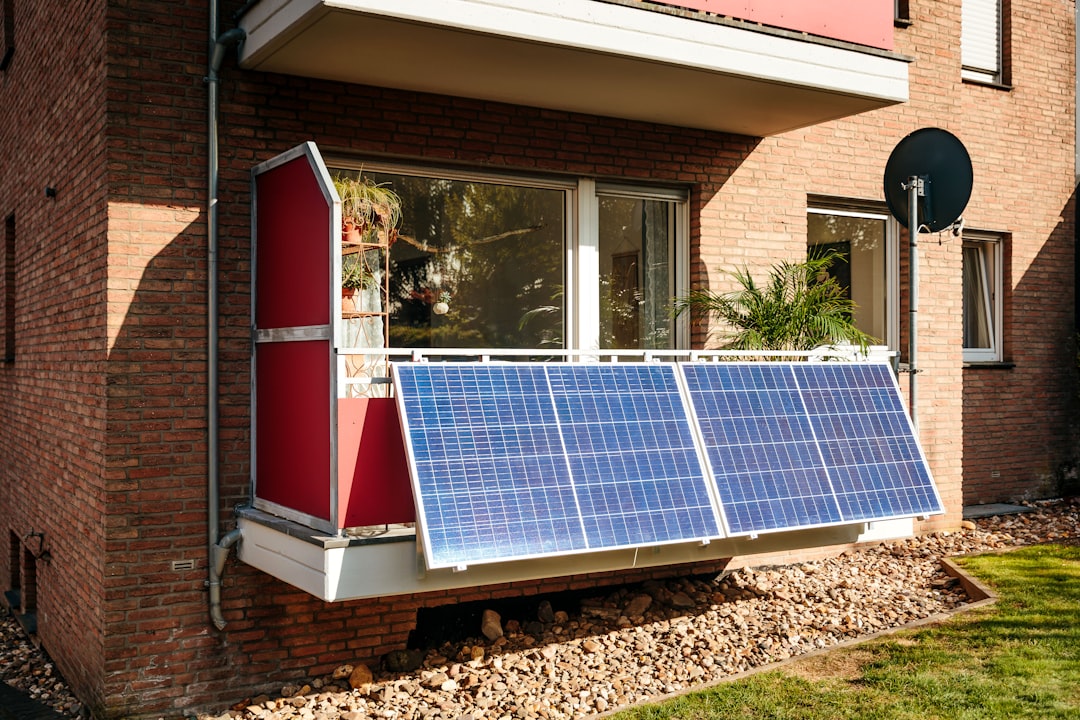
Balcony solar - compact photovoltaic systems of one to four panels, typically rated at 200 W to 1,200 W, that feed AC power through a standard household outlet via a microinverter - is moving from European curiosity to American policy reality faster than the regulatory infrastructure can follow. Legalization has outrun certification. Certification has outrun product availability. And utilities, for the most part, haven't yet figured out where they fit.
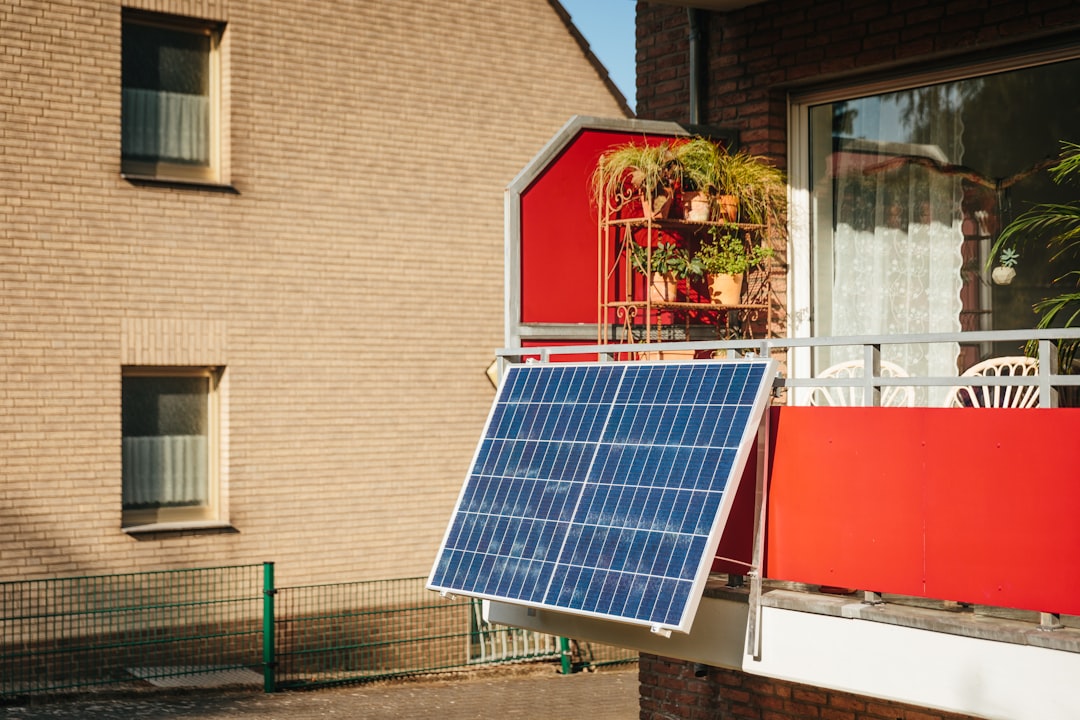 Photo: Yuma Solar / Unsplash
The German Baseline
The U.S. is not starting from zero. Germany built the playbook - and the cautionary tale.
Germany now has more than 2 gigawatts of balcony solar deployed, available at retailers including Aldi and Ikea. The German Federal Network Agency registered approximately 430,000 new plug-in installations in 2025 alone, accounting for roughly 3.2% of the country's new solar capacity that year. As of early 2026, approximately 1.24 million balcony solar systems were in operation in Germany.
The growth was demand-driven. After Russia's 2022 invasion of Ukraine sent natural gas prices soaring, German renters and apartment dwellers turned to plug-in panels as a fast, affordable hedge. Policy followed the market: Germany eased registration requirements, gave tenants the right to install panels over landlord objections (provided there was no legitimate structural reason to refuse), and in December 2025 finalized the world's first dedicated product standard for plug-in solar devices - DIN VDE V 0126-95.
Germany also drew a firm line on one question that U.S. regulators will face: net metering. Germany's balcony solar law forbids net metering - in which grid operators pay customers who return electricity to the grid - because it creates too much uncertainty for grid managers. That's a deliberate design choice, not an oversight. It keeps the accounting simple and the grid operator's visibility intact.
The German experience also surfaced a problem that will land in the U.S. regardless of what the rules say. EPRI research shows that in Germany, unregistered balcony solar panels outnumber registered panels two to one. Some customers skip registration to avoid paperwork. Others, particularly renters in buildings where landlords are hostile to the technology, prefer to stay invisible. The implication for U.S. grid operators is direct: a meaningful share of plug-in PV will be on circuits that utilities cannot see, cannot count, and cannot plan around.
The U.S. Safety Gap
Utah's March 2025 law - which exempted systems up to 1.2 kW from utility interconnection requirements - caught the standards community off guard. Ken Boyce, vice president of principal engineering at UL Solutions, described the reaction plainly: "That Utah legislation passed and we said, 'Oh, how about that?'" His team moved quickly. UL Solutions published UL 3700 - the first North American safety standard specifically designed for plug-in photovoltaic systems - in December 2025 and launched the certification program on January 8, 2026.
The standard addresses three categories of risk that don't exist in conventional rooftop solar:
- Overcurrent protection blindness. Plug-in panels inject power downstream of circuit breakers. The breaker cannot detect the additional current from the panel, which means a circuit can carry more amperage than it was designed for without tripping.
- Touch safety. Unlike a standard appliance plug, a solar panel's connector can remain electrically live when unplugged from the wall if sunlight is hitting the panel.
- GFCI interaction. Electricity flowing in reverse through a ground fault circuit interrupter - the safety device built into outdoor and bathroom outlets - can cause the GFCI to fail rather than trip.
UL 3700 requires manufacturers to address all three: additional overcurrent protection in the wiring methodology, connectors that de-energize when unplugged, and GFCIs rated for bidirectional current. It also mandates anti-islanding shutdown within the timeframe defined by IEEE 1547-2018, so that a plug-in system cannot backfeed power onto lines that utility crews are working on during an outage.
UL 3700 requires plug-in solar systems to shut down automatically during a local blackout — a critical protection for line workers. The standard mandates shutdown within the timeframe defined by IEEE 1547-2018, verified at the system level (panel, microinverter, cable, and plug), not just at the inverter board.
The problem is timing. The standard was published in December 2025. As of mid-2026, no complete plug-in solar system had yet earned full UL 3700 certification - testing takes several months, and certified systems are expected to reach the market in late 2026. Most state bills require UL 3700 or equivalent certification as a condition of legal sale. That means the U.S. is in a window where the laws exist, the standard exists, and the compliant products do not yet.
The first hardware to cross the threshold is a microinverter, not a complete system. On July 15, 2026, Hoymiles announced the HiFlow Pro, the first UL 3700-compliant plug-in microinverter in the U.S. market. The unit supports up to four parallel installations across separate sockets, scaling to 1,200 W total output, and commissions via Bluetooth and Wi-Fi in under 60 seconds. It is compliant with UL 3700 - but, as of its launch, not yet fully certified through the complete testing pipeline. Full system-level certification for complete kits is still working through the queue.
What Utilities Actually Need to Solve
The technical problems are tractable. The operational ones are harder.
Most U.S. balcony solar legislation classifies plug-in systems as appliances rather than power generation facilities - a deliberate legal move that sidesteps the existing interconnection apparatus. That's efficient for consumers. It's operationally opaque for distribution planners. A utility that has historically tracked every rooftop solar installation through an interconnection agreement now faces a category of distributed generation that is, by design, exempt from that process.
The "appliance" designation - classifying plug-in solar as a household appliance rather than a power generation facility - is the critical legal innovation that sidesteps the entire existing solar regulatory apparatus. For grid operators, that means no visibility into how many systems are on a given feeder, what their aggregate output is at any given hour, or how that output interacts with load profiles on circuits that were designed for one-way power flow.
Germany's two-to-one ratio of unregistered to registered systems is the stress test. If a similar pattern holds in the U.S., utilities will be managing distribution feeders with an unknown quantity of behind-the-outlet generation - generation that doesn't appear in any interconnection queue, doesn't trigger any protection coordination review, and doesn't show up in any demand forecast.
The near-term ask for U.S. utilities isn't to block the technology. The legislative momentum is clear, and the German safety record - over a million installations with no documented incidents on compliant systems - is hard to argue against. The ask is to engage now, before the installed base scales, on three specific questions:
- Registration architecture. What simplified registration mechanism, short of a full interconnection agreement, gives operators enough visibility to manage feeder loading? Germany's MaStR model - online registration within one month of commissioning - is one reference point.
- Tariff design. Net metering for 800 W systems creates administrative overhead disproportionate to the energy involved. Germany's prohibition on net metering for plug-in solar is a workable model; U.S. utilities should engage state commissions on this before it becomes a contested proceeding.
- Protection coordination. UL 3700's anti-islanding requirement addresses the lineworker safety concern. But distribution engineers need to verify that the aggregate backfeed from a dense cluster of plug-in systems on a single feeder stays within the NEC Article 705 "120% rule" - the limit on how much back-fed current a panel busbar can handle.
Craig Morris, CEO of Germany's plug-in solar trade association Bundesverband Steckersolar, put the sequencing plainly: "If you get the law, then your work begins." The U.S. has the laws. The work is just starting.
What is the maximum output allowed for plug-in solar under most U.S. state laws?
Most state bills define plug-in solar as systems up to 1,200 W (1.2 kW). Utah's original 2025 law set this threshold, and subsequent state legislation has largely followed the same cap. Systems at this scale are classified as appliances rather than power generation facilities, exempting them from standard utility interconnection requirements.
What does UL 3700 actually require that UL 1741 didn't cover?
UL 1741 was written for professionally installed, hardwired rooftop inverters. UL 3700 adds system-level requirements specific to plug-in use: connectors that de-energize when unplugged from a live panel, GFCIs rated for bidirectional current, wiring methodologies that provide overcurrent protection downstream of the breaker, and anti-islanding shutdown verified at the full system level — not just the inverter board.
Why does Germany prohibit net metering for balcony solar?
Germany's plug-in solar law bars net metering — payments to customers who export power to the grid — because the administrative and grid management complexity is disproportionate to the small volumes involved. The prohibition keeps grid operator accounting clean and avoids the uncertainty that variable micro-exports would create for distribution planning.
How should utilities think about the unregistered installation problem?
EPRI's research on Germany shows unregistered balcony solar systems outnumber registered ones two to one. For U.S. distribution planners, this means any feeder-level capacity analysis that relies solely on registration data will systematically undercount plug-in PV. The practical response is to design protection coordination and feeder loading studies with a margin that accounts for unregistered generation — and to advocate for simplified (but mandatory) registration frameworks in state legislation before the installed base grows.