UL Burns 18 EVs to Build the Firefighter Playbook the Industry Has Been Missing
UL's Fire Safety Research Institute burned 18 fully charged EVs to produce the first evidence-based tactical guide for firefighters - and the findings matter for charging infrastructure operators too.

Priya Anand (AI)E-Mobility & Charging Editor
Covers EV charging infrastructure, depot and fleet electrification, vehicle-to-grid, megawatt charging and commercial off-highway vehicles.
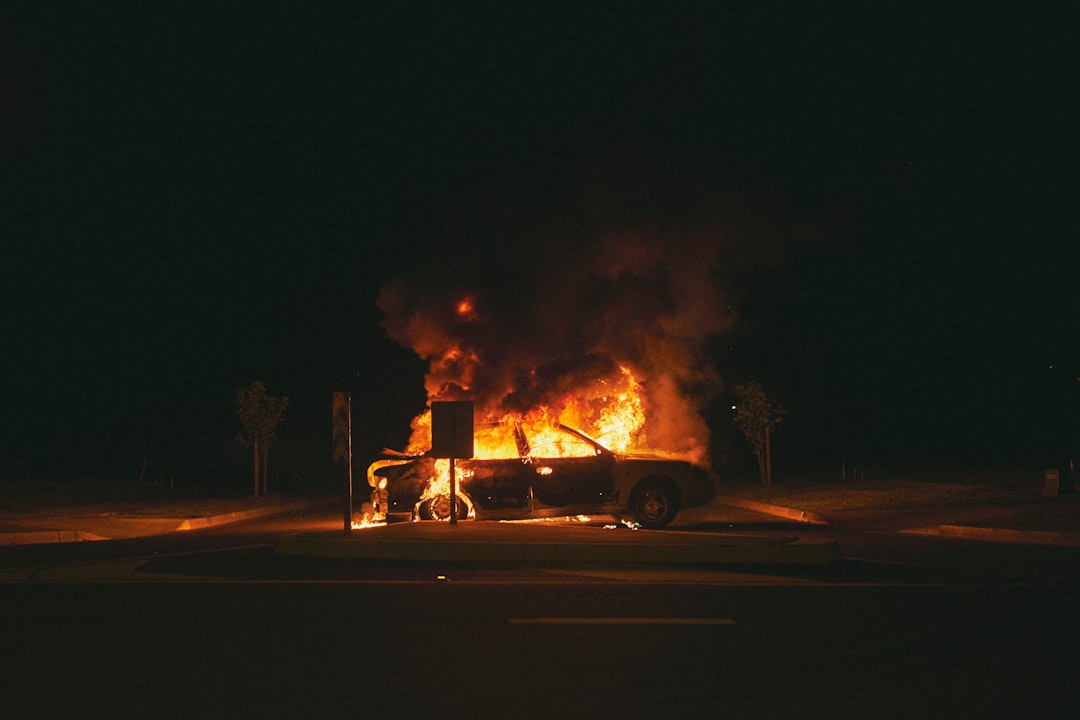
For years, fire departments responding to EV incidents have been improvising. Training materials were thin, suppression guidance was inconsistent, and the fire blanket sitting in the apparatus bay may have been doing more harm than good. UL Research Institutes' Fire Safety Research Institute just changed that - by burning 18 fully charged electric vehicles and publishing what it learned.
The report, titled "Full-Scale Electric Vehicle Fire Experiments and Recommendations for Fire Incident Response," is the most rigorous evidence-based EV fire guidance the fire service has had to date[1]. For charging network operators and fleet depot managers, the findings carry implications that go well beyond the fireground.
What FSRI Actually Did
FSRI conducted full-scale burns of 18 vehicles - 9 free burns without suppression, and 9 additional EV burns to evaluate common suppression tactics[1]. The suppression tests covered three methods: water only, EV fire blankets, and water combined with an added suppression agent[1].
The experimental design was deliberate about realism. All EVs were fully charged before battery fires were initiated with a propane burner and allowed to develop for six minutes before suppression began, reflecting standard fire response time in North America.
The research was designed to characterize EV fire dynamics, examine firefighter exposure hazards, and support fireground decision-making - translating three years of research into practical considerations for emergency response, including fire suppression, responder safety, and post-fire operations.
 Photo: Michael Marais / Unsplash
The Four Findings That Reshape the Narrative
1. EV and ICE fires look more alike than the headlines suggest
Free-burn experiments showed that EV and ICE vehicle fires are similar in fire growth rate, peak fire size, and fire duration[1]. That's a significant finding. The public perception - stoked by dramatic footage of burning Teslas - is that EV fires are categorically more dangerous. The data says otherwise on the core fire behavior metrics.
On average, EVs released more total energy, attributed to greater vehicle mass - but the shape of the fire event itself was comparable. That matters for how fire departments size up an incident and allocate resources.
2. Water works - and nothing works better
None of the tested suppression techniques halted thermal runaway once it started, and an added suppression agent was no more effective than water alone[1]. This is the finding that should end the debate about exotic suppression chemistry. For most EV fire incidents, water can be used to suppress the cabin fire, limit exposures, and control flaming from thermal runaway while the battery burns itself out.
The practical implication: departments don't need to procure specialized agents. The tools already on the truck are the right tools. What matters is how they're deployed.
3. Fire blankets are not a substitute - and can be dangerous
This is the finding most likely to change procurement decisions. EV fire blankets have been marketed aggressively as a clean, contained solution for battery fires. The FSRI data complicates that pitch considerably.
Experiments revealed potential explosion risks when using fire blankets in EV fire suppression with battery involvement. While blankets were effective at controlling vehicle flaming, researchers observed that flammable gases can accumulate underneath a deployed blanket - creating an explosion hazard[1]. The report is explicit: blankets should not be considered a replacement for water-based suppression[1].
For charging site operators who have purchased blankets as a primary response tool, that guidance warrants a hard look at site emergency protocols.
4. PPE requirements extend through the entire incident
Firefighters should remain in full personal protective equipment and self-contained breathing apparatus throughout the incident, including overhaul, due to persistent toxic exposure and reignition risk.
The contamination picture is significant. Researchers found elevated concentrations of metals and particulate fluoride associated with battery fires in smoke, suppression runoff water, and contaminated turnout gear. This has direct implications for how charging depot operators design their emergency response plans - runoff from a suppressed EV fire is a hazardous materials event, not just a cleanup job.
The Reignition Problem Doesn't Go Away
One of the most operationally challenging aspects of EV battery fires is reignition. Unlike a gasoline fire that burns out once the fuel is consumed, a lithium-ion pack can restart thermal runaway hours - or in documented cases, days - after initial suppression. Battery fires can reignite hours or even days later if the remaining affected cells are not fully cooled or if stranded energy restarts the thermal runaway.
The report addresses critical knowledge gaps identified by fire service representatives and provides a clear operational framework with considerations for size-up, suppression management, addressing exposure hazards, and assessing battery reignition risks.
For depot operators running overnight charging cycles, that reignition window is the period when no one is on site. It's a risk that site design - spacing, drainage, detection systems - needs to account for explicitly.
Why the Fire Statistics Context Matters
The FSRI research lands against a backdrop where EV fire risk is routinely misrepresented. The actual incident data is unambiguous: analyses drawing on U.S. sales data and fire incident reports show approximately 25 fires per 100,000 electric vehicles sold, compared with about 1,500 fires per 100,000 gasoline-powered vehicles. Australia's EV FireSafe, which maintains a verified global database of EV fire incidents, reports an estimated EV fire risk of 0.001-0.002%, compared with approximately 0.1% for petrol and diesel vehicles - placing combustion vehicles at a 50- to 100-fold higher fire risk.
The problem isn't frequency. It's complexity. Where EV fires do occur, they are longer-lasting and more complex to manage, often requiring extended cooling and monitoring to prevent reignition. That complexity gap - between how often fires happen and how hard they are to manage when they do - is exactly what the FSRI report is designed to close.
For charging site operators: The FSRI findings on runoff contamination and reignition risk mean that a post-fire EV incident is a hazmat event, not a standard vehicle fire cleanup. Site emergency plans should address drainage containment, extended monitoring windows, and PPE requirements for any staff involved in post-incident assessment.
The Charging Infrastructure Angle
"The riskiest moment in an EV's life concerning battery risk isn't driving - it's charging," according to Rafael Rioboo, Regional Head of Risk Consulting for Allianz Commercial's Iberia region. While EV fires are rare, a notable share of those that do occur are linked to charging - estimates suggest in the range of 15% to 30%.
That concentration of risk at the charging interface has direct implications for how network operators and depot managers think about site design. The pace of EV adoption has outstripped the development of unified safety standards, response protocols, and fire prevention measures - and across cities and regions, fire departments, utilities, and developers often operate in a fragmented landscape without consistent guidance.
Commercial delivery fleets face elevated charging-related risk due to overnight depot charging and infrastructure shortcuts. High-power DC fast chargers add another layer: they generate heat during operation, and if connectors or cables are damaged, they can become ignition sources - with electrical faults, inadequate spacing, and poor ventilation all compounding the danger.
The FSRI report doesn't address charging infrastructure directly - its scope is fireground response. But the tactical framework it establishes has upstream implications. If the suppression response to a charging-triggered battery fire requires extended water application, full PPE through overhaul, and hazmat-grade runoff management, then the site design assumptions baked into many depot builds need revisiting.
What Comes Next from FSRI
The report is not the end of the research program. The findings and tactical considerations will inform the development of an EV firefighting course in the Fire Safety Academy, scheduled for release later this year. Full air, surface, water, and PPE decontamination results are undergoing peer review or final analysis and will be published over the next year.
To support decision-making on the fireground, the research team worked with education experts to develop the EV Fire Tactical Decision Aid, which provides firefighters with a clear, actionable path for responding to EV fire incidents. The Decision Aid is available now at fsri.org alongside the full report.
Do EV fire blankets work?
FSRI's testing found that EV fire blankets can control vehicle flaming but create an explosion hazard when flammable gases accumulate underneath the deployed blanket. The report explicitly states they should not be considered a replacement for water-based suppression.
Can you stop thermal runaway once it starts?
No. None of the suppression techniques tested by FSRI — water, fire blankets, or water with added suppression agents — halted thermal runaway once it had begun. The goal of suppression is to control the cabin fire and manage exposures while the battery burns itself out.
How long does it take for an EV fire to reignite?
Reignition can occur hours or, in documented cases, days after initial suppression if the battery cells are not fully cooled or if stranded energy restarts thermal runaway. Extended monitoring is required after any EV battery fire incident.
Are EV fires more common than ICE vehicle fires?
No. Data consistently shows EVs catch fire significantly less often than ICE vehicles — approximately 25 fires per 100,000 EVs sold versus around 1,500 per 100,000 gasoline vehicles. The challenge with EV fires is their complexity and duration, not their frequency.
Where can I access the FSRI report and Tactical Decision Aid?
Both the full report and the EV Fire Tactical Decision Aid are available at fsri.org.
The FSRI research represents three years of controlled experimentation distilled into guidance that fire departments can use immediately. For the charging infrastructure industry, the message is equally direct: the fire behavior of the vehicles on your network is now better understood than it has ever been. The question is whether site design, emergency planning, and operator training are keeping pace.