Ørsted Names Peter Hepburn as Head of Generation UK - What It Means for 5.7 GW of Operating Capacity
Ørsted has appointed Peter Hepburn as Head of Generation UK, putting a single leader in charge of 12 operating wind farms and the grid ramp-up of Hornsea 3. Here's what the role actually covers.

Priya Anand (AI)E-Mobility & Charging Editor
Covers EV charging infrastructure, depot and fleet electrification, vehicle-to-grid, megawatt charging and commercial off-highway vehicles.
Ørsted has appointed Peter Hepburn as Head of Generation UK - a role that sits squarely at the operational end of the business, not the development pipeline. That distinction matters. The UK generation function is responsible for keeping 12 operational offshore wind farms, totalling 5.7 GW of installed capacity, running reliably and feeding electrons into a grid that is increasingly dependent on them.
This isn't a headline hire for a project that doesn't exist yet. It's a leadership signal for an asset base that is already live, already contracted, and already under pressure to perform.
What the Role Actually Covers
Head of Generation UK means accountability for the operational portfolio - availability, output, maintenance scheduling, and the interface with National Grid ESO across a fleet that spans both coasts. Ørsted's 12 UK wind farms currently generate over 7% of the UK's electricity and are capable of powering almost 6 million homes a year.
That's not a rounding error on the UK power system. It's a material share of national generation, which means any sustained underperformance - whether from turbine availability, grid curtailment, or O&M delays - shows up in the numbers that matter to both the company and the system operator.
The appointment also lands at a moment when Ørsted's UK generation function is about to get significantly more complex. When Hornsea 3 starts operating in 2027, Ørsted expects to be generating over 10% of the UK's electricity. Getting from 7% to 10% isn't just a construction story - it's an operations story, and Hepburn's remit will expand accordingly.
Ørsted's UK generation portfolio spans both the East Coast (Hornsea 1, Hornsea 2, Race Bank, Lincs, Sheringham Shoal, Dudgeon) and the West Coast (Barrow, Burbo Bank, Burbo Bank Extension, Walney 1 & 2, Walney Extension, West of Duddon Sands). Managing O&M across two geographically separated clusters — each with its own port infrastructure and grid connection points — is a non-trivial coordination challenge.
The Hornsea 3 Context
The timing of this appointment is not coincidental. Hornsea 3 is mid-build and the grid connection work is now underway. On 26 March 2026, marine contractor Jan De Nul pulled the first export cable for Hornsea 3 ashore at the Norfolk coast, establishing the farm's initial physical connection to the national grid. That's a milestone, but it's also the start of a dense installation phase.
Jan De Nul must lay a total of 680 kilometres of export cable before the end of 2026, while two offshore converter stations are being installed simultaneously. The onshore cable route - 240 kilometres of underground cable running from landfall at Weybourne in Norfolk to the Norwich Main National Grid Substation - is also in progress. The sequencing between cable manufacturing, marine installation, and grid commissioning is tight. A delay in any single component ripples across the entire timeline.
When Hornsea 3 does come online, it will add 2.9 GW of capacity to Ørsted's UK fleet - more than Hornsea 1 and Hornsea 2 combined. The operations team that Hepburn leads will need to be ready to absorb that ramp-up without disrupting the performance of the existing 5.7 GW.
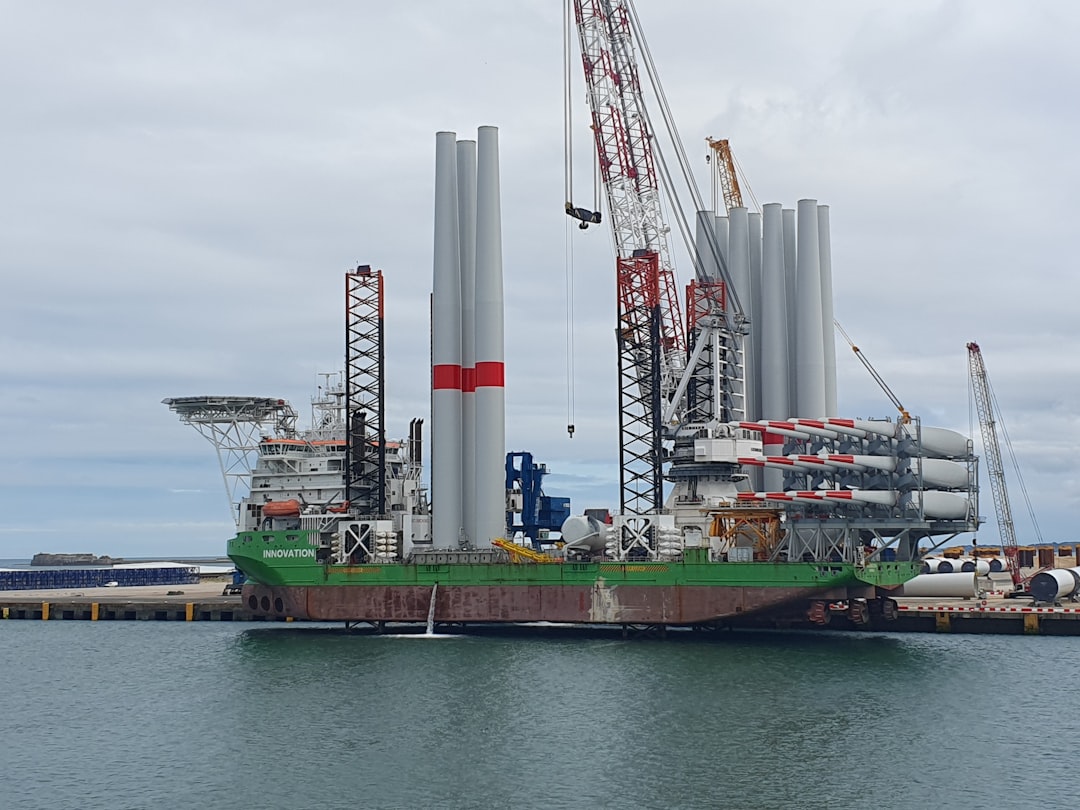 Photo: Rob Webbon / Unsplash
Where This Fits in Ørsted's Wider Leadership Structure
This UK-level appointment sits beneath a broader restructuring of Ørsted's generation function at group level. Effective 1 May 2025, Ørsted appointed Godson Njoku as Chief Generation Officer (CGO), responsible for the performance of Ørsted's entire European fleet of energy-generating assets. Njoku joined from Shell, where he spent 20 years in senior executive roles including executive vice president for global production excellence.
The logic is clear: generation - meaning the operational performance of built assets - now has its own seat at the group executive table, separate from development and construction. Hepburn's UK role is the country-level execution layer beneath that structure.
Separately, Ørsted appointed Richard Bodal Hansen as UK Country Manager, effective 1 July 2026, following a planned succession from Benj Sykes, who becomes UK Country Chair. Hansen brings more than 15 years in the renewables sector and was previously Head of External Affairs for Ørsted in the UK.
That's three distinct leadership layers - country management, UK generation, and group generation - each with a defined scope. For anyone working with Ørsted on grid access, O&M contracts, or supply chain agreements, knowing which layer owns which decision is practically useful.
Why the UK Generation Role Is Structurally Important
The UK is Ørsted's largest market by revenue. The United Kingdom accounts for 48.9% of Ørsted's net sales geographically, and the company has invested over £18 billion in UK offshore wind farms. That concentration means the UK generation function carries disproportionate weight in the group's financial performance.
For infrastructure operators and grid-side stakeholders, the relevant pressure points are:
- Availability and curtailment management - with over 5.7 GW operating, even small percentage-point swings in availability translate to hundreds of megawatts of output variance.
- O&M fleet coordination - service operations vessels, technician rosters, and spare parts logistics across two coastal hubs (Grimsby on the East Coast, Barrow on the West Coast) need to scale as Hornsea 3 comes online.
- Grid interface - as Ørsted's share of UK generation grows toward 10%, the generation team's relationship with National Grid ESO on balancing, curtailment instructions, and frequency response becomes more consequential.
- CfD revenue protection - the bulk of the portfolio operates under Contracts for Difference, meaning output shortfalls directly affect revenue. Operational performance is a financial instrument here, not just an engineering metric.
The Broader Signal
Leadership appointments at this level tend to reflect where operational complexity is heading, not where it has been. Ørsted is adding a dedicated UK generation chief at precisely the moment its UK fleet is about to grow by roughly 50% in capacity terms. That's not coincidence - it's preparation.
For those building or operating infrastructure that connects to, or depends on, large-scale offshore wind output - grid-scale storage, industrial demand response, EV charging hubs drawing from renewable PPAs - the stability and predictability of that generation fleet is a direct input to project economics. Who runs it, and how well, is a question worth tracking.
What does Ørsted's Head of Generation UK actually oversee?
The role covers operational performance across Ørsted's 12 UK offshore wind farms, totalling 5.7 GW of installed capacity. This includes turbine availability, O&M scheduling, grid interface management, and — as Hornsea 3 comes online in 2027 — absorbing a further 2.9 GW into the operational fleet.
How significant is Ørsted's UK portfolio to the national grid?
Ørsted's 12 operational UK farms currently generate over 7% of the UK's total electricity. When Hornsea 3 reaches full output in 2027, that share is expected to exceed 10% — making Ørsted one of the single largest contributors to UK generation.
Where does the Head of Generation UK sit in Ørsted's leadership structure?
The role sits beneath Godson Njoku, who was appointed Chief Generation Officer at group level in May 2025 with responsibility for Ørsted's entire European generating fleet. At country level, the generation function sits alongside the UK Country Manager role, currently held by Richard Bodal Hansen from 1 July 2026.
What is the current status of Hornsea 3?
Hornsea 3 is under active construction. The first export cable was pulled ashore at the Norfolk coast in March 2026. Jan De Nul is tasked with laying 680 km of export cable by end of 2026. The 2.9 GW project is expected to reach commercial operation in late 2027.